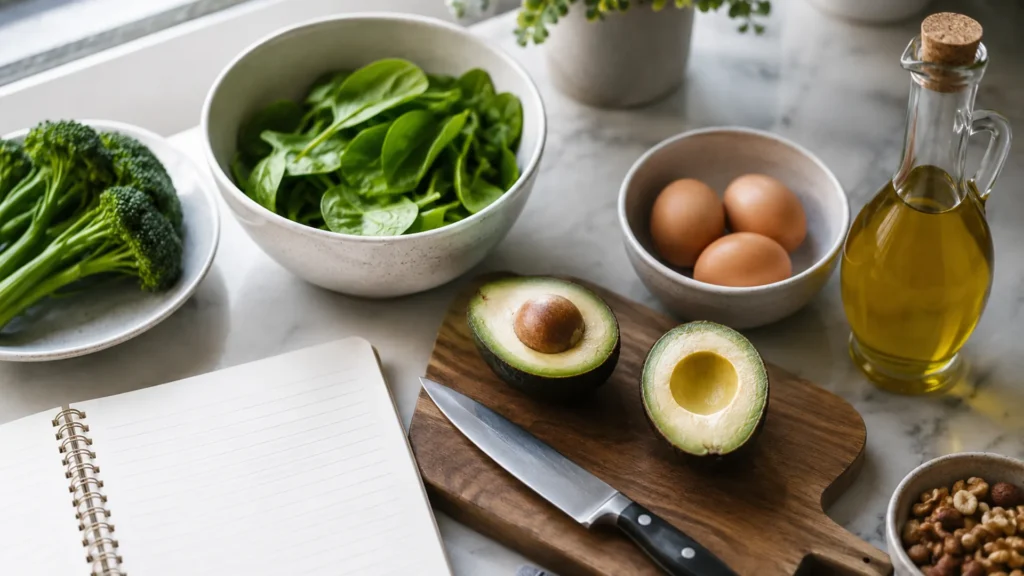
If you want to learn how to go keto without stalling out in week one, the order you do things matters more than any single food rule. The pattern is familiar. People read three blog posts, buy a box of “keto” bars, eat a lot of bacon, feel rough by day four, and quit. That is a setup problem, not a willpower problem. This guide walks through the setup in order: macros first, food list second, electrolytes third, then the small daily habits that keep you in ketosis without white-knuckling it.
Keto is a real metabolic shift, not a marketing word. Done well it is steady and boring in the best way. Done sloppy it makes you feel like you caught a mild flu. The difference is almost always preparation. Here is how to prepare.
What Going Keto Actually Means
The ketogenic diet pushes your body to run on fat instead of glucose. When you cut carbohydrates low enough for long enough, your liver starts converting fat into molecules called ketones, and your brain and muscles burn those for fuel. That state is called ketosis. The whole game of going keto is reaching ketosis and then staying there comfortably.
Here is the part people skip. Ketosis is not a vibe or a feeling, it is a measurable shift in how you burn fuel. You do not need a lab to confirm it, but you do need to respect the threshold. For most adults, that means keeping net carbohydrates very low and getting the bulk of your calories from fat, with adequate protein. The classic clinical version of keto runs roughly 70 to 80 percent of calories from fat, but most people doing keto for weight and energy land in a more relaxed range that still works. The research consensus, summarized in the medical literature on the ketogenic diet through StatPearls, is that the diet reliably shifts metabolism when carbs stay low and intake is consistent.
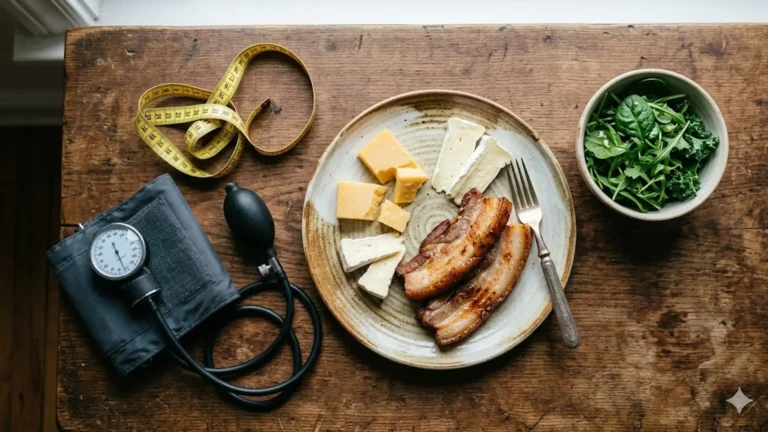
One more honest note before we build your plan. Keto is not right for everyone. If you are pregnant, if you have type 1 diabetes, if you take blood sugar or blood pressure medication, or if you have kidney or liver conditions, talk to your doctor before starting. This guide is not medical advice, and the smart move is to get cleared by your physician first.
Step One: Set Your Macros Before You Touch a Grocery List
Macros are your protein, fat, and carbohydrate targets for the day. If you do not set them, you are guessing, and guessing is how people accidentally eat 90 grams of carbs and wonder why nothing is happening.
Start with the carb ceiling. For most beginners, 20 to 25 grams of net carbs per day is the reliable entry point. Net carbs means total carbohydrates minus fiber and minus sugar alcohols like erythritol, because those do not raise blood sugar the same way. Twenty grams is strict on purpose. It gets you into ketosis faster, and once you are fat-adapted you can test a slightly higher number. If you want the full breakdown of where that ceiling comes from, see the guide on how many carbs a day on keto.
Next, set protein. This is where people go wrong in both directions. Too little and you lose muscle and feel weak. Too much and the excess can blunt ketosis slightly through a process your liver runs called gluconeogenesis. A practical target is roughly 0.7 to 1.0 grams of protein per pound of your goal body weight, leaning higher if you lift weights or are older. Protein is not the enemy on keto. Underrating it is a common beginner mistake.
Fat fills the rest. Fat is your fuel and your satiety lever, not a number to maximize for its own sake. Eat enough fat to feel full and to hit your energy needs, and pull back on it as you lose weight so your body taps stored fat. Here is a simple starting framework.
| Macro | Beginner target | Why it matters |
|---|---|---|
| Net carbs | 20 to 25 g per day | Low enough to reach ketosis quickly |
| Protein | 0.7 to 1.0 g per lb goal weight | Protects muscle, keeps you full |
| Fat | Fill remaining calories | Primary fuel and satiety lever |
Use a free macro calculator or a tracking app for the first two or three weeks. You do not have to track forever. You track at the start so your eye gets calibrated, then most people coast on intuition once they know what 20 grams of carbs looks like on a plate.
Step Two: Build Your Food List So Decisions Are Easy
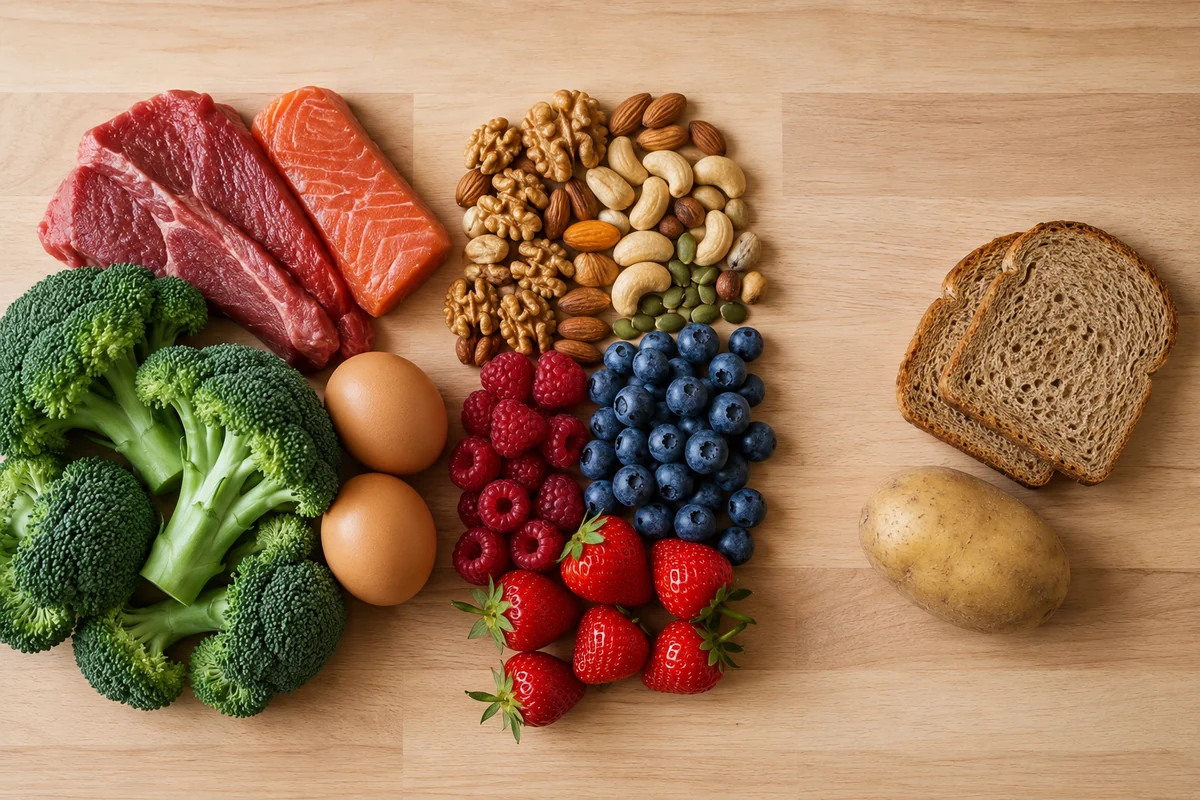
The fastest way to fail at keto is standing in your kitchen at 7 p.m. deciding what is allowed. Decide in advance. Stock your kitchen with green-light foods and clear out the obvious carb traps, and most of your daily choices get made for you.
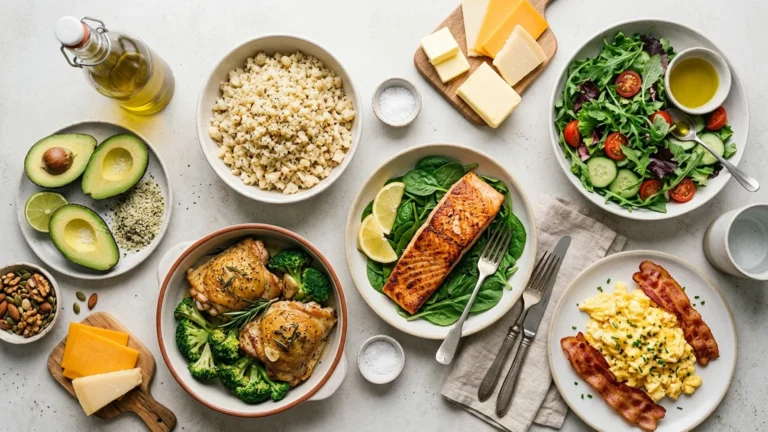
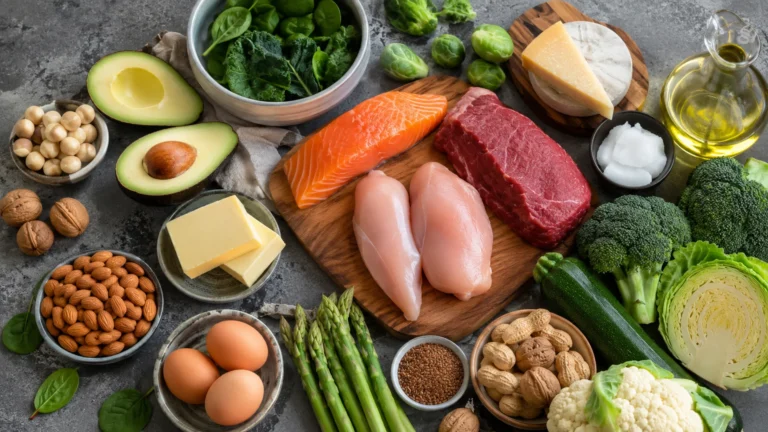
Your core green-light foods are eggs, fatty fish, poultry, beef, pork, non-starchy vegetables, avocado, olive oil, butter, full-fat dairy, nuts, and seeds. For a sortable version you can shop from, our keto diet food list lays it out by category. For the produce side specifically, the rundown of keto-friendly vegetables is the place to start, because vegetables are where beginners either thrive or quietly blow their carb budget on a sweet potato.
The red-light list is shorter and more predictable. Sugar, bread, pasta, rice, potatoes, most fruit, beans, and anything labeled low-fat usually means high-carb. Beer is mostly liquid carbs. So are most smoothies and bottled coffee drinks. Read labels for the first month. Hidden sugars hide in salad dressing, marinades, and sauces.
| Eat freely | Eat in moderation | Avoid |
|---|---|---|
| Eggs, meat, fish | Nuts, full-fat dairy | Bread, pasta, rice |
| Leafy greens, broccoli | Berries, tomatoes | Sugar, soda, juice |
| Avocado, olive oil | Onion, bell pepper | Potatoes, beans, beer |
About fat quality, since this is a health topic and not just a weight one. Filling your plate only with processed meats and butter is not the smartest version of keto. Mix in monounsaturated and omega-3 fats from olive oil, avocado, nuts, and fatty fish. Harvard’s overview of good fats and bad fats is a solid plain-English reference, and it lines up with the approach here. Keto is permission to eat fat, not a mandate to eat the worst kinds.
Step Three: Get Ahead of Electrolytes
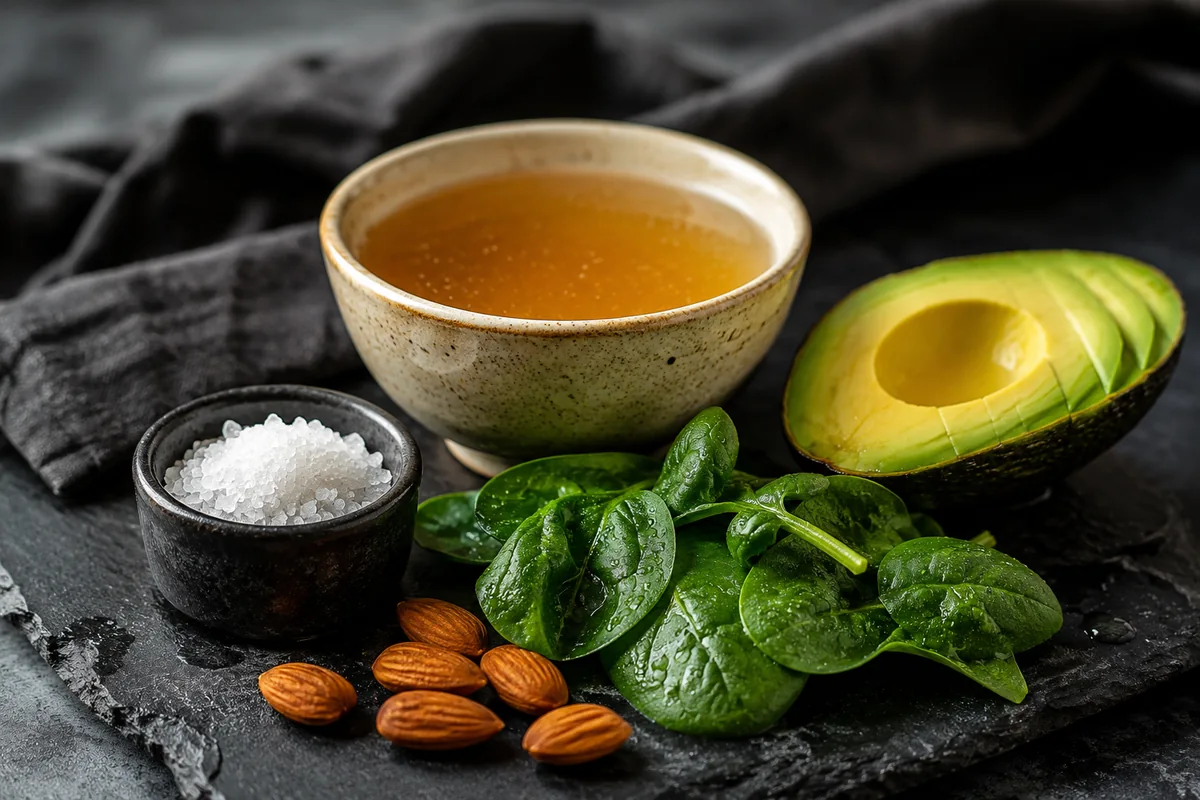
This is the step that separates a smooth start from a miserable one. When you cut carbs, your body dumps water and the sodium that came with it. That water loss is the famous “keto whoosh” on the scale in week one, but it also flushes out electrolytes. Low sodium, potassium, and magnesium are the actual cause of what people call the keto flu: headache, fatigue, brain fog, leg cramps, irritability.
You prevent it instead of treating it. Salt your food deliberately. Drink broth. Eat avocado and leafy greens for potassium and magnesium, and consider a magnesium supplement in the evening if cramps show up. The general guidance on sodium from MedlinePlus is worth reading, with one caveat: most sodium advice is written for people eating processed carbs, and early keto temporarily flips that script because you are losing sodium fast. If you have high blood pressure or take diuretics, get your sodium plan from your doctor rather than from a coach.
| Electrolyte | Rough daily aim | Easy sources |
|---|---|---|
| Sodium | 3,000 to 5,000 mg (early keto) | Salt, broth, pickles |
| Potassium | 3,000 to 4,000 mg | Avocado, spinach, salmon |
| Magnesium | 300 to 400 mg | Nuts, leafy greens, supplement |
If you do one thing from this guide, make it electrolytes. A salt deficiency can derail a keto start as easily as a carb mistake. For the full troubleshooting playbook, our piece on the keto flu covers symptoms and fixes in detail.
Step Four: Plan Your First Two Weeks of Meals
Going keto is a logistics problem in the first fortnight. Solve it with a small rotation rather than a fancy meal plan you will abandon. Pick three breakfasts, three lunches, and three dinners you genuinely like, and repeat them. Repetition is not boring at the start, it is freedom from decision fatigue.
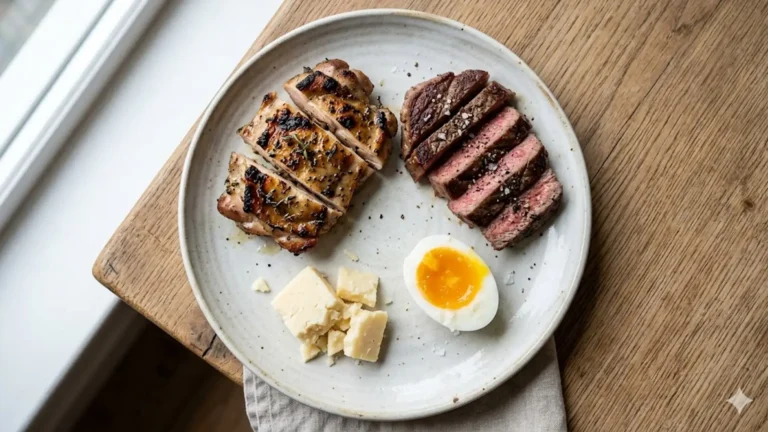
A simple template looks like this. Breakfast is eggs cooked in butter with avocado, or a quick coffee with cream if you are not hungry. Lunch is a protein and a big pile of greens with olive oil. Dinner is a fatty cut of meat or fish with a roasted non-starchy vegetable. Snacks, if you need them, are cheese, olives, nuts, or hard-boiled eggs. Most people find their hunger drops within a week of being fat-adapted, and the snacking takes care of itself.
Coffee deserves a note because so many beginners ask. Black coffee is fine. Adding butter or MCT oil is optional, not mandatory, and the calories count. If you want the honest version of where bulletproof-style coffee helps and where it does not, our breakdown of keto coffee covers it. Do not drink your calories without thinking about them just because the drink is keto-approved.
Batch cooking is the quiet hero of a successful keto start. Pick one afternoon and cook a tray of chicken thighs, hard-boil a dozen eggs, roast two sheet pans of broccoli and cauliflower, and portion everything into containers. When dinner is already half-made, you stop reaching for the carb-heavy convenience food that derails most beginners. Fat adaptation happens in the body, but adherence happens in the fridge. Stock it on purpose and the diet runs itself.
Restaurants are where new plans go to die, so build a default order before you need it. At nearly any restaurant you can ask for a protein, a green vegetable, and an oil-and-vinegar dressing, and skip the bread, fries, and rice. Burgers without the bun, fajitas without the tortillas, salads without the croutons, eggs any style at breakfast. Once you have three or four go-to orders memorized, eating out stops being a risk and becomes routine.
Look outside keto-labeled recipes too. A lot of naturally low-carb cooking from other traditions adapts cleanly. Hearty soups built on broth and meat are a good example, and a rotation of chicken soups gives you warming, filling dinners without a single grain. Roasted protein-forward plates work the same way, which is why simple air fryer chicken recipes are a good fit when you want fast weeknight protein with crisp skin and zero breading.
Step Five: Know How to Confirm You Are in Ketosis
You do not have to test, but testing removes doubt in the first weeks when motivation is fragile. There are three common methods. Urine strips are cheap and useful early on, then become unreliable once you adapt. Breath meters measure acetone and are reusable. Blood ketone meters are the most accurate and the most expensive. For a beginner, urine strips for the first two weeks are plenty.
A quick word on cost. Urine strips run a few dollars for a bottle that lasts the first weeks, which is the only window where they shine. Once you are adapted, your muscles use ketones more efficiently and fewer spill into your urine, so the strips read pale even though you are firmly in ketosis. Do not let a fading strip scare you back to carbs. A blood meter costs more upfront but tells the truth at any stage, and a breath meter sits in the middle on both price and accuracy. For a beginner on a budget, strips early then nothing later is a perfectly sound plan.
Signs that you are getting there without any device include reduced appetite, steadier energy across the day, and a metallic or fruity taste in your mouth. That taste is real and it is the topic of a lot of questions, because the same acetone that breath meters detect is what causes early keto breath. Timing varies by person. Some people reach ketosis in two days, others take a week. Our explainer on how long it takes to get into ketosis covers the variables, from your starting glycogen stores to your activity level.
Common Beginner Mistakes and How to Fix Them
After enough coaching cycles, the same handful of mistakes shows up again and again. Here are the ones worth pre-empting.
Eating too little protein. People over-fear protein because of an old myth that it kicks you out of ketosis. Adequate protein protects muscle and keeps you full. Hit your target. If you want the nuance, our guide to going high protein on keto separates the myth from the math.
Ignoring hidden carbs. Sauces, dressings, “sugar-free” candy with sneaky maltitol, and creamy restaurant dishes add up. Track honestly for a month and the surprises stop.
Quitting during the keto flu. Day three to five is the dip. It is electrolytes, not a sign keto is wrong for you. Salt and broth fix most of it within a day.
Going zero-fiber. Cutting carbs can cut fiber by accident. Lean on low-carb vegetables, chia, and flax so digestion stays regular.
Chasing perfection. One higher-carb meal does not erase your progress, it just means you dip out of ketosis and climb back in. Consistency over weeks beats perfection over days.
Building the Habit So It Lasts
Going keto is the easy part. Staying keto is the part that pays. The habits that make it stick are unglamorous. Keep your kitchen stocked so the default choice is compliant. Prep protein in batches. Keep an electrolyte routine. Plan for restaurants by checking menus ahead and defaulting to a protein with vegetables. And give yourself a realistic timeline. Real fat adaptation, where your body burns fat smoothly during exercise, takes several weeks, not days. The first month is the investment, and everything after it is easier.
Track your wins beyond the scale. Steadier energy, fewer cravings, better focus, looser waistband on your jeans. Weight fluctuates with water, especially early, so do not let the scale be your only judge. If you ground your start in macros, a solid food list, and electrolytes, the rest tends to fall into place. That is how to go keto without the crash, one step at a time.
Frequently Asked Questions
How long does it take to go keto and reach ketosis?
Most people reach nutritional ketosis within two to four days of keeping net carbs at or below 20 grams, though it can take up to a week depending on your glycogen stores and activity level. Full fat adaptation, where energy and exercise feel normal again, usually takes two to four weeks.
How many carbs can I eat to stay in ketosis?
Start at 20 to 25 grams of net carbs per day, which is total carbs minus fiber and sugar alcohols. Once you are fat-adapted you can test a slightly higher ceiling, often 30 to 50 grams, and watch whether you stay in ketosis using strips, a breath meter, or how you feel.
Why do I feel sick when I first go keto?
Those early symptoms, called the keto flu, come mostly from losing sodium, potassium, and magnesium as your body sheds water. Salting your food, drinking broth, and eating potassium-rich foods like avocado and greens usually resolves it within a day or two. If symptoms are severe or persistent, see your doctor.
Is going keto safe for everyone?
No. Keto can be a strong tool for many adults, but it is not appropriate for everyone. Talk to your doctor first if you are pregnant, have type 1 diabetes, kidney or liver disease, or take medication for blood sugar or blood pressure. This guide is education from a coach, not medical advice.