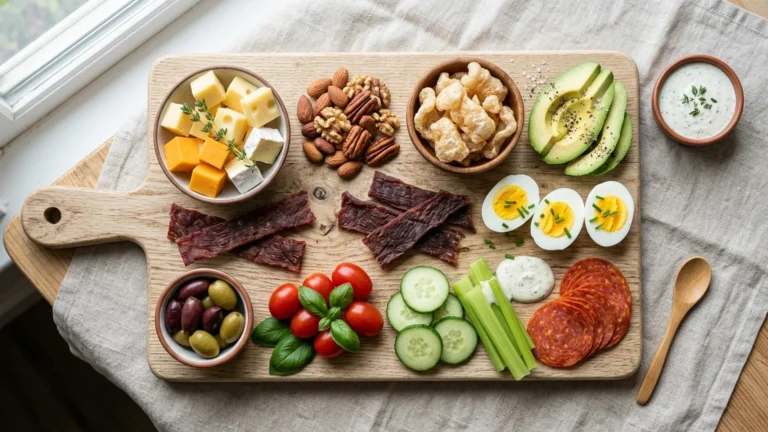

How many carbs a day on keto? For most people, somewhere between twenty and fifty grams of net carbs per day, with twenty to thirty grams being the reliable sweet spot for getting into and staying in ketosis. Going under twenty grams nearly guarantees ketosis for almost everyone, while creeping above fifty usually pushes you out of it. The catch is that there is no single number that fits everyone, because your personal carb limit depends on your activity, muscle mass, and how your body handles carbohydrate. The good news is that finding your own number is simple once you understand the ranges and what moves them.
This guide breaks down exactly how many carbs to eat on keto, what net carbs actually mean and how to count them, the three common carb tiers and who each suits, the factors that raise or lower your personal limit, and a practical method to find the exact number that keeps you in ketosis. None of this is medical advice, and anyone with a health condition should talk to a doctor, but as a practical framework for setting your carb target, this is everything you need.
The Short Answer
Keto is generally defined as eating fewer than fifty grams of net carbs a day, and most people aim for twenty to fifty grams. Staying under twenty grams produces ketosis in roughly ninety-five percent of people and is the safest bet when you are starting out or want fast results. Twenty to thirty grams is the standard target that balances effectiveness with being livable long term. Thirty to fifty grams works for some people, especially those who are active or already fully keto-adapted. Above fifty grams, most people drift out of ketosis. If you remember one number, make it twenty to thirty grams of net carbs, which works for the majority of beginners. If you are still setting up your diet, our guide on how to start the keto diet walks through the rest of the plan around that number.
What Are Net Carbs?
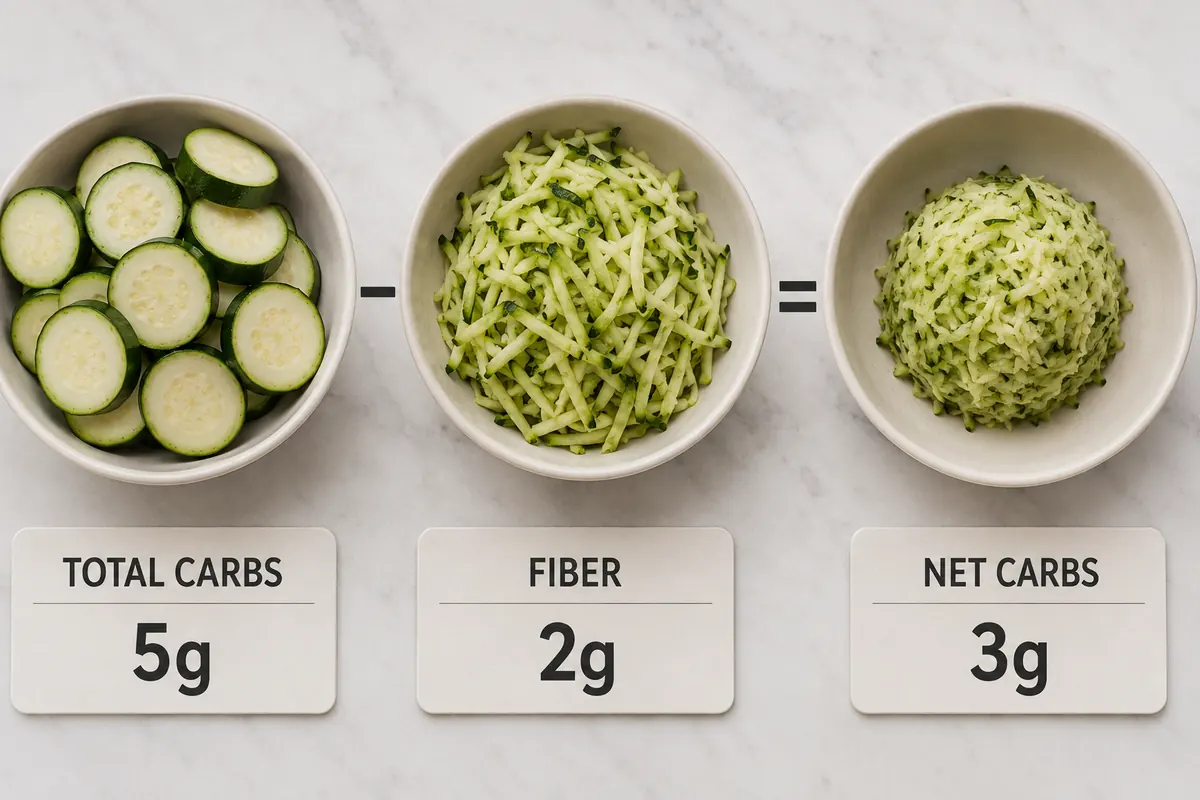
On keto, the number that matters is net carbs, not total carbs. Net carbs are the carbohydrates your body actually digests into usable glucose, and you calculate them by taking the total carbohydrate on a label and subtracting the fiber, because fiber is a carbohydrate that passes through largely undigested and does not raise blood sugar. So a food with twelve grams of total carbs and seven grams of fiber has five grams of net carbs. Sugar alcohols, found in many low-carb products, can also be partially subtracted, though they vary in how much they affect you, so it is wise to be conservative with them. This is why low-carb vegetables and high-fiber foods are so useful on keto: their net carb count is far lower than their total carbs suggest, letting you eat more volume while staying under your limit.
The Three Carb Tiers
| Approach | Net carbs/day | Best for |
|---|---|---|
| Strict | Under 20 g | Fast, reliable ketosis; beginners |
| Standard | 20-30 g | Best balance, sustainable |
| Moderate | 30-50 g | Active or fully adapted people |
The strict tier, under twenty grams, gets most people into ketosis within a few days and is the surest path when you are new or want quick momentum. The standard tier, twenty to thirty grams, is where most people settle once they are established, because it is low enough to keep ketosis but generous enough to fit a varied diet. The moderate tier, thirty to fifty grams, suits people who train hard or have become metabolically flexible, since exercise burns through carbs and can widen the window. Start lower and loosen up only if you stay in ketosis, rather than the other way around.
What Affects Your Personal Carb Limit
Your individual threshold can sit anywhere in the twenty to fifty gram range, and several factors decide where. Physical activity is the biggest lever: athletes and very active people burn carbohydrate fast and can often tolerate the higher end, sometimes even more, while sedentary people usually need to stay lower. Muscle mass matters too, since more muscle means more capacity to store and use carbohydrate. Insulin sensitivity is key: people who are insulin resistant typically need to stay strictly under twenty grams to reach ketosis, while insulin-sensitive people have more room. Age and genetics play a role as well, with tolerance often narrowing over time. Because of all this, two people can eat the same carbs and only one stays in ketosis, which is exactly why finding your own number beats copying someone else’s.
Total Carbs vs Net Carbs: Which Should You Track?
Most people on keto count net carbs, subtracting fiber, which allows a more generous and varied diet full of vegetables. Some prefer to count total carbs instead, which is stricter and simpler since there is no subtraction, and it removes any guesswork around fiber and sugar alcohols. If you are counting total carbs, a limit of around twenty-five to thirty grams is roughly comparable to a net carb limit in the twenties. Neither approach is wrong; net carbs is the mainstream choice and works well for most, while total carbs can be a good fallback if you are not losing weight or staying in ketosis despite hitting your net carb target, since it closes the loopholes. Pick one method and be consistent, because mixing them up is a common reason people miscount.
How to Find Your Personal Carb Limit
The reliable method is to start low and work up. Begin at under twenty grams of net carbs for the first few weeks, which gets you firmly into ketosis and keto-adapted. Once you are comfortably in ketosis and feeling good, you can slowly add carbohydrate, roughly five grams at a time over a few days, and watch what happens. If you stay in ketosis and feel fine, that new level is sustainable; if you drop out or notice cravings and energy dips returning, step back to the previous amount. Testing for ketones with urine strips or a blood meter makes this experiment more precise, though paying attention to how you feel works too. Over a few weeks this dialing-in process reveals your personal ceiling, which becomes the number you can maintain without thinking about it. A varied rotation of meals like keto chicken chili and roasted vegetables makes hitting a consistent carb target much easier than relying on willpower alone.
Carbs and Weight Loss Plateaus
When weight loss stalls on keto, carbs are one of the first things to revisit, because carb creep is a common and sneaky culprit. Over time, small amounts of carbohydrate tend to slip back in: an extra handful of nuts, a few more berries, a sauce here, a keto product there, and the daily total drifts upward without you noticing. Recalculating your net carbs honestly for a few days, weighing portions rather than estimating, often reveals that you are eating more than you think. If the carbs are genuinely under control and the scale still will not move, the issue is usually total calories rather than carbs, since keto reduces appetite but does not suspend the laws of energy balance, and it is possible to overeat fat. Tightening from net carbs to total carbs for a couple of weeks can also break a stall by closing the loopholes around fiber and sugar alcohols. The point is that a plateau is a signal to measure rather than guess, and carbs are the first number to check.
Where Your Carbs Should Come From

Not all carbs are equal on keto, and spending your limited allowance wisely makes the diet far easier. The best sources are low-carb, high-fiber vegetables: leafy greens, broccoli, cauliflower, zucchini, peppers, and asparagus give you volume, nutrients, and fiber for very few net carbs. A small portion of berries can fit when you want something sweet. Nuts and seeds add carbs along with their fat, so they count too. What you want to avoid spending your carbs on is sugar, bread, pasta, rice, and starchy vegetables, which use up your whole daily limit in a single small serving and offer little fiber in return. Building your carbs from vegetables rather than starches means you can eat more food, feel fuller, and get more nutrition while staying under your number. Pairing them with a protein like pan-fried salmon keeps meals satisfying without adding carbs.
What 20 Grams of Carbs Actually Looks Like
Numbers on a page are abstract, so it helps to see what a daily carb budget looks like in real food. Twenty grams of net carbs is genuinely small once sugar and starch are involved: a single slice of bread can be around fifteen grams, a medium banana about twenty-five, and a cup of cooked rice over forty, so any one of those nearly or fully spends your whole day. Spent on vegetables, though, the same twenty grams goes a long way: a couple of cups of leafy greens, a cup of broccoli, half an avocado, and a handful of berries together stay well within budget while filling your plate. That contrast is the entire strategy of keto in one picture, because the same carb allowance either disappears into a few bites of starch or stretches across a day of vegetables and whole foods. Once you have eyeballed your staples a few times, you stop needing to weigh everything and start knowing roughly what a meal costs.
Carb Cycling, Targeted Keto, and Refeeds
Standard keto keeps carbs consistently low every day, but a few variations adjust the carb limit on purpose, and they are worth knowing even if most people never need them. Targeted keto adds a small amount of carbohydrate right around workouts to fuel intense training, then returns to baseline, which suits athletes more than casual dieters. Cyclical keto alternates several strict keto days with occasional higher-carb refeed days, a more advanced approach that some use for performance or to break up the diet, though it risks pulling you out of ketosis if not managed carefully. For the vast majority of people, none of this is necessary, and chasing these strategies before mastering plain keto usually backfires. The simple, consistent twenty-to-thirty-gram approach is what delivers results for most, and the variations are tools for specific goals rather than a starting point. If you are new, ignore the fancier versions until your baseline keto is solid.
Why Your Carb Limit Can Drift Over Time
Your personal carb threshold is not fixed for life, and it can shift as your body and habits change. As you become more keto-adapted over months, some people find they tolerate slightly more carbohydrate while staying in ketosis, because their metabolism has grown more flexible. Changes in activity move the line too, since ramping up exercise widens your carb window and becoming more sedentary narrows it. Weight loss, muscle gain, age, and even stress and sleep can nudge your tolerance one way or the other. The practical implication is to revisit your number occasionally rather than assuming the limit you set on day one is permanent, especially if your results stall or your lifestyle changes. Treating your carb limit as something to recheck now and then, rather than a fixed rule, keeps the diet working as your body evolves. Reliable cooking references like America’s Test Kitchen and Cook’s Illustrated help you build a repertoire of low-carb meals, and the vegetable-forward, low-starch approach overlaps with allergy-aware gluten-free cooking.
Frequently Asked Questions
How many carbs a day do you need to stay in ketosis?
Most people stay in ketosis on twenty to fifty grams of net carbs per day, with twenty to thirty grams being the reliable target. Under twenty grams gets nearly everyone into ketosis, while above fifty grams usually disrupts it. Your exact limit depends on your activity, muscle mass, and insulin sensitivity.
Is it 20 or 50 grams of carbs on keto?
Both are within the keto range, but they suit different people. Under twenty grams is the strict approach that guarantees ketosis for most, while up to fifty grams can work for active or fully adapted people. Beginners do best starting at twenty to thirty grams of net carbs.
What is the difference between net carbs and total carbs?
Total carbs is the full carbohydrate amount on a label, while net carbs is that total minus fiber, and sometimes minus part of the sugar alcohols. Net carbs reflects what your body digests into glucose. Most keto dieters count net carbs, which allows a more generous, vegetable-rich diet.
Why am I not in ketosis if I am eating low carb?
The usual reasons are hidden carbs in sauces and processed foods, eating too many net carbs without realizing it, or a personal limit that is lower than you think. Try dropping to under twenty grams, counting total carbs for a while, and checking labels carefully to close the gaps.
Can I eat more carbs on keto if I exercise?
Often, yes. Physical activity burns through carbohydrate, so active people and athletes can sometimes tolerate the higher end of the range, thirty to fifty grams or more, while staying in ketosis. The more active and metabolically flexible you are, the wider your carb window tends to be.
Do you count carbs from vegetables on keto?
Yes, but vegetables are the best carbs to spend your allowance on because they are high in fiber, so their net carbs are low. Leafy greens and cruciferous vegetables like broccoli and cauliflower give you volume and nutrients for few net carbs, while starchy vegetables like potatoes and corn are too high and should be avoided. Count the net carbs, but do not fear low-carb vegetables.
What happens if you go over your carb limit one day?
A single higher-carb day can pull you out of ketosis temporarily, sometimes for a day or two, and may bring back water weight and cravings. It does not erase your progress, though. Return to your normal carb target, drink water, and stay active, and most people are back in ketosis within a day or two, faster than the first time.
How do I find my personal carb limit?
Start under twenty grams of net carbs for a few weeks to reach ketosis, then add about five grams at a time and watch whether you stay in ketosis and feel good. Step back if you drop out. Testing ketones makes this more precise, and over a few weeks you find your sustainable number.
Bottom Line
How many carbs a day on keto is best answered with a range: twenty to fifty grams of net carbs, with twenty to thirty grams the dependable target for most people and under twenty grams the surest route into ketosis. Count net carbs by subtracting fiber, spend your allowance on low-carb vegetables rather than starches, and remember that your personal limit depends on your activity, muscle, and insulin sensitivity. Start low, dial up slowly to find your ceiling, and you will land on the exact number that keeps you in ketosis while still enjoying your food.