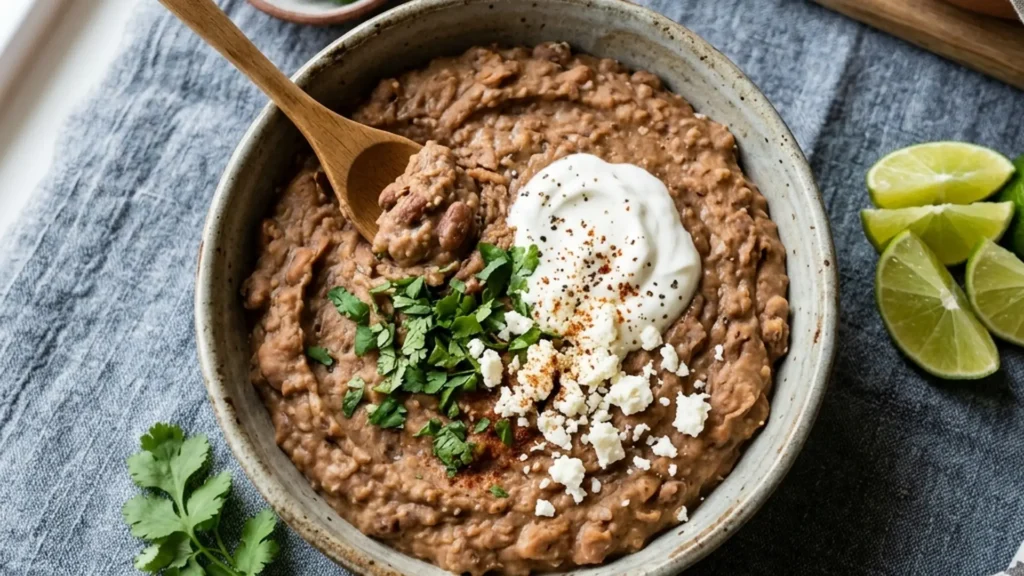
Keto refried beans are absolutely doable, just not with the beans you grew up on. Traditional refried beans built from pinto beans carry about 26 grams of net carbs per cup, which torches a keto budget in one scoop. The fix is swapping the high-carb legume for a low-carb stand-in, and the best of these get you a creamy, savory, cumin-and-lime side at 2 to 5 grams of net carbs per serving that genuinely tastes like the real thing. Black soybeans are the closest match, for reasons explained below, plus two backup methods.
Quick answer for the impatient: cook or drain black soybeans, blend most of them smooth with broth and rendered bacon fat, then mash in the rest for texture and finish with cumin, garlic, and lime. That gets you keto refried beans at roughly 2 grams of net carbs per quarter cup, close enough to frijoles refritos that most people cannot tell. If you cannot find black soybeans, cauliflower or lupini beans both work, with tradeoffs laid out below.
Why regular refried beans are off the table on keto
It helps to see the actual numbers, because “beans are too high carb” is vague and easy to ignore. A cup of pinto-based refried beans runs about 40 grams of total carbs, and after subtracting roughly 14 grams of fiber, you are left with about 26 grams of net carbs. That is your entire daily keto allowance, in a side dish, before the main course. Black beans are similar. Canned refried beans are often worse, since many add lard plus a little sugar and starch, and some restaurant versions are higher still.
Beans are not junk food, to be clear. They are fiber-rich, protein-rich, and great on most diets. They simply do not fit the carb math of ketosis, where you are holding total net carbs to 20 to 30 grams a day. A quarter cup of real refried beans alone is about 6 to 7 grams net carbs, so even a small scoop is a meaningful chunk of your budget. That is the whole reason the substitutes exist.
The three keto substitutes, compared
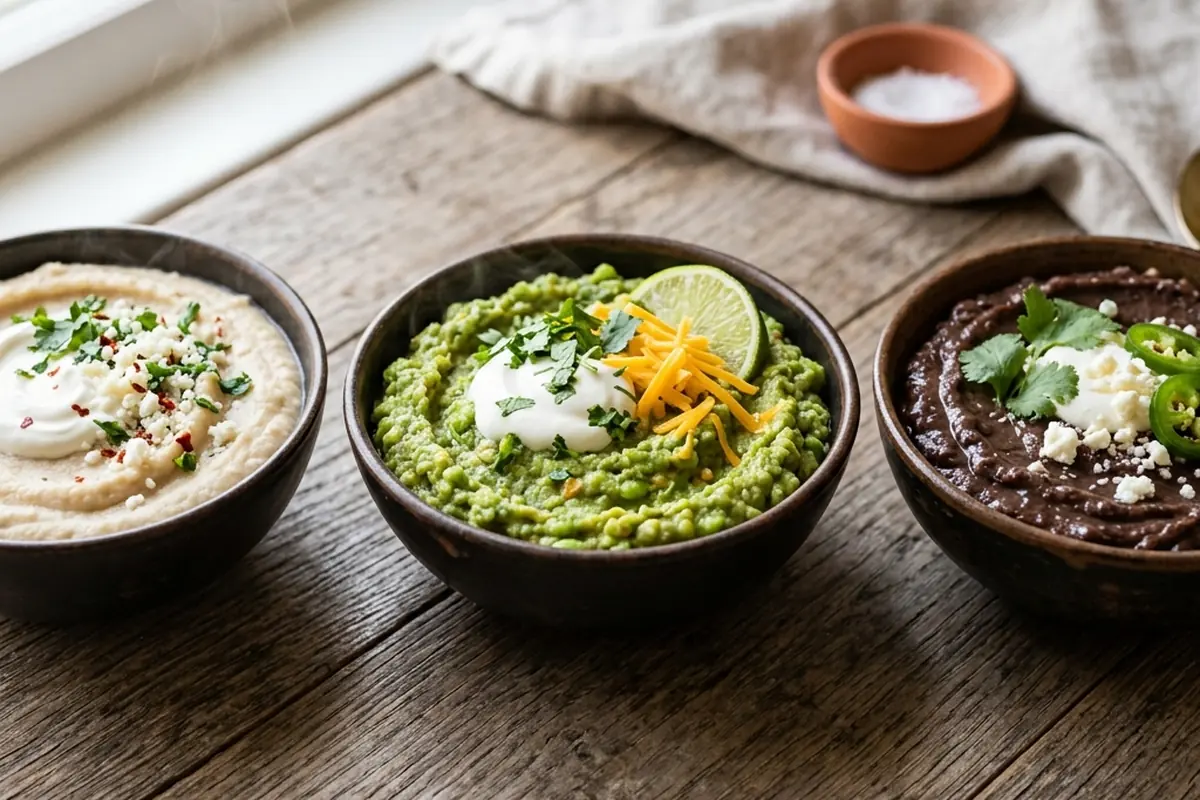
There is no single right answer; it depends on what you can find and how authentic you need it. Here is the honest head-to-head.
| Substitute | Net carbs (1/4 cup) | Taste/texture | Sourcing |
|---|---|---|---|
| Black soybeans | ~2 g | Closest to real beans | Health stores, online (Eden) |
| Lupini beans/flakes | ~1 g | Beany, needs debittering | Specialty, harder to find |
| Cauliflower | ~2 g | Creamy, mild, not beany | Any grocery store |
My pick is black soybeans. They are an actual bean, so the texture and the slight earthiness land right, and at 4 grams net carbs per quarter-cup of dry beans with 16 grams of protein, the macros are excellent. Lupini wins on lowest carbs and protein but tastes more assertively beany and needs a debittering soak. Cauliflower is the everyman option: no specialty shopping, mild flavor, and it disappears under the spices, though nobody will mistake it for a legume.
The black soybean method (the closest to real frijoles)
This is the main recipe. The technique matters as much as the ingredient, because the magic of refried beans is partly smooth and partly chunky, all carried by fat. Makes about 2 cups, eight quarter-cup servings.
Ingredients:
- 2 cans (15 oz each) black soybeans, drained and rinsed, or about 2 1/2 cups cooked
- 2 slices bacon, chopped (or 2 tablespoons lard or olive oil)
- 1/2 small onion, minced
- 1 jalapeno, seeded and diced
- 2 cloves garlic, minced
- 1 teaspoon ground cumin
- 1/2 to 3/4 cup chicken broth
- 2 teaspoons lime juice, salt to taste
Method: Render the bacon in a skillet over medium heat until the fat is out and the bits crisp. Add the onion and jalapeno, cook 4 to 5 minutes until soft, then the garlic and cumin for 30 seconds until fragrant. Set aside a half cup of soybeans for texture. Blend the rest with the broth, the bacon, and the cooked aromatics until smooth-ish, then scrape it all back into the skillet. Mash in the reserved beans with a fork, simmer 5 to 8 minutes to thicken, and finish with lime and salt. Per quarter cup: about 2 grams net carbs, 5 grams fat, 7 grams protein, 80 calories.
How to fix the two black soybean problems
Black soybeans have two quirks worth solving. First, canned ones can taste a little bitter or “green” straight from the can. Rinsing them well under cold water knocks most of that back, and the cumin, lime, and bacon fat cover the rest; do not skip the lime, it brightens everything. If you are still sensitive to it, a tiny pinch of baking soda in the cooking liquid mellows the bitterness.
Second, soybeans, like all soy, can cause gas if your gut is not used to them, especially in a big first serving. Start with a quarter cup, rinse the beans thoroughly, and cook them through; that handles most of it. Texture is the easy part: the reserve-and-mash trick (blend most, mash some) is what gives you that authentic part-smooth, part-rustic frijoles feel instead of baby-food puree. Fat is non-negotiable here. Beans without enough fat taste flat, so the bacon or lard is doing real flavor work, not just adding calories.
No-soy version: cauliflower refried “beans”
If soy is off your list or you just want pantry-friendly, cauliflower makes a surprisingly convincing base. Steam or roast a small head until very soft, then blend it with the same aromatics, plus a tablespoon of tahini or a couple tablespoons of cream cheese to mimic the richness beans have, and season hard with cumin, smoked paprika, garlic, and lime. The color is paler, so a little smoked paprika helps it read as beans. Roasting at 425 degrees F instead of steaming adds a nutty depth that gets you closer to the real thing. It comes in around 2 grams net carbs per quarter cup and asks for nothing you cannot find at any store. For the technique side of cooking cauliflower down properly, America’s Test Kitchen has a useful archive of vegetable methods.
The lupini bean route for the lowest carbs
Lupini beans deserve their own section because they are the lowest-carb legume of the bunch, around 1 gram of net carbs per quarter cup, with serious protein. The catch is they are bitter in their natural state and need debittering, which is why they are sold either pre-brined in jars (ready to use, just rinse) or as dry beans that require a multi-day soak with frequent water changes. For refried beans, jarred lupini or lupini flakes save you that whole ordeal.
To use them, simmer lupini flakes in water with a pinch of baking soda for 15 to 20 minutes to soften and further mellow them, drain, then blend with the same aromatics, fat, broth, and lime as the soybean version. The flavor is more pronounced and beany than soybeans, which some people love and others find too strong, so taste and adjust the lime and salt to balance it. Lupini also pack more fiber, so they sit heavier; a small serving goes a long way. If you have a soy sensitivity but want a true legume rather than cauliflower, lupini are your answer. The main downside is purely practical: most grocery stores do not carry them, so you are ordering online or hunting Italian or Middle Eastern markets.
Where to buy black soybeans (and what to look for)
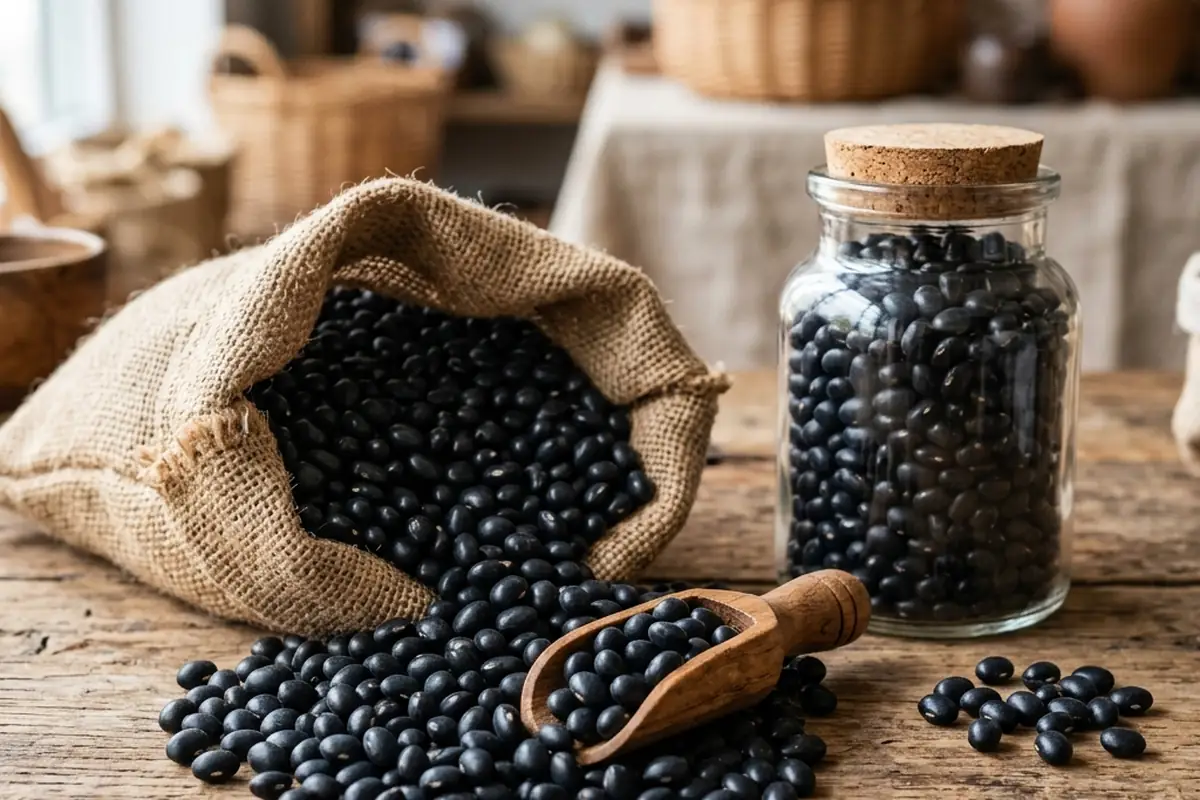
Sourcing trips a lot of people up, so here is the practical map. Canned black soybeans are the easiest entry point; the Eden Organic brand is the one most widely stocked at natural-food stores and online, and canned means no cooking the beans from scratch. Drain and rinse them well and they are ready to blend. Dry black soybeans (Shiloh Farms is a common brand) are cheaper per serving and have a slightly better texture, but you have to soak and simmer them, which takes a couple of hours of mostly hands-off time.
Read the can or bag and confirm you have black soybeans, not regular black beans, which look almost identical on a label and are emphatically not keto. The carb line tells the truth fast: black soybeans show very low net carbs (most of their carbohydrate is fiber), while regular black beans show 20-plus grams net per cup. If the carbs look like normal beans, they are normal beans. One can yields roughly a cup and a quarter of beans, so plan two cans for the full batch in the recipe above.
Getting the flavor right: the common mistakes
My first attempt at keto refried beans was bland and a little sad, and the reason was timid seasoning and not enough fat. Beans, real or substitute, are a blank canvas, and the dish lives or dies on the cumin, the lime, and the fat. Toast the cumin in the rendered bacon fat for half a minute before anything else goes in, because blooming the spice in fat wakes it up in a way that stirring it into the blender never does. That one step changes the whole dish.
The other lesson was salt and acid at the end, not just the start. Blend the beans, then taste, then add lime and salt in small amounts until it tastes alive rather than flat. Underseasoned bean puree tastes like wallpaper paste; properly seasoned, it tastes like the side you remember from your favorite taqueria. If you want smoke, a chipotle in adobo blended in adds depth for almost no carbs. A handful of cilantro stirred in at the end brightens it further. Treat the recipe as a base and season aggressively; these substitutes need a confident hand more than real pintos do, because they have a little less natural flavor of their own.
Scaling and meal prep
This recipe doubles cleanly, and a big batch is the smart play because the beans freeze so well. Make a double batch, portion it into quarter or half-cup containers, and freeze flat in bags so they thaw fast. From frozen, they reheat in a saucepan with a splash of broth in about 10 minutes, or in the microwave in a couple of minutes with a stir halfway. Because they thicken as they cool and as they freeze, always have a little extra broth on hand to bring them back to a spreadable, creamy consistency.
For weeknight Mexican plates, having a tub of these in the fridge means a keto burrito bowl or a quick bean-and-cheese side is five minutes away. That convenience is the difference between sticking to keto and reaching for whatever is fast. Freezer portions mean a craving for something starchy and comforting has a low-carb answer ready to go.
How to use keto refried beans
Once you have a batch, the Mexican-night options open up. Spread them on a low-carb tortilla for a keto bean burrito, use them as the base of a layered dip with cheese, sour cream, and salsa, or spoon them next to eggs for a keto huevos rancheros. They thicken as they cool, so loosen leftovers with a splash of broth when you reheat. A scoop alongside carnitas or grilled chicken makes a complete plate that feels nothing like diet food. Stir them into a skillet with ground beef and taco seasoning for a quick keto chili, or thin them with broth into a creamy bean soup topped with cheese and avocado. They also make a solid filling for stuffed peppers or a layer in a keto enchilada bake. The point is that once the base is in your fridge, it behaves like real refried beans across every dish you would normally use them in.
For scooping, you want crunch that does not blow your carbs, which is exactly what the guide to keto friendly tortilla chips is for; the two together make a proper bean dip. These beans also meal-prep beautifully, which is why they show up in these no-cook and make-ahead keto lunch ideas. If you are newer to all this and want to be sure a soybean side fits your day, the overview of how keto works and staying in ketosis sets the carb framework. Curious about the protein and fiber numbers behind these beans? The USDA food database has the detail.
FAQ
Can you eat refried beans on keto?
Not traditional pinto refried beans; they run about 26 grams of net carbs per cup, which is a full day’s keto budget. You can eat keto versions made from black soybeans, lupini beans, or cauliflower, which come in at 2 to 5 grams of net carbs per serving and taste close to the original.
How many carbs are in keto refried beans?
About 2 grams of net carbs per quarter-cup serving for the black soybean or cauliflower versions, and as low as 1 gram for lupini. Compare that to roughly 6 to 7 grams for the same amount of traditional refried beans. The exact number depends on the substitute and any added dairy or fat.
Are black soybeans really keto?
Yes. Unlike most beans, black soybeans are low in net carbs (about 4 grams per quarter-cup dry) and high in protein and fat. Most of their carbohydrate is fiber, which you subtract for net carbs. They are the go-to legume for keto cooking precisely because of this profile.
What can I use instead of beans on keto?
Black soybeans are the closest swap for refried beans. Lupini beans work and are even lower carb but need debittering. For a no-soy, no-specialty option, blended cauliflower with tahini or cream cheese gives a creamy base that takes the same Mexican seasonings well.
Do keto refried beans taste like real refried beans?
The black soybean version is genuinely close; the texture and earthiness are right, and the cumin, lime, and bacon fat sell it. Cauliflower is milder and not beany, so it relies more on seasoning, but under a layer of cheese and salsa it passes easily. Be honest with expectations: close, not identical.
How long do they keep?
About 4 to 5 days in the fridge in a sealed container, or up to 3 months frozen. They thicken when chilled, so reheat with a splash of broth or water and stir until creamy again. The flavor actually deepens by the next day.
Bottom line
Keto refried beans come down to one swap: drop the pinto beans, which cost about 26 grams of net carbs per cup, and rebuild the dish around a low-carb stand-in. Black soybeans give you the most authentic result at roughly 2 grams of net carbs per quarter cup, with great protein, and the reserve-and-mash technique plus real fat is what makes them taste like the original rather than a sad puree. Keep cauliflower in your back pocket for soy-free or last-minute batches. Either way, Mexican night is back on the menu without leaving ketosis.