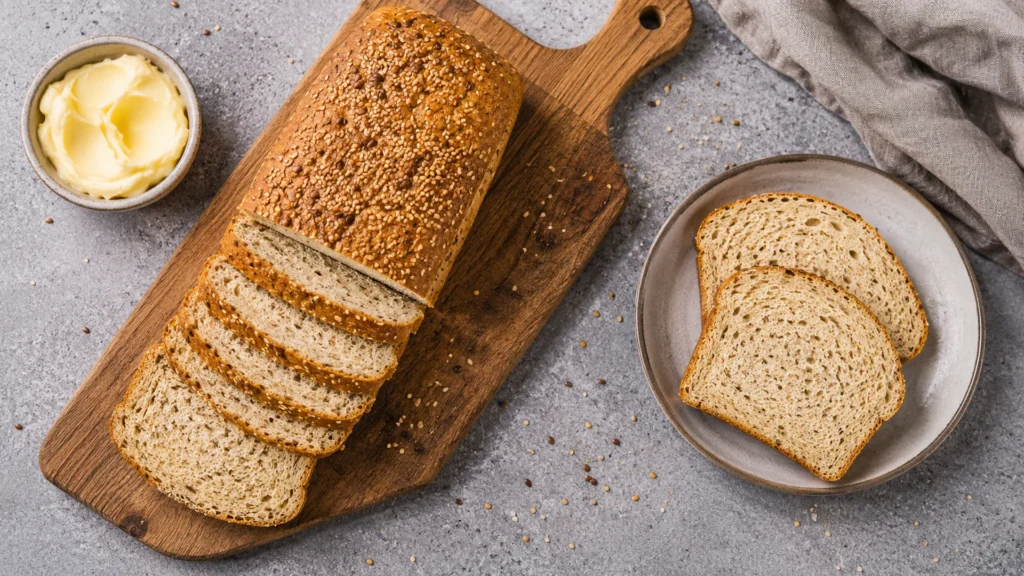
Keto bread is bread engineered to stay under your daily net carb limit, usually landing between 1 and 3 grams of net carbs per slice instead of the 12 to 15 grams in regular wheat bread. It does that by swapping flour, the carbohydrate engine of normal bread, for low carb ingredients like almond flour, coconut flour, and psyllium husk, then leaning on eggs and fat to hold the loaf together. The trade is real: keto bread will never have the airy gluten chew of a sourdough, but a good recipe gets you a sturdy, sliceable loaf that toasts well and carries a sandwich without breaking ketosis. This guide covers the macros honestly, ranks the flours, explains why the loaf rises (or does not), and gives you a method that works the first time.
Failed keto loaves are common, the kind that bake up gummy in the middle or stained an alarming purple. The recipe below fixes each of those problems one at a time, and the troubleshooting section names every common mistake so you can skip them. None of this is medical advice; it is a practical baker’s breakdown of low carb bread with the numbers counted.
Why Regular Bread Is Off the Table
A single slice of standard white or wheat bread carries roughly 13 to 20 grams of total carbohydrate with only a gram or two of fiber, which leaves 12 to 18 grams of net carbs. On a keto plan that caps you at 20 to 30 grams of net carbs for the entire day, two slices of normal bread is your whole budget gone before lunch. That is the core problem keto bread solves. By replacing wheat flour with nut and seed flours that are mostly fiber and fat, the net carb count per slice drops by roughly 85 percent while the slice still looks and behaves like bread.
The fiber math is what makes it work. Almond flour, the most common keto bread base, has about 6 grams of total carbohydrate per quarter cup, but 3 of those are fiber, so the net carbs land near 3 grams. Spread across a loaf that yields a dozen or more slices, each slice contributes only a fraction of a gram of net carbs from the flour itself. The rest of the slice is protein and fat from eggs and oil, neither of which moves your carb count.
It is worth being clear about what you give up, because some keto bread marketing oversells it. Wheat gets its stretch and its open, holey crumb from gluten, a protein network you cannot replicate without wheat. No almond or coconut loaf will ever tear like a baguette or balloon like ciabatta. What a good keto loaf can do is hold a sandwich, toast crisp, and taste like bread rather than like eggs. If you walk in expecting that and not a miracle, you will be happy. If you walk in expecting Wonder Bread, you will be let down, and that gap is the single biggest reason people quit on keto bread before they get the technique right.
The Flours, Ranked
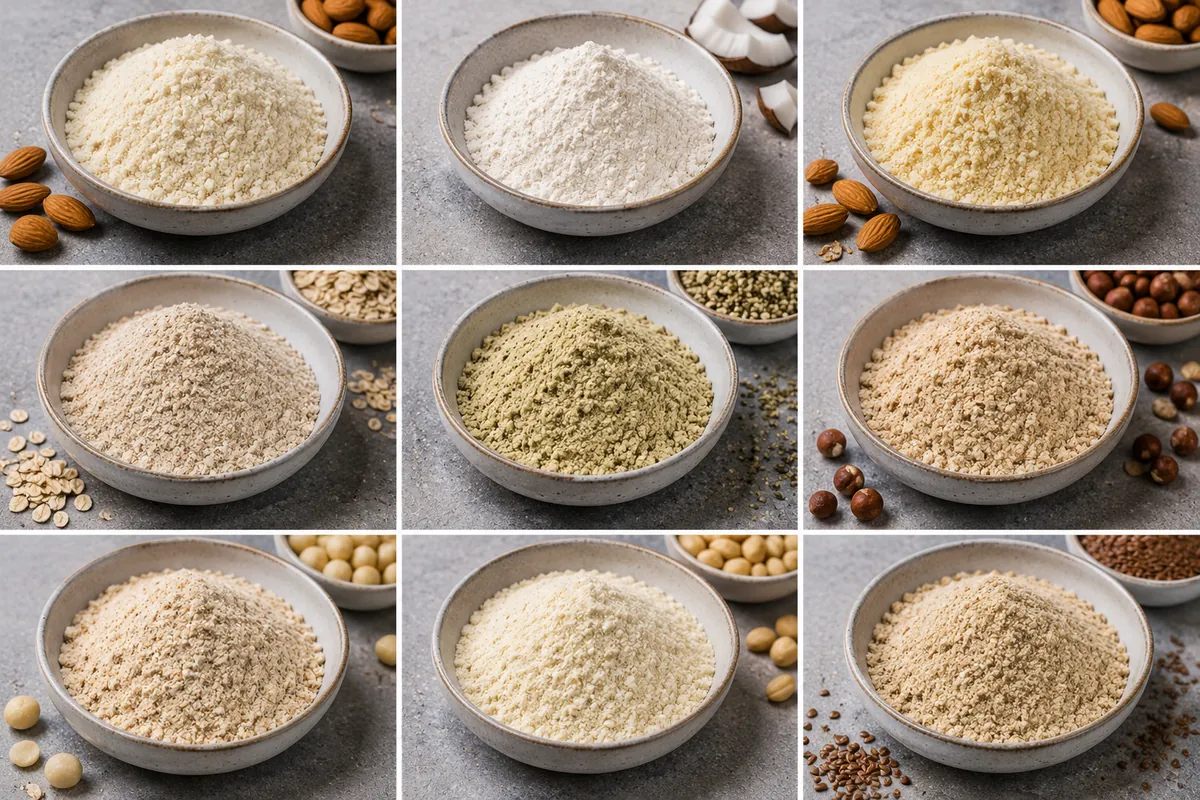
Every keto bread is defined by its flour, and the three main options behave very differently. Mixing them, rather than using one alone, is usually the secret to a loaf that does not crumble or turn dense.
Almond flour (the workhorse)
Blanched almond flour is the default for a reason: it has a neutral, slightly sweet taste and produces the closest texture to real bread. Use superfine blanched almond flour, not almond meal, which is coarser and made with the skins on and gives a gritty, heavy loaf. Almond flour brings about 3 grams of net carbs per quarter cup and a good amount of fat, which keeps the bread moist. Its weakness is structure; almond flour alone makes a tender, cake-like crumb that can fall apart under a knife unless you add a binder.
Coconut flour (the sponge)
Coconut flour is extremely absorbent, soaking up far more liquid than any other flour, so you use only a quarter to a third as much of it. It is high in fiber and low in net carbs, around 2 grams of net carbs per two tablespoons, and it is cheaper than almond flour. The catch is that it drinks moisture, so coconut flour loaves need extra eggs and liquid or they bake up dry and crumbly. Most bakers use it in small amounts alongside almond flour rather than as the main flour.
Psyllium husk (the binder)
Psyllium husk powder is not really a flour; it is a soluble fiber that does the job gluten does in wheat bread. It absorbs water and turns gelatinous, giving the dough stretch and the loaf a chewy, bready structure instead of a crumbly one. A few tablespoons of psyllium is the difference between a slice that holds a sandwich and one that shatters. Its net carb contribution is essentially zero because it is almost all fiber. The one quirk is that some brands turn baked goods purple or gray, which is harmless but startling and is covered in troubleshooting.
| Ingredient | Role | Net carbs |
|---|---|---|
| Almond flour | Main structure, moisture | about 3 g / quarter cup |
| Coconut flour | Bulk, absorbs liquid | about 2 g / 2 tbsp |
| Psyllium husk | Binder, chew, rise | about 0 g |
What Makes a Keto Loaf Rise
Regular bread rises on yeast and gluten: yeast makes gas, gluten traps it. Keto bread has no gluten and usually no yeast, so the rise comes from two other sources. The first is beaten eggs, which is why so many recipes tell you to whip the eggs or the egg whites to double their volume before folding in the dry ingredients. That trapped air is structural. The second is a chemical leavener, baking powder, which releases gas when it hits moisture and heat. If your loaf comes out flat and dense, the cause is almost always tired baking powder or eggs that were not beaten enough. Fresh baking powder matters more in keto baking than anywhere else, because there is no gluten to bail you out.
Apple cider vinegar shows up in a lot of recipes for the same reason. The acid reacts with baking soda or powder to give an extra push of lift, and it brightens the flavor a little. A teaspoon is enough. Skip it and the loaf rises less. The flavor difference is small but the rise difference is not.
One more lever that quietly matters is oven temperature and where the loaf sits. Keto bread sets slowly because there is no gluten to firm it up fast, so a steady 350 degrees on the middle rack works better than a hot, fast bake that browns the top before the center cooks. If the top is darkening too quickly while the inside is still wet, tent a sheet of foil loosely over the loaf for the back half of the bake. That lets the center finish without burning the crust, and it is the trick that gets loaves to bake through evenly instead of staying raw in the middle under a dark shell.
A Loaf That Works
This is the basic formula. It uses the almond-plus-psyllium combination for structure and beaten eggs for lift.
Combine 2 cups of superfine blanched almond flour, 5 tablespoons of psyllium husk powder, 2 teaspoons of baking powder, and three quarters of a teaspoon of salt in a bowl. In a separate bowl, beat 3 large eggs with 1 teaspoon of apple cider vinegar until frothy. Add the eggs and 1 cup of warm water to the dry mix and stir until it forms a thick dough that pulls together. Shape it into a loaf, set it in a parchment-lined pan, and bake at 350 degrees Fahrenheit for 55 to 70 minutes, until the top is hard and sounds hollow when tapped. The long bake is not optional; underbaked keto bread is gummy in the center.
That recipe yields about 12 slices at roughly 2 to 3 grams of net carbs each, which is the headline number for almost every good keto bread. The texture is sturdy and slightly chewy, ideal for toasting. If you want the precise technique on beating eggs to volume and judging doneness, the bakers at America’s Test Kitchen have detailed work on egg foams and quick breads that translates directly to grain-free baking, and outlets like Bon Appetit cover the role of psyllium and alternative flours in non-wheat loaves.
Troubleshooting the Common Failures
Gummy center is the most common complaint, and it has two causes: underbaking and slicing while warm. Keto bread holds a lot of moisture, so it needs a longer bake than you expect and a full cool before you cut it. Slice into a warm loaf and the steam has nowhere to go, leaving a dense, wet line through the middle. Let it cool completely, even overnight, before the first slice.
Purple or green bread is harmless and comes from a reaction between certain psyllium brands and baking powder. Switch psyllium brands and it goes away. The bread is perfectly safe to eat either way; it is just a color reaction, not spoilage.
A dense, flat loaf points to leavening. Check that your baking powder is fresh, beat the eggs more, and do not skip the vinegar. Dryness and crumbling usually mean too much coconut flour or not enough liquid, since coconut flour drinks moisture; add an egg or a splash of water. And do not store the loaf in plastic, which traps moisture and turns the crust soft and the crumb soggy. Wrap it in parchment or a paper towel inside a loose container instead.
Store-Bought Keto Bread Versus Baking Your Own
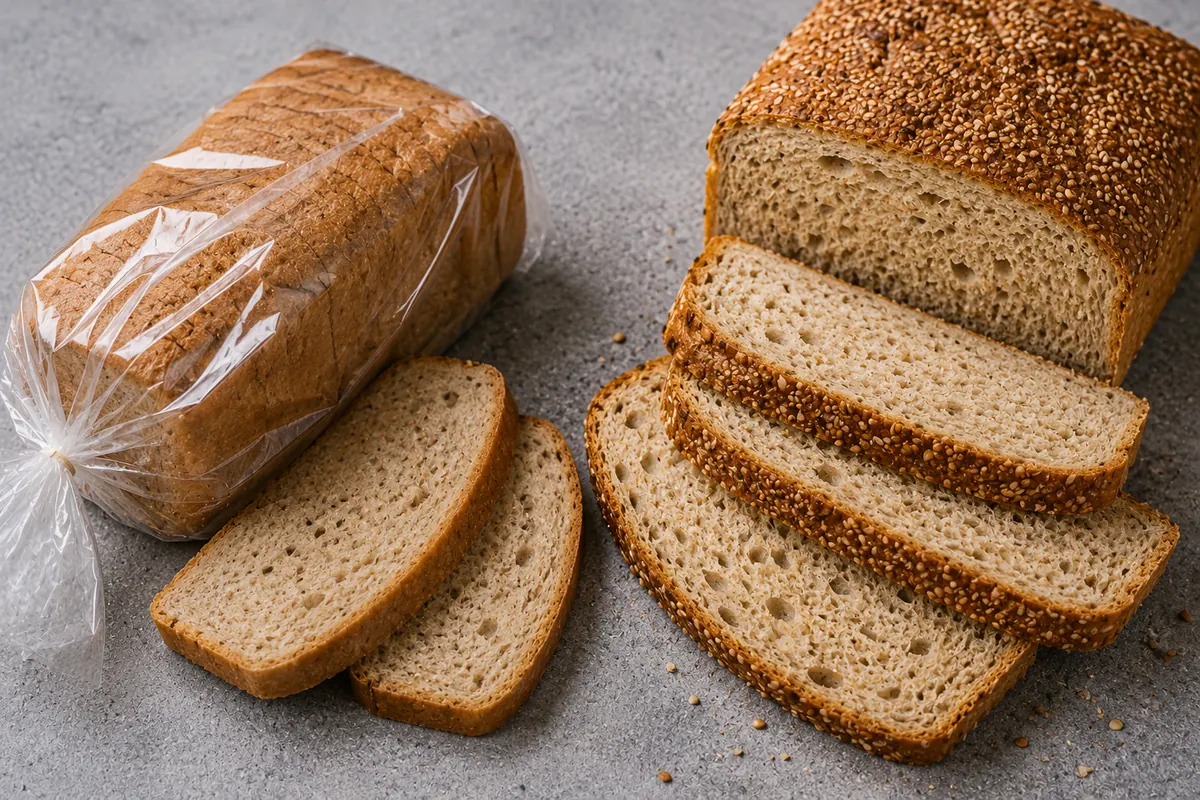
Commercial keto bread has gotten much better, and for a lot of people the bagged loaf at the grocery store is the realistic choice. The convenience is obvious, and the macros on the good brands are honest: 1 to 3 grams of net carbs per slice, which matches a homemade loaf. The catch is the ingredient list. To make a shelf-stable, soft, sliceable loaf at scale, manufacturers reach for wheat gluten, modified wheat starch, and resistant starches like oligofructose or chicory root fiber. Most of those are genuinely low in net carbs, but a few people find that certain fibers and resistant starches spike their blood sugar or cause bloating in a way pure almond flour does not. If a store loaf seems to stall your progress, that is the first thing to check.
Baking your own costs more time and a little money up front for almond flour and psyllium, but it buys you a five-ingredient loaf with nothing you cannot pronounce, and the per-slice cost drops below the premium store brands once you are making it regularly. My honest take after years of both: keep a bag of a trusted store brand for busy weeks, and bake your own when you want a better loaf and have an hour. There is no purity contest here. Both keep you in ketosis.
Flavor Variations Worth Trying
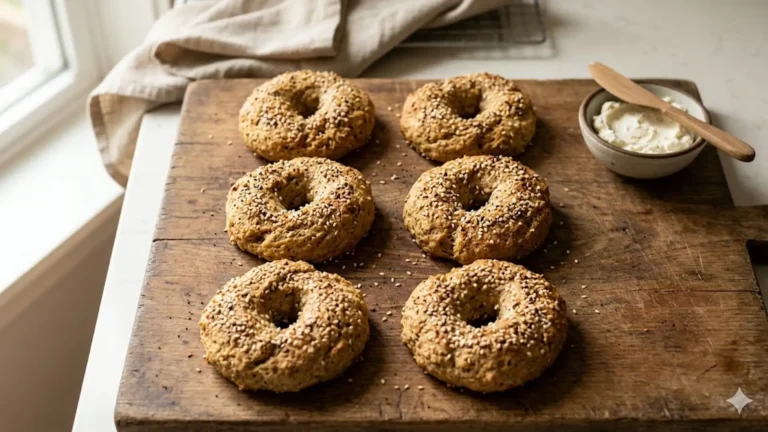
The base loaf is a blank canvas, and small additions change it without touching the carb count much. Fold in a tablespoon of everything-bagel seasoning before baking for a savory loaf that makes a strong breakfast sandwich. Stir a cup of shredded sharp cheddar into the dough for a cheese bread that needs no topping. For a sweeter loaf that works as breakfast toast, add a teaspoon of cinnamon and a couple of tablespoons of a granulated keto sweetener like erythritol or allulose; both add bulk and sweetness with zero or near-zero net carbs. Each of these stays inside the 2 to 3 gram per slice range because cheese, spices, and sugar alcohols contribute almost no usable carbohydrate. The structure does not change, so the same beat-the-eggs, bake-long, cool-fully rules still apply.
How Keto Bread Fits a Day
At 2 to 3 grams of net carbs per slice, two slices for a sandwich costs you 4 to 6 grams of net carbs, which fits comfortably inside a 20 to 30 gram daily ceiling. That is the whole appeal: it lets you eat a sandwich, a piece of toast with butter, or a burger with a real bun without spending your entire carb budget. Pair it with high-fat fillings like eggs, avocado, cheese, and clean mayo, and you have a meal that is mostly fat with a trace of carbs, which is exactly the keto target.
Bread also pairs naturally with the other building blocks of a low carb kitchen. Toasted keto bread under a fried egg, alongside a salad of the lowest carb vegetables for keto, makes a full plate that stays well under your limit. If you are weighing whether commercial keto bread is worth buying instead of baking, the honest ingredient breakdown in whether keto bread is actually healthy walks through what the store loaves really contain. And to set the daily carb ceiling all of this works against, the complete keto diet guide lays out the macro framework in full.
Bottom Line
Keto bread is a genuine swap, not a gimmick. By trading wheat flour for almond flour, coconut flour, and psyllium husk, you drop from roughly 13 grams of net carbs per slice to 2 or 3, which keeps bread on the menu while you stay in ketosis. The texture will not fool a sourdough purist, but a well-baked loaf toasts beautifully and holds a sandwich. Use superfine almond flour, add psyllium for structure, beat your eggs, use fresh baking powder, bake longer than feels right, and cool it fully before slicing. Get those six things right and keto bread stops being a disappointment and becomes a staple.
FAQ
How many carbs are in keto bread?
A good homemade keto bread runs 2 to 3 grams of net carbs per slice, compared to 12 to 18 grams in regular wheat bread. The low number comes from replacing wheat flour with high-fiber almond flour, coconut flour, and psyllium husk.
What flour is best for keto bread?
Superfine blanched almond flour is the best main flour because it gives the closest texture to real bread. Combine it with a few tablespoons of psyllium husk for structure and chew, and optionally a little coconut flour for bulk.
Why is my keto bread gummy in the middle?
Almost always underbaking or slicing while warm. Keto bread holds extra moisture, so bake it 55 to 70 minutes until the top is hard, then let it cool completely before cutting so the steam can escape.
Why did my keto bread turn purple?
Certain psyllium husk brands react with baking powder and tint the loaf purple or gray. It is harmless and the bread is safe to eat. Switch to a different psyllium brand to avoid the color.
Does keto bread need yeast?
Most keto bread does not use yeast. Without gluten, yeast has little to trap, so the rise comes from beaten eggs and baking powder instead. That is why fresh baking powder and well-beaten eggs matter so much.
How do you store keto bread?
Keep it in parchment or a paper towel inside a loose container, not sealed plastic, which traps moisture and softens the crust. It lasts about a week in the refrigerator and freezes well sliced for longer storage.