
Keto, how long does it take to work? If you have just dropped your carbs and you are watching the clock, here is the short answer: most people get into ketosis in two to four days of eating 20 to 50 grams of net carbs per day. Some cross over in 24 hours, others need a full week. The spread is normal, and the number on a ketone meter matters less than whether you stay consistent long enough to become fat-adapted. This guide walks through the real timeline, the factors that speed it up or stall it, how to confirm you are actually in ketosis, and the mistakes that quietly keep people stuck in carb-burning mode for weeks.
Net carbs are total carbohydrates minus fiber and minus most sugar alcohols. That is the number that drives the timeline, so 20 grams here means 20 grams of net carbs, not total. Keep that straight and the rest of this gets a lot simpler.
What Ketosis Actually Is
Your body’s default fuel is glucose. When you eat carbs, you break them down to glucose, and your cells burn it. Whatever you do not burn gets stored as glycogen in the liver and muscles. When you cut carbs hard, those glycogen tanks drain over a couple of days. Once they run low, your liver switches to plan B: it breaks down fat into molecules called ketones, mainly beta-hydroxybutyrate (BHB), and your brain and muscles start running on them. That metabolic state is nutritional ketosis.
The Cleveland Clinic defines ketosis as the point where your blood carries elevated ketone levels because your body is burning fat for fuel instead of glucose, and it is careful to separate this from the dangerous condition called diabetic ketoacidosis, which involves ketone levels many times higher and almost always occurs in people with type 1 diabetes. You can read their clinical overview of ketosis at the Cleveland Clinic for the medical framing. Nutritional ketosis, the kind you are aiming for, is a controlled and self-limiting state.
The reason the timeline takes days rather than hours comes down to your glycogen reserves. An average adult stores roughly 400 to 500 grams of glycogen across the liver and muscles, and each gram holds onto about three grams of water, which is why the first few pounds you drop on keto are mostly water, not fat. Your liver glycogen, the smaller pool, is what keeps your blood sugar steady between meals, and it is the one that has to run low before ketone production ramps up in earnest. Muscle glycogen stays local; it fuels your muscles and does not release glucose back into the blood. So the clock you are really watching is the slow draining of that liver pool, and anything that drains it faster, fasting, exercise, or simply not refilling it with carbs, pulls your start date forward.
The Honest Timeline: Day by Day

Crossing into ketosis is gradual, not a switch that flips. Your liver does not wake up one morning fully loaded with ketones. It ramps up production as glycogen falls. Here is what is happening behind the scenes for a typical person eating under 50 grams of net carbs daily.
| Day | What is happening in your body | Typical blood ketones (mmol/L) |
|---|---|---|
| Day 1 | Liver glycogen still feeding your blood sugar; ketone production minimal. | Under 0.2 |
| Days 2-3 | Glycogen stores draining; the liver starts converting fat to ketones. | 0.2 to 0.5 |
| Days 3-4 | Most people cross into nutritional ketosis here. | 0.5 to 1.0 |
| Days 5-7 | Ketosis deepening; keto flu symptoms often peak then fade. | 1.0 to 2.0 |
| Weeks 3-6 | Fat adaptation: muscles and brain run efficiently on fat and ketones. | 0.5 to 3.0 (steady) |
Notice the gap between days 3 to 4 and weeks 3 to 6. This is the single most misunderstood part of keto. Being in ketosis and being fat-adapted are not the same thing, and confusing them is why so many people quit on day five feeling worse than when they started.
In Ketosis Versus Fat-Adapted
Getting into ketosis is fast. Your meter can read 0.7 mmol/L by Thursday. But your muscles, heart, and brain take longer to get good at pulling ketones and fatty acids out of the bloodstream and burning them efficiently. That deeper rewiring, called keto adaptation or fat adaptation, takes roughly three to six weeks. During the in-between window your ketones are up but your performance can feel flat, your workouts feel heavy, and your energy is uneven. That is not failure. That is your metabolism finishing the renovation. Push through it and the steady energy people rave about shows up on the far side.
Here is a useful way to picture it. Ketosis is your kitchen receiving a delivery of a new ingredient. Fat adaptation is the cook learning a new recipe well enough to make it on autopilot. The ingredient can be in the pantry days before anyone knows what to do with it. That is why your ketone reading can look great in week one while your body still struggles, and why judging keto by how you feel on day five is almost guaranteed to mislead you. The people who succeed long term are the ones who give the adaptation its full month before they decide anything about energy, athletic performance, or appetite.
What Speeds You Up and What Slows You Down
The two-to-four-day average hides a lot of personal variation. Your starting point and your habits decide where you land in that range, and a few of them can stretch it to a week or longer.
| Factor | Pushes ketosis faster | Slows it down |
|---|---|---|
| Prior carb intake | Already eating low-carb | Coming off a high-sugar diet |
| Daily net carbs | Under 20 g | Creeping over 50 g |
| Activity | Fasted cardio, strength work | Mostly sedentary |
| Insulin sensitivity | Lean and insulin-sensitive | Insulin resistance, type 2 diabetes |
| Fasting window | 14 to 16 hours overnight | Frequent snacking |
Prior Diet and Glycogen Load
If you spent the last year on white rice, soda, and bagels, your glycogen tanks are topped off and your insulin is running high. Insulin is the brake on fat burning; while it is elevated, your liver will not make many ketones. You have to drain the tanks first, which adds a day or two. Someone who was already eating moderate carbs starts with half-empty tanks and crosses faster.
Insulin Resistance and Metabolic Health
This is the factor the big articles skim past. Insulin resistance, common with type 2 diabetes and metabolic syndrome, keeps insulin chronically elevated, and that suppresses ketone production. People in this group often need a full week, sometimes longer, and they benefit most from being strict on carbs early. The flip side is that they tend to see the biggest improvements once they adapt. The published clinical literature, including the StatPearls review of the ketogenic diet on the NIH bookshelf, documents both the slower onset in insulin-resistant individuals and the metabolic benefits that follow.
Activity and Fasting
Exercise burns through glycogen faster than sitting still, so a few brisk walks or a fasted morning workout can pull your timeline forward by a day. Intermittent fasting works the same way: a 14 to 16 hour overnight fast forces your body to lean on fat sooner. You do not have to do anything extreme. Finishing dinner by 7 p.m. and skipping breakfast until 11 a.m. is enough to nudge things along. The reason this works is mechanical, not magical. Glycogen is the gatekeeper, and anything that empties those stores faster, whether it is a workout or simply going longer between meals, moves the moment your liver switches to fat closer. Combine a strict 20-gram carb day with one fasted walk and you have stacked two of the strongest levers there are.
Age, Sex, and Body Composition
These rarely get mentioned, but they shift the timeline at the margins. Younger, leaner, more active bodies tend to drain glycogen and start producing ketones a bit faster, partly because they carry more muscle and burn through stored carbohydrate more readily. Women sometimes notice that their ketone readings move with their menstrual cycle, since hormone shifts affect water retention and insulin sensitivity across the month, so a single low reading on a given day is not cause for alarm. Larger or less active bodies may take an extra day or two, mostly because glycogen tanks are fuller to begin with. None of these are dealbreakers. They simply mean that comparing your day-three number to a friend’s day-three number tells you very little. Your timeline is yours.
How to Confirm You Are Actually in Ketosis
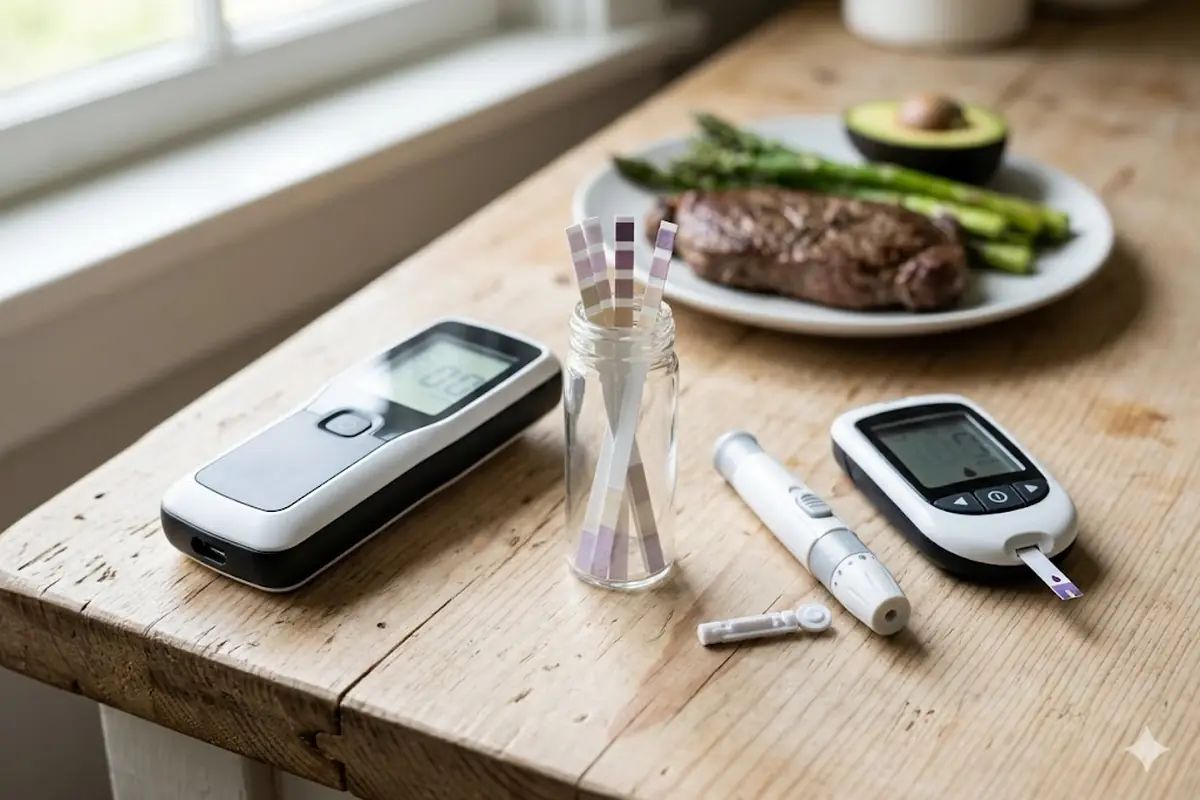
You can feel your way to a guess, but the only way to know is to measure. Three tools exist, and they are not equal.
| Test method | What it measures | Accuracy | Rough cost |
|---|---|---|---|
| Urine strips | Acetoacetate (excess ketones spilled in urine) | Low after the first weeks | 8 to 12 dollars for 100 strips |
| Breath meter | Acetone on the breath | Moderate, reusable | 60 to 130 dollars, one-time |
| Blood ketone meter | Beta-hydroxybutyrate (BHB) in blood | High, the gold standard | 30 to 50 dollars plus 1 to 2 dollars per strip |
Nutritional ketosis is generally defined as a blood BHB reading of 0.5 to 3.0 mmol/L. Urine strips are cheap and fine for the first week or two, but once your body learns to use ketones efficiently it stops dumping the excess in your urine, so the strips fade to a pale pink and fool people into thinking they fell out of ketosis. They did not. They just got better at burning fuel. If you want one reliable number, the blood meter is worth the strips it costs.
The Symptoms You Can Read Without a Meter
Even without a device, your body sends signals as ketones rise. A metallic or fruity taste and a distinct change in breath odor (the smell of acetone) are classic. So is a short bout of increased thirst and more frequent bathroom trips as you shed water weight, plus a temporary dip in appetite. Many people also report a clear-headed focus once they adapt. None of these confirm a number, but together they tell you the switch is underway.
The Keto Flu: Why You Feel Worse Before Better
Around days two through five, a lot of people hit the keto flu: headache, fatigue, irritability, brain fog, muscle cramps, and poor sleep. It is not your body rejecting the diet. It is electrolytes. As insulin falls, your kidneys flush sodium and water, and potassium and magnesium go with them. Low electrolytes cause most of those symptoms, and they are fixable in an afternoon.
Salt your food deliberately, add a cup or two of broth, eat magnesium-rich and potassium-rich foods like avocado and leafy greens, and drink to thirst. The full prevention and recovery routine is in the guide to the keto flu and how to beat it. Handle electrolytes from day one and most people barely notice the transition. Ignore them and you will blame keto for what is really a salt deficit.
Common Mistakes That Stall Ketosis
When someone has been “doing keto for two weeks” and the meter still reads 0.2, it is almost always one of these.
- Hidden carbs. Ketchup, barbecue sauce, glazes, dressings, flavored yogurt, and “low-carb” wraps stack up fast. A few tablespoons here and there can blow past 50 grams without a single obvious carb on the plate.
- Too much protein. Protein is essential, but eat far more than your body needs and it converts a portion to glucose through gluconeogenesis, which keeps insulin elevated. Aim for adequate, not enormous.
- Not enough fat. Cut carbs and protein both and you are just starving. Fat is the fuel that replaces the carbs you dropped, so it has to fill the gap.
- Snacking all day. Every bite triggers a small insulin response. Three clean meals beats constant grazing for getting into and staying in ketosis.
- Quitting on day five. The keto flu peaks right when ketosis is deepening. Many people give up at the exact moment they were about to feel better.
Knowing what to put on your plate fixes most of this. If you are still building your shopping list, the keto food list sorts the safe staples from the carb traps so you are not guessing in the grocery aisle.
How to Get Into Ketosis Faster
If your only goal is speed, here is the stack that consistently works, in order of impact:
- Drop net carbs to 20 grams a day for the first week. This is the biggest lever by far.
- Use a 14 to 16 hour overnight fast to drain glycogen sooner.
- Add daily movement, even a 30-minute walk, and a fasted workout if you can manage it.
- Keep fat as your main fuel; do not go low-fat and low-carb at the same time.
- Salt your food and stay hydrated so the keto flu does not derail your consistency.
You do not need exogenous ketone supplements to get there. They can raise the number on your meter, but that is not the same as your body making and burning its own ketones from stored fat, which is the whole point. Real food and consistency do the work.
Eating Around Keto: Pairings That Help
Keto rarely lives in a vacuum. If you cook for a household with different needs, a pot of low-carb soup can feed everyone with a few swaps, and the slow-simmered options over at these beef stews adapt easily by skipping the starchy thickeners. And if a family member eats plant-based, building a flexible base from these vegan bowls lets you keep your own portion keto while everyone shares the same table. Cooking around one diet does not mean cooking two separate dinners.
Frequently Asked Questions
How long does it take to get into ketosis for the first time?
For most people new to keto, two to four days of eating 20 to 50 grams of net carbs daily. If you are coming off a high-sugar diet or you are insulin resistant, expect closer to a week. Staying strict on carbs and adding a short overnight fast can shorten it.
Can you get into ketosis in 24 hours?
Yes, but it is uncommon and usually requires extreme carb restriction combined with fasting or hard exercise that empties glycogen quickly. Most people will not hit meaningful ketosis that fast, and chasing 24 hours is far less important than staying consistent for the three to six weeks it takes to become fat-adapted.
How do I know if I am in ketosis without a meter?
Watch for a fruity or metallic taste and a change in breath, a short stretch of extra thirst and bathroom trips as you lose water weight, reduced appetite, and steadier energy and focus after the first week. These signs are suggestive, not proof. A blood ketone meter reading of 0.5 mmol/L or higher is the only definitive confirmation.
Why am I not in ketosis after a week?
The usual culprits are hidden carbs in sauces and condiments, eating well over 50 grams of net carbs without realizing it, too much protein converting to glucose, or simply being insulin resistant and needing more time. Tighten carbs to 20 grams, track everything you eat for a few days, and confirm with a blood meter rather than urine strips.