Keto vegetarian eating means hitting very low net carbs, usually 20 to 30 grams a day, while getting your protein and fat from eggs, dairy, nuts, seeds, tofu, and low carb vegetables instead of meat and fish. It is harder than standard keto for one specific reason: most plant proteins, like beans, lentils, and grains, come packaged with a heavy load of carbohydrate, so the foods a regular vegetarian leans on for protein are exactly the foods keto rules out. The good news is that a keto vegetarian diet is entirely workable once you know which plant foods deliver protein without the carb penalty, and this guide lays out those foods, the macros, the daily structure, and the pitfalls with the numbers counted.
A keto plan built around eggs and dairy can be adapted into a vegetarian version, and the difference is real but manageable. A common failure when you write a first vegetarian meal plan is a menu full of fat and vegetables with almost no protein, which leaves you hungry by mid-afternoon. The fix was embarrassingly simple, anchor each meal with a real protein, and once we did that the whole thing held together. The trick is treating protein as the constraint to solve first, then letting fat and vegetables fill in around it. None of this is medical advice; it is a practical map of how to run keto without meat or fish, with net carbs and protein grams stated throughout.
The Core Tension: Protein Without the Carbs
Standard vegetarians get a large share of their protein from legumes and grains: black beans, chickpeas, lentils, quinoa, and bread. Every one of those is high in carbohydrate. A single cup of cooked lentils carries about 30 grams of net carbs, which is an entire keto day in one side dish. So the keto vegetarian cannot use the usual vegetarian protein playbook. Instead, the protein has to come from a narrower set of foods that are high in protein and low in carbs at the same time. That set is smaller than what a meat eater has, but it is large enough to build a full diet on, and the foods in it are familiar.
The macro target does not change. Keto is still roughly 70 to 75 percent of calories from fat, 20 to 25 percent from protein, and 5 to 10 percent from carbohydrate, with net carbs held under 20 to 30 grams a day. What changes is the sourcing. A meat eater hits the protein number with chicken and steak; a keto vegetarian hits it with eggs, cheese, Greek yogurt, tofu, tempeh, and a deliberate scattering of nuts and seeds.
The Best Keto Vegetarian Protein Sources
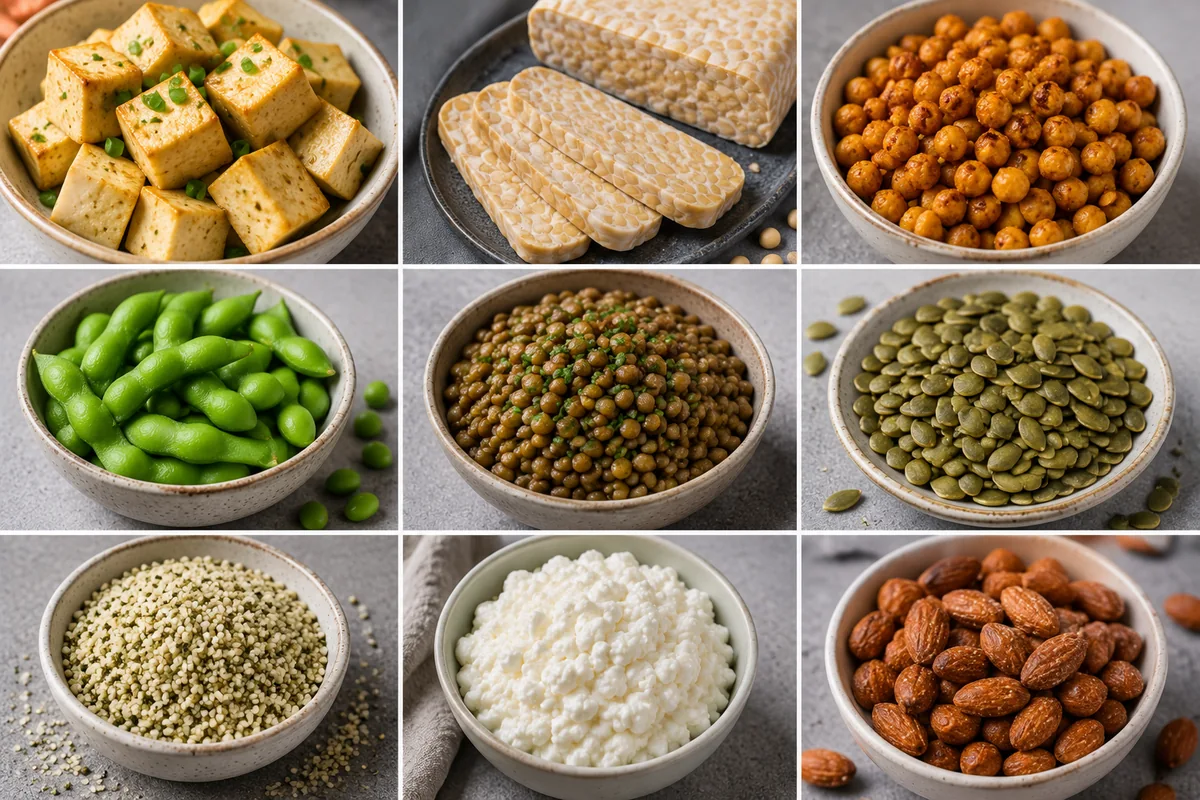
These are the foods that carry protein without breaking your carb limit. Build your meals around them.
| Food | Protein | Net carbs |
|---|---|---|
| 2 large eggs | 12 g | 1 g |
| Firm tofu, 4 oz | 10 g | 1-2 g |
| Tempeh, 3 oz | 16 g | 3-5 g |
| Cheddar cheese, 1 oz | 7 g | 0-1 g |
| Greek yogurt (full fat), 1 cup | 9 g | 6-8 g |
| Almonds, 1 oz | 6 g | 3 g |
Eggs and dairy do the heavy lifting
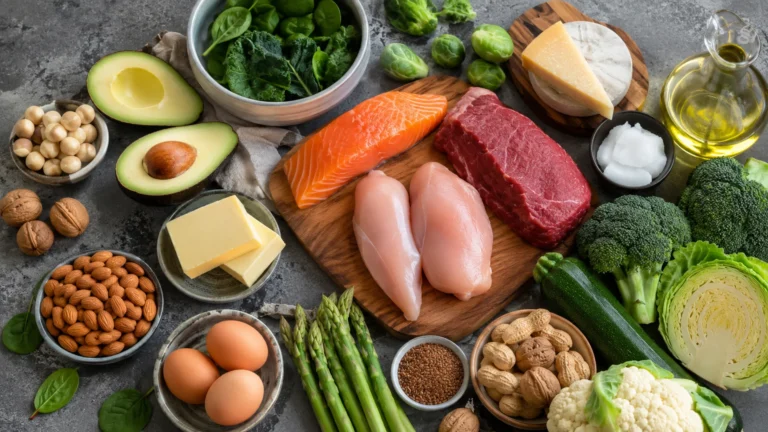
If you eat eggs and dairy, keto vegetarian is straightforward. Eggs are nearly perfect: 6 grams of protein each, a single gram of carbohydrate, and plenty of fat. Hard cheeses, full-fat Greek yogurt, heavy cream, and butter add fat and protein with little to no carbohydrate. A breakfast of three eggs scrambled in butter with cheese is 20-plus grams of protein and 1 to 2 grams of net carbs, which is a strong start to any day. For lacto-ovo vegetarians, this group alone can cover most of the protein target.
Soy foods for plant protein
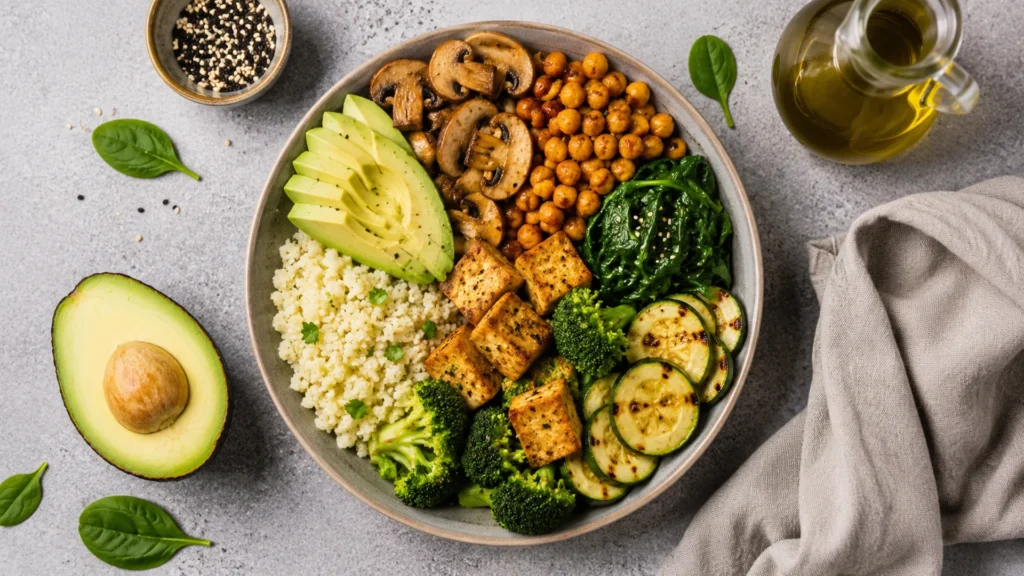
Tofu, tempeh, and edamame are the densest plant proteins that fit keto. Tofu is a blank slate, low in carbs and high in protein, and it takes on whatever flavor you cook it with. Tempeh is firmer and nuttier with a bit more carbohydrate, still well within range. Soy is a complete protein, meaning it provides all nine essential amino acids, which is why it anchors most vegan keto plans. Press tofu and pan-fry or bake it to get a satisfying texture rather than a wet, bland block.
Nuts and seeds, in measured amounts
Almonds, pecans, macadamias, walnuts, pumpkin seeds, and sunflower seeds add protein, fat, and crunch. The caution is portion size, because nuts carry carbs that add up if you graze. An ounce of almonds is fine at 3 grams of net carbs; a handful here and a handful there can quietly reach 15 grams. Measure them. Macadamias and pecans are the lowest carb of the popular nuts and the safest to lean on.
Low Carb Vegetables Are the Foundation
Vegetables are where the keto vegetarian wins, because the diet is naturally vegetable-forward. The rule is the same as any keto plan: stay above ground and leafy. Spinach, kale, lettuce, broccoli, cauliflower, zucchini, asparagus, mushrooms, bell peppers, and avocado are all low in net carbs and high in volume, so they fill a plate without filling your carb budget. Avocado deserves special mention; it is technically a fruit, it is loaded with fat, and it carries only 2 to 3 grams of net carbs per half, which makes it a keto vegetarian staple for both calories and creaminess.
The vegetables to avoid are the starchy underground ones: potatoes, sweet potatoes, corn, peas, and winter squash, all of which are carb-dense enough to blow your daily limit in one serving. Getting the rankings right matters, and the full breakdown of the lowest carb vegetables for keto shows exactly where each one lands so you can build plates with confidence.
Vegan Keto: The Harder Version
If you drop eggs and dairy as well as meat, keto gets noticeably tighter, because you lose your two easiest protein sources at once. Vegan keto is possible, but it leans almost entirely on soy and a careful rotation of nuts and seeds. Tofu, tempeh, edamame, and seitan become daily staples rather than occasional players. Seitan deserves a note: it is nearly pure wheat protein, very high in protein and low in carbs, which makes it useful on vegan keto even though it is off-limits for anyone avoiding gluten. Hemp seeds, chia, and a plant protein powder with no added sugar help close the gap on days when whole foods fall short.
The fat side gets easier on vegan keto, oddly, because avocado, olive oil, coconut oil, nuts, and seeds are all plant foods that fit perfectly. The protein side is the constant work. A practical vegan keto day might run tofu scramble for breakfast, a tempeh and avocado salad for lunch, and a seitan stir-fry with low carb vegetables for dinner, hitting protein through sheer repetition of soy and wheat protein. It takes more planning than the egg-and-cheese version, and tracking your protein for the first couple of weeks is the only way to be sure you are landing the target.
Common Keto Vegetarian Mistakes
The first and biggest mistake is under-eating protein. Without meat, it is easy to drift toward a fat-and-vegetable diet that quietly falls short on protein, which costs you muscle and leaves you hungry. The fix is to anchor every meal with a named protein source, eggs, tofu, cheese, or tempeh, before you add the vegetables and fat. If a meal has no protein anchor, it is a side dish, not a meal.
The second mistake is hidden carbs in plant foods that feel healthy. Cashews are much higher in carbs than almonds. Many plant-based meat substitutes and veggie burgers are built on beans and starches that wreck a keto carb budget, so the package labeled vegetarian is not automatically keto. Plant milks vary wildly: unsweetened almond and coconut milk are nearly carb-free, but oat milk and sweetened versions are loaded with sugar. Read every label, because the vegetarian aisle is full of foods that are healthy in general but wrong for keto specifically.
The third mistake is relying on fruit. Vegetarians often eat a lot of fruit, and most fruit is too high in sugar for keto. The exceptions are small portions of berries: raspberries, blackberries, and strawberries are low enough in net carbs to fit in measured amounts. Everything else, from bananas to apples to grapes, is a carb bomb on a keto budget.
Meal Prep Makes It Sustainable
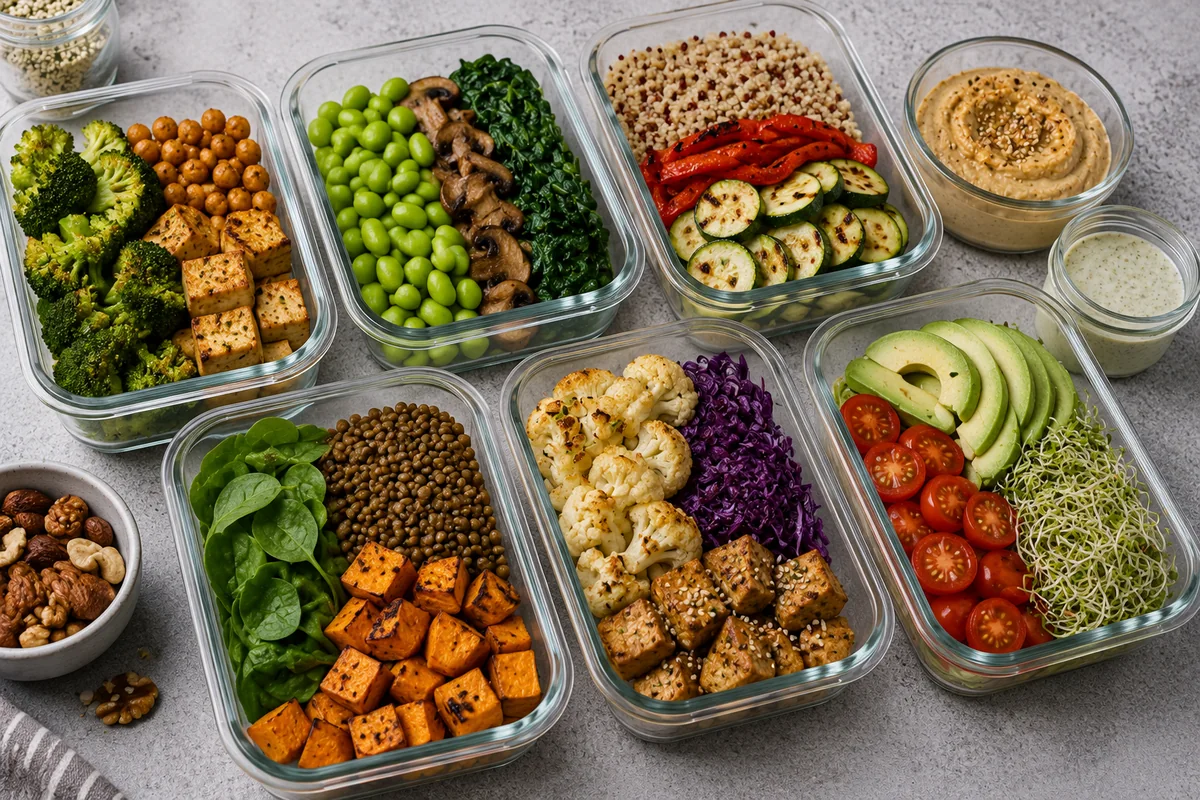
Keto vegetarian rewards a little batch cooking, because the protein foods all hold up well in the refrigerator. Press and bake a full block of tofu at the start of the week, hard-boil a dozen eggs, and roast a sheet pan of broccoli and cauliflower, and you have the building blocks for several days of fast meals. Cheese, nuts, and avocado need no prep and round out any plate. Having pre-cooked protein on hand is what keeps you from reaching for a high-carb shortcut when you are hungry and short on time, which is the moment most keto plans break.
Watch the Fiber and the Electrolytes
Two things trip up keto vegetarians more than meat eaters. The first is fiber, which is actually easier to get on a plant-forward keto plan thanks to all the vegetables, nuts, and seeds, but it still needs attention because cutting out beans and grains removes a major fiber source. Leaning on avocado, chia seeds, flax, and leafy greens keeps your fiber up and your digestion comfortable.
The second is electrolytes. Any keto diet flushes sodium, potassium, and magnesium in the first weeks, and a vegetarian version is no exception. Salt your food, and use avocado, spinach, mushrooms, and nuts for potassium and magnesium. If you feel the early fatigue and headaches that come with the carb cut, electrolytes are almost always the fix, not more food. A pinch of salt in a glass of water, or a cup of broth, can clear the early sluggishness within an hour, which is faster than most people expect.
One nutrient worth a deliberate check is vitamin B12, which comes almost entirely from animal foods. Lacto-ovo vegetarians usually get enough from eggs and dairy, but vegans on keto should plan a B12 source, either a fortified food or a supplement, since the high-B12 plant options are rare. Iron and omega-3 fats are two more to keep an eye on; pumpkin seeds and spinach cover iron, while chia, flax, walnuts, and an algae-based supplement cover omega-3 without fish. None of this is complicated, but it is the kind of thing that is easy to overlook when you are focused on carbs and protein.
Does Keto Vegetarian Help With Weight Loss?
It can, for the same reason any keto plan can: cutting carbs lowers insulin, steadies blood sugar, and tends to reduce appetite, so people often eat less without trying. The vegetarian version adds a quirk worth knowing. Because plant proteins frequently come with more carbohydrate than animal proteins, hitting your protein target while staying under the carb ceiling takes more care, and the easiest failure mode is filling up on fat and skimping on protein. Protein is the macro most linked to fullness and to holding onto muscle while you lose fat, so a keto vegetarian who tracks protein for a few weeks will usually see better results than one who eyeballs it. The carbs take care of themselves once you cut the beans, grains, and fruit; the protein is the number to guard.
A Day of Keto Vegetarian Eating
Here is how the pieces fit into a real day that lands near 25 grams of net carbs and over 80 grams of protein. Breakfast is three eggs scrambled in butter with an ounce of cheese and a handful of spinach. Lunch is a big salad of greens, avocado, cucumber, pumpkin seeds, and olive oil, with pan-fried tofu on top and a creamy dressing. A snack is an ounce of macadamias or a few cubes of cheese. Dinner is baked tempeh with roasted broccoli and cauliflower tossed in butter, finished with parmesan. That day is mostly fat, hits the protein target, stays under the carb ceiling, and uses no meat or fish at all.
For the dressing that ties the lunch salad together without adding carbs, the rundown of the best dressings for a keto diet covers the low-carb options, and the whole structure sits inside the macro framework laid out in the complete keto diet guide. For technique on cooking vegetables and plant proteins well, the test cooks at Cook’s Illustrated and Bon Appetit have extensive work on tofu, eggs, and roasting vegetables that translates directly to a keto kitchen.
Bottom Line
Keto vegetarian is a real diet, not a contradiction, but it asks you to solve the protein problem on purpose. Skip the beans, lentils, and grains that normally power a vegetarian plate, and build instead on eggs, dairy, tofu, tempeh, nuts, and seeds, with low carb vegetables filling the rest of the plate. Keep net carbs under 20 to 30 grams, push protein toward 25 percent of calories, salt your food, and lean on avocado for both fat and fiber. Do that and you can hold ketosis indefinitely without a bite of meat or fish. The diet asks for a little more planning than meat-based keto, especially in its vegan form, but the foods are ordinary and the rules are few. Track your protein for the first couple of weeks, keep a B12 source in the rotation if you skip eggs and dairy, and let vegetables carry the volume of every plate. Once the pattern clicks, it runs on autopilot like any other way of eating.
FAQ
Can you do keto as a vegetarian?
Yes. A keto vegetarian diet works by sourcing protein from eggs, dairy, tofu, tempeh, nuts, and seeds instead of meat, while keeping net carbs under 20 to 30 grams a day. The challenge is avoiding the high-carb beans and grains vegetarians usually rely on for protein.
Where do keto vegetarians get protein?
Mainly from eggs, hard cheese, full-fat Greek yogurt, tofu, tempeh, edamame, and measured portions of nuts and seeds. Soy foods are complete proteins, so they anchor most plans, and eggs plus dairy can cover the target for lacto-ovo vegetarians.
Are beans allowed on keto vegetarian?
Generally no. Most beans and lentils carry 20 to 30 grams of net carbs per cooked cup, which is close to or above an entire keto day. Small amounts of the lowest-carb legumes are possible, but they are not a reliable protein base on keto.
Is keto vegetarian healthy?
It can be, with attention to fiber and electrolytes. The vegetable-forward nature of the diet makes fiber easy, but you need to salt food and get potassium and magnesium from avocado, greens, and nuts. As with any major diet change, check with your doctor first.
How much protein do keto vegetarians need?
Aim for roughly 20 to 25 percent of calories from protein, which for most people lands around 70 to 100 grams a day. Spread it across the day from several plant and dairy sources to cover all the essential amino acids.
What vegetables are best for keto vegetarian?
Leafy greens, broccoli, cauliflower, zucchini, asparagus, mushrooms, bell peppers, and avocado. Avoid starchy underground vegetables like potatoes, sweet potatoes, corn, and peas, which are too high in carbohydrate for a keto limit.