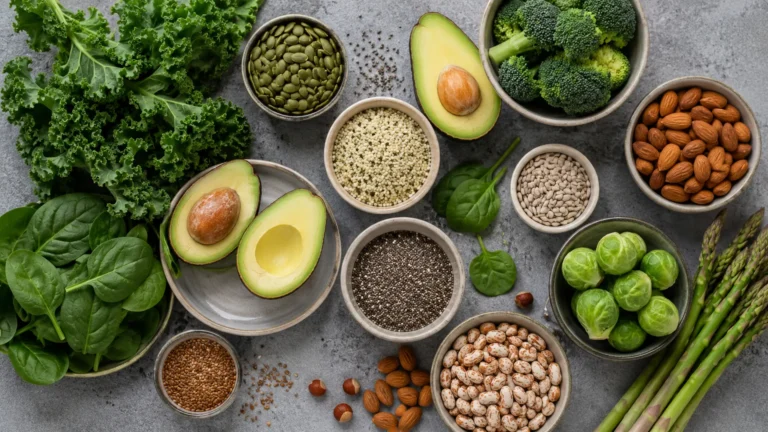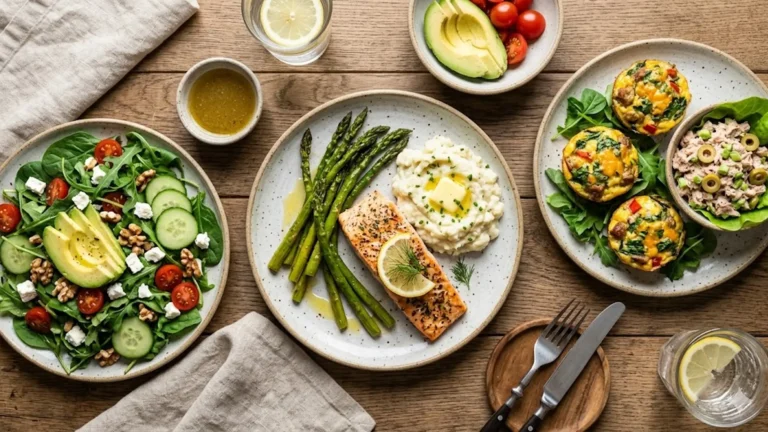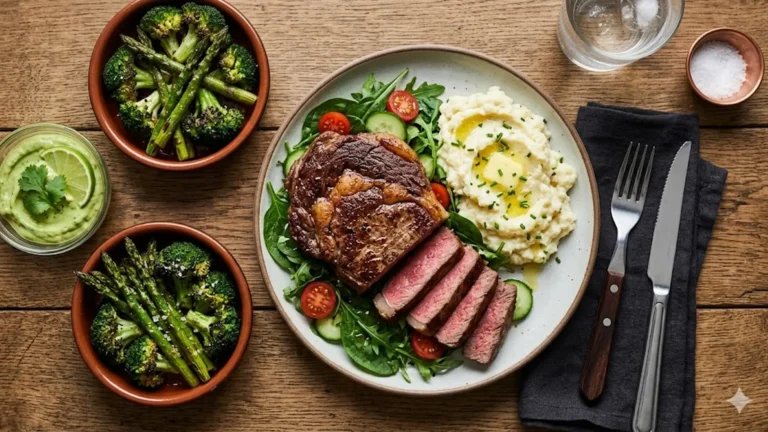
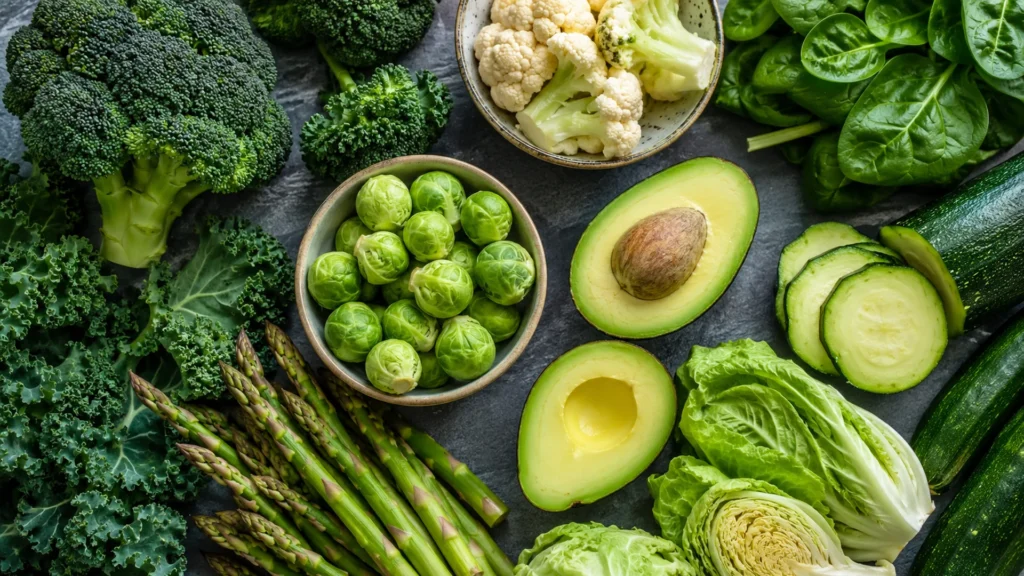
Keto friendly vegetables are the low-starch, above-ground vegetables you can eat in real serving sizes without spending your whole carb budget: cauliflower, zucchini, broccoli, cabbage, bell peppers, leafy greens, asparagus, mushrooms, eggplant. Most carry 1 to 5 grams of net carbs per serving, which means a full plate of them costs less than a single slice of bread. But knowing the list is the easy part. The harder, more useful part is what you do with them: how you swap them in for rice and pasta and mashed potatoes, how you cook them so a smaller portion actually satisfies, and how you spread them across a day without tipping over 20 grams. That is what this guide is about.
Plenty of articles will hand you a ranked carb chart and call it done. A chart tells you cauliflower is low. It does not tell you how to turn that cauliflower into rice that fools your brain, or why roasting it makes you eat less of it, or which two vegetables on the “safe” list quietly blow your day if you eat a normal helping. So this guide keeps the ranking to one supporting table and spends the rest of its words on cooking method, starch swaps, and a meal-by-meal plan. If you want the deep carb-by-carb ranking on its own, the lowest carb vegetables for keto breakdown sorts every common vegetable for you.
The above-ground rule: your fast first filter
Here is the single heuristic that gets you 90 percent of the way without a chart in your hand. Above-ground vegetables are usually keto. Below-ground vegetables usually are not. Plants store sugar and starch in their roots and tubers, which is why potatoes, sweet potatoes, parsnips, beets, and carrots all read high. The leafy and flowering parts that grow in the air, spinach, lettuce, broccoli, cauliflower, zucchini, cabbage, store almost no starch, so their carbs come mostly from fiber that you subtract back out.
The rule is not perfect, and the exceptions are worth knowing because they are the ones people get wrong. Bell peppers and tomatoes grow above ground but carry more sugar than their neighbors, so they are fine in a portion but not unlimited. Onion and garlic grow underground but you use them in such small amounts that a tablespoon barely registers. Winter squash like butternut grows above ground on a vine yet behaves like a starch. So treat the above-ground rule as your first pass: it tells you which vegetables to reach for by default. The numbers in the next section settle the edge cases. The practical payoff is that you stop standing in the produce aisle running a mental spreadsheet. You grab the green stuff, the cruciferous stuff, the squashes that are not winter squash, and you are right almost every time.
The best keto friendly vegetables and their net carbs
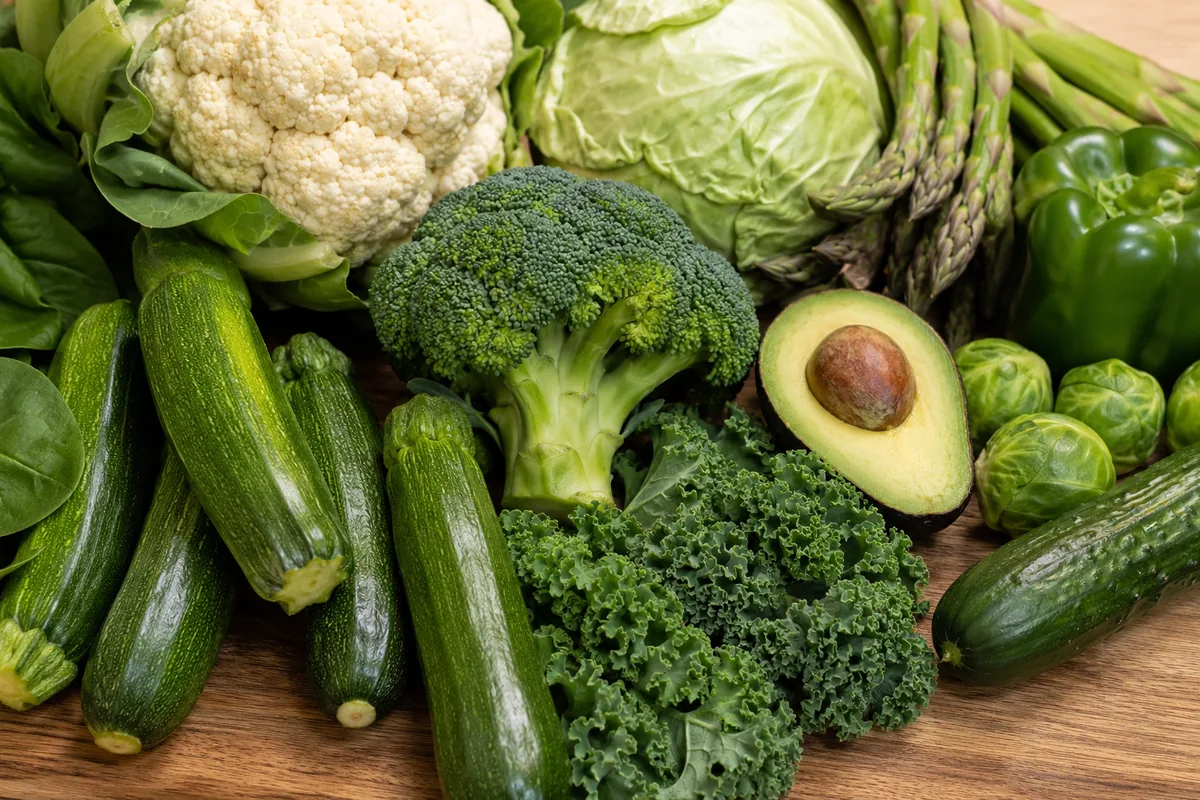
This is the one ranking table in the guide, and it exists to anchor the rest. Net carbs are total carbohydrate minus fiber, per the serving listed. The figures are rounded to stay usable in the kitchen rather than the lab. Notice that the differences between tiers are not subtle once you eat realistic amounts, which is why portion matters more than memorizing a list.
| Vegetable | Net carbs per serving | Tier and note |
|---|---|---|
| Spinach (1 cup raw) | 0.4 g | Free tier, eat freely |
| Romaine and leafy greens (1 cup) | 0.5 g | Free tier, salad base |
| Cucumber (1 cup sliced) | 2 g | Free tier, hydrating |
| Eggplant (1 cup cubed) | 2.3 g | Free tier, soaks up fat |
| Zucchini (1 cup) | 2.6 g | Free tier, pasta swap |
| Cauliflower (1 cup) | 3 g | Free tier, rice and mash swap |
| Cabbage (1 cup shredded) | 3 g | Free tier, noodle swap |
| Asparagus (1 cup) | 2.5 g | Free tier, roasts well |
| Broccoli (1 cup) | 3.6 g | Free tier, count if you pile it |
| Bell pepper (1 cup chopped) | 3.6 g | Portion tier, sweeter than it looks |
| Green beans (1 cup) | 4 g | Portion tier, fine in a side |
| Brussels sprouts (1 cup) | 4.6 g | Portion tier, count the second helping |
| Onion (2 tbsp diced) | 1.5 g | Portion tier, flavor amount only |
| Tomato (1 medium) | 3.3 g | Portion tier, one is fine, three is not |
The takeaway is that almost everything above-ground and non-starchy lands under 5 grams a serving, which is why you can build a genuinely large plate of vegetables and still spend only a few carbs. The vegetables that need counting are the sweeter or denser ones, peppers, sprouts, green beans, where a single serving is fine but a heaped second helping is where the day quietly slips. For the full sortable ranking with every vegetable, lean on the dedicated lowest carb vegetables post instead of trying to hold all of it in your head.
Starch swaps that actually work
This is the heart of using keto friendly vegetables rather than just listing them. Most people do not miss vegetables on keto. They miss rice under their curry, pasta under their sauce, and mashed potato next to their roast. The trick is that three vegetables stand in for those three starches almost seamlessly, and the carb math is dramatic.
Cauliflower rice replaces white rice. One cup of cooked white rice is about 45 grams of net carbs, an entire keto day in one side. One cup of riced cauliflower is 3 grams. You pulse florets in a food processor until they look like grains, then saute them in butter or oil for five to seven minutes until tender. The fat matters here, not just for flavor but because dry cauliflower rice tastes like dry cauliflower, while cauliflower rice cooked in browned butter genuinely passes under a stir-fry or a curry. That is a 42-gram swing for one side dish.
Zucchini noodles replace pasta. A cup of cooked spaghetti runs about 43 grams of net carbs; a cup of zoodles is under 3. Spiralize a zucchini, then resist the urge to boil it, which turns it to mush and floods your sauce with water. Salt the noodles, let them sit ten minutes, blot them, then sear them hot and fast for ninety seconds so they keep a bite. Top them off the heat so they do not keep cooking. Done right, a bowl of zoodles with meat sauce and parmesan is a real dinner, not a sad imitation. The same logic powers a lot of the dishes in our keto dinner ideas roundup, where vegetable bases carry the carb-heavy classics.
Mashed cauliflower replaces mashed potato. A cup of mashed potato is around 30 grams of net carbs; mashed cauliflower is 3 to 4. Steam cauliflower until very soft, drain it thoroughly (the wetness is what ruins it), then blend with butter, cream cheese, salt, and a little garlic until smooth. The cream cheese is the secret, it adds the richness and body that potato gets from starch. Cabbage also swaps in for noodles in soups and stir-fries: sliced thin and simmered, it carries broth like a wide egg noodle for 3 grams a cup. Once you have these four swaps in your hands, keto stops feeling like subtraction and starts feeling like substitution, which is the whole psychological game.
How cooking method changes things
Vegetables are not static. The same cauliflower can be watery and bland or deeply savory depending entirely on how you cook it, and that difference decides whether you eat your vegetables or skip them. The carbs barely move with cooking; what moves is satisfaction, and satisfaction is what keeps you on plan.
Roasting is the highest-leverage method on keto. Dry heat drives off water and concentrates flavor, and it triggers browning that reads as savory and faintly sweet without adding a single carb. Roasted broccoli, cauliflower, brussels sprouts, and asparagus taste like a different food than their steamed versions, and because the flavor is concentrated, a smaller portion satisfies. Toss in plenty of oil, spread in a single layer so the pieces brown instead of steaming each other, and roast hot, around 425 degrees. America’s Test Kitchen has tested this exhaustively and their guidance on roasting vegetables for deep browning comes down to high heat, a hot pan, and not crowding, which is exactly what you want on keto where fat and flavor do the heavy lifting.
Steaming keeps volume and nutrients but gives you nothing extra in flavor, so it is the method that needs the most help afterward, a knob of butter, salt, lemon, or a sauce. It is fine for vegetables you will fold into something else, like the cauliflower you are about to mash. Sauteing splits the difference and adds fat directly, which is its real keto advantage: a vegetable cooked in butter or olive oil is more filling than the same vegetable steamed dry, because the fat slows digestion and blunts hunger. Grilling, like roasting, concentrates and caramelizes. The rule across all of it: pair every vegetable with fat. On keto, fat is not the enemy of the vegetable, it is the thing that makes the vegetable worth eating, and a buttered or roasted vegetable carries no more carbs than a naked one.
Vegetables that look keto but are not

This is where good intentions go to die, because these vegetables are genuinely healthy and feel like they belong on a keto plate, right up until the portion tips them over. Knowing the exact amount where each one becomes a problem is more useful than a blanket ban.
| Vegetable | Net carbs | Where it tips |
|---|---|---|
| Carrot | 5.8 g per cup | A few coins are fine, a full cup is a third of your day |
| Green peas | 11 g per cup | Technically a starch, treat like a grain |
| Butternut squash | 14 g per cup | Above ground but behaves like a potato |
| Sweet potato | 20 g per half | Half a small one is most of your budget |
| Beets | 13 g per cup | The sweetest common vegetable, save for off days |
| Corn | 25 g per cup | A grain in disguise, not a vegetable for keto |
| Onion (whole) | 14 g per cup | Fine by the tablespoon, not by the cup |
The pattern is the same one that drives the above-ground rule: these are either roots, tubers, or seeds that store starch, or vegetables sweet enough to behave like fruit. The fix is rarely to ban them outright. A few carrot coins in a stew, a tablespoon of diced onion for flavor, a small handful of peas for color, these fit because the portion is tiny. The trouble starts when you treat them as a main side and load a full cup onto the plate. The trap food is not the carrot, it is the cup of carrots. Portion is the whole game with this list, the same way it is with nuts and berries on the rest of the plan.
A day of vegetables on keto
Lists are abstract, so here is a concrete day that keeps vegetables central and lands well under 20 grams of net carbs, leaving room for the rest of your food. The point is to show that vegetables can be in every meal without crowding your budget.
Breakfast: a two-egg omelet with a cup of spinach and a quarter cup of diced bell pepper, cooked in butter. The spinach wilts to almost nothing and the pepper adds sweetness and crunch. Running total, about 3 grams of net carbs from the vegetables. Lunch: a big salad on a romaine and cucumber base, topped with grilled chicken, avocado, and olive oil dressing, with a few cherry tomatoes. The leafy base is essentially free; the tomatoes and avocado add maybe 4 grams. Running total, around 7 grams.
Snack: celery sticks with cream cheese, or a handful of raw bell pepper strips, under 2 grams. Running total, around 9 grams. Dinner: roasted salmon with a generous pile of roasted broccoli and asparagus tossed in olive oil, plus a scoop of mashed cauliflower standing in for potato. The broccoli, asparagus, and cauliflower together come to roughly 8 grams. Final total for the day, around 17 grams of net carbs from a genuinely large volume of vegetables across four eating occasions. You ate vegetables at every meal, you never felt deprived, and you stayed comfortably under the strict 20-gram ceiling. For more structured plates built this way, the keto meals formula shows how to assemble protein, fat, and vegetables into a repeatable plate without doing the math every time.
Fiber and electrolytes from your vegetables
Vegetables do more on keto than fill the plate; they are your main source of two things the diet otherwise makes hard to get, fiber and electrolytes. This is the angle most keto vegetable lists skip entirely, and it matters because the most common reasons people feel bad in the first weeks, constipation and the keto flu, both trace partly to under-eating vegetables.
Fiber first. The reason net carbs work is that fiber passes through without raising blood sugar, so it subtracts from the carb count. That same fiber keeps digestion moving, which is the fix for the constipation that hits a lot of beginners when they cut out bread and fruit. Cruciferous vegetables, broccoli, cauliflower, cabbage, brussels sprouts, are the heavy hitters here, carrying real fiber for very little net carb, which Healthline covers well in its breakdown of cruciferous vegetables and net carbs. Avocado, technically a fruit but eaten like a vegetable, is another fiber powerhouse. If your digestion is sluggish, the answer is usually more of these, not a supplement, and our guide to getting fiber on keto lays out exactly which vegetables to lean on and how much.
Electrolytes second. When you cut carbs, your body holds less water and flushes more sodium, potassium, and magnesium, and that mineral drop is what causes the headaches, cramps, and fatigue people call keto flu. Vegetables are a quiet source of potassium and magnesium: spinach, avocado, and mushrooms in particular. Spinach is one of the most potassium-dense foods you can eat, and a daily cup or two folded into eggs or a salad does real work. Salt your food generously, drink enough water, and keep leafy greens and avocado in the rotation, and most of the early misery never shows up. The vegetables are not just allowed on keto, they are part of the fix.
Bottom line
Keto friendly vegetables are simpler than the charts make them look. Reach for above-ground, non-starchy vegetables by default, and almost everything you grab will land under 5 grams of net carbs a serving. The real value is in how you use them: swap cauliflower rice for white rice, zoodles for pasta, and mashed cauliflower for potato, and you reclaim the meals keto seems to take away. Roast more than you steam, because concentrated flavor means a smaller portion satisfies, and always cook with fat. Watch the handful of roots and sweet vegetables that tip on portion, lean on cruciferous vegetables and greens for fiber and electrolytes, and put a vegetable in every meal. Do that and your vegetables stop being a restriction and become the most flexible part of the plate.
Frequently Asked Questions
What vegetables can I eat freely on keto?
Leafy greens, cucumber, zucchini, cauliflower, cabbage, asparagus, broccoli, and eggplant are all under 5 grams of net carbs per serving, so you can eat them freely and build meals around them. Spinach and lettuce are nearly free at well under 1 gram a cup. The simple filter is above-ground and non-starchy, which catches almost all of them without needing a chart.
Are carrots keto friendly?
Carrots are borderline. A full cup is about 5.8 grams of net carbs, which is a noticeable chunk of a 20-gram day, so a whole serving does not really fit. A few coins in a stew or a small handful raw are fine because the portion is tiny. The problem is never a couple of carrots, it is treating them as a main side and loading a full cup onto the plate.
What is the best keto swap for rice and pasta?
Cauliflower rice replaces white rice and zucchini noodles replace pasta, and the carb savings are huge. A cup of white rice is about 45 grams of net carbs versus 3 for riced cauliflower, and a cup of pasta is 43 grams versus under 3 for zoodles. Cook both in fat and do not overcook them, and they genuinely stand in for the starch under your sauce.
Does cooking change the carbs in keto vegetables?
Cooking barely changes net carbs, but it changes how filling and satisfying a vegetable is, which decides whether you actually eat it. Roasting concentrates flavor through browning, so a smaller portion satisfies, while steaming keeps volume but adds nothing in taste. Always pair vegetables with fat: a buttered or roasted vegetable carries no more carbs than a plain one but is far more filling.
Can I get enough fiber from keto vegetables?
Yes, and vegetables are your main fiber source on keto since you have cut bread and fruit. Cruciferous vegetables like broccoli, cauliflower, cabbage, and brussels sprouts carry plenty of fiber for very little net carb, and avocado is another strong source. If digestion slows in the first weeks, the fix is usually more of these vegetables rather than a supplement.
Which keto vegetables help with the keto flu?
Vegetables rich in potassium and magnesium help blunt the keto flu, since the early headaches and cramps come from flushing those minerals when you cut carbs. Spinach, avocado, and mushrooms are the standouts, with spinach especially potassium-dense. Fold a cup of spinach into eggs or a salad daily, salt your food, and stay hydrated, and most of the early misery never shows up.