
This keto diet food list is built the way you actually shop: aisle by aisle, with a yes, limit, or skip call on every shelf and the net carbs printed right next to it. Instead of a wall of two hundred food names, you get a store walkthrough you could print and carry. Start in produce, move through the meat case, the dairy door, the pantry, the snack aisle, and the drinks cooler, and by the time you reach the register your cart is keto by design. The rule under all of it stays simple: keep net carbs in the rough 20 to 50 gram daily range, lean on fat, hold protein moderate, and spend every carb on purpose.
Most food lists group foods by type, which is useless when you are standing in a real store moving down real aisles. You do not shop by macronutrient. You shop by section. So this guide maps the keto green light onto the path your cart already takes, gives you a checklist for each aisle, names a budget swap in every section, and ends with a first cart you can fill in one trip. If you want the eat-or-avoid version sorted by food group instead, the keto food list covers the gray areas, and the keto diet guidelines explain where the carb range comes from.
The produce aisle: most of your no-list lives here
Start here, because produce is where beginners get nervous and where the easiest wins hide. The rule for vegetables is simple: anything that grows above ground and is mostly water or leaf is keto, and anything that grows underground as a starch store is not. Leafy greens, the cabbage family, and the squash family are your yes column. Roots, tubers, and the sweet stuff are your skip column.
In your yes column: spinach, romaine, kale, arugula, and other leafy greens at about 1 gram net carbs per cup raw. Zucchini, cucumber, celery, and bell pepper at 2 to 3 grams per cup. Cauliflower and broccoli at 2 to 4 grams per cup, the backbone of keto rice and mash. Asparagus, green beans, and mushrooms round it out. Avocado earns its own callout at 2 grams per half, and it doubles as a fat source. For the full ranking of which vegetables cost the fewest carbs, the lowest carb vegetables for keto breakdown sorts them gram by gram.
In your limit column: onion and garlic, fine in cooking amounts but not by the cup, tomato at about 3 grams per small one, Brussels sprouts at 5 grams a cup, and berries, which count as produce here even though the store files them with fruit. Raspberries and blackberries at 3 to 4 grams a half cup are the only fruit that fits a strict day. In your skip column: potatoes, sweet potatoes, corn, carrots in quantity, peas, and every fruit beyond berries. A banana is 24 grams, an apple is 20, a single date is 16. They are not evil, they just cost an entire keto day. Budget swap for this aisle: buy frozen broccoli, cauliflower, and spinach. They are cheaper, they do not rot in the drawer, and the net carbs are identical to fresh.
The meat and seafood counter: your free zone
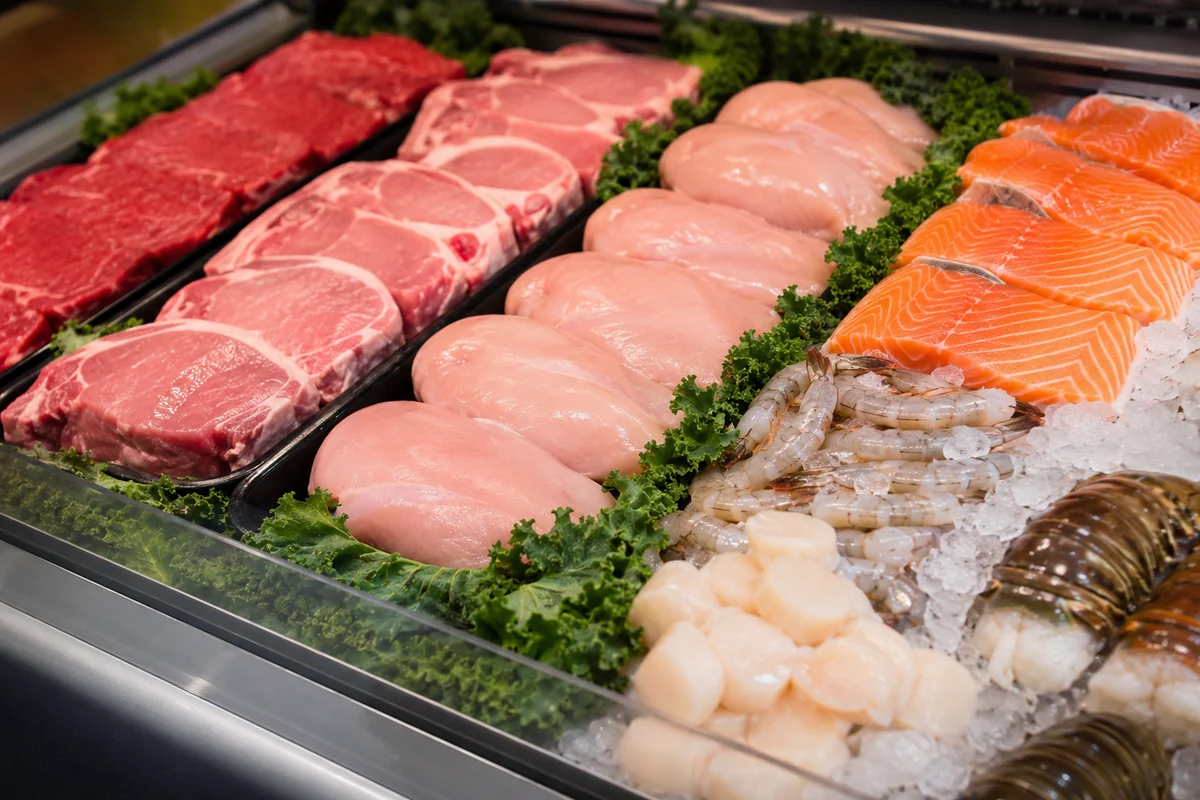
This is the easiest aisle on the entire list, because plain meat, poultry, fish, and eggs carry zero or near-zero carbs. There is no limit column here worth fussing over. The only thing that adds carbs is what gets done to the meat before it reaches you: breading, sugar cures, and sweet marinades.
Your yes column is everything unprocessed. Beef, pork, lamb, chicken, and turkey at 0 grams. Salmon, tuna, cod, shrimp, sardines, and mackerel at 0 to 1 gram, with the fatty fish doubling as fat fuel. Eggs at under 1 gram each, the single most flexible food on keto. Bacon and plain sausage are fine, just glance at the label for added sugar in the cure. Deli meats are usually fine but the cheap ones pack starchy fillers, so read the panel. Your skip column is short: anything breaded or battered (the breading is 15 to 30 grams), honey-glazed or maple anything, teriyaki and barbecue pre-marinated meats, and imitation crab, which is bound with starch. Budget swap here matters most, because protein is the priciest part of a keto cart. Chicken thighs beat chicken breast on price and flavor, ground beef at 80/20 is cheaper than lean and better for keto, and a bag of frozen fish or shrimp costs less per pound than the fresh counter and keeps for months. Whole chickens and pork shoulder stretch the furthest of all.
The dairy case: low carbs up top, hidden sugar down low
Dairy is a keto workhorse, but the case is split. The harder and more aged the product, the lower the carbs, because aging ferments away the lactose. The more liquid and sweetened, the higher the carbs climb. Walk the case with that one rule and you sort it on sight.
Your yes column: hard and aged cheeses (cheddar, parmesan, gouda, swiss, mozzarella) at 0 to 1 gram per ounce, cream cheese at about 1 gram per ounce, heavy cream at about 0.5 gram per tablespoon, sour cream, and butter at 0 grams. Heavy cream is the keto coffee staple precisely because it carries almost nothing while regular milk does not. Your limit column: full-fat plain Greek yogurt at 4 to 6 grams a serving, cottage cheese at about 4 grams a half cup, and string cheese, all fine in a single portion. Your skip column: regular milk at about 12 grams a cup from lactose, sweetened or fruit-on-the-bottom yogurts at 20 plus grams, flavored coffee creamers, and anything labeled low-fat, because the fat removed gets replaced with sugar or starch to fix the texture. Budget swap: store-brand block cheese beats pre-shredded on both price and quality, since pre-shredded is coated with potato starch to keep it loose, which adds a gram or two you did not order.
The pantry and oils aisle: stock the staples
The center aisles are mostly a minefield of grains and sugar, but a few shelves hold the keto staples that make everything else work. Fats and oils are the headline, because fat is the fuel that keeps a keto plate filling instead of leaving you cold and hungry at nine at night.
Your yes column: extra virgin olive oil for cold use and dressings, avocado oil and beef tallow for high-heat searing past 400 degrees, butter and ghee for medium heat and flavor, and coconut oil for specific dishes. All cooking fats are 0 grams, so the choice is about heat and taste, not carbs. Also yes: canned tuna and salmon, olives at 1 gram per ten, pork rinds (zero carb, the keto cracker), almond flour and coconut flour for baking, unsweetened nut butters, and sugar-free sweeteners like erythritol, allulose, and monk fruit. Your limit column: nuts and seeds, covered next because they deserve their own warning, and canned coconut milk at 1 to 2 grams a quarter cup. Your skip column is the bulk of the center store: all flour and baking sugar, bread, pasta, rice, oats, cereal, beans and lentils (20 plus grams a cup, the surprise sugar bomb that reads healthy), honey, maple syrup, and most jarred sauces, which hide sugar by the spoonful. America’s Test Kitchen has reliable guidance on choosing and storing cooking oils so the bottle you stock actually holds up to the heat you cook at. Budget swap: store-brand olive oil and butter are identical for keto purposes, and buying almond flour in a bulk bag cuts the per-cup cost roughly in half.
The snack and condiment aisle: read every label
This aisle is where the word keto gets stamped on packaging that does not deserve it, so it is the one place you slow down and read. The skill is simple once you know the three numbers that matter, and it travels to every other aisle too.
Net carbs equals total carbohydrate minus fiber minus sugar alcohols. So a bar that lists 22 grams total carb, 12 grams fiber, and 8 grams sugar alcohol is really 2 grams net. The big number on the front is doing nothing. One warning: erythritol and allulose subtract cleanly, but maltitol does not, so count maltitol closer to full carbs and treat any sugar-free candy sweetened with it as a trap. Your yes column in this aisle: pork rinds, plain nuts in measured amounts, beef jerky with no added sugar (read it), olives, pickles, mustard, mayonnaise, hot sauce, vinegar, and sugar-free dressings checked for maltitol. Your limit column: nuts again, since a quarter cup is one serving and most people pour three. Macadamias at 2 grams an ounce and pecans are the lowest, cashews the highest. Berries dried into “keto” snacks are usually sugar-coated, so skip those. Your skip column: chips, crackers, pretzels, candy, granola, most protein bars, ketchup (sugar), barbecue and teriyaki sauces, and sweet salad dressings. When even slicing vegetables feels like too much work, the keto friendly snacks roundup lists grab-and-go options with the net carbs already counted.
The drinks cooler: water, coffee, and the sugar traps
Drinks are where a clean keto day quietly falls apart, because liquid sugar does not feel like food. The rule is to drink your carbs almost never. Plain water, sparkling water, black coffee, and unsweetened tea are your unlimited yes column at 0 grams. Coffee or tea with heavy cream stays near zero. Unsweetened almond and coconut milk at 1 to 2 grams a cup are fine. Diet sodas and sugar-free electrolyte drinks fit, though they work better as occasional drinks than as staples.
Your skip column is long and important: regular soda, fruit juice (even the no-sugar-added kind is concentrated fruit sugar), sweet tea, sports drinks, most bottled smoothies at 30 plus grams, flavored lattes, energy drinks with sugar, and milk as a drink. Alcohol deserves its own note. Beer is liquid bread at 10 to 15 grams a can, and sweet wine and cocktails carry sugar by the mixer. Dry wine at 3 to 4 grams a glass and plain spirits with soda water at near zero are the keto-compatible choices, though alcohol still pauses fat burning while your body processes it. Budget swap: a refillable bottle and a box of tea bags replace a fridge full of bottled drinks, and black coffee at home costs pennies against a daily 40-gram flavored latte.
The checklist table: net carbs per realistic serving
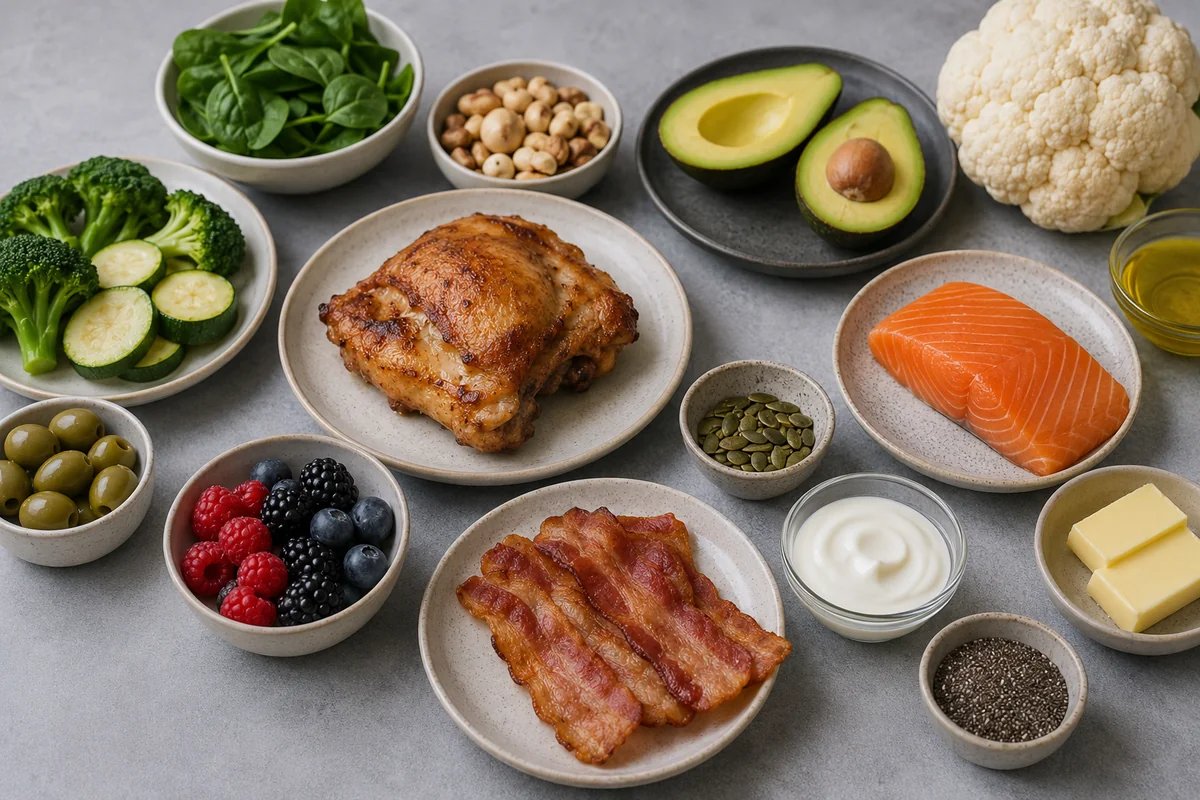
Here is the printable core of the list. These are the foods worth keeping straight, with the net carbs per the serving you actually use, not per 100 grams of math. Snap a photo of this and you have your shopping card.
| Food | Aisle | Net carbs per serving | Call |
|---|---|---|---|
| Spinach, raw | Produce | 1 g per cup | Yes |
| Zucchini | Produce | 2 g per cup | Yes |
| Avocado | Produce | 2 g per half | Yes |
| Cauliflower | Produce | 3 g per cup | Yes |
| Raspberries | Produce | 3 g per half cup | Limit |
| Chicken thigh | Meat | 0 g | Yes |
| Salmon | Seafood | 0 g | Yes |
| Eggs | Meat case | under 1 g each | Yes |
| Cheddar | Dairy | 0 to 1 g per oz | Yes |
| Heavy cream | Dairy | 0.5 g per tbsp | Yes |
| Greek yogurt, plain | Dairy | 5 g per serving | Limit |
| Olive oil | Pantry | 0 g | Yes |
| Macadamias | Snacks | 2 g per oz | Limit |
| Almonds | Snacks | 3 g per quarter cup | Limit |
| Black coffee | Drinks | 0 g | Yes |
Your first cart: shop the whole list in one trip
The big lists never give you an actual cart, just categories. So here is the starter cart. If you walked into a store today with an empty kitchen, these anchors walk every aisle above and cover a week of keto meals.
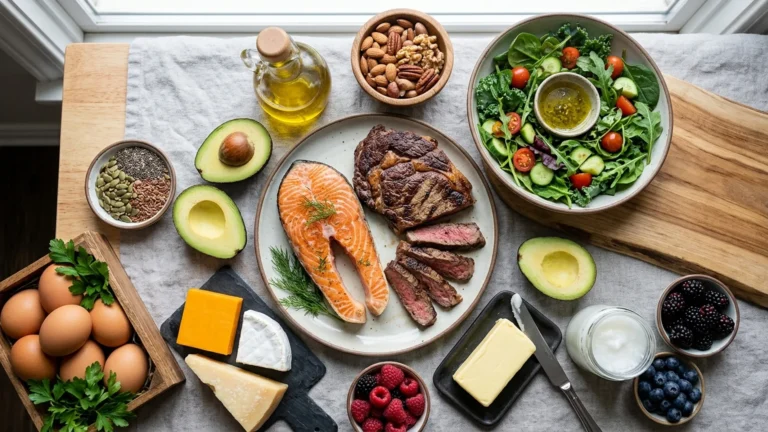
- Produce: a bag of mixed greens, two avocados, a zucchini, a cucumber, and a bag of frozen cauliflower.
- Meat and seafood: two pounds of chicken thighs, a pound of 80/20 ground beef, and a bag of frozen salmon or shrimp.
- Dairy: a dozen eggs, a block of cheddar, a tub of cream cheese, and a small carton of heavy cream.
- Pantry and oils: a bottle of olive oil, butter, and a bag of pork rinds.
- Snacks: a quarter-cup-portioned bag of macadamias or almonds.
- Produce extra: a bag of frozen raspberries for the week’s dessert.
That cart runs under 5 grams net carbs per meal if you assemble plainly, and it leaves headroom for the limit-column extras. The frozen proteins and vegetables are deliberate. They do not spoil, so a tough week does not end with a fridge full of waste and a drive-through dinner instead. For ideas on turning those anchors into actual plates, the keto meals formula shows how to build a meal from a protein, a fat, and a vegetable without a recipe.
The meal builder: turn the checklist into dinner
A food list is only useful if it becomes a plate. The whole keto meal formula is three slots: one protein, one or two non-starchy vegetables, and enough fat to make it filling. Pick one from each column on the list above and you have dinner, no recipe required.
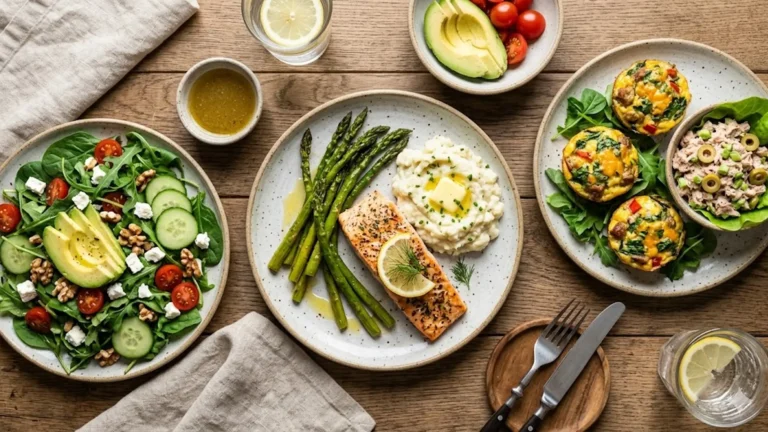
Watch how the cart assembles itself. Eggs scrambled in butter with spinach and cheddar is breakfast under 4 grams. Salmon with a side of cauliflower roasted in olive oil is dinner under 5. Ground beef browned with peppers and onion, topped with sour cream and avocado, is a taco bowl with no shell under 6. A chicken thigh seared in tallow with a cucumber salad dressed in oil and vinegar is lunch under 4. None of these need a recipe card, because the list already did the carb math. Healthline has a solid overview of how keto macros fit together if you want the nutrition reasoning behind why this protein-fat-vegetable shape keeps you in ketosis. Build from the list, add fat freely, and the day takes care of itself.
Eating out: the same checklist, applied to a menu
Restaurants are where good carts get undone, but the list still works, you just read the menu like a label. Think in swaps, not sacrifices. Order the burger with no bun on a bed of greens. Get the steak or grilled fish and swap fries for a side salad or extra vegetables. At breakfast, eggs any style with bacon is keto by default, so skip the toast and hash browns. Mexican works as a bowl with no rice, no beans, no tortilla, loaded with meat, cheese, guacamole, and sour cream.
The hidden carbs hide in the extras, exactly like the snack aisle. Breading on anything fried adds 15 to 30 grams. Sweet sauces, glazes, teriyaki, and most ketchup carry sugar. Thickened soups and gravies lean on flour or cornstarch. Even a salad can hide candied nuts, croutons, dried cranberries, and a sweet dressing that doubles the count, so ask for oil and vinegar and sidestep it. The skill is the one you built walking the snack aisle: assume sauces and breading carry sugar until proven otherwise, and the menu sorts itself the same way the store did.
Frequently Asked Questions
What is the simplest keto diet food list to follow?
The simplest version is the aisle walk: in produce buy leafy greens and non-starchy vegetables, at the meat counter buy any unprocessed protein, at the dairy case buy hard cheese and heavy cream, in the pantry buy oils and pork rinds, and in drinks stick to water and coffee. Skip every grain, sugar, starchy root, and sweet drink. If you only remember one rule, build plates from things that carry almost no sugar and add fat freely.
How many carbs a day does this food list keep me under?
Built as written, this list keeps most people under 20 to 50 grams of net carbs a day, with 20 being the strict target and 50 a flexible ceiling. Net carbs means total carbohydrate minus fiber and sugar alcohols. The yes-column foods cost so few carbs that the budget mostly gets spent on the limit-column items like nuts, berries, and yogurt, which is exactly why those get portioned.
Which aisle has the most keto foods?
The meat and seafood counter is the richest, because plain protein carries zero or near-zero carbs and needs no portioning at all. Produce is a close second for variety, but it has more limit and skip items than the meat case. If you are overwhelmed, start your cart at the protein counter and the dairy case, where almost everything is a yes.
Can I keep this food list to a budget?
Yes, and the cheaper choices are often the more keto ones. Chicken thighs beat breast, 80/20 ground beef beats lean, frozen fish beats the fresh counter, frozen vegetables match fresh on net carbs, and store-brand cheese and oil are identical to name brands for keto purposes. Whole chickens and pork shoulder stretch the furthest. A keto cart is not automatically expensive once you shop the frozen and bulk shelves.
How do I read a label to confirm a food is keto?
Check three numbers on the nutrition panel: total carbohydrate, dietary fiber, and sugar alcohols. Subtract fiber and most sugar alcohols from total carbs to get net carbs. Ignore the word keto on the front, which is unregulated, and watch for maltitol, which does not subtract cleanly and should be counted closer to full carbs. The panel decides, not the marketing.
What should I never put in the cart on keto?
The hard skip list is short: bread, pasta, rice, potatoes, corn, oats, and cereal, plus sugar, honey, maple syrup, and agave. Add most fruit beyond berries, beans and lentils, juice and soda, beer, and anything breaded or honey-glazed. These cost more carbs than a keto day can spend, so they stay out of the cart unless you are deliberately spending big on purpose.
Bottom line
A keto diet food list works best when it follows the path your cart already takes. Walk produce for greens and non-starchy vegetables, the meat counter for any plain protein, the dairy case for hard cheese and heavy cream, the pantry for oils and staples, the snack aisle with your label-reading on, and the drinks cooler for water and coffee. Make a yes, limit, or skip call at each shelf, lean on the budget swaps, and fill the first cart in one trip. Then turn it into dinner with the protein-fat-vegetable formula. Get the aisle walk right and you never memorize a food list again, because the store itself becomes the checklist and your cart stays under 50 grams of net carbs without a single calculation at the register.