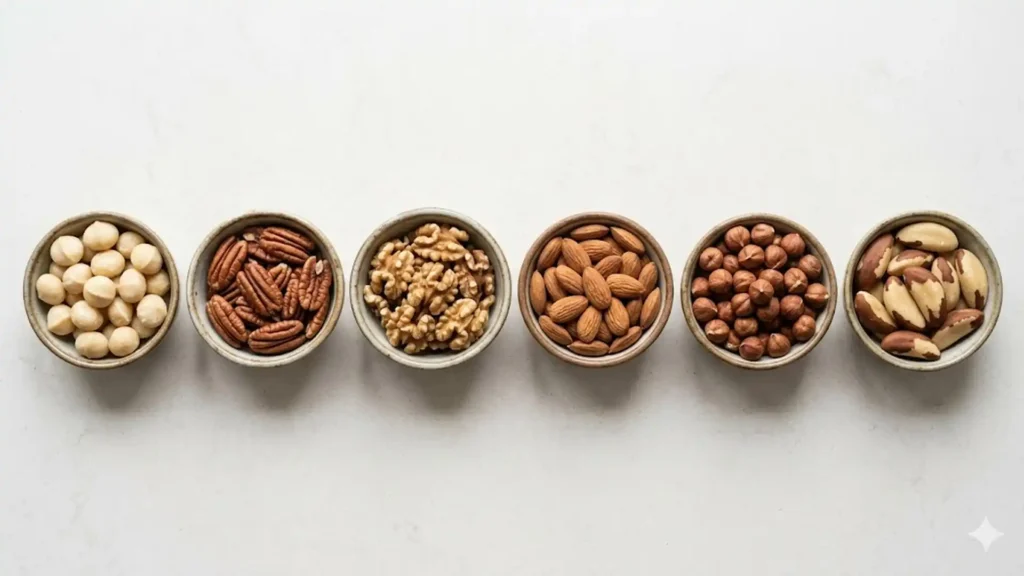
Nuts feel like the perfect keto food. They are crunchy, satisfying, portable, mostly fat, and they scratch the snack itch without a single chip in sight. And for the most part that reputation is earned. But nuts also carry the single sneakiest trap on keto, and it is not the one most people worry about. The danger is rarely which nut you choose. It is how many you eat, because a casual handful of even a great keto nut can quietly double both the carbs and the calories you intended, and you will not notice until the scale stalls. Good nuts for keto are the ones that combine genuinely low net carbs with a portion you can actually control.
This guide ranks the nuts from best to worst for keto by net carbs per ounce, shows you the portion that keeps you in range, flags the two or three nuts you should treat with caution, and explains the calorie problem that nobody puts on the front of the package. By the end you will be able to glance at any nut and know both whether it fits and how much of it fits.
How to Judge a Nut for Keto
There are two numbers that decide whether a nut belongs on keto, and most guides only mention one. The first is net carbs per ounce, which is total carbohydrate minus fiber. This is the number that determines whether a nut threatens ketosis. The second is calorie density, because nuts are extraordinarily energy-dense: a single ounce runs roughly 160 to 200 calories, and an ounce is a small handful, far smaller than the fistful most people grab. If you want to check the exact carb and calorie figures for any specific nut, the USDA FoodData Central database is the reference used here to settle the numbers. You can stay in ketosis on nuts and still stall your weight loss purely because you ate four ounces of almonds without noticing.
So a “good keto nut” is one that scores well on net carbs and is easy to portion. A nut with low carbs that you cannot stop eating is, in practice, a worse keto food than a slightly higher-carb nut you can ration. Keep both numbers in mind as you read the ranking, because the best nut on paper is not always the best nut in your hand. The clinical reviews of ketogenic eating, including the overview maintained on the NIH StatPearls library, consistently frame low-carb fats like nuts as helpful only when total intake stays controlled.
The Best Keto Nuts, Ranked by Net Carbs

The table below ranks common nuts by net carbs per 1-ounce (about 28 gram) serving, with calories alongside so you can see the energy cost too. The split at the bottom is sharp: the top of the list is keto-friendly with room to spare, while the bottom three need real restraint or a place on the avoid list.
| Nut (1 oz / ~28 g) | Net carbs | Calories | Keto verdict |
|---|---|---|---|
| Macadamia nuts | ~1.5 g | ~200 | Best |
| Pecans | ~1.5 g | ~196 | Best |
| Brazil nuts | ~1.5 – 2 g | ~187 | Great (limit for selenium) |
| Walnuts | ~2 g | ~185 | Great (omega-3s) |
| Hazelnuts | ~2 g | ~178 | Great |
| Almonds | ~2.5 – 3 g | ~164 | Good (workhorse) |
| Pistachios | ~5 g | ~159 | Caution – easy to overeat |
| Cashews | ~8 – 9 g | ~157 | Limit – high carb |
| Chestnuts | ~13 g | ~69 | Avoid – starchy |
One note on reading these numbers in the store: package labels list total carbohydrate and fiber separately, and net carbs are simply total minus fiber. Many nuts carry a gram or two of fiber per ounce, which is why their net figure lands lower than the total carbohydrate line you see first. When you scan a label, do the subtraction rather than reacting to the bigger total number, because for nuts that fiber is doing real work both on your carb count and on your digestion. The ranking below already reflects net carbs, so you can trust the order, but knowing how the math works lets you judge any nut or seed that is not on this list.
The Clear Winners: Macadamias and Pecans
Macadamia nuts and pecans sit at the top for a reason. Both come in around 1.5 grams of net carbs per ounce, the lowest of any common nut, and both are overwhelmingly monounsaturated fat, which is the heart-friendlier kind. Macadamias in particular are almost a perfect keto food: buttery, rich, and so fat-dominant that they barely register on the carb count. Pecans are right beside them and toast beautifully. If you want a nut you can eat on keto with the least worry about carbs, these two are it.
The Solid Middle: Brazil Nuts, Walnuts, Hazelnuts, Almonds
Brazil nuts (around 1.5 to 2 grams net carbs) are excellent, with one important caveat: they are extremely high in selenium, and eating more than a few a day can push you toward selenium excess, so this is a nut to enjoy in small numbers rather than by the handful. Walnuts (around 2 grams) bring omega-3 fats that support heart and brain health and are one of the better choices nutritionally. Hazelnuts (around 2 grams) are a low-carb favorite that pairs famously with chocolate. Almonds (around 2.5 to 3 grams net carbs) are the workhorse: a touch higher in carbs than the leaders, but rich in protein, vitamin E, and magnesium, and the base for almond flour and almond butter that anchor so much keto baking. All four fit keto comfortably at a sensible portion.
The Caution List: Cashews, Pistachios, and Chestnuts
Here is where nuts stop being automatic. Cashews carry roughly 8 to 9 grams of net carbs per ounce, which is several times the macadamia number and enough to eat a serious bite out of a strict carb budget in one small handful. Pistachios land around 5 grams and come with a second trap: they are so easy to eat mindlessly, shell after shell, that the carbs add up fast. Chestnuts are essentially a starchy food in nut form and are not keto-friendly at all. None of these are forbidden in a tiny quantity if you account for them, but they are the opposite of a free snack, and most people are better off keeping them out of the house entirely on a strict keto plan.
The Portion Trap Nobody Talks About
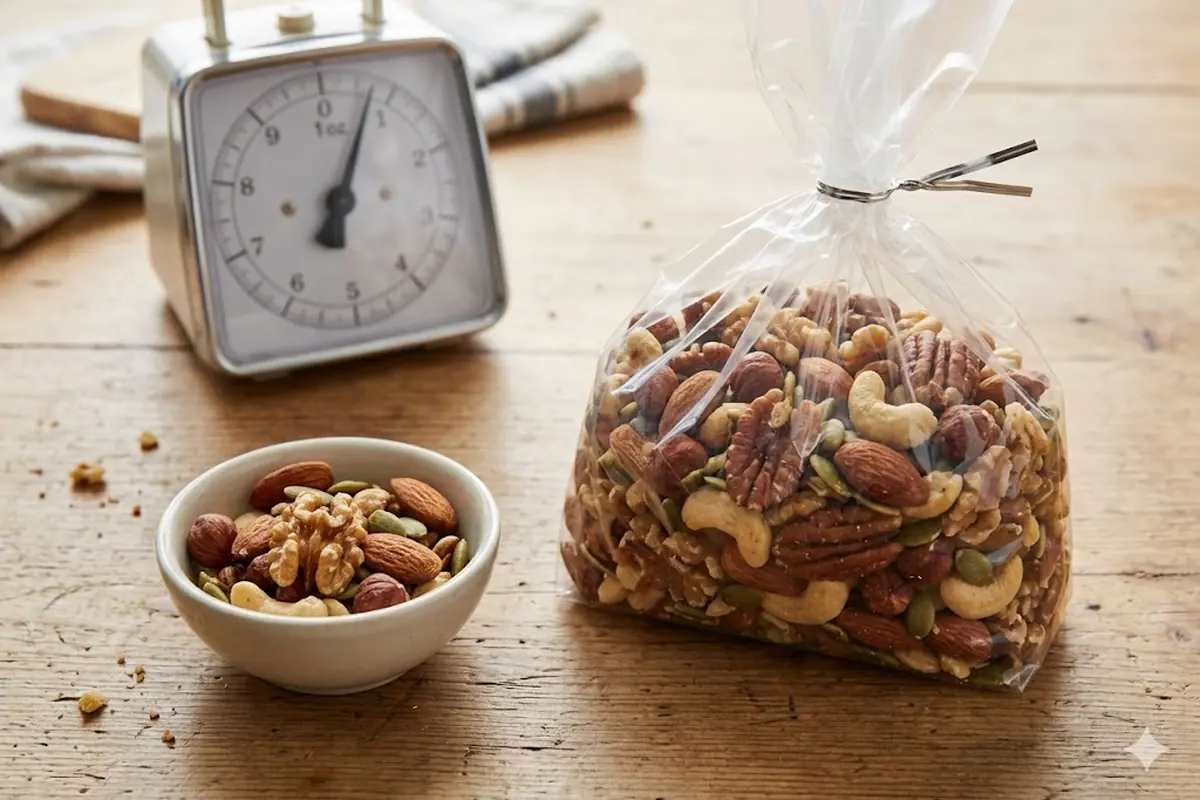
This is the part that matters more than the ranking, and it is where the most quiet failure happens. A serving of nuts is one ounce. That is about 10 to 12 macadamias, 19 pecan halves, 23 almonds, or 14 walnut halves. It is not “a handful,” because a real handful is usually two to three times that. Eat from the bag and you will sail past a single serving without registering it, and three ounces of almonds is nearly 500 calories and close to 9 grams of net carbs, which on a 20-gram keto day is almost half your carb budget gone on a snack.
It helps to understand why nuts in particular slip past your guard. Most foods give you a natural stopping signal: a plate empties, a bowl of soup is finished, a sandwich is gone. Nuts give you no such cue. They come in a bag with no portion boundary, they require almost no effort to eat, and they are dense enough that a satisfying-feeling amount is actually several servings. Add in that they are often eaten absentmindedly, in front of a screen or while cooking, and you have a food engineered, almost by accident, to defeat portion awareness. None of that makes nuts bad. It just means they are the one keto food where you cannot rely on feeling full to tell you when to stop, so you have to decide the amount in advance.
The fix is mechanical, not willpower-based. Pre-portion nuts into small bags or containers the day you buy them, one ounce each, and eat from those rather than the bulk container. This single habit can unstick a stalled keto week. It sounds almost too simple, but the entire nut problem on keto is a measurement problem, and pre-portioning solves the measurement problem before it starts. If you want the deeper breakdown of serving sizes and portioning strategy, the full guide to keto friendly nuts goes nut by nut.
Smart Ways to Use Keto Nuts
Beyond eating them straight, nuts earn their keep across a keto kitchen. Almond and coconut flour replace wheat flour in keto baking. Nut butters (the kind with no added sugar, check the label) make a fast fat-rich snack or a dip for celery. Crushed pecans and almonds make a crunchy coating for chicken or fish in place of breadcrumbs. Toasted nuts add texture and fat to salads and roasted vegetables. And a small portion of macadamias or walnuts is one of the easiest ways to round out the fat on a meal that came up lean.
Nuts also slot naturally into a broader keto snacking strategy, which is where most people need the most help staying on plan. A handful of pre-portioned nuts alongside the other building blocks of a good snack rotation keeps you from reaching for carbs when hunger hits between meals; this roundup of keto snacks shows how to combine them with fat bombs, cheese, and other low-carb options. When you want crunch that is not a nut, air-fried options scratch the same itch, and pairing them with a few air fryer snacks or keeping some lower-carb gluten-free snacks on hand widens the rotation so nuts are not the only thing you reach for.
Do Not Forget the Seeds
Seeds belong in any honest conversation about keto nuts, because several of them outperform nuts on the metrics that matter and they almost never get mentioned. Chia and flax seeds are the standouts: both are so high in fiber that their net carbs come out extremely low, often around 1 gram or less per tablespoon after subtracting fiber, and both bring omega-3 fats. Ground flax and chia are also the fiber insurance the whole diet needs, which makes them a two-for-one, snack and digestive aid in the same spoonful. Pumpkin seeds and sunflower seeds are solid too, a little higher in carbs than chia and flax but rich in magnesium and zinc, two minerals strict keto tends to run short on. Hemp seeds are another quiet winner, delivering complete protein at very low carbs. If your keto snacking is all almonds and macadamias, rotating in a tablespoon of chia or a small handful of pumpkin seeds widens both your nutrient base and your fiber intake without adding meaningful carbs.
Buying, Storing, and Prepping Keto Nuts
A few practical habits make nuts work better day to day. Buy them raw or dry-roasted and unsalted-or-lightly-salted rather than the flavored kinds, because honey-roasted, candied, and many “trail mix” nuts carry added sugar and the dried fruit alongside them is essentially candy on keto. Read the label on anything seasoned; plain nuts need no label, but a barbecue or honey coating can add several grams of carbohydrate per serving. When in doubt, raw is always the safe default.
Storage matters more than people expect, because nuts are high in fat and that fat goes rancid. Keep them in airtight containers away from heat and light, and for nuts you will not finish quickly, the fridge or freezer extends their life by months. Rancid nuts are not dangerous, but they taste bad and the oxidized fats are not what you want. Toasting is the one prep step that pays off out of proportion to the effort: a few minutes in a dry pan or low oven deepens the flavor of pecans, almonds, and hazelnuts enough that a smaller portion satisfies, which quietly helps with the portion problem. Toast a batch, let it cool, then pre-portion into your one-ounce containers, and you have turned a stalling food into a controlled, genuinely enjoyable part of the diet.
The Bottom Line on Nuts and Keto
Good nuts for keto come down to a short, clear logic. Reach first for macadamias and pecans, the lowest-carb options. Lean on walnuts, hazelnuts, almonds, and a few Brazil nuts as solid everyday choices. Treat cashews and pistachios as occasional, carefully counted indulgences, and skip chestnuts entirely. Then, whichever nut you choose, control the portion, because the portion is the whole game. Get those two things right, the choice and the amount, and nuts become exactly what they look like: one of the easiest, most satisfying snacks on the entire ketogenic diet.
Frequently Asked Questions
What are the best nuts for keto?
Macadamia nuts and pecans are the best, with the lowest net carbs at around 1.5 grams per ounce and a high proportion of heart-friendly monounsaturated fat. Brazil nuts, walnuts, hazelnuts, and almonds are also excellent everyday choices at roughly 1.5 to 3 grams of net carbs per ounce. Walnuts add omega-3 fats and almonds bring protein and magnesium. All of these fit keto comfortably at a sensible one-ounce serving, so they should be your default picks.
Which nuts should you avoid on keto?
Cashews are the main one to limit, at roughly 8 to 9 grams of net carbs per ounce, which is several times higher than macadamias and enough to dent a strict carb budget quickly. Pistachios are moderately high at around 5 grams and are very easy to overeat shell by shell. Chestnuts are essentially a starchy food and are not keto-friendly. None are strictly forbidden in tiny, counted amounts, but most people on strict keto are better off keeping cashews and pistachios out of easy reach.
How many nuts can you eat on keto?
Stick to a one-ounce serving, which is about 10 to 12 macadamias, 19 pecan halves, 23 almonds, or 14 walnut halves. That keeps both carbs and calories in check. The bigger risk than carbs is calories: nuts run 160 to 200 calories per ounce, and eating several ounces without noticing can stall weight loss even while you stay in ketosis. Pre-portioning nuts into one-ounce bags rather than eating from the container is the single most effective way to control intake.
Why are nuts stalling my keto weight loss?
Almost always because of portion size, not carbs. Nuts are extremely calorie-dense, so eating from the bag instead of a measured serving can easily add several hundred extra calories a day without feeling like much food. Even low-carb nuts like almonds add up fast when a real handful is two to three servings. The fix is to pre-portion nuts into one-ounce amounts and eat only those, which turns nuts from a stalling food back into a controlled, satisfying keto snack.