
There is a fear that has followed keto since the day it went mainstream, and it goes like this: eat too much protein and your body will turn it into sugar, knock you out of ketosis, and undo all your work. So people ration their protein, eat fatty meals that leave them weak and losing muscle, and wonder why they feel terrible. That fear deserves to be taken apart, because it is built on a real biological process that has been badly misread, and getting protein right is one of the most important things you can do on a ketogenic diet. Done well, a higher-protein approach to keto preserves muscle, keeps you full, and still keeps you in ketosis.
People have read that keto is “high fat” and concluded that protein is something to fear. It is not. Protein is the macro you should arguably be most careful not to under-eat, especially if you are losing weight or lifting anything heavier than a coffee mug. This guide covers exactly how much protein you need on keto, where the “protein kicks you out of ketosis” myth comes from and why it is mostly wrong, and how to run a high-protein version of keto without sabotaging your results.
The Gluconeogenesis Myth, Explained Honestly
The fear traces back to a real process called gluconeogenesis, which is the body making glucose from non-carbohydrate sources, including the amino acids in protein. The scary version of the story says: eat protein, your body converts the excess to glucose, your blood sugar rises, insulin follows, and ketosis collapses. Tidy, alarming, and largely wrong.
Here is what the research actually shows. Gluconeogenesis is demand-driven, not supply-driven. Your body makes glucose when it needs glucose, at a fairly steady rate, regardless of whether you ate a little protein or a lot. It is not a leaky faucet where every extra gram of protein spills directly into your bloodstream as sugar. The liver tightly regulates this. For the large majority of people, eating a generous, sensible amount of protein does not spike blood glucose or break ketosis. The notion that protein is “almost as bad as carbs” is one of the most persistent and damaging myths in the whole low-carb world.
Is there any truth in it? A sliver. A small number of people who are very metabolically sensitive, or who eat genuinely enormous amounts of protein in one sitting, may see ketone levels dip somewhat. If your ketone readings consistently sit below 0.5 mmol/L despite low carbs, protein is one variable worth testing. But that is a fine-tuning concern for the few, not a reason for everyone to under-eat protein and lose muscle. The far more common mistake is eating too little.
How Much Protein You Actually Need on Keto
Protein needs are best calculated from body weight, not as a flat percentage of calories, because a percentage scales with how much you eat rather than with what your body requires. The standard guidance for a well-formulated ketogenic diet is 1.2 to 2.0 grams of protein per kilogram of reference body weight, and the floor matters: dropping below about 1.2 g/kg risks muscle loss, which is the opposite of what most people want. Clinical overviews of the diet, such as the one maintained on the NIH StatPearls library, describe keto as a high-fat, very-low-carbohydrate pattern with moderate protein, which is precisely the point most people get wrong by reading “moderate” as “minimal.”
Where you land in that range depends on your situation. If you are sedentary and at maintenance, the lower end, around 1.2 to 1.5 g/kg, is usually plenty. If you are in a calorie deficit trying to lose fat, push toward the higher end, 1.6 to 2.0 g/kg, because more protein protects lean mass while you are losing weight and keeps you fuller on fewer calories. If you lift weights or train hard, stay high for the same reasons. The table below turns those ratios into real daily targets so you do not have to do the math in your head.
| Goal / activity | Protein target (g/kg) | 120 lb (54 kg) | 155 lb (70 kg) | 190 lb (86 kg) |
|---|---|---|---|---|
| Sedentary, maintenance | 1.2 – 1.5 | 65 – 81 g | 84 – 105 g | 103 – 129 g |
| Fat loss (calorie deficit) | 1.6 – 2.0 | 86 – 108 g | 112 – 140 g | 138 – 172 g |
| Active / lifting weights | 1.6 – 2.0 | 86 – 108 g | 112 – 140 g | 138 – 172 g |
Notice how this reframes the macro split. The classic keto ratio of 75 percent fat, 20 percent protein, 5 percent carbs is a starting template, not a law. A higher-protein ketogenic diet often runs closer to 60 to 65 percent fat, 30 percent protein, and 5 to 10 percent carbs, and that is a perfectly valid way to do keto, especially for active people and anyone prioritizing muscle. The carbs stay low; the protein goes up; the fat comes down a little to make room. You are still in ketosis. You are just not starving your muscles to get there.
Why Under-Eating Protein Is the Bigger Risk
Most keto failures are not protein-too-high problems. They are protein-too-low problems wearing a disguise. When you cut calories and skimp on protein at the same time, your body breaks down muscle for fuel and amino acids. You lose weight on the scale, but a chunk of it is muscle, your metabolism slows, and you end up smaller but softer and weaker. That is the lean-tissue trap, and it is exactly what adequate protein prevents.
Protein also wins the hunger game. Gram for gram, it is the most satiating macronutrient by a wide margin. Plenty of people who feel ravenous on keto are not eating too few carbs; they are eating too little protein and trying to fill the gap with fat, which is calorie-dense but far less filling per calorie. Bumping protein up often quiets the hunger that fat alone could not. This is why a higher-protein keto plate frequently makes the diet easier to stick to, not harder.
The early days are their own challenge, and protein helps there too. During the keto transition, when electrolyte shifts can leave you foggy and tired, solid protein meals give you something steady to build on while your body adapts. If that rough first week is hitting you, the full breakdown of the keto flu covers the electrolyte fixes that pair with eating enough protein to get through it.
How to Build a High-Protein Keto Plate
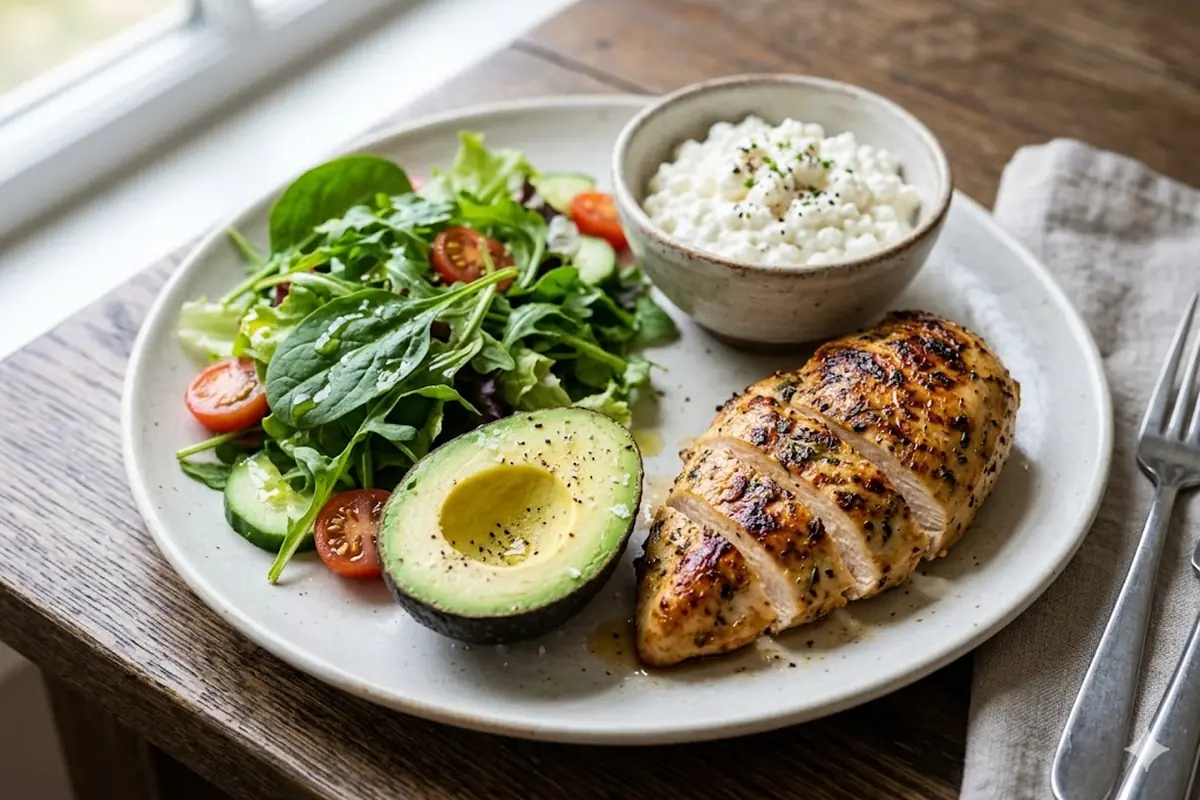
The mechanics are simple once you stop fearing protein. Anchor every meal with a clear protein source, hit your daily gram target across two or three meals, and use fat to top up the remaining calories rather than as the centerpiece. Meat, poultry, fish, and eggs are the obvious anchors. Greek yogurt, cottage cheese, and harder cheeses add protein with manageable carbs. If you train and want a clean protein hit between meals, an unsweetened whey or egg-white protein with no added sugar fits fine.
The fat choices then become a dial rather than the whole meal. Build a plate around chicken thighs or a lean cut, and you can add as much or as little oil, cheese, and avocado as your fat target needs. This is where keto cooking gets flexible: a high-protein air fryer chicken dish lets you control the fat by how you dress it, and even plant proteins like tofu and tempeh, the kind that anchor a good vegan burger, can slot into a higher-protein keto day for people who want to lean less on meat. Snacking is where protein quietly slips, so keep protein-forward options on hand; nuts help, but watch the portion, since they are more fat than protein. My guide to keto friendly nuts breaks down which ones give you the most protein for the carbs.
The Targeted and Cyclical Variations
Once your everyday protein is dialed in, a couple of variations are worth knowing about, because they reframe how protein and carbs interact for active people. A targeted approach keeps carbs very low all day but allows a small, deliberate dose of carbohydrate right around hard training, on the logic that the working muscle will use that glucose directly rather than letting it stall ketosis broadly. A cyclical approach is more aggressive, running strict keto most of the week and then including a higher-carb refeed window, typically for athletes with serious training demands. Both of these are advanced tools, not starting points, and neither is necessary for the average person losing weight or eating keto for metabolic reasons.
What they illustrate is the principle underneath this whole guide: keto is a low-carbohydrate diet with protein set to protect muscle and fat set to fill the energy gap, and those two macros are dials you can adjust to your goals rather than fixed commandments. The standard keto eater holds protein steady at 1.2 to 2.0 g/kg and lets fat float to meet calories. The high-protein eater pushes protein up and fat down. The athlete might layer in targeted carbs. In every version, protein is the anchor, not the afterthought, and that single mental shift fixes most of the protein mistakes people make on keto. Treat protein as the number you must hit, treat carbs as the number you must cap, and treat fat as the flexible remainder, and the macro math stops being confusing.
Signs You Have Your Protein Dialed In
You do not need a lab to know whether your protein is working. The signals are practical. You are not constantly hungry between meals. You are holding or building strength in the gym rather than watching your lifts slide. The weight you lose looks like fat loss, not deflation. And if you test ketones, they stay in a comfortable range despite your eating real, satisfying amounts of protein. When all of that lines up, you have found your number, and you can stop worrying about a process your liver was managing fine the whole time.
How to Distribute Protein Across the Day
Total daily protein matters most, but how you spread it has a real effect on muscle. The body can only use so much protein for muscle repair in one sitting, so dumping your entire day’s protein into a single dinner is less effective than spreading it across two or three meals of roughly 30 to 45 grams each. If you eat two meals a day, which many keto folks drift toward once appetite settles, make each one protein-substantial rather than relying on a fat-heavy breakfast and a real meal only at night. Three eggs is about 18 grams, a 6-ounce chicken thigh portion is around 40, a cup of cottage cheese is roughly 24. Stacking those across the day gets most people to target without effort.
Timing around training helps if you lift, though it matters less than the total. A protein-forward meal in the few hours around a workout supports recovery, but the older idea of a narrow “anabolic window” has been overstated; hitting your daily number consistently does the bulk of the work. The practical takeaway is to stop treating protein as an afterthought you tack onto a fat-centered plate and start treating it as the thing you build each meal around, with fat dialed up or down to meet your calorie target.
Protein Quality and Sources Beyond Meat
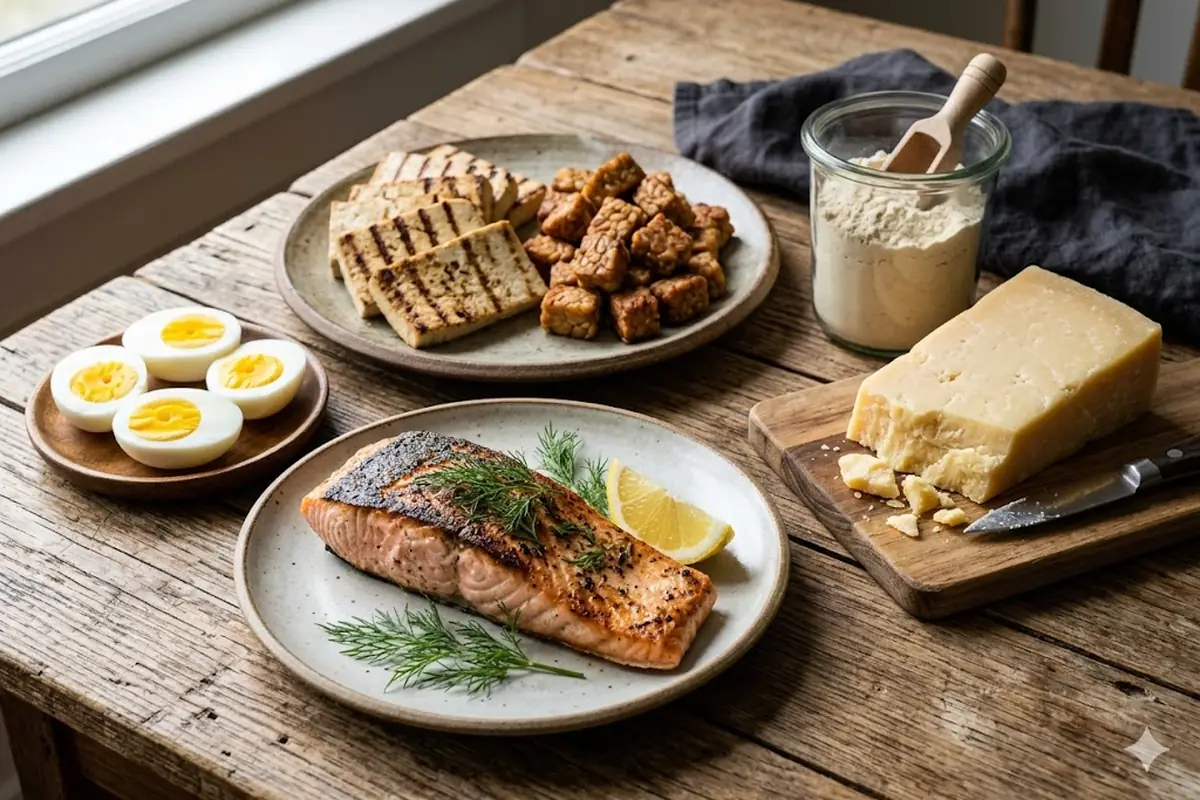
Not all protein is equal in how completely it supplies the amino acids your body needs. Animal proteins, including meat, fish, eggs, and dairy, are complete and highly bioavailable, which is why they anchor most keto plates easily. Whey and egg-white protein powders are the same story in convenient form, useful when whole food is impractical. Even health authorities cautious about keto, such as Harvard Health, emphasize choosing quality protein and fat sources rather than treating the diet as a free pass on any high-fat food, and that guidance applies squarely to where you get your protein.
Plant proteins can contribute too, especially for people who want to lean less heavily on meat. Tofu, tempeh, and seitan deliver meaningful protein at manageable carbs, and a few keto-friendly nuts and seeds add a little more. They tend to be less complete individually, so variety matters more on the plant side, but they expand the menu. The bottom line on quality is simple: prioritize complete, minimally processed protein sources, get enough of them, and the question of which exact food it came from matters far less than whether you hit your number at all.
Keto was never meant to be a low-protein diet. It is a low-carbohydrate diet, and protein is the macro that protects everything you are trying to keep while the carbs come down. Eat enough of it, distribute it across the day, and let fat fill the rest. That is the version of keto that actually holds up over months instead of weeks.
Frequently Asked Questions
Does eating too much protein kick you out of ketosis?
For most people, no. The fear comes from gluconeogenesis, the process of making glucose from protein, but that process is demand-driven and tightly regulated by the liver, not a faucet where every extra gram of protein turns into blood sugar. Eating a generous, sensible amount of protein does not break ketosis for the large majority of people. Only the very metabolically sensitive, or those eating enormous single doses of protein, may see ketones dip, and that is a fine-tuning issue, not a reason to under-eat protein.
How much protein should I eat per day on keto?
Aim for 1.2 to 2.0 grams of protein per kilogram of reference body weight. Sedentary people at maintenance can use the lower end, around 1.2 to 1.5 g/kg. If you are in a calorie deficit losing fat, or you train hard, push toward 1.6 to 2.0 g/kg to protect muscle and stay full. For a 70-kilogram person that is roughly 84 to 140 grams a day. Do not drop below about 1.2 g/kg, because that risks muscle loss.
What is a high-protein keto macro split?
A higher-protein ketogenic diet typically runs about 60 to 65 percent of calories from fat, 30 percent from protein, and 5 to 10 percent from carbohydrate, compared with the classic split of roughly 75 percent fat, 20 percent protein, and 5 percent carbs. The carbs stay low in both versions. The higher-protein split simply trades a little fat for more protein, which suits active people and anyone prioritizing muscle while still keeping you in ketosis.
Why am I still hungry on keto?
The most common reason is too little protein, not too few carbs. Protein is the most satiating macronutrient, so people who try to fill up on fat alone often stay hungry because fat, while calorie-dense, is less filling per calorie. Anchoring each meal with a clear protein source and hitting your daily gram target usually quiets the hunger that fat could not. Inadequate protein during a calorie deficit also drives muscle loss, so raising it solves two problems at once.