
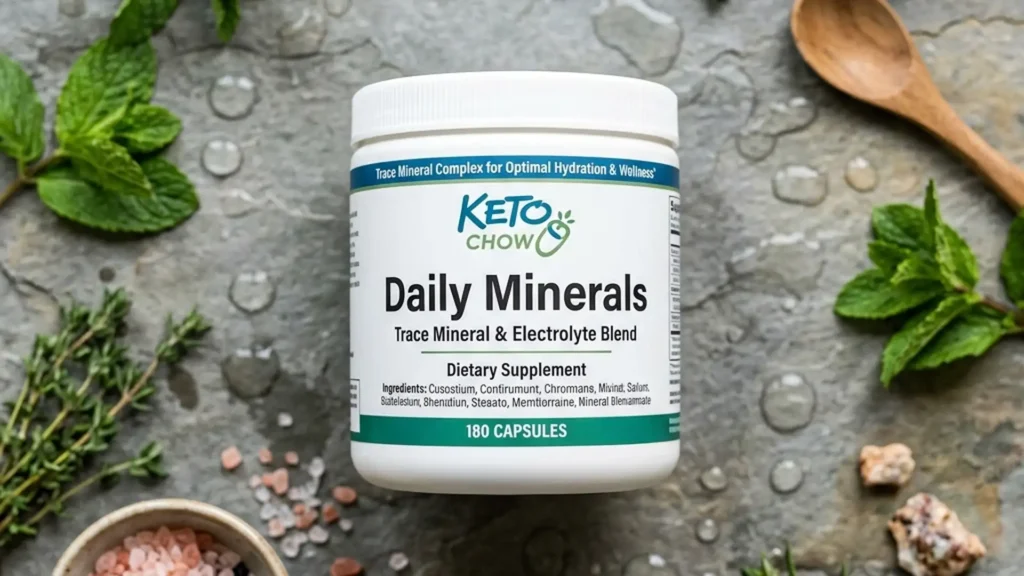
Keto Chow Daily Minerals (now sold as SALTT Minerals) is a zero-carb electrolyte supplement built to fix the exact mineral shortfall that wrecks people in their first weeks of keto. One tablespoon delivers 600 mg sodium, 1,000 mg potassium, and 400 mg magnesium, plus a stack of trace minerals, for no calories and no carbs. It works, it is one of the cheapest options per milligram, and it tastes aggressively salty. Whether you need it at all is the real question, so here is a straight answer instead of a sales pitch.
Here is the short version. If you get headaches, fatigue, cramps, or brain fog in early keto, that is almost always low electrolytes, and a product like this fixes it fast and cheaply. But you can hit the same numbers with plain salt, a potassium-based salt substitute, and a magnesium supplement for pennies. What Daily Minerals buys you is convenience, the trace minerals, and not having to measure three things. Below is a breakdown of the exact contents, your real daily targets, how it compares to LMNT and a DIY mix, and who should actually bother.
What is in it, exactly
The formula is mineral chlorides sourced from the Great Salt Lake, which matters because the chloride form dissolves and absorbs well. Per 1 tablespoon (15 mL) serving of the powder or drops, you get the following.
| Mineral | Per tablespoon | Why it matters on keto |
|---|---|---|
| Sodium | 600 mg | Lost fast as insulin drops; the #1 deficit |
| Potassium | 1,000 mg | Cramps, heart rhythm, follows sodium loss |
| Magnesium | 400 mg | Sleep, cramps, the most common deficiency |
| Chloride | 2,400 mg | Pairs with sodium/potassium for fluid balance |
| Trace (zinc, copper, etc.) | Varies | Zinc 15 mg, iodine 300 mcg, selenium 75 mcg + more |
Zero calories, zero carbs, no sugar, no flavor. The trace minerals are the part most DIY mixes skip: zinc, boron, manganese, copper, iodine, selenium, chromium, and molybdenum, all of which can run low on a tightly restricted diet grown in depleted soils. That trace stack is the genuine argument for buying a formula instead of mixing your own.
Your real daily electrolyte targets on keto

You cannot judge a supplement without knowing the target it is filling. On keto, the commonly cited daily ranges are higher than standard guidelines, because your kidneys are dumping sodium. Rough targets most keto practitioners aim for: 3,000 to 5,000 mg of sodium, 3,000 to 4,000 mg of potassium, and 300 to 400 mg of magnesium per day. These are general ranges; people with kidney disease, heart failure, or on blood-pressure or potassium-affecting medication should get personalized numbers from a doctor, since loading potassium and sodium is not safe for everyone.
Now line that up against the product. One tablespoon gives you 600 mg sodium, which is a fraction of your 3,000-plus target, so Daily Minerals is a supplement on top of food and salt, not a replacement for them. It nails magnesium in one serving and covers a solid quarter of your potassium. The takeaway: you still need to salt your food generously and eat potassium-rich keto foods like avocado, spinach, and salmon. The product closes the gap; it does not do the whole job.
Do you actually need it? An honest decision
Food first, always. If you are eating whole foods, salting to taste, and feeling fine, you may not need any supplement at all. Here is who benefits.
- Buy it if: you are in your first month of keto with classic keto-flu symptoms, you are athletic or sweat a lot, you live somewhere hot, or you simply will not remember to measure salt, lite salt, and magnesium separately.
- You can skip it if: you cook from scratch, salt aggressively, eat plenty of leafy greens and avocado, and have no symptoms. A salt shaker and a magnesium pill may be all you need.
- Talk to a doctor first if: you have kidney disease, heart conditions, or take ACE inhibitors, ARBs, or potassium-sparing diuretics, since added potassium can be dangerous in those cases.
The keto flu specifically is an electrolyte problem dressed up as a diet problem, which is why a product like this resolves it so fast. The full symptom-by-symptom fix is in the guide to the keto flu and how to beat it, and the role minerals play there is the whole reason supplements like this exist.
How it compares to LMNT, Redmond, and plain salt
Daily Minerals is not the only game, so here is the honest comparison. The big difference is that LMNT and Redmond Re-Lyte are flavored and pleasant to drink, while Daily Minerals is unflavored and tastes like the ocean. You pay for that flavor in both money and, in some cases, fewer total minerals.
| Option | Sodium | Potassium | Magnesium | Notes |
|---|---|---|---|---|
| Keto Chow Daily Minerals | 600 mg | 1,000 mg | 400 mg | Unflavored, trace minerals, cheapest |
| LMNT (per stick) | 1,000 mg | 200 mg | 60 mg | Flavored, more sodium, pricier |
| Redmond Re-Lyte | 810 mg | 400 mg | 60 mg | Flavored, balanced, mid price |
| DIY (salt + lite salt + Mg) | Your call | Your call | Your call | Cheapest, no trace, you measure |
My honest read: Daily Minerals is the value pick if you do not mind the salty taste and you want the highest potassium and magnesium per serving. LMNT wins purely on flavor and convenience, which is not nothing when you are trying to actually drink the stuff every day. If you are budget-driven and disciplined, a DIY mix of table salt, a potassium chloride salt substitute, and a magnesium glycinate capsule replicates most of it for a fraction of the cost; you just give up the trace minerals and have to measure.
Drops, capsules, or powder: which to get
The same formula comes three ways, and they suit different people. The liquid drops in a 2 oz bottle are travel-friendly; you squeeze a dose into 24 to 28 ounces of water and go. Capsules suit anyone who hates the salty taste, since you swallow them and skip the flavor entirely, though you take several to hit a full serving. The 32 oz powder is the cheapest per serving and the right choice for daily home use, scooped into water, coffee, or a shake.
About that taste: it is salty, full stop. Reviewers consistently say so, and the brand itself suggests mixing it with a flavored drink. If you go powder or drops, put it in something with flavor (a sugar-free electrolyte flavoring, lemon water, or coffee) rather than plain water, or you will dread it. Start with one serving a day and add more only if you are very active or sweating hard.
What each mineral actually does (and the symptom it fixes)
Understanding the three big minerals helps you tell whether you need a supplement or just need to eat differently. Sodium is the one your body sheds first on keto, within days of cutting carbs, and the shortfall shows up as headaches, lightheadedness when you stand, and a foggy, drained feeling. It is the single most common cause of feeling awful in week one, and it is the easiest to fix: salt your food and drink something salty.
Potassium is the partner mineral. When sodium drops, potassium follows it out, and low potassium brings muscle cramps (the dreaded 2 a.m. calf cramp), an irregular or pounding heartbeat, and weakness. Potassium is harder to supplement safely in big doses, which is why food sources matter so much: a single avocado has around 700 mg, a cup of cooked spinach about 840 mg. Magnesium is the quiet one, the deficiency most people already had before keto, and it drives poor sleep, cramps, anxiety, and constipation. Magnesium is where a supplement earns its keep, because hitting 300 to 400 mg from food alone on a restricted diet is genuinely hard.
So the pattern is this: sodium, fix it with salt; potassium, lean on food plus a little supplement; magnesium, supplement it outright. A product like Daily Minerals is appealing precisely because it handles all three in one scoop, with magnesium fully covered, which is the part DIYers most often shortchange.
When to take it for the best effect

Timing matters more than people think. The worst keto-flu symptoms tend to hit mid-morning and late afternoon, so spacing your electrolytes across the day beats slamming them all at breakfast. A common approach is a serving in the morning and, if symptoms or hard exercise demand it, a second in the early afternoon. Taking your full day’s electrolytes at once can cause loose stools, especially with the magnesium, so split it.
Around workouts is the other key window. If you train fasted or sweat heavily, a serving 30 minutes before exercise sharpens performance and heads off cramps; another after replaces what you sweated out. Magnesium specifically is worth taking in the evening, since it helps with sleep and muscle relaxation, which is one reason some people take the capsules at night even if they use powder during the day. Avoid taking it right before bed in a huge dose, though, or the bathroom trips will undo the sleep benefit.
The cost breakdown: is it worth the money?
Value is a real selling point here, so here are the numbers. The 32 oz powder runs roughly 64 servings, which works out to well under a dollar a serving, cheaper than the flavored stick-pack competitors that often land north of a dollar and a half each. Over a month of daily use, that gap adds up to real money. The drops cost more per serving but win on portability, and the capsules cost the most per dose because you are paying for the convenience of no taste.
Against a pure DIY mix, the supplement loses on raw price; a box of salt, a canister of potassium-based salt substitute, and a bottle of magnesium glycinate will outlast and undercut any commercial blend by a wide margin. What the DIY route costs you is the trace minerals and your time and attention measuring three things every day. For a lot of people, the few extra dollars a month to not think about it is worth it, and consistency beats the perfect cheap mix you keep forgetting to make. My honest stance: if you will genuinely DIY it every day, do that and save the money; if you know yourself and you will not, buy the formula and actually use it.
Common electrolyte mistakes on keto
A few errors show up over and over. The biggest is under-salting out of old habit; people spend decades being told salt is the enemy, then go keto and stay scared of it while their kidneys dump sodium, and they feel terrible for no reason. On keto, more salt is usually the answer, not less, unless a doctor told you otherwise. The second mistake is ignoring magnesium entirely and wondering why sleep and cramps got worse. The third is treating a sugary sports drink as an electrolyte fix; it spikes your blood sugar and knocks you out of ketosis for a few hundred milligrams of sodium you could get from a pinch of salt.
The fourth is overdoing potassium from supplements. Food potassium is hard to overdo, but pills and heavy supplement doses can push potassium too high, which is dangerous for the heart, especially if you take certain blood-pressure medications. Get most of your potassium from avocado, leafy greens, salmon, and mushrooms, and use supplements to top up, not as the main source. Respect that one and the rest of electrolyte management is forgiving.
Using it as a salt replacement on food
One underrated use: because it is mostly mineral chlorides, the powder doubles as a seasoning that adds potassium and magnesium along with the salty hit. Sprinkle it on eggs, roasted vegetables, or a steak the way you would use finishing salt, and you season your food and top up electrolytes in one move. It will taste saltier and more mineral-forward than table salt, so use a lighter hand at first.
This pairs naturally with cooking that already leans on salt and fat. Good keto food is salted food, and proper salting is a technique worth learning regardless of supplements; America’s Test Kitchen covers seasoning and vegetable cooking technique in depth. If you want to build the rest of your day around mineral-rich foods so you lean on the supplement less, these keto lunch ideas are full of avocado, greens, and salmon, and the broader guide to how keto works and staying in ketosis covers where electrolytes fit in the daily plan. For the science on why these minerals matter, this review of electrolyte balance and health is a solid reference.
FAQ
What is in Keto Chow Daily Minerals?
Per tablespoon: 600 mg sodium, 1,000 mg potassium, 400 mg magnesium, 2,400 mg chloride, plus trace minerals including zinc, copper, boron, manganese, iodine, selenium, chromium, and molybdenum. It has zero calories, zero carbs, no sugar, and no added flavor. The minerals are in chloride form, sourced from the Great Salt Lake.
Does Keto Chow Daily Minerals have carbs?
No. It is zero carbs and zero calories, so it will not affect ketosis or your daily carb budget at all. That is the point of an electrolyte supplement versus a sports drink, which is loaded with sugar.
How much should I take?
Start with one serving (1 tablespoon of powder, the labeled dose of drops, or the capsule equivalent) per day. Increase if you are very active, sweating heavily, or in a hot climate. Because one serving only covers part of your daily sodium and potassium targets, keep salting your food and eating mineral-rich keto foods too.
Why does it taste so salty?
Because it is concentrated mineral chlorides with no added flavoring. That salty, ocean-like taste is the unflavored formula doing its job. Mix it into a flavored drink or coffee, or use the capsules instead, if the taste bothers you.
Is it better than LMNT?
It depends on what you want. Daily Minerals has more potassium and far more magnesium per serving and costs less, but it is unflavored and salty. LMNT has more sodium, comes in flavors, and is easier to drink daily, but costs more and has less magnesium. Value goes to Daily Minerals; enjoyment goes to LMNT.
Can I just use salt instead?
Partly. Plain salt covers sodium and chloride cheaply, and a potassium chloride salt substitute plus a magnesium supplement covers the rest. That DIY route is the cheapest and works, but you have to measure three things and you miss the trace minerals a formula includes. The supplement mainly buys convenience and that trace stack.
Bottom line
Keto Chow Daily Minerals is a genuinely good electrolyte supplement: zero carbs, strong magnesium and potassium per serving, real trace minerals, and a low price, with the only real downside being an aggressively salty taste you can mix away. It will not single-handedly hit your daily sodium and potassium targets, so think of it as filling the gap on top of well-salted, mineral-rich food, not replacing it. If keto flu has you flattened, it is one of the fastest fixes out there. If you cook from scratch and salt freely, a shaker and a magnesium pill might be all you ever need.