Keto lunch ideas have to clear two hurdles a dinner does not: lunch usually happens away from your kitchen, and you rarely have time to cook it, which is exactly why the conventional answer, a sandwich, wrap, or salad with croutons and a sweet dressing, is so carb-heavy and so hard to replace. A standard deli sandwich runs 40 to 50 grams of net carbs in the bread alone, more than two days of a keto budget. The fix is to build lunch from the same fat-and-protein logic as the rest of keto, in a form that travels and needs no stove. This guide covers no-cook lunches you can assemble in minutes, meal-prep bowls and salads you batch on Sunday, work-friendly options that survive a desk drawer, and the packing logistics most lists skip, all with net carbs stated and US measures throughout. None of this is medical advice; it is a practical set of low carb lunches with the numbers counted.
The honest starting point is that lunch is where most people break keto, because it is the meal they least control. You are at a desk, in a car, or grabbing something fast, and the easy options, sandwiches, wraps, fast food, are built on bread and starch. The only reliable solution is to decide lunch before lunch happens, either by packing it the night before or by keeping shelf-stable keto food where you work. Once lunch is solved in advance, the midday carb trap disappears, and that single habit does more for staying in ketosis than any specific recipe.
No-Cook Lunches You Assemble in Minutes
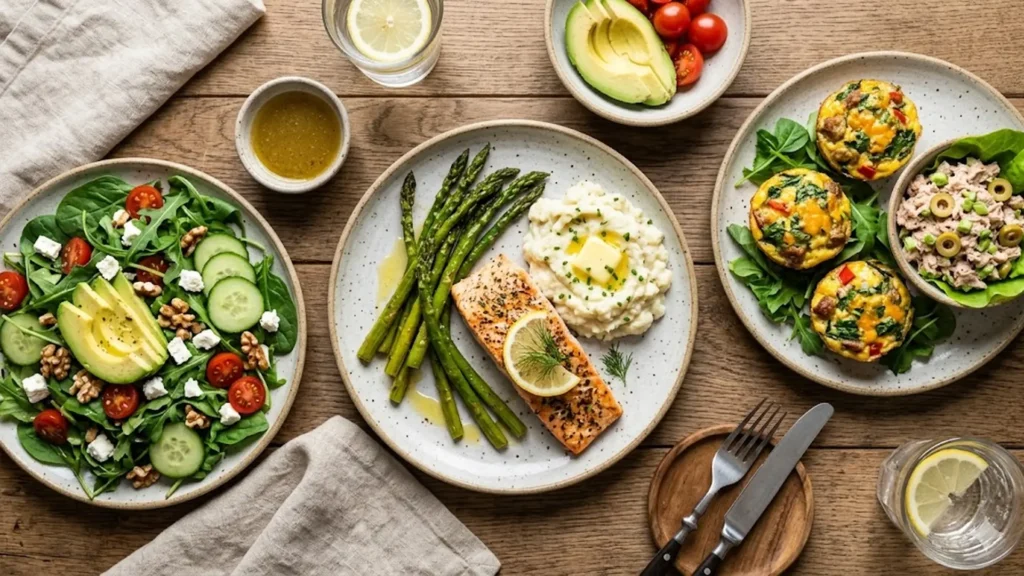
The fastest keto lunches involve no cooking at all, just assembly from ingredients you keep on hand. Deli roll-ups are the classic: a slice of turkey, ham, or salami wrapped around a stick of cheese, with a pickle, olive, or pepperoncini for flavor, lands around 2 grams of net carbs and takes two minutes. A can or pouch of tuna or wild salmon stirred with mayo or olive oil is zero to 3 grams and needs no refrigeration before opening, making it a perfect desk-drawer lunch. Hard-boiled eggs with half an avocado run about 4 grams and deliver protein and fat that keep you full all afternoon.
For something that feels more like a meal, a chopped salad of greens, cooked chicken or tuna, cheese, and a fatty dressing comes together in five minutes if the protein is already cooked. Lettuce cups filled with egg salad, chicken salad, or taco-seasoned beef are a no-bread wrap at 3 to 4 grams. And a simple charcuterie-style plate of cold cuts, cheese, olives, nuts, and a few cucumber slices is a lunch with no recipe at all, perfect when you do not want to think. Many of these overlap with portable bites, and the keto snacks guide covers more of the grab-and-go items that scale up into a lunch.
| Lunch | Net carbs | Type |
|---|---|---|
| Deli and cheese roll-ups | 2 g | No-cook |
| Tuna or salmon pouch with olive oil | 0-3 g | Shelf-stable |
| Chicken or egg salad lettuce cups | 3-4 g | No-cook |
| Cobb or chopped salad | 5-6 g | Assembly |
| Cauliflower rice bowl with chicken | 5-6 g | Meal prep |
| Egg drop or broth soup | 1-3 g | Make-ahead |
Meal Prep: Cook Once, Eat All Week
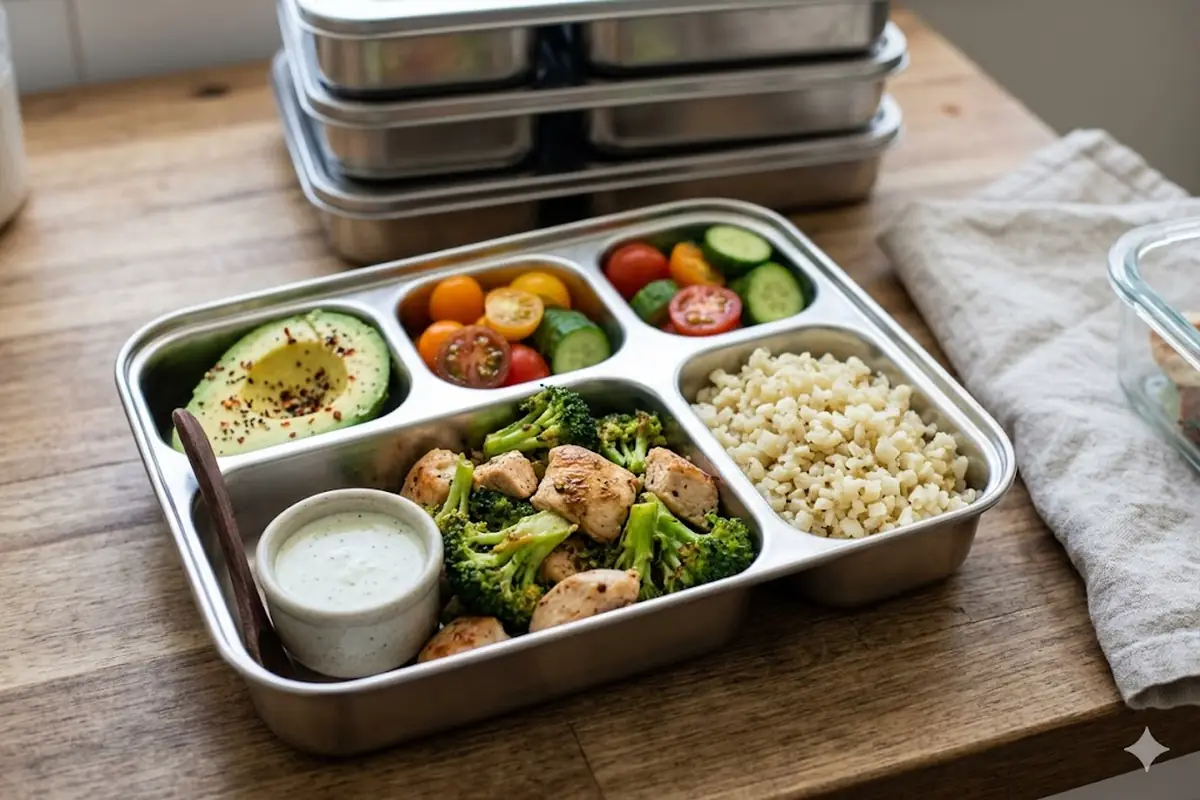
The most reliable way to keep lunch keto is to batch it on a weekend. A few proteins cooked in bulk, shredded chicken, ground beef, hard-boiled eggs, or a tray of roasted sausage, become the base for a week of lunches. Portion them into containers with a low carb vegetable and a sauce and you have grab-and-go meals at 4 to 6 grams of net carbs each. Bowls are the easiest format: cauliflower rice topped with seasoned chicken or beef, cheese, and a fatty sauce reheats well and keeps four to five days in the fridge. A Korean-style beef bowl, a fajita bowl, or a taco bowl over cauliflower rice all work.
Salads prep well too, with one rule: keep the dressing separate until you eat, or the greens go soggy. A jar salad layered with dressing at the bottom, then hard vegetables, protein, and greens on top, stays crisp for days and tips into a bowl when you are ready. For warm lunches, a soup like egg drop or a cabbage-and-sausage soup batches into single servings and freezes for weeks. The technique that makes meal prep taste good rather than like sad reheated leftovers is seasoning the protein well and not overcooking it, since reheating dries food out; the test cooks at America’s Test Kitchen have reliable methods for chicken, beef, and eggs that hold up to a second day. Most of these are simply scaled-down dinners, and the keto dinner ideas guide shows the full meals these lunch portions come from.
Lunches That Travel to Work or School
Work and school add a constraint: the lunch has to survive hours without a kitchen, sometimes without a fridge. Shelf-stable options win here. Canned or pouched tuna and salmon, beef or turkey jerky with no added sugar, cheese crisps, nut packs, and single-serve olives or guacamole all keep at a desk for hours and need no refrigeration before opening. Keep a small stash of these at work and you always have a backup keto lunch even on a day you forgot to pack.
For anything perishable, an insulated lunch bag with an ice pack buys you the safe window: meat, eggs, cheese, and dressed salads are fine for several hours kept cold, but should not sit at room temperature past about two hours. Pack dressings and sauces in small separate containers so nothing goes soggy, and add a squeeze of lemon or lime to cut avocado to keep it from browning. A leak-proof container matters more than people think, because a tuna salad that leaks into a bag is the reason people give up on packing lunch. The logistics, an insulated bag, an ice pack, separate sauce containers, and a stable shelf stash, are what make a packed keto lunch actually happen day after day.
Warm Lunches and Soups
Not every lunch should be cold, and a warm keto lunch is often more satisfying, especially in winter. Soups are the easiest hot option to batch and carry: an egg drop soup is about 1 gram of net carbs, a cabbage-and-sausage soup runs 3 to 5 grams, and a creamy chicken or broccoli-cheese soup makes a filling lunch under 6 grams. Made in a big pot on the weekend, soup portions into jars, freezes for weeks, and reheats in a microwave at work in two minutes. Broth-based soups also help with the sodium that keto bodies need, which doubles their usefulness.
Beyond soup, anything from the dinner table reheats into a warm lunch. A portion of casserole, a few meatballs, a piece of frittata, or leftover roast meat with a low carb vegetable goes from fridge to hot lunch in minutes. The trick with reheating is to slightly undercook the protein the first time and stop the microwave before it is piping hot throughout, because overheating is what turns reheated chicken rubbery and dry. A splash of broth or a pat of butter added before reheating keeps things moist. Treating dinner leftovers as tomorrow’s lunch is the single most efficient keto habit there is, since it solves two meals with one cooking session and adds no extra carbs.
The Cheapest Keto Lunches
Keto lunch does not have to be expensive, despite the reputation. Eggs are the cheapest complete protein there is, and a couple of hard-boiled eggs with cheese or avocado is a full lunch for very little. Canned tuna and sardines are inexpensive, shelf-stable, and zero carbs. Ground beef cooked in bulk and portioned over cauliflower rice costs far less than restaurant lunches and beats them on macros. Rotisserie chicken from the store stretches across several lunches as salad, bowls, and lettuce wraps. The expensive part of keto is usually the specialty packaged products, the keto bars, branded snacks, and prepared meals, and you can skip almost all of them by leaning on eggs, canned fish, ground beef, and cheap cuts of meat. Cooking your own lunch is both cheaper and lower in carbs than nearly anything you would buy out. A useful budgeting move is to build a week of lunches around one cheap protein on sale, a few pounds of ground beef or a value pack of chicken thighs, cooked once and seasoned differently across the week so it never tastes the same twice. Eggs and canned fish then fill the gaps on days you want something faster. Bought this way, a week of keto lunches can cost less than a few days of buying lunch out, while keeping every meal firmly inside your carb budget.
Eating Out for Lunch on Keto
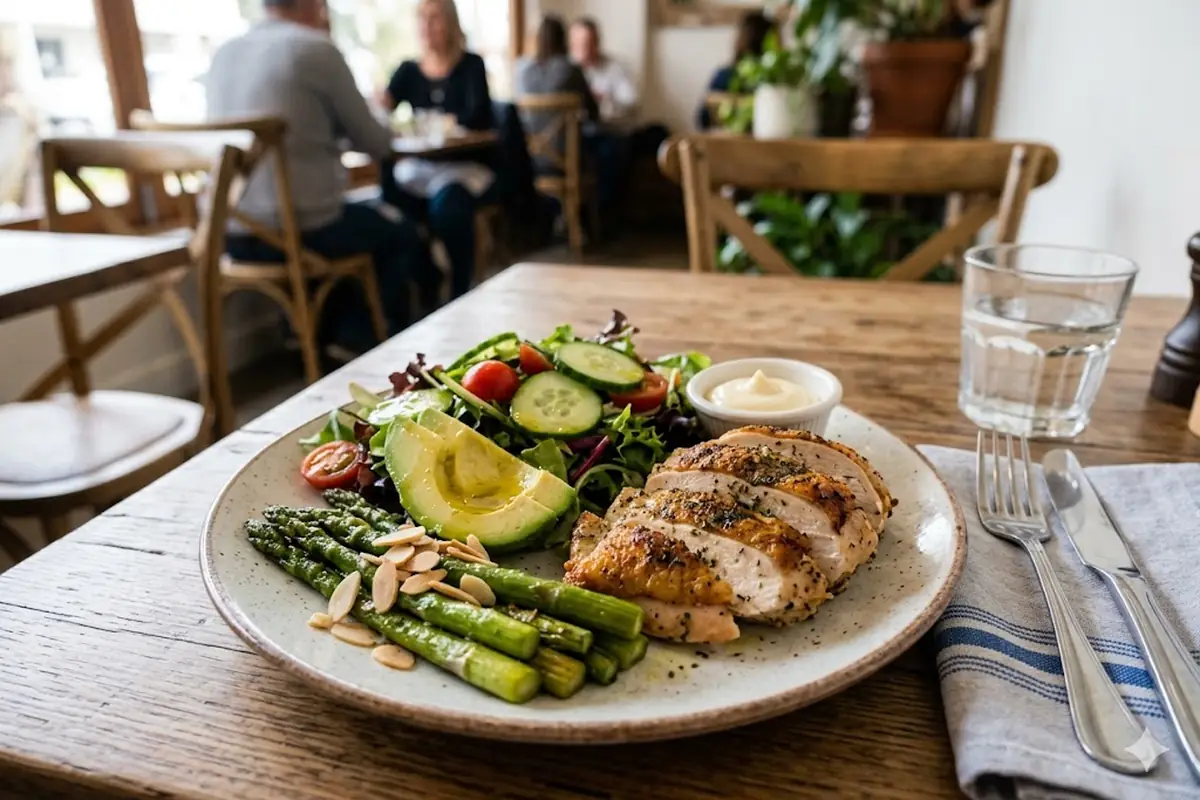
Sometimes you have to buy lunch, and most places have a keto-friendly option if you know how to order. The universal move is to order a protein and skip the starch: a burger with no bun, a salad with grilled chicken and oil-and-vinegar or ranch, a bowl with no rice or beans, or fajita meat without the tortillas. Fast-casual places that build bowls or salads are the easiest, since you control what goes in. Avoid the obvious traps, the bun, the wrap, the breading, the sweet dressing, the fries, and the soda, and ask for extra protein or avocado to make up the volume. Salad dressings are the sneakiest carb source when eating out, so favor oil and vinegar or ask for dressing on the side and use a little. If you want to make your own low carb dressings to bring along instead, the recipe developers at Bon Appetit publish reviewed vinaigrette and creamy dressing ratios you can build without sugar and pack in a small jar.
Troubleshooting: Why Lunch Trips You Up
A few problems come up repeatedly, and each has a fix.
You forget to pack and grab carbs. Keep a shelf-stable backup stash at work, canned fish, jerky, cheese crisps, and nuts, so a forgotten lunch never forces a carb-heavy choice.
Soggy salad by noon. The dressing was mixed in too early. Pack it separately and add it just before eating, or layer a jar salad with dressing on the bottom and greens on top.
Hungry again by mid-afternoon. Not enough fat and protein. Add avocado, cheese, or a fattier dressing so lunch actually holds you to dinner instead of leaving you reaching for a snack.
Bored of the same lunch. Rotate the protein and sauce while keeping the format. The same bowl base feels different as a taco bowl one day and a Korean beef bowl the next, just by changing the seasoning.
Lunch leaked in your bag. Use a genuinely leak-proof container for anything wet like tuna or chicken salad, and pack sauces separately. This single fix saves more packed lunches than any recipe.
How Lunch Fits Your Daily Carbs
The math is the part that keeps you in ketosis. A lunch at 4 to 6 grams of net carbs fits comfortably inside a 25-gram daily ceiling alongside breakfast and dinner. The trap at lunch is not the protein, it is the additions: a sweet dressing, a sugary sauce, a piece of fruit, or a soda can add 15 to 30 grams without changing how the meal looks. Count the dressing and the sauce, not just the main, and lunch causes no trouble. The other quiet leak is grazing through the afternoon because lunch was too light, which is why building enough fat and protein into the meal matters as much as keeping the carbs low. A satisfying lunch that holds you to dinner is what stops the afternoon snack spiral that breaks so many keto days.
Bottom Line
Keto lunch ideas come down to deciding lunch before lunch happens, because midday is the meal you control least. Keep no-cook options like deli roll-ups, tuna pouches, and lettuce-cup salads for fast assembly, batch bowls and salads on the weekend so weekdays need no decisions, and stash shelf-stable backups at work so a forgotten lunch never forces a carb-heavy choice. Pack an insulated bag with an ice pack, keep dressings separate to stop sogginess, and use a leak-proof container for anything wet. Lean on cheap staples, eggs, canned fish, and ground beef, rather than pricey packaged keto products, and when you eat out, order a protein and skip the starch. Count the dressing and sauce against your daily budget, build in enough fat to stay full, and lunch stops being the meal where keto falls apart and becomes the easiest one to keep low carb. The pattern that works for almost everyone is the same: cook a cheap protein in bulk on the weekend, pack it with a low carb vegetable and a separate sauce, and keep a shelf-stable backup at your desk for the days the plan slips.
FAQ
What can I eat for lunch on keto?
Deli and cheese roll-ups, tuna or salmon with mayo, chicken or egg salad in lettuce cups, chopped salads with a fatty dressing, and cauliflower rice bowls topped with seasoned meat are all strong options, most landing between 2 and 6 grams of net carbs. The key is building lunch from protein and fat instead of bread or wraps.
What is a good no-cook keto lunch?
Deli meat and cheese roll-ups at about 2 grams, a tuna or salmon pouch stirred with olive oil at 0 to 3 grams, or hard-boiled eggs with avocado at around 4 grams all need no cooking and just minutes to assemble. A charcuterie-style plate of cold cuts, cheese, olives, and nuts is another no-recipe option.
How do I pack a keto lunch for work?
Use an insulated bag with an ice pack for anything perishable, keep dressings and sauces in separate small containers to prevent sogginess, and use a leak-proof container for wet items like tuna salad. Keep a shelf-stable backup stash, such as canned fish, jerky, and nuts, at your desk for days you forget to pack.
How many carbs should a keto lunch have?
Aim for about 4 to 6 grams of net carbs so lunch fits inside a 25-gram daily ceiling alongside breakfast and dinner. The carbs usually creep in through dressings, sauces, and sides rather than the protein itself, so count those rather than assuming a salad or bowl is automatically low.
Can I meal prep keto lunches?
Yes, and it is the most reliable approach. Cook proteins like shredded chicken, ground beef, or hard-boiled eggs in bulk, portion them into containers with a low carb vegetable and sauce, and they keep four to five days refrigerated. Bowls over cauliflower rice reheat well, and jar salads stay crisp if you keep the dressing at the bottom.
What can I order for lunch out on keto?
Order a protein and skip the starch: a bunless burger, a salad with grilled chicken and oil and vinegar, a bowl with no rice or beans, or fajita meat without tortillas. Avoid buns, wraps, breading, fries, sweet dressings, and soda. Ask for dressing on the side, since restaurant dressings are the sneakiest carb source.