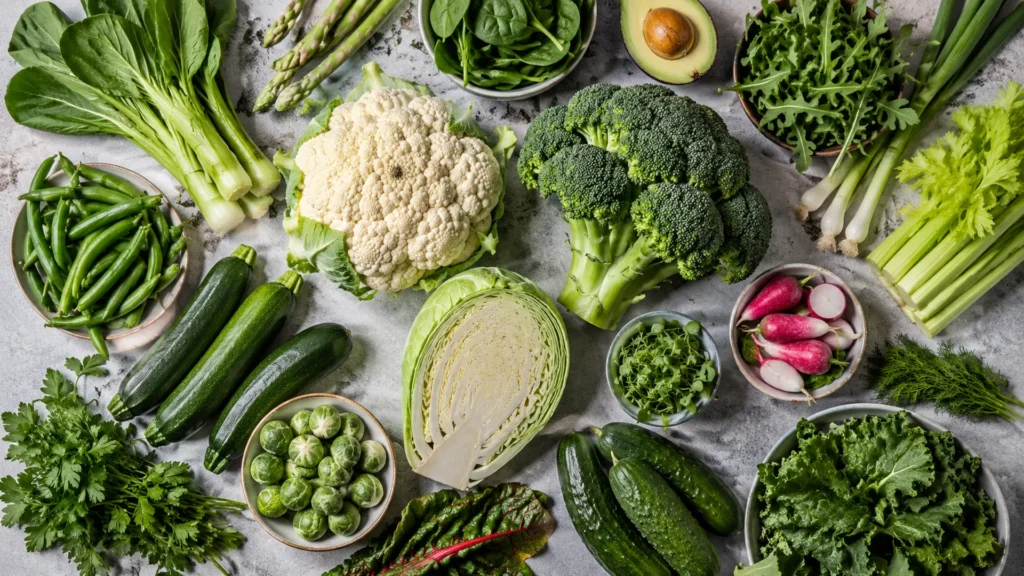
Lowest carb vegetables keto eaters can rely on share one trait: they grow above the ground and carry just a gram or two of net carbs per serving, which means you can eat them freely without spending your daily carb budget. Vegetables are where most of your fiber, potassium, magnesium, and antioxidants come from on keto, so cutting them out is a mistake; the trick is knowing which ones are genuinely low and which quietly add up. This guide ranks the lowest-carb vegetables by net carbs, explains the above-ground rule, flags the veggies to limit, and shows how to fit them into a keto plate, with net carbs counted per serving throughout.
None of this is medical advice, and your tolerances are your own. But if you want to fill your plate with color and fiber without worrying about ketosis, here is exactly which vegetables to reach for and how many carbs each one really costs.
The Above-Ground Rule
The fastest way to judge a vegetable on keto is to ask where it grew. Vegetables that grow above the ground, the leafy greens, the cruciferous heads, the squashes and peppers, tend to be low in carbohydrate. Vegetables that grow below ground as roots and tubers store energy as starch, which makes them carb-dense. Potatoes, sweet potatoes, parsnips, beets, and carrots in quantity all fall on the high side because of that stored starch. There are exceptions in both directions, but as a rule of thumb the above-ground question gets you the right answer most of the time, and it is easy to remember at the grocery store or a restaurant.
The other number that makes vegetables work on keto is net carbs. Net carbs are total carbohydrate minus fiber, and vegetables are high in fiber, so their net carb count is often much lower than the label suggests. A cup of raw spinach shows a few grams of total carbohydrate but only about one gram of net carbs once you subtract the fiber. That is why leafy greens are nearly free on keto and why fiber-rich vegetables are the foundation of a good plan.
The Lowest-Carb Vegetables, Ranked
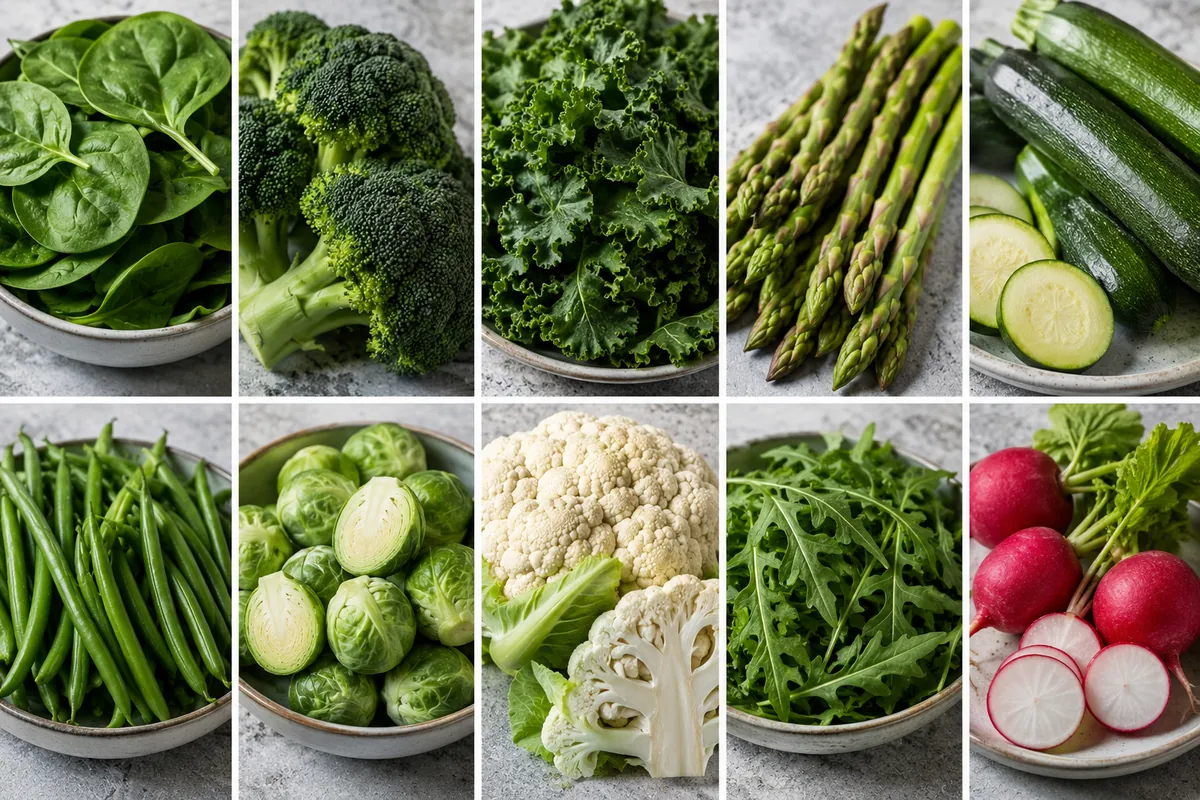
Here are the vegetables that cost you the least, roughly from lowest net carbs upward, with typical counts per common serving. Leafy greens lead the pack. Lettuce of all kinds, romaine, green leaf, iceberg, runs about one gram of net carbs per cup. Raw spinach is around one gram per cup, and kale lands near one gram per cup as well. Mushrooms come in around one gram per cup and add savory depth for almost nothing. Cucumber and celery are both about one gram per cup and are mostly water. Bok choy is famously low, under one gram per cup, and unusually high in vitamins for a green.
Moving up slightly, zucchini and cauliflower each carry about three grams of net carbs per cup, which is why both are keto workhorses for swaps like zoodles and cauliflower rice. Cabbage is around three grams per cup, asparagus about three grams per cup cooked, and radishes about two grams per cup. Broccoli and Brussels sprouts sit a touch higher near four grams per serving but bring excellent fiber and nutrients. Bell peppers and green beans run closer to six grams per cup, still workable but worth counting. Tomatoes, botanically a fruit, land around four grams per cup of cherry tomatoes.
| Vegetable | Net carbs (per cup) | Notes |
|---|---|---|
| Lettuce | ~1 g | Salad base, eat freely |
| Spinach (raw) | ~1 g | Cooks down small |
| Mushrooms | ~1 g | Savory, meaty texture |
| Cucumber | ~1 g | Mostly water |
| Zucchini | ~3 g | Great as noodles |
| Cauliflower | ~3 g | Rice, mash, pizza base |
| Broccoli | ~4 g | High fiber |
| Bell pepper | ~6 g | Count the portion |
The Free Greens You Can Eat Without Counting
A handful of vegetables are so low in net carbs that, in normal portions, you barely need to track them. Leafy salad greens, raw spinach, kale, lettuce, arugula, and Swiss chard sit at one to two grams per cup and shrink dramatically when cooked. Mushrooms, cucumber, celery, and radishes fall in the same near-free range. These are the vegetables to lean on when you want volume, crunch, and fiber without doing carb math. Filling half your plate with them adds bulk and nutrients while leaving most of your carb budget for a serving of a slightly higher-carb vegetable later in the day. They also carry the potassium and magnesium that keep the keto flu away.
Why Net Carbs, Not Total Carbs, Decide Everything
Understanding net carbs is what unlocks vegetables on keto, so it is worth slowing down on. When you eat a carbohydrate, your body breaks the digestible part down into glucose, which raises blood sugar and the insulin response that keto is built to keep low. Fiber is carbohydrate too, but your body cannot break it into glucose, so it passes through without spiking blood sugar. That is why you subtract fiber from total carbohydrate to get net carbs, the number that actually affects ketosis. Vegetables happen to be among the most fiber-dense foods you can eat, which is exactly why their net carb counts come out so low.
Take broccoli as an example. A cup of chopped broccoli shows around six grams of total carbohydrate, but about two of those grams are fiber, leaving roughly four grams of net carbs. The fiber does double duty: it lowers the net carb count and it feeds your gut and keeps digestion moving, something that matters because constipation is a common early keto complaint. So when you choose vegetables by net carbs, you are not gaming the system; you are counting the carbs that genuinely affect your blood sugar and ignoring the fiber that does not. Once that clicks, the whole category of low-carb vegetables stops feeling risky and starts feeling like the easiest, healthiest carbs you can spend.
Vegetables to Limit or Avoid on Keto
Some vegetables carry enough starch or sugar to be worth limiting. Potatoes and sweet potatoes are the obvious ones, both very high in starch. Corn is technically a grain and is high in carbs. Peas and most beans are starchy and carb-dense despite being green. Carrots and beets are sweeter root vegetables that add up quickly in any real portion, though a few carrot slices in a salad are fine. Winter squashes like butternut and acorn are higher than the summer squashes. None of these are forbidden in a single bite, but they are easy to overdo, and a normal serving can spend your whole daily carb budget on its own. Keep them small and occasional, or skip them in favor of the low-carb options above.
It is worth understanding why root vegetables run high. A plant stores energy underground as starch to survive winter and fuel next season’s growth, and starch is just chains of glucose. That is the same reason potatoes, sweet potatoes, and parsnips are filling and energy-dense; they are essentially natural starch reserves. Onions and garlic sit in a middle zone, higher in carbs than leafy greens but used in such small amounts as aromatics that they rarely cause a problem. A tablespoon of diced onion or a clove of garlic for flavor is fine; a cup of caramelized onions is not. The general lesson holds: the more a vegetable tastes sweet or starchy, the more carbs it carries, and the more carefully you should portion it.
Smart Low-Carb Vegetable Swaps
The lowest-carb vegetables shine as replacements for the starches keto removes. Cauliflower is the most versatile: pulse it into rice, steam and mash it like potatoes, or roast it for a side that soaks up fat and flavor. Zucchini spiralizes into noodles for a low-carb pasta night, and sliced lengthwise it becomes lasagna sheets. Spaghetti squash, slightly higher in carbs but still moderate, pulls apart into strands. Cabbage leaves wrap fillings in place of tortillas, and lettuce makes a crisp bun substitute for burgers. Portobello mushroom caps stand in for buns or pizza bases. These swaps let you keep the shape and comfort of familiar meals while staying well under your carb ceiling, which is a big part of what makes keto sustainable.
How to Cook Vegetables on Keto
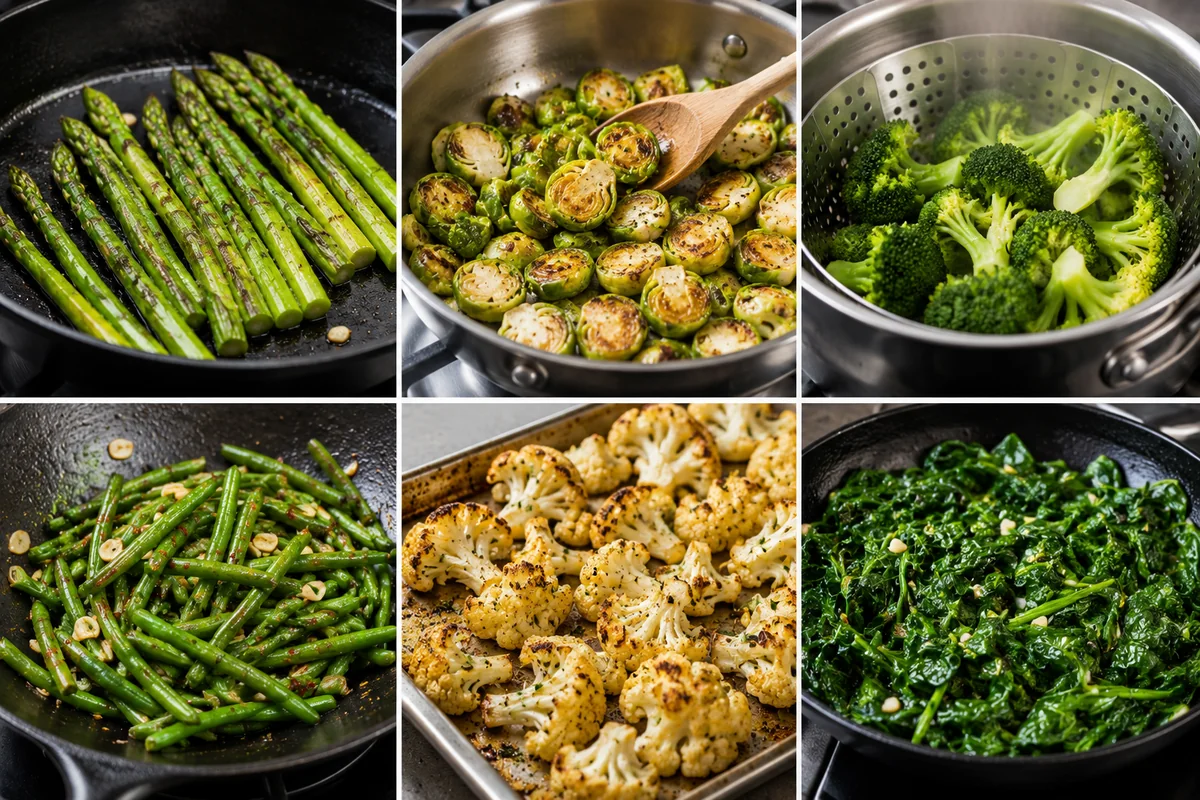
The best keto vegetable cooking adds fat, because fat is the macro you are building meals around. Roast broccoli or cauliflower in olive oil until the edges crisp. Saute spinach or kale in butter with garlic until just wilted. Grill zucchini and peppers, then finish with a drizzle of good oil. Steam-and-butter is the simplest move of all and works on nearly anything green. Adding cheese, bacon, or a creamy sauce turns a low-carb vegetable into a rich side that helps you hit your fat target. The one habit to avoid is boiling vegetables plain and leaving them dry, which makes keto feel like a punishment rather than the genuinely good food it can be.
Browning is your friend here. Roasting and sauteing trigger the Maillard reaction, the chemistry that turns the edges of cauliflower golden and gives broccoli its nutty, slightly crisp finish. That deep flavor is what makes low-carb vegetables very good instead of dutiful. Crank the oven to about 425 degrees Fahrenheit, toss the vegetables in enough oil to coat them, spread them in a single layer so they roast rather than steam, and leave them alone until the edges caramelize. The same vegetables that taste bland boiled become something you look forward to when they are roasted properly, and that difference is what makes a keto diet stick rather than feel like a sacrifice.
Vegetables also carry most of your fiber on keto, which matters for digestion and for keeping net carbs low. If you find yourself low on fiber, leaning into the higher-fiber low-carb vegetables like broccoli, Brussels sprouts, and avocado helps. Our guide on how to get fiber on keto goes deeper on the best low-carb fiber sources, and since vegetable carbs all count toward your ceiling, our breakdown of how many carbs a day on keto shows how to budget them across a day.
Avocado: The Vegetable-Like Fruit Keto Loves
Avocado deserves its own mention because it behaves like a low-carb vegetable but delivers the fat keto runs on. Botanically a fruit, an avocado carries only about two to three grams of net carbs for half of a medium one, with the rest of its substance being healthy monounsaturated fat and a generous dose of fiber and potassium. That potassium is valuable on keto, where electrolyte loss drives the keto flu. You can slice avocado into a salad, mash it for guacamole with a low-carb vegetable dipper, or simply eat half with salt and lime. Few foods do as much for a keto plate, adding creaminess, fat, fiber, and minerals in one cheap, common ingredient. If you treat avocado as a daily staple alongside your leafy greens, you cover a lot of nutritional ground at once.
Seasonal and Practical Tips for Buying Vegetables
Eating low-carb vegetables year-round is easier with a few practical habits. Buy a mix of sturdy and delicate produce so you always have something on hand: hardy cabbage, peppers, and cauliflower keep for a week or more, while delicate greens need to be used within a few days. Pre-washed bagged salad and pre-riced cauliflower save time on busy nights and make the keto choice the easy choice. Frozen vegetables are just as nutritious as fresh, hold for months, and cost less, so a freezer stocked with broccoli, spinach, and green beans means you are never stuck. Buying what is in season tends to taste better and cost less, and rotating your vegetables through the week keeps meals from feeling repetitive. The goal is to make reaching for a low-carb vegetable the path of least resistance, because convenience is what determines what you actually eat day to day.
Building a Keto Plate Around Vegetables
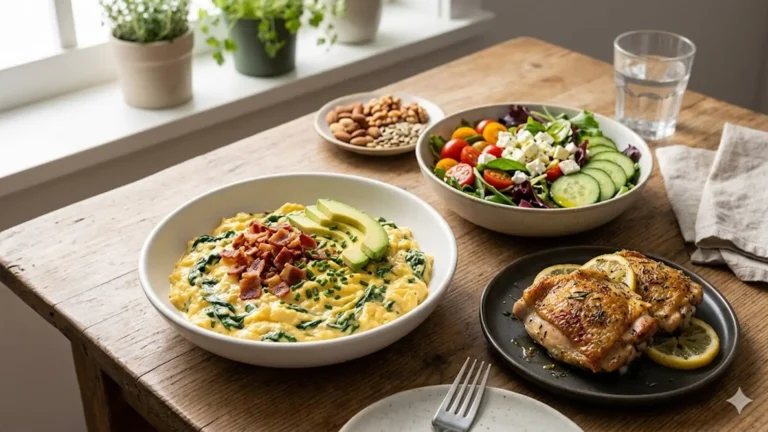
A good keto plate is half low-carb vegetables, a quarter protein, and a clear source of fat tying it together. Start with a generous pile of greens or roasted above-ground vegetables, add a fatty protein like salmon, chicken thigh, or steak, then finish with butter, olive oil, cheese, or a creamy sauce. That structure gives you volume, fiber, and nutrients while keeping carbs in check. It also looks and feels like a normal, satisfying meal rather than a restriction, which is exactly what keeps people on plan for the long haul. For technique-driven vegetable cooking, food authorities like America’s Test Kitchen test the best ways to roast and saute, and Cook’s Illustrated digs into why certain methods bring out flavor in low-carb vegetables.
Frequently Asked Questions
What is the single lowest-carb vegetable for keto?
Leafy salad greens like lettuce, spinach, and bok choy are the lowest, at roughly one gram of net carbs per cup or less. They are mostly water and fiber, so you can eat them in large amounts without affecting ketosis. They make the ideal base for any keto meal.
Can I eat as many low-carb vegetables as I want?
Near-free greens like lettuce, spinach, cucumber, and mushrooms can be eaten freely in normal portions. The slightly higher-carb vegetables like broccoli, peppers, and green beans should still be counted, because a couple of cups can add up to several grams. When in doubt, weigh or measure until you know the counts by sight.
Are carrots keto-friendly?
Carrots are a sweeter root vegetable, higher in carbs than above-ground options, so they are best in small amounts. A few slices in a salad or a little grated into a dish is fine, but a full serving of cooked carrots can spend a big share of your daily carbs. Reach for cauliflower or zucchini instead when you need volume.
Is cauliflower really that low in carbs?
Cauliflower runs about three grams of net carbs per cup, which is low enough to use generously. That, plus its neutral flavor and firm texture, is why it stands in for rice, mashed potatoes, and even pizza crust on keto. It is one of the most useful vegetables on the entire plan.
Do frozen vegetables work on keto?
Yes. Frozen broccoli, cauliflower, spinach, and green beans have the same carb counts as fresh and are convenient to keep on hand. Just check the bag for added sauces or breading, which can sneak in sugar and starch. Plain frozen vegetables are a reliable keto staple.
Why do vegetables matter so much on keto?
Vegetables supply most of the fiber, potassium, magnesium, and antioxidants in a keto diet, nutrients that protein and fat alone do not provide. They also add volume and variety that keep meals satisfying. Skipping them is a common beginner mistake that leads to constipation, electrolyte issues, and boredom, all of which are easy to avoid by filling half your plate with low-carb vegetables.
Are tomatoes and peppers keto?
Both are technically fruits and run a little higher than leafy greens, around four to six grams of net carbs per cup, but they fit keto easily in normal portions. A few cherry tomatoes in a salad or half a bell pepper sliced into a stir-fry adds color and nutrients without a problem. Just count them rather than treating them as free like lettuce.
Can I eat onions and garlic on keto?
Yes, in the small amounts used for flavor. Onions and garlic are higher in carbs than leafy vegetables, so you would not eat a bowl of them, but a tablespoon of diced onion or a clove or two of garlic to season a dish adds almost nothing to your daily count. They are aromatics, not main ingredients, on keto.