
Keto is a very low carb, high fat way of eating that pushes your body to burn fat for fuel instead of sugar, usually by holding net carbs under about 20 to 30 grams a day. When you cut carbs that far, your body runs low on glucose and the liver starts converting fat into molecules called ketones, which your brain and muscles use for energy. That metabolic switch is called ketosis, and it is the whole point of the diet. This guide explains in plain terms how keto works, the macros to aim for, what to eat and what to avoid, the keto flu and how to dodge it, who should be cautious, and the mistakes that quietly knock people out of ketosis. Every number here is stated in net carbs and US measures, and none of this is medical advice; talk to a doctor before starting if you have a medical condition or take medication.
The honest framing is that keto is simple in principle and easy to get wrong in practice. The principle is one sentence: eat fat and protein, keep carbs very low, and your body burns fat. The practice trips people up because carbs hide in foods that seem innocent, because the first week feels bad before it feels good, and because a lot of products marketed as keto are not. Most people who say keto did not work for them either never actually got into ketosis, gave up during the rough first week, or were undermined by hidden carbs they did not count. Understanding the mechanism and counting net carbs honestly fixes nearly all of that.
What Ketosis Actually Is
Your body’s default fuel is glucose, which comes from carbohydrates. Eat a normal carb-heavy diet and you are running on sugar all day, with insulin shuttling that sugar into cells and storing the excess as fat. Cut carbs drastically and that sugar supply dries up within a day or two, so your body turns to its backup system: it breaks down fat, both dietary fat and stored body fat, into ketones in the liver and burns those instead. Being in ketosis means you have enough ketones circulating that your body is primarily fat-fueled. This is a normal, well-understood metabolic state, not a dangerous one for healthy people, and it is distinct from the rare medical emergency called ketoacidosis, which affects people with uncontrolled diabetes and is something else entirely.
The practical consequence is that ketosis flattens hunger and steadies energy, because you are no longer riding the blood sugar spikes and crashes that carbs cause. Many people find they eat less without trying and lose the constant snacking urge, which is one of the main reasons keto produces weight loss. It typically takes two to four days of very low carb eating to enter ketosis and a few weeks for your body to become efficient at using fat, a transition period sometimes called becoming fat-adapted.
The Macros: How Much of Each
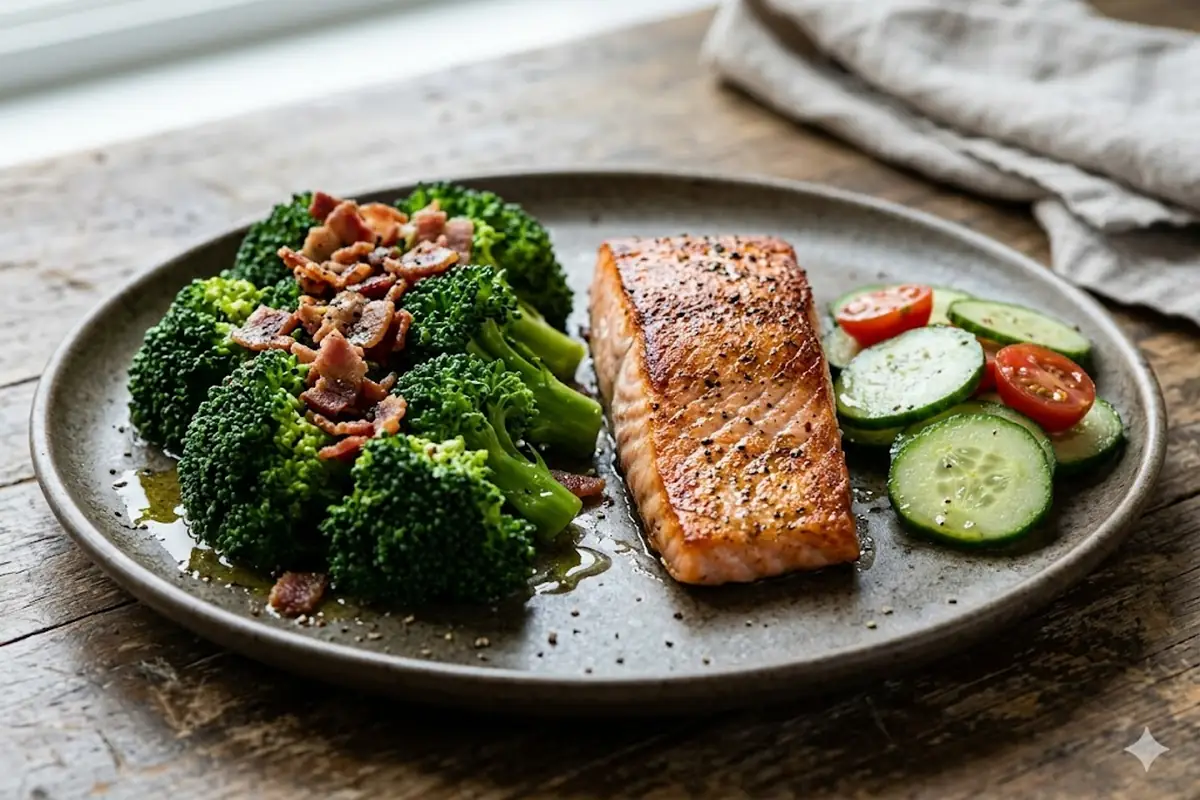
The standard ketogenic diet runs roughly 70 percent of calories from fat, 20 to 25 percent from protein, and 5 to 10 percent from carbs. In practical terms, the only number you must track is carbs, because the others fall into place if you eat real food. Keep net carbs under 20 grams a day and ketosis is close to guaranteed for almost everyone; some people maintain it up to 30 or even 50 grams, but beginners are best served by aiming low at 20 grams for the first month so the body fully adapts before testing a higher limit.
Net carbs, not total carbs, are what matter, and the calculation is simple: total carbohydrates minus fiber, since fiber is not digested into glucose. So a food with 10 grams of total carbs and 7 grams of fiber has only 3 net carbs. Protein should be adequate but not unlimited, usually somewhere around 0.6 to 1 gram per pound of target body weight, enough to preserve muscle without overdoing it. Fat fills the rest and is the lever you adjust: eat more fat if you are hungry, less if you are trying to lose weight and have enough body fat to burn. For a deeper walk-through of getting started and dialing in these numbers, the keto dinner ideas guide shows what these macros look like on an actual plate.
What to Eat on Keto
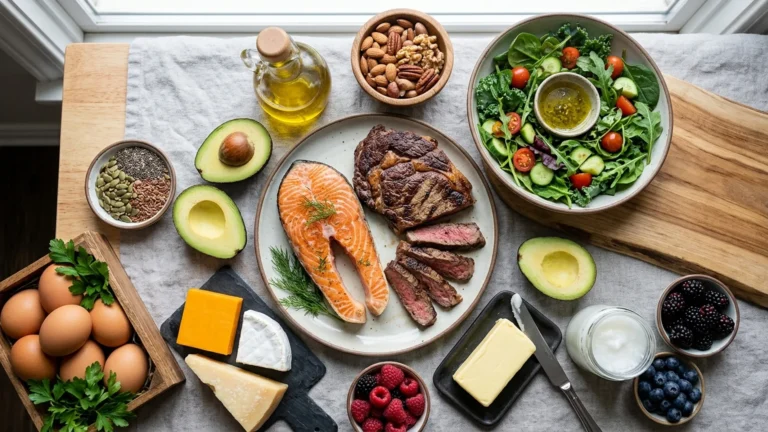
Keto food is straightforward once you know the categories. The foundation is fatty protein and low carb vegetables, with added fats for flavor and fullness.
| Category | Examples |
|---|---|
| Proteins | Beef, pork, chicken, fatty fish, eggs, shellfish |
| Fats | Butter, olive oil, avocado, coconut oil, cheese |
| Low carb vegetables | Spinach, broccoli, cauliflower, zucchini, peppers |
| Nuts and seeds | Macadamias, pecans, almonds, chia, flax |
| Fruit (limited) | Raspberries, blackberries, strawberries |
What to avoid is just as clear: sugar in all its forms, grains and anything made from flour, starchy vegetables like potatoes, most fruit, beans and legumes, and sugary drinks including fruit juice. Beer and sweet cocktails are out, though dry wine and spirits in moderation fit. The single biggest skill on keto is reading labels, because added sugar and starch hide in sauces, dressings, processed meats, and anything marketed as low fat, which usually compensates with sugar. When in doubt, eat foods that do not have a label at all: meat, eggs, vegetables, and natural fats. When a real gap opens between meals, a short list of low carb options keeps you from reaching for carbs, and the keto snacks guide covers the bites that fit a strict carb budget.
The Keto Flu and How to Beat It
The first week is where most people quit, and it is almost entirely avoidable. As you cut carbs, your body sheds water and the electrolytes dissolved in it, mainly sodium, potassium, and magnesium. That electrolyte loss, not the lack of carbs itself, causes the headaches, fatigue, brain fog, irritability, and muscle cramps people call the keto flu. The fix is to replace those electrolytes aggressively from day one: salt your food generously, drink salty broth, eat potassium-rich foods like avocado and leafy greens, and consider a magnesium supplement. Most people who supplement electrolytes early either skip the keto flu entirely or get a mild version that passes in a couple of days.
Drinking enough water matters too, but the common mistake is drinking lots of water without adding salt, which dilutes electrolytes further and makes the symptoms worse. Water plus salt is the combination that works. The keto flu is temporary and signals that the diet is working, not that it is harming you, but you do not have to suffer through it if you handle electrolytes from the start.
Common Mistakes That Break Ketosis
Several mistakes quietly keep people out of ketosis or stall their progress.
Hidden carbs. Sauces, dressings, ketchup, marinades, and processed meats often carry added sugar. A barbecue sauce or a sweet salad dressing can add 10 grams without you noticing. Read every label and count it.
Too much protein, not enough fat. Eating a high protein, low fat version of keto leaves you hungry and can slow ketosis. Fat is the fuel; do not fear it on this diet.
Eating too often. Grazing all day, even on keto foods, keeps insulin elevated. Eating fewer, larger meals helps, and keto naturally reduces hunger enough to make that easy.
Mistaking healthy for keto. Oatmeal, whole grain bread, fruit, and honey are wholesome foods but they are not keto, and treating them as fine because they are healthy is a common trap.
Sugar alcohols that spike blood sugar. Maltitol, common in sugar-free candy, raises blood sugar despite the label. Stick to erythritol, allulose, and monk fruit.
The Different Versions of Keto

Most people mean the standard ketogenic diet when they say keto, but there are a few variations worth knowing. The standard version, the one nearly all research is based on, is the steady 70 percent fat, 20 to 25 percent protein, 5 to 10 percent carb pattern described above, and it is the right choice for almost everyone, especially beginners. The high-protein version nudges protein up to around 35 percent and fat down a little, which suits people who train hard or struggle to eat enough fat, though pushing protein too high can blunt ketosis.
Two athletic variations exist but are not for beginners. The targeted ketogenic diet allows a small amount of fast carbs right around workouts to fuel high-intensity training, and the cyclical version alternates strict keto days with occasional higher-carb refeed days, used mostly by bodybuilders. Both add complexity and are easy to misjudge, so the sensible path is to run the standard diet until you are fully fat-adapted and only consider a variation if you have a specific athletic reason. For most people chasing weight loss or steadier energy, the standard version is all they ever need.
What Keto Is Good For
The most common reason people try keto is weight loss, and it tends to work, partly because ketosis suppresses appetite and partly because cutting carbs lowers insulin and reduces water retention. Studies generally show keto matching or slightly beating low-fat diets for weight loss, with the appetite suppression being the practical edge that makes it easier to stick to. Beyond weight, keto improves blood sugar control and insulin sensitivity, which is why it draws interest from people managing type 2 diabetes, always under medical guidance. The ketogenic diet also has a long, well-established medical use in treating drug-resistant epilepsy, where it was first developed.
Many people also report steadier daytime energy and fewer cravings once adapted, because the blood sugar roller coaster of a high carb diet flattens out. None of this means keto is the right diet for everyone or that it cures anything, and the research on some claimed benefits is still developing. The reliable, well-supported uses are weight loss, blood sugar management, and epilepsy treatment; treat the rest as possible rather than proven.
Who Should Be Cautious
Keto suits most healthy adults, but a few groups should talk to a doctor first. People with type 1 diabetes or anyone taking diabetes medication, especially insulin or SGLT2 inhibitor drugs, need medical supervision because keto changes blood sugar and carries a ketoacidosis risk with certain drugs. People with kidney disease, a history of disordered eating, or who are pregnant or breastfeeding should also get professional guidance. This is not a warning that keto is dangerous for healthy people; it is a reminder that a major dietary change interacts with medication and existing conditions, and a doctor can adjust both safely. For the cooking technique side of eating well within these limits, the test cooks at America’s Test Kitchen and Bon Appetit have reliable methods for the meats, eggs, and vegetables that make up the bulk of a keto plate.
What to Expect Over Time
The first week is the hardest, with the keto flu and the adjustment to a new way of eating. By the second or third week most people are fat-adapted, hunger settles, energy stabilizes, and the diet starts to feel easy rather than restrictive. Weight loss is usually fastest at the start, partly from water, then settles into a steadier rate. Beyond weight, many people report steadier energy, fewer cravings, and clearer focus once adapted. The diet is sustainable long term for many, but it requires staying low carb consistently, since a few high carb days will drop you out of ketosis and restart a mini version of the adjustment period. Whether you eat keto as a temporary reset or a long-term pattern, the mechanism is the same: keep carbs low, and your body keeps burning fat.
Bottom Line
Keto works by one mechanism: cut net carbs low enough, under about 20 grams a day to start, and your body switches from burning sugar to burning fat in a state called ketosis. Build meals from fatty protein, low carb vegetables, and natural fats, avoid sugar, grains, starches, and most fruit, and read every label because hidden carbs are the main thing that breaks ketosis. Handle electrolytes from day one with extra salt, broth, and magnesium and you will dodge most of the keto flu that makes people quit in the first week. Count net carbs honestly, eat enough fat to stay full, do not overdo protein, and check with a doctor first if you have a medical condition or take medication. Get those basics right and keto stops being complicated and becomes a steady, low carb way of eating that your body adapts to within a few weeks. Start with the standard version, give it a full month before judging it, and let the appetite suppression and steady energy do the work rather than relying on willpower alone.
FAQ
What is keto in simple terms?
Keto is a very low carb, high fat diet that makes your body burn fat for fuel instead of sugar. By keeping net carbs under about 20 to 30 grams a day, you enter a state called ketosis where the liver turns fat into ketones that power your brain and body, which is what drives the fat loss and steadier energy people see.
How many carbs can I eat on keto?
Most people stay in ketosis at under 20 grams of net carbs per day, which is the safest target for beginners. Some maintain ketosis up to 30 or even 50 grams once they are fat-adapted, but starting at 20 grams for the first month ensures your body fully makes the switch before you test a higher personal limit.
What can I eat on keto?
Fatty meat and fish, eggs, cheese, butter, olive and coconut oil, avocado, low carb vegetables like spinach and broccoli, nuts, and small amounts of berries. Avoid sugar, grains, bread, pasta, potatoes, beans, most fruit, and sugary drinks. The simplest rule is to favor foods that do not come with a nutrition label at all.
How long does it take to get into ketosis?
It usually takes two to four days of eating under 20 grams of net carbs to enter ketosis, and a few weeks for your body to become efficient at burning fat, a stage called being fat-adapted. The keto flu, which hits in the first few days, signals that the carb-to-fat switch is underway.
What is the keto flu?
The keto flu is the headaches, fatigue, brain fog, and cramps some people feel in the first week. It is caused by losing electrolytes, mainly sodium, potassium, and magnesium, as your body sheds water on low carbs. Replacing those electrolytes with extra salt, broth, and magnesium from day one usually prevents or greatly reduces it.
Is keto safe?
For most healthy adults, keto is a safe way of eating and ketosis is a normal metabolic state. However, people with type 1 diabetes, those on diabetes medication, people with kidney disease, and anyone pregnant or breastfeeding should talk to a doctor first, because the diet interacts with certain conditions and medications and may need medical supervision.