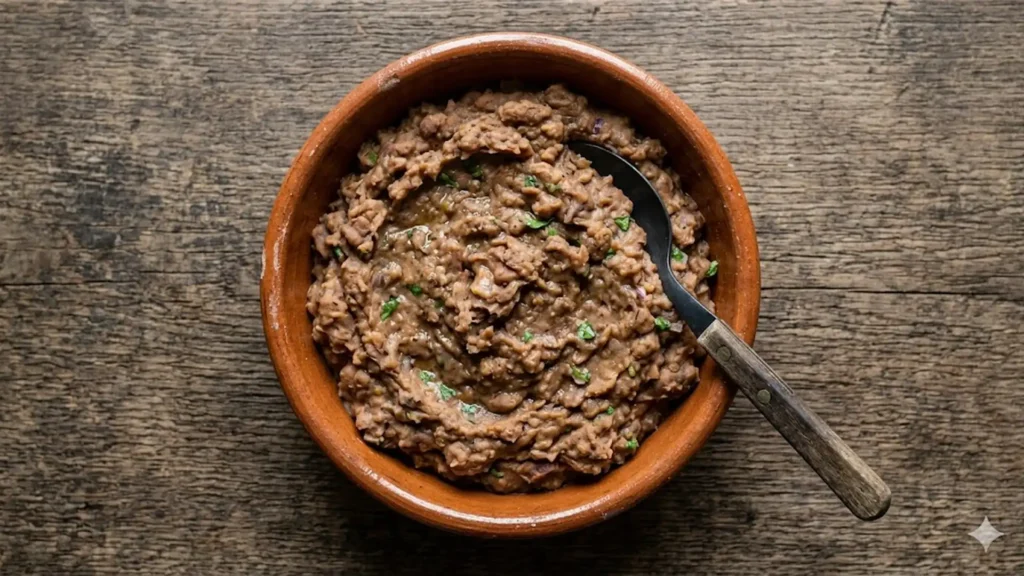
Refried beans keto means swapping the high-carb pinto base for a low-carb stand-in that mashes and seasons the same way: black soybeans, lupini beans, roasted eggplant, or pureed mushrooms. The best swaps land around 5 grams of net carbs per half-cup serving, against roughly 26 grams for traditional refried beans. You keep the cumin, garlic, lime, and creamy texture; you drop the starch that kicks you out of ketosis.
Regular refried beans are one of the sneakiest carb bombs in Mexican food. A single cup runs about 26 grams net carbs, which is an entire strict keto day in one side. So this guide does what the recipe pages skip: it compares the four real low-carb bases head to head so you can pick the right one, gives a no-soy path for the big crowd that avoids soybeans, and hands you a troubleshooting tree for when the batch goes thin, bitter, or weepy. If you want to see where beans sit on keto generally, the keto food list spells out the carb counts.
Why regular refried beans break keto
Pinto and black beans are nutritious, but they are starch-dense legumes. A half cup of canned refried pintos carries roughly 13 grams net carbs, so a normal restaurant scoop of a full cup is about 26. Add the rice and a tortilla and a single combo plate can hit 80 grams of carbs before the entree. That is why beans, despite the fiber and protein, sit firmly in the avoid column on a strict keto day. The goal here is not to pretend beans are fine. It is to get the same smoky, creamy, scoopable side at a fraction of the carbs, so your taco night survives.
The four keto refried bean bases, compared
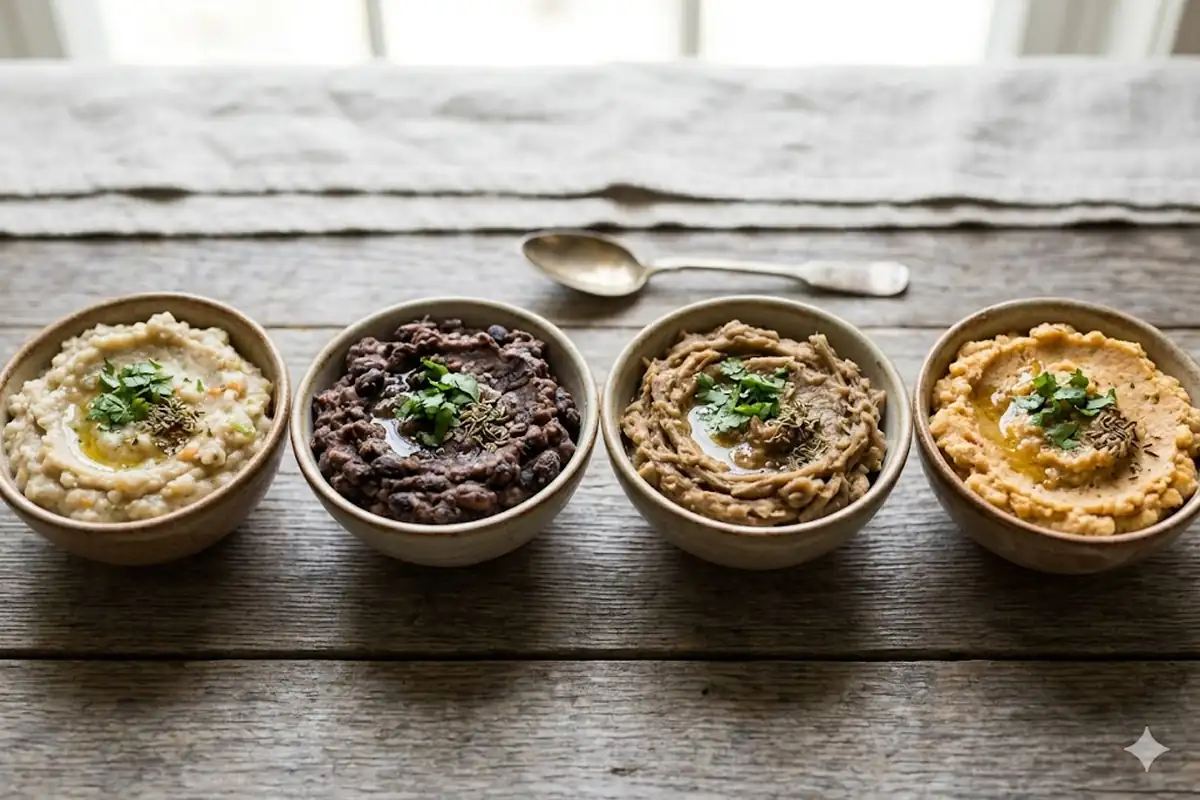
Every recipe online picks one base and runs with it. The smarter move is to know all four and choose by what you have and what you avoid. Net carbs are per half-cup finished serving, approximate.
| Base | Net carbs | Soy? | Best for |
|---|---|---|---|
| Black soybeans | 5 g | Yes | Closest bean look and texture |
| Lupini beans | 3 g | No | Highest protein, real bean bite |
| Roasted eggplant | 4 g | No | No special shopping, creamy |
| Pureed mushroom | 3 g | No | Deep umami, fully veggie |
Black soybeans win on resemblance. They look and bite like real beans, which is why they are the popular pick. Lupini beans are the lowest in carbs and highest in protein, with a firm bean texture, but they need a soak or a special order and a baking-soda cook to soften their skins. Eggplant is the everyday hero because you can buy it anywhere and it blends silky, though it leans vegetable-forward unless you season hard. Mushroom brings the deepest savory note and is the most carb-frugal, but it reads more like a dip than a bean. Pick the row that matches your kitchen and your soy stance.
The no-soy path with nothing special to order
A large slice of the keto crowd avoids soy, and the popular black-soybean recipes leave them stuck. Here is the path that needs nothing you cannot buy at any grocery store. Take one large eggplant, cube it, toss with olive oil and salt, and roast at 400 degrees for about 25 minutes until soft and lightly browned, not charred. Sweat half a diced onion and two cloves garlic in bacon fat or olive oil with a heaping teaspoon of cumin and a pinch of smoked paprika. Blend the roasted eggplant with the aromatics, a tablespoon of lime juice, and salt until smooth.
If it needs body, this is the trick the recipes skip: blend in an ounce of cream cheese or two tablespoons of sour cream. The dairy thickens the puree, adds richness, and emulsifies any rendered fat so the batch does not separate. That single addition turns a loose vegetable mash into something that scoops and holds like real refried beans, and it costs almost no carbs. Top with shredded cheese and you have a side that fools most people. America’s Test Kitchen has solid guidance on getting eggplant to cook through without turning bitter, which is the main pitfall here.
The black soybean version, step by step
If you want the closest look and texture to real refried beans and soy is fine for you, black soybeans are the move. They come canned, already cooked, so this is fast. Drain and rinse a 15-ounce can well, because the canning liquid carries a faint off-flavor you do not want. Render two slices of chopped bacon in a skillet, then sweat half a diced onion and two garlic cloves in the bacon fat until soft. Add the drained soybeans, a heaping teaspoon of cumin, a pinch of smoked paprika, and about a third of a cup of broth, then simmer for ten minutes so the beans soften further and take on the seasoning.
Mash right in the pan with a potato masher for a rustic texture, or blend with an immersion blender for a smooth one. Finish with lime juice and salt, and loosen with more broth if it tightens up. The whole thing takes about twenty minutes and comes out at roughly 5 grams net carbs per half cup. The bacon is doing real work here, not just flavor; its fat gives the beans the glossy, rich mouthfeel that broth-only versions lack. This is the version to make for a bean-loving guest.
Lupini beans: the highest-protein option
Lupini beans deserve a closer look because they are the rare legume that is genuinely low carb, around 3 grams net per half cup, with a big protein payload. The catch is preparation. Lupini come either brined in jars, ready to use, or dried, which need soaking and a baking-soda cook to soften their tough skins and remove the natural bitterness. For refried-style beans, jarred lupini save hours; just rinse off the brine well, because they are salty.
Blended with the same cumin-garlic-lime seasoning, lupini give a firmer, meatier texture than soybeans and a flavor that takes well to chorizo. They lean slightly bitter on their own, so they need a touch more acid and salt than the other bases, and the cream cheese trick helps round them out. If you are eating keto with an eye on protein, lupini are the base that pulls double duty as a side and a protein source. They are worth the special order if high protein is your goal.
When roasting turns bitter
An over-roasted eggplant version comes out with a sharp, faintly bitter back-note that no amount of cumin covers. Cranking the oven to 450 and walking away takes the eggplant past browned to scorched at the edges. Bitter eggplant is almost always over-roasting or under-salting, or both.
There is a rescue, and it doubles as the fix. Stirring in an extra tablespoon of lime juice and a half teaspoon of salt pulls the flavor back toward savory, and a little more cream cheese rounds it out. It came back from the brink, but the real lesson was prevention: roast at 400, not 450, pull the eggplant when it is soft and golden rather than dark, and salt the cubes before roasting so they release their bitter liquid early. Do those three things and the bitter note never shows up. Set a timer for 25 minutes and actually check it.
Seasoning so it tastes like the real thing
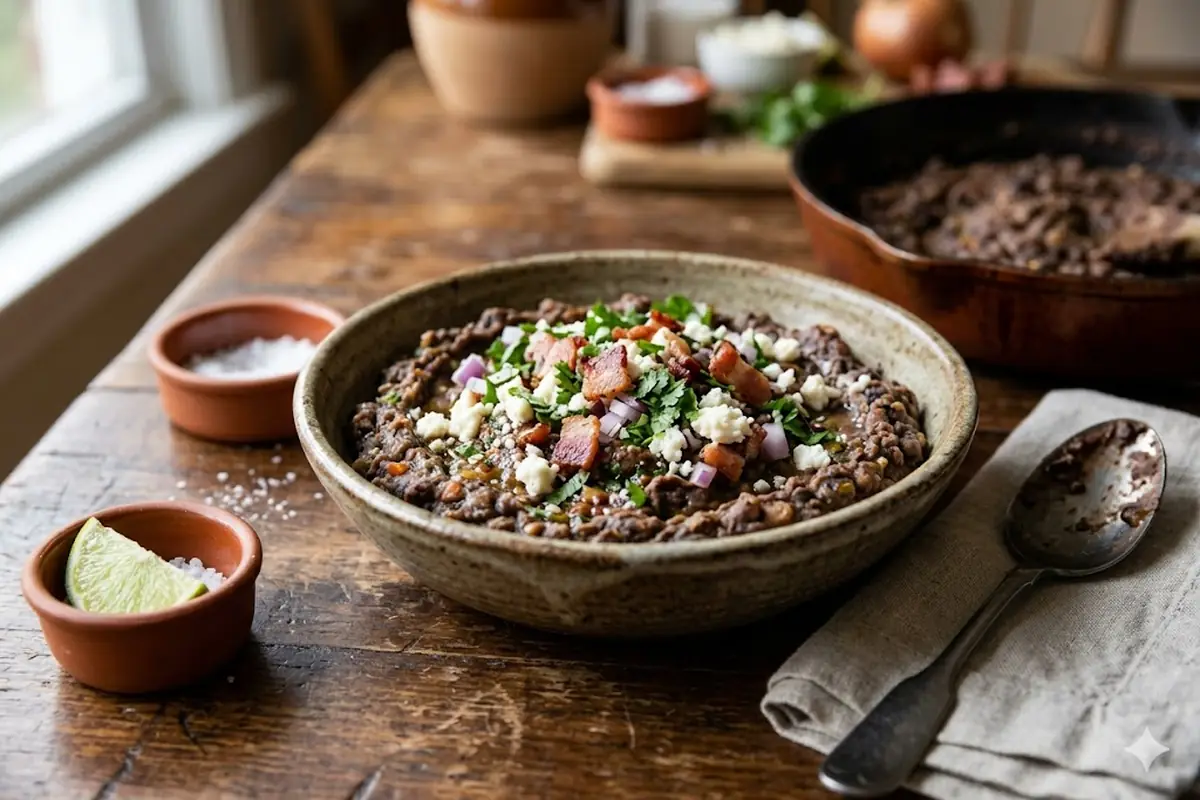
The base is neutral; the seasoning is everything. The flavor that says “refried beans” to your brain is cumin first, then garlic, then a smoky element and a hit of acid. My baseline per two cups of base is one heaping teaspoon ground cumin, two cloves garlic, half a teaspoon smoked paprika or a small chipotle in adobo, the juice of half a lime, and salt to taste. Bacon fat as the cooking fat adds a savory depth that pushes any version closer to authentic, and rendered chorizo blended in does the same with more punch.
Taste and adjust in that order: salt first, because under-salting reads as “missing something,” then acid, then heat. A pinch of epazote, the traditional Mexican herb, nudges it even closer if you can find it. Cookiegrove has a useful note on balancing flavors that applies to any from-scratch base, sweet or savory. For ideas on rounding out the whole plate, the keto friendly snacks guide covers low-carb sides and dippers.
Troubleshooting: thin, thick, bitter, or weeping
Here is the decision tree the recipe pages leave out. Match the symptom to the cause and the fix.
- Too thin and runny: not reduced enough, or too much liquid in the blend. Simmer it uncovered to cook off water, or stir in cream cheese to thicken without adding liquid.
- Too thick and pasty: over-reduced. Loosen with a splash of broth or water, a tablespoon at a time, until it scoops.
- Beany or bitter aftertaste: over-roasted eggplant or undercooked lupini. Add acid and salt to mask, and next time roast cooler and salt earlier.
- Weeping liquid after reheating: fat separated from the puree. Stir in a teaspoon of cream cheese or sour cream while warm to re-emulsify, and reheat gently rather than at high heat.
Most failures are texture, and most texture problems come down to too much or too little moisture. The cream cheese fix solves both thinness and weeping, so keep some on hand for every batch. Bon Appetit has a clear explainer on why purees break and how to bring them back that is worth a read if separation keeps happening.
Storage and using it through the week
Keto refried beans keep about five days in the fridge and freeze well for up to three months, which makes a double batch worth the effort. The texture firms up cold, so reheat with a splash of broth and a gentle stir to bring back the scoopable consistency. Use it the way you would the real thing: layered in a taco bowl with no rice, spread under cheese for nachos on pork rinds, as a dip with sliced bell peppers, or as a side to carnitas. A quarter-cup serving adds only a couple grams of carbs to a plate, so it stretches a single batch across a week of Mexican-style meals without nudging you out of ketosis.
One note on where the numbers come from, because precision keeps a “low-carb” side honest. Total carbs and fiber for the base come from USDA FoodData Central; fiber is subtracted for net carbs, and the result is divided by servings. Canned black soybeans list about 5 grams net per half cup, eggplant about 2 grams per cup raw before it cooks down, and lupini around 3 grams. The dairy you add to thicken contributes a gram or less. If your brand of canned beans or your eggplant size differs, run the same math, because a heavier hand with the base moves the per-serving number. For a full picture of how to build the rest of the plate, the keto meals guide lays out the formula. The habit that makes this stick is batch cooking on a quiet day, because a tub of seasoned keto refried beans in the fridge turns a lazy weeknight into a five-minute taco bowl instead of a drive-through detour.
Building the full keto Mexican plate
The refried beans are one piece, so it helps to think about the whole plate they land on. Cauliflower rice stands in for the rice at about 3 grams net carbs a cup, and seasoned with lime and cilantro it disappears into the meal. For the protein, carnitas, carne asada, or shredded chicken are all naturally carb-free. Skip the tortilla or use a low-carb almond-flour one, and lean on cheese, sour cream, guacamole, and pico de gallo to round it out, all of which are keto by default. Built this way, a generous Mexican plate that would normally run 80 grams of carbs comes in under 15, with the refried beans contributing just a couple. That is the payoff of swapping the base: you get the meal you actually wanted, not a sad approximation, and you stay in ketosis through taco night.
Frequently asked questions
What can I use instead of beans on keto?
The four best refried-bean stand-ins are black soybeans, lupini beans, roasted eggplant, and pureed mushrooms, all around 3 to 5 grams net carbs per half cup. Black soybeans look and bite most like real beans, while eggplant and mushroom give a fully vegetable, soy-free option. Season any of them with cumin, garlic, and lime and they read as refried beans.
How many net carbs are in keto refried beans?
About 5 grams net carbs per half-cup serving for most low-carb versions, compared to roughly 13 grams for the same amount of traditional refried beans. Lupini and mushroom bases can drop to 3 grams. The exact number depends on your base and how much dairy you add to thicken it.
Are black soybeans really keto?
Yes. Black soybeans are the lowest-carb canned bean at about 5 grams net carbs per half cup, with high protein and fiber. They behave like regular black beans in cooking, which is why they are the go-to for keto refried beans. The only caveat is that they are soy, so they do not suit people avoiding it.
Can I make keto refried beans without soy?
Yes, and you do not need special ingredients. Roast eggplant, blend it with sauteed onion, garlic, cumin, lime, and a spoon of cream cheese or sour cream to thicken. The result scoops and tastes like refried beans with no soy and nothing to special-order. Mushroom puree works the same way for a deeper savory version.
Why are my keto refried beans bitter?
Bitterness almost always comes from over-roasted eggplant or undercooked lupini. Roast eggplant at 400 degrees, not 450, salt the cubes before roasting to draw out the bitter liquid, and pull it when soft and golden rather than dark. To rescue a bitter batch, stir in extra lime juice, salt, and a little cream cheese.
How do I thicken keto refried beans?
Simmer the puree uncovered to cook off water, or stir in cream cheese or sour cream, which thickens without adding liquid and emulsifies any loose fat. Avoid flour or cornstarch, which add carbs. If it gets too thick, loosen it back with a tablespoon of broth at a time.
Can I freeze keto refried beans?
Yes, they freeze for up to three months. Cool completely, portion into containers, and thaw in the fridge overnight. The texture firms when cold and may weep slightly on reheating, so warm gently and stir in a teaspoon of cream cheese to bring back the smooth, scoopable consistency.