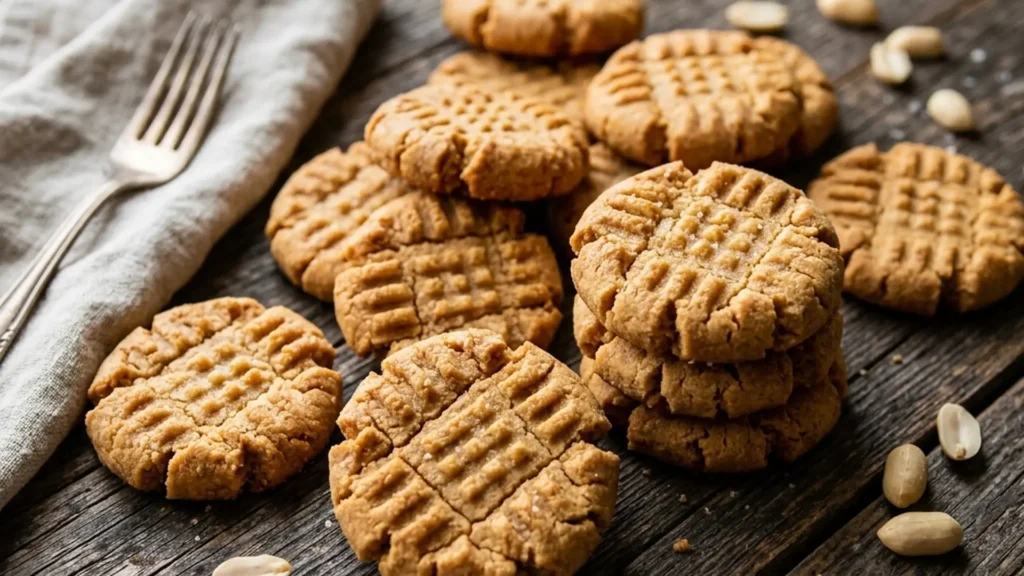
Keto peanut butter cookies are the easiest low-carb dessert to get right, landing around 1.5 to 2 grams of net carbs each, and you can make a batch in under 30 minutes with as few as three ingredients. They are rich, soft or crunchy depending on how you bake them, and they scratch the cookie itch without the 12 grams of sugar carbs a normal peanut butter cookie carries. The trick almost nobody explains is which sweetener to use, because that one choice decides whether your cookies come out chewy or hard as a hockey puck.
If you want the fast answer: use a no-sugar-added peanut butter, sweeten with an allulose or monk-fruit-allulose blend (not pure erythritol if you want them chewy), and bake at 350 degrees F for 10 to 12 minutes, pulling them while the centers still look soft. That gets you a soft, bendy cookie at roughly 1.8 grams net carbs. Below are both a 3-ingredient flourless version and a sturdier almond-flour version, plus the full macros and a troubleshooting table for when they crumble or spread.
Why peanut butter cookies specifically, out of all the keto desserts? Because they are the most honest. A lot of low-carb baking fights an uphill battle trying to fake what flour and sugar do, and the results can be gritty or eggy. Peanut butter cookies were always a little dense and fudgy, so the keto version does not have to pretend to be something it is not. The flavor is doing the heavy lifting, and the texture you are aiming for is the texture peanut butter cookies have always had. That is why these make a good first keto cookie to bake; the gap between the real thing and the low-carb version is the smallest you will find.
The sweetener decision that makes or breaks the texture
This is the single most important thing, and it is the gap in most recipes. Keto sweeteners do not behave like sugar when they cool. Erythritol, the most common one, recrystallizes as it cools, which is why erythritol-sweetened cookies often turn hard, dry, and a little cracky an hour after baking. Allulose and BochaSweet do the opposite; they stay dissolved and keep cookies soft and chewy, browning more like real sugar. Monk fruit is usually sold blended with one of these, so read the bag.
So match the sweetener to the cookie you want. For soft, chewy cookies, use allulose or a monk-fruit-allulose blend (Besti and Lakanto both sell these). For deliberately crunchy cookies, erythritol’s tendency to harden actually works in your favor, so lean into it and bake a couple of minutes longer. There is one more wrinkle: erythritol can leave a cooling, almost minty aftertaste at high doses, while allulose does not, which is another reason to reach for allulose first. The downside is allulose browns fast, so watch the edges.
Recipe 1: 3-ingredient flourless keto peanut butter cookies
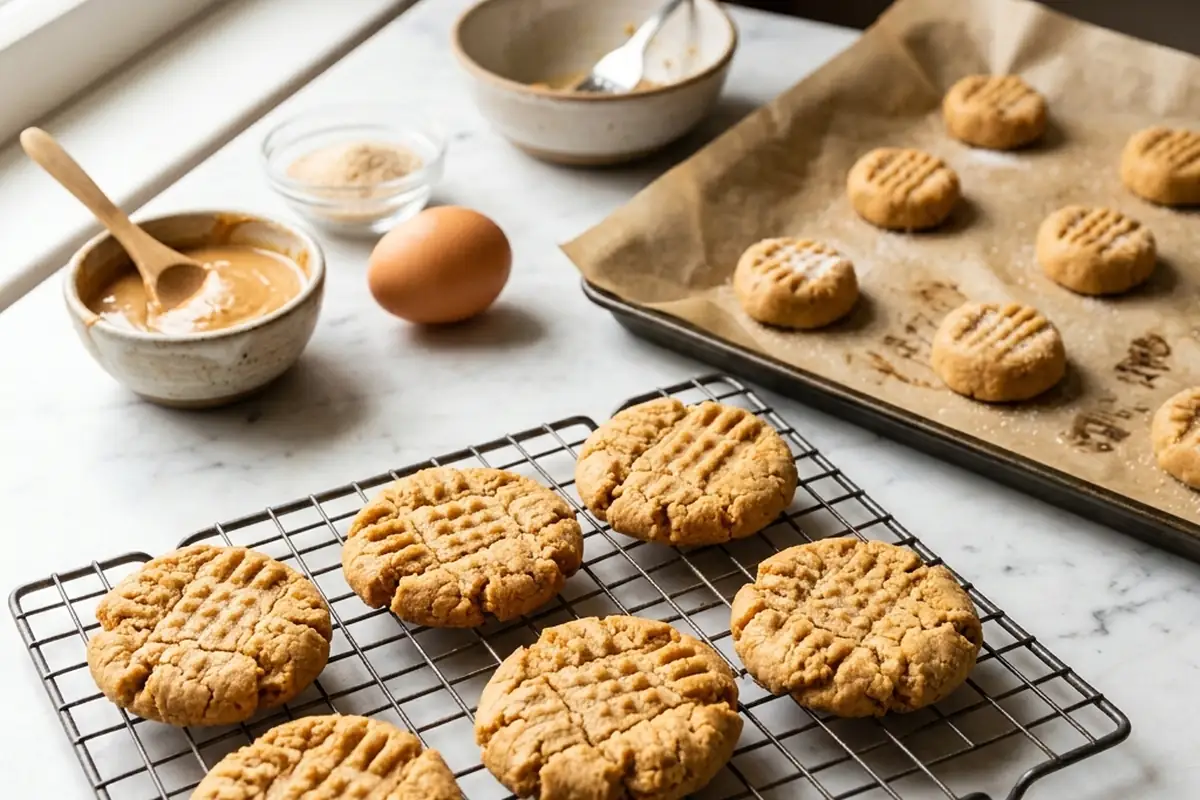
This is the one to make when you want cookies in 20 minutes and do not want to buy almond flour. Peanut butter has enough structure on its own that no flour is needed; the egg binds and the sweetener does the rest. Makes about 12 cookies.
Ingredients:
- 1 cup natural peanut butter (no sugar added, just peanuts and salt), well stirred
- 1/3 cup allulose or monk-fruit-allulose blend
- 1 large egg
- Optional: 1/2 teaspoon vanilla, pinch of flaky salt on top
Method: Heat the oven to 350 degrees F and line a sheet with parchment. Mix everything in one bowl until it forms a thick, smooth dough; it will feel oily at first and tighten as you stir. Roll into 12 balls, set them 2 inches apart, and press a crosshatch into each with a fork (more on why below). Bake 10 to 12 minutes until the edges are just set and the centers still look slightly underdone. Leave them on the pan 10 full minutes; they are fragile while hot and firm up as they cool. Per cookie: about 1.8 g net carbs, 13 g fat, 6 g protein, 150 calories.
Recipe 2: almond-flour keto peanut butter cookies (sturdier, more cookie-like)
If you want a cookie that holds up in a lunchbox and tastes closer to a bakery cookie, add almond flour and a little leavening. This dough is more forgiving and the cookies are less greasy. Makes about 16 cookies.
Ingredients:
- 1 cup blanched almond flour
- 3/4 cup natural peanut butter (no sugar added)
- 1/2 cup allulose or brown monk-fruit blend
- 4 tablespoons unsalted butter, softened
- 1 large egg
- 1/2 teaspoon baking soda
- 1/4 teaspoon salt, 1 teaspoon vanilla
Method: Heat the oven to 350 degrees F. Cream the butter, peanut butter, and sweetener, then beat in the egg and vanilla. Stir in the almond flour, baking soda, and salt to a soft dough. Chill it 20 minutes so it does not spread; this matters because there is no gluten to hold shape. Roll 16 balls, fork-press, and bake 11 to 12 minutes until the edges brown. Cool on the pan 10 minutes. Per cookie: about 2 g net carbs, 11 g fat, 4 g protein, 130 calories.
Why the fork crosshatch is not just for looks
The classic crosshatch fork mark on peanut butter cookies has a real job, and it matters more on keto. Regular cookie dough spreads and flattens because gluten and sugar melt. Keto peanut butter dough has no gluten and keto sweeteners do not melt the same way, so the dough barely spreads, meaning a rolled ball stays a ball and bakes unevenly. Pressing it flat with a fork in two directions gives you an even thickness that bakes through and crisps at the edges. Skip it and you get a domed cookie that is raw in the middle and dry outside. Two seconds with a fork fixes it.
Macros and how these fit your day
At under 2 grams of net carbs apiece, two cookies cost you under 4 grams, which fits easily inside a 20 to 30 gram daily keto budget. The bigger thing to watch is calories and fat, since peanut butter is calorie-dense; these are a treat, not a free food. Peanut butter also brings real protein, about 4 to 6 grams per cookie, plus magnesium and vitamin E, so they are a better-built dessert than most. If you are tracking, log the whole batch and divide, because peanut butter brands vary in carbs by a gram or two per serving. One practical tip: weigh the dough before portioning and divide by your cookie count, so each cookie’s macros are accurate instead of guessed. The flax-egg and cream-cheese substitutions shift the numbers only slightly, but if you make those swaps regularly, re-run the math once and save it.
| Per cookie | Flourless | Almond flour |
|---|---|---|
| Net carbs | 1.8 g | 2 g |
| Fat | 13 g | 11 g |
| Protein | 6 g | 4 g |
| Calories | 150 | 130 |
Peanuts are technically legumes, not nuts, which trips some strict keto eaters up, but in the small amounts here they are fine on net carbs. If you want the deeper breakdown of peanut and nut macros, the data lives in resources like the USDA food database. For more sweet options that stay in range, this roundup of keto desserts that actually hold together covers cakes, fat bombs, and more cookies. If cookies are becoming a daily habit, slot them into the framework in the guide to how keto works and staying in ketosis so the treats do not creep your carbs up. Want the full-sugar classic for non-keto family? The peanut butter cookies hub has it.
Choosing the right peanut butter (it changes everything)
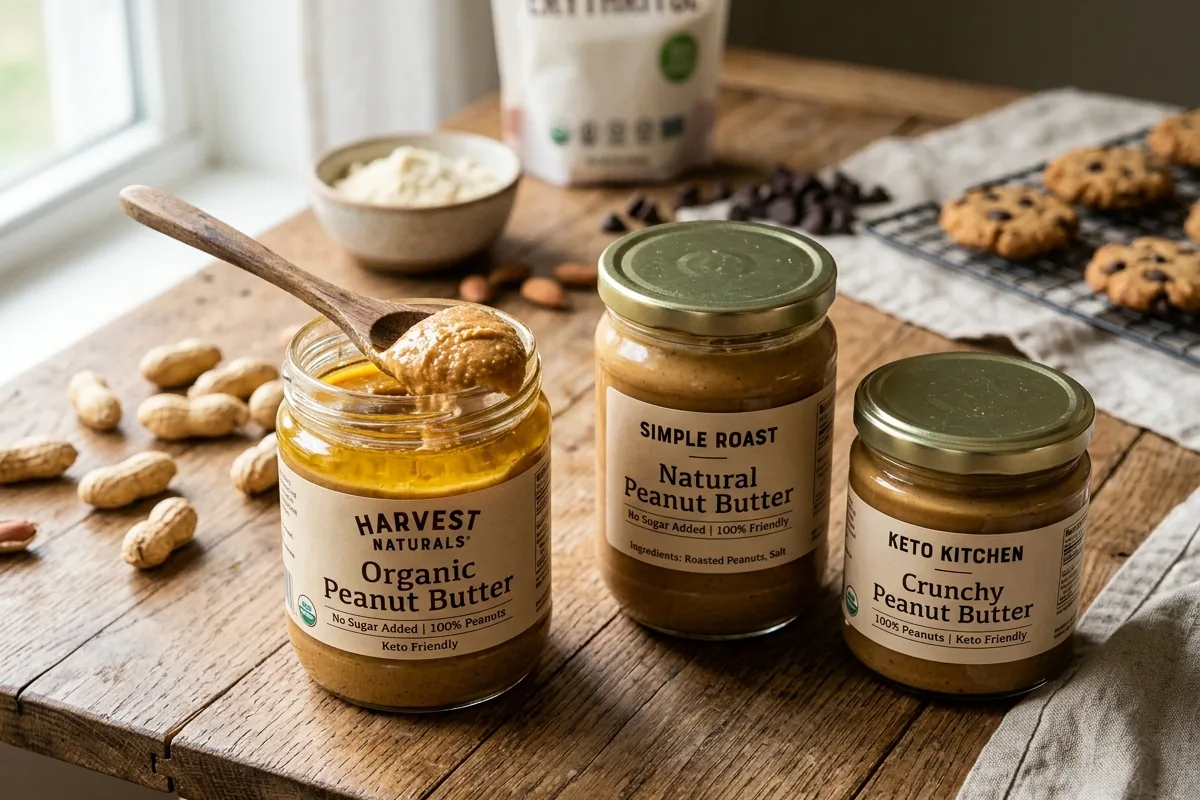
The peanut butter you grab off the shelf matters more than any other ingredient, because it is most of the cookie. You want natural peanut butter whose label reads “peanuts” and maybe “salt,” nothing else. Regular grocery brands like the big sweetened ones hide 3 to 5 grams of added sugar per two-tablespoon serving, and across a batch that pushes your net carbs from under 2 grams a cookie to 4 or 5. That is the difference between a keto cookie and a cheat.
There is a texture angle too. Natural peanut butter separates, with oil pooling on top, and the consistency of what is left after you stir affects the dough. A drier, stiffer natural peanut butter gives a sturdier cookie; a loose, runny one makes a softer, oilier cookie that needs the almond-flour recipe to hold together. No-stir natural brands (the ones with palm oil added to prevent separation) are a convenient middle ground and bake consistently, just confirm there is no added sugar. Crunchy peanut butter works in either recipe and adds little bits of texture for free. A stiff natural peanut butter works best for the flourless cookies specifically, because the extra structure is what lets you skip flour entirely.
Almond butter, cashew butter, and sunflower seed butter all substitute one-for-one if you want to vary the flavor or avoid peanuts. Sunflower seed butter is the move for nut-free households, though it sometimes reacts with baking soda and turns cookies slightly green inside; harmless, just startling. Whatever you use, give it a hard stir before measuring so the oil is fully incorporated, or your macros and texture will drift.
Variations and add-ins that stay keto
Once you have the base down, the cookies become a canvas. Sugar-free dark chocolate chips are the obvious add-in; a quarter cup folded into either dough adds maybe half a gram of net carbs per cookie and turns them into peanut butter chocolate chip cookies. Lily’s and ChocZero make keto-friendly chips sweetened with stevia or allulose. A flaky-salt finish on top makes the peanut flavor pop and costs nothing on carbs.
For peanut butter blossoms, press a sugar-free chocolate kiss or a small square of keto chocolate into each cookie the moment they come out of the oven. For a sandwich cookie, pipe a quick filling of softened cream cheese beaten with a little allulose and vanilla between two cooled cookies; that adds about a gram of net carbs per sandwich and feels like a real treat. Crushed peanuts pressed onto the tops before baking give crunch and a bakery look. A teaspoon of cinnamon or a tablespoon of cocoa powder in the dough shifts the flavor without touching the carb count in any meaningful way.
If you like a thicker, scoopable cookie, chill the dough longer and bake at 325 degrees F for a couple extra minutes; lower and slower keeps them tall and fudgy. For thin and crisp, flatten harder with the fork and bake at 350 until the edges are deep golden. Same dough, two completely different cookies, which is the fun of having the base recipe memorized.
Storing and freezing for grab-and-go
These keep well, which makes them ideal for keeping a sweet option on hand so you do not raid the pantry. At room temperature in an airtight container they last about 5 days, and they genuinely improve after a day as the flavors settle and the texture firms. Layer parchment between them if you stacked add-ins on top so they do not stick.
Freezing is where these shine for meal prep. Freeze baked cookies in a single layer, then bag them; they thaw in 20 minutes on the counter and taste fresh for up to 3 months. Even better, freeze the raw dough balls (already fork-pressed) on a tray, then bag them, and bake straight from frozen with 2 to 3 extra minutes. That way you bake two cookies at a time whenever a craving hits instead of committing to a full batch, which for a lot of people is the difference between a controlled treat and eating the whole tray. Allulose-sweetened cookies freeze and thaw better than erythritol ones, which can go grainy, so if freezing is your plan, lean allulose.
Troubleshooting: when keto peanut butter cookies go wrong
These cookies are simple, but a few things go sideways, and they all have quick fixes.
| Problem | Cause | Fix |
|---|---|---|
| Crumbly, falls apart | Moved while hot; not enough egg/fat | Cool 10 min on pan; add an egg yolk |
| Hard and dry | Erythritol recrystallized; overbaked | Switch to allulose; pull 1-2 min sooner |
| Greasy / oil pooling | Unstirred natural PB; too much fat | Stir PB well; blot pan, cut butter slightly |
| Spread too thin | Warm dough (almond version) | Chill dough 20 min before baking |
| Cooling aftertaste | Too much erythritol | Use allulose or monk-fruit blend |
For broader cookie technique that transfers even to low-carb baking, America’s Test Kitchen keeps a deep archive of cookie methods worth studying.
FAQ
How many carbs are in keto peanut butter cookies?
About 1.5 to 2 grams of net carbs per cookie, depending on the recipe and peanut butter brand. The flourless version runs slightly lower at roughly 1.8 grams; the almond-flour version is around 2 grams. Two cookies cost under 4 grams net carbs, which fits a standard keto day.
What peanut butter is keto?
Natural peanut butter with no added sugar, just peanuts and salt. Check the label: regular grocery peanut butter often hides 3 to 5 grams of sugar per serving. The natural kind separates and needs stirring, but it is the keto-safe choice. Almond butter works too if you prefer.
Why are my keto cookies hard?
Almost always the sweetener. Erythritol recrystallizes as it cools and turns cookies hard and dry. Swap to allulose or a monk-fruit-allulose blend for soft, chewy results. Overbaking makes it worse, so pull the cookies while the centers still look slightly underdone.
Can I make keto peanut butter cookies without eggs?
Yes. Replace the egg with a flax egg (1 tablespoon ground flax plus 3 tablespoons water, rested 5 minutes) or 2 tablespoons of softened cream cheese. The cookies will be a touch more delicate, so cool them fully on the pan before moving.
Do keto peanut butter cookies need flour?
No. The 3-ingredient version uses peanut butter, sweetener, and egg with no flour at all, and it works because peanut butter provides structure. Almond flour gives a sturdier, more bakery-style cookie, but it is optional, not required.
How long do they keep?
About 5 days in an airtight container at room temperature, or up to 3 months frozen. They actually firm up nicely after a day. If you used allulose they stay soft longer; erythritol versions dry out faster, so eat those sooner or freeze them.
Bottom line
Keto peanut butter cookies are one of the highest-reward, lowest-effort low-carb desserts out there: three ingredients, under 2 grams of net carbs each, and ready in under half an hour. The whole game is the sweetener. Pick allulose or a monk-fruit-allulose blend for chewy cookies, lean on erythritol only when you want them crunchy, use no-sugar peanut butter, and do not skip the fork press. Start with the flourless recipe, and once you have the feel for it, the almond-flour version gives you something closer to a real bakery cookie that still fits your macros.