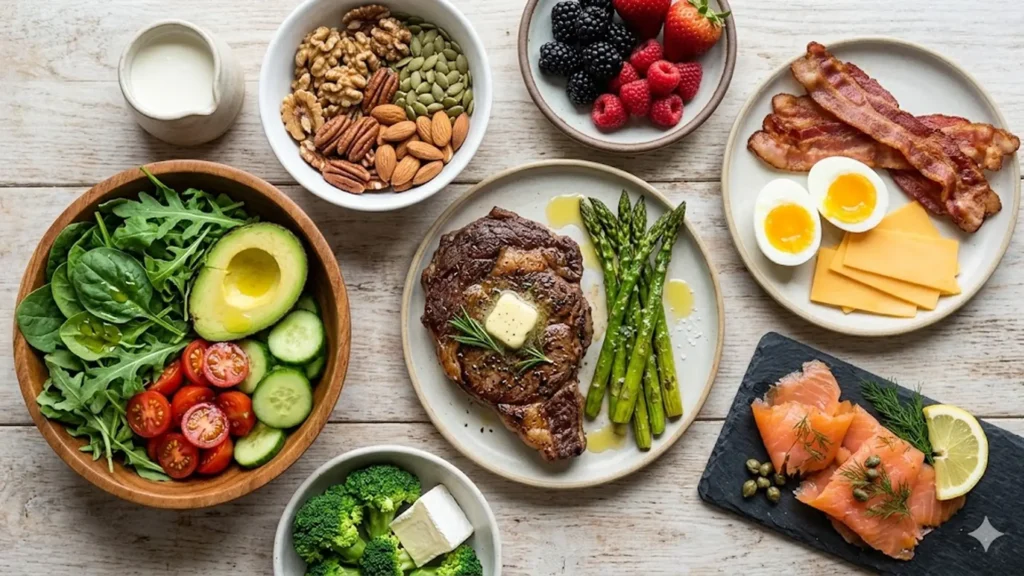
Keto food list questions almost always come down to one thing: how many net carbs is this, per the amount I would actually eat? This list answers exactly that. Every category is organized here, protein, fat, vegetable, dairy, nut, fruit, drink, condiment, and sweetener, with net carbs per a realistic serving, not per 100 grams, because nobody eats 100 grams of mayonnaise. There is also a section most lists skip: the gray-area foods that keto people argue about, with a clear verdict on each. Use the green list freely, treat the gray list with measurement, and keep the red list off your plate.
Net carbs throughout means total carbohydrates minus fiber and minus non-impact sugar alcohols like erythritol and allulose. That is the number that counts against your daily limit of roughly 20 to 30 grams. Where a sweetener is questionable, such as maltitol, it is flagged rather than subtracted.
Proteins: Eat Freely
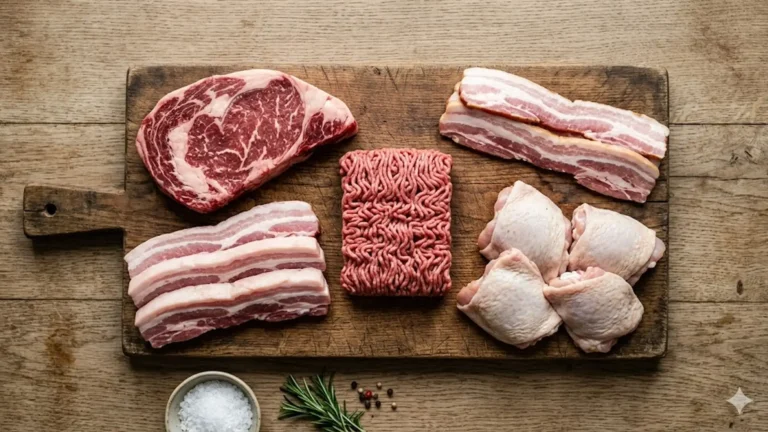
Almost all unprocessed meat, poultry, fish, and eggs are 0 net carbs, which makes protein the simplest category on keto. Beef, pork, lamb, chicken, turkey, and game are all essentially carb-free; choose fattier cuts (ribeye, chicken thigh, pork belly) to hit your fat target without added oil. Fatty fish are doubly valuable: salmon, mackerel, sardines, and tuna bring 0 carbs plus omega-3s. Shellfish are mostly low but not zero: shrimp and crab are near 0, while oysters, mussels, and scallops carry 3 to 5 net carbs per serving, so count those.
Eggs are 0.5 net carbs each and one of the best foods on the entire plan for protein and fat per dollar. The protein cautions are processed: deli meats, sausages, and bacon can hide sugar in cures and glazes (read for 1 to 3 added carbs), and breaded or battered anything is off the list because the coating is grain. For ideas on assembling these into actual plates, see our keto lunch ideas.
Fats and Oils: The Backbone
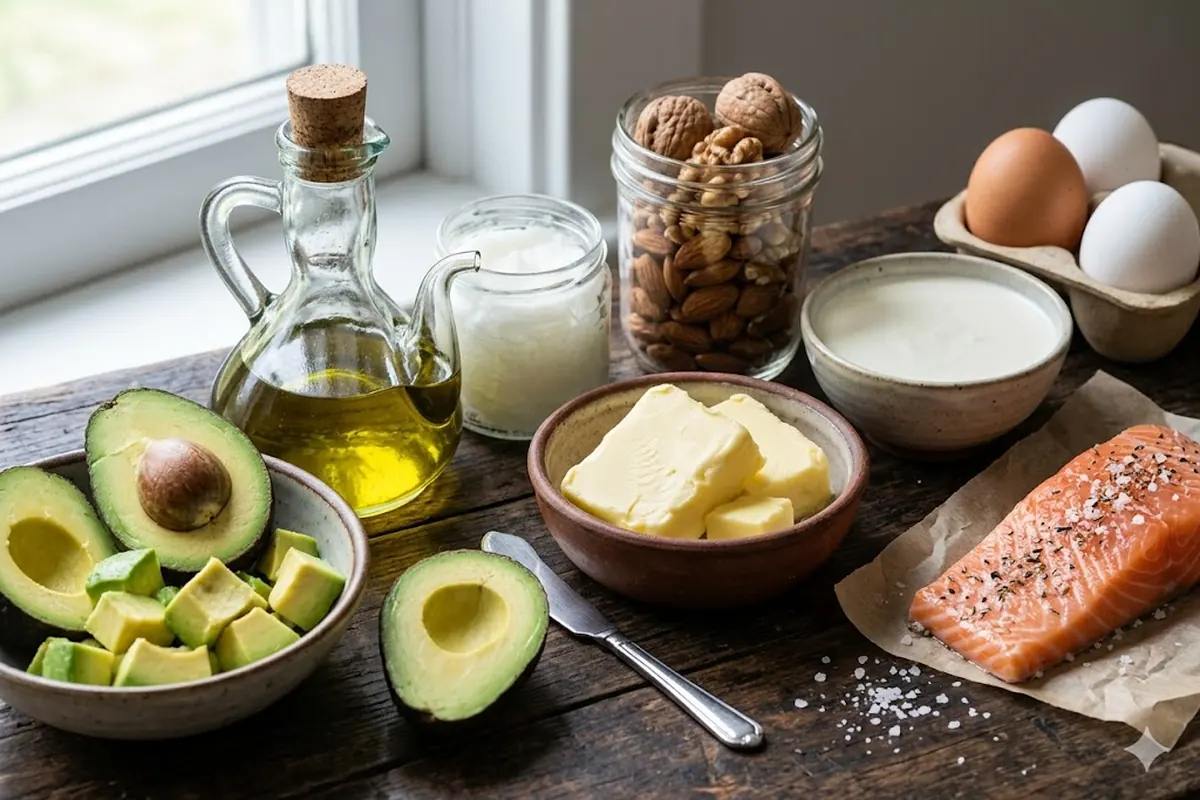
Pure fats are 0 net carbs across the board: butter, ghee, lard, tallow, olive oil, avocado oil, coconut oil, and MCT oil. Lean on the stable, minimally processed ones, olive oil, avocado oil, butter, and animal fats, for both cooking and finishing. Heavy cream is the main fat with carbs worth noting at about 0.5 net carbs per tablespoon, still negligible in normal amounts. Mayonnaise made with a clean oil is near 0, but check labels because some brands add sugar.
The fats to avoid are not about carbs but about quality: highly processed seed oils oxidize easily and many keto eaters limit them. None of that changes your carb count, but it matters for how well you feel on the diet. Fat is the lever you adjust for your goal, more for maintenance, less for fat loss, so keep a range of these on hand and tune the amount rather than the carb math.
Vegetables: Your Carb Budget Lives Here
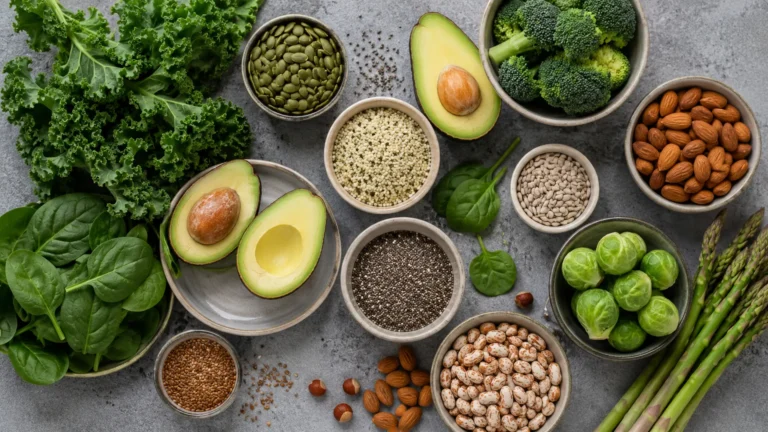
Spend most of your daily carbs on non-starchy vegetables for fiber and minerals. Per 1 cup raw unless noted: spinach 0.4nc, lettuce 0.5nc, bok choy 0.8nc, celery 1nc, cucumber 2nc, zucchini 2nc, asparagus 2.4nc, cauliflower 3nc, broccoli 3.6nc, green beans 4nc, brussels sprouts 5nc, bell pepper 4nc. Mushrooms are about 1 net carb per cup and add savory depth. Avocado, technically a fruit, belongs here for how you use it: half an avocado is about 2 net carbs with a big dose of potassium.
The vegetables to limit or avoid are the starchy ones: potato (30nc per cup), sweet potato (24nc), corn (25nc), peas (11nc), and winter squash (varies, often high). Onion and carrot are middle-ground; a little for flavor is fine (a tablespoon of diced onion is under 1 carb), a full serving adds up. Tomatoes sit around 3 net carbs per half cup, usable in moderation. The reliable move is to fill your plate with the leafy and cruciferous vegetables up top and treat the rest as garnish.
Dairy: Full-Fat Only
Choose full-fat dairy and the carbs stay low. Per serving: hard cheeses (cheddar, parmesan, gouda) about 0.5 to 1nc per ounce; cream cheese under 1nc per ounce; butter 0nc; heavy cream 0.5nc per tablespoon; full-fat Greek yogurt about 4nc per half cup; cottage cheese about 3nc per half cup. These deliver fat and protein with minimal carb cost, and cheese in particular is one of the most flexible keto ingredients for adding fat and flavor.
The dairy to avoid is the low-fat and flavored kind. Skim and low-fat milk are high in lactose sugar (about 12nc per cup), and flavored or sweetened yogurts can carry 20 plus grams of sugar. Regular milk in any amount adds up fast, so use unsweetened almond or coconut milk (1 to 2nc per cup) for drinking and cooking. If you are lactose-sensitive, hard aged cheeses and butter are the lowest-lactose options, since most of the lactose is removed during aging and clarifying.
Nuts, Seeds, Fruits, and Drinks
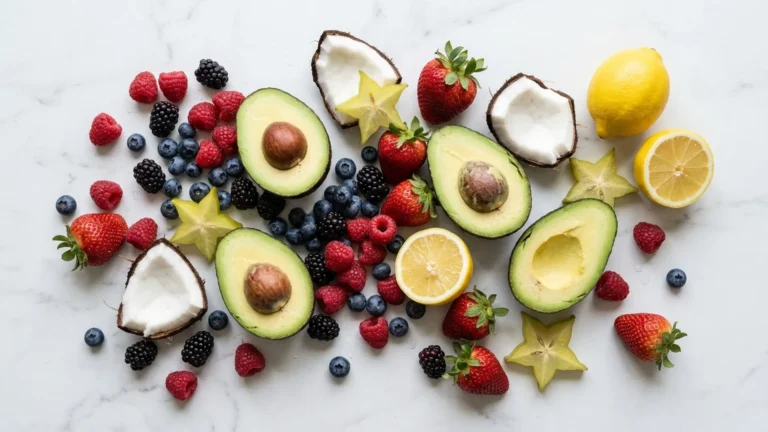
Nuts vary widely, so measure. Per ounce: pecans 1nc, macadamias 2nc, walnuts 2nc, almonds 2.5nc, peanuts 3nc, pistachios 5nc, cashews 8nc (limit). Seeds are friendly: chia 1nc, flax 0nc, pumpkin 2nc, sunflower 3nc per ounce. Among fruits, only berries fit comfortably: per half cup, raspberries 3nc, blackberries 3nc, strawberries 4nc, blueberries 9nc (small portions). Lemon and lime juice in small amounts are fine for flavor.
For drinks, the safe list is water, sparkling water, black coffee, plain tea, and unsweetened almond or coconut milk, all near 0nc. Dry wine (about 3nc per glass) and spirits (0nc, mixed with soda water) fit occasionally; beer and sweet cocktails do not. Avoid juice, soda, sweetened coffee drinks, and energy drinks. For a deeper look at where store-bought products hide carbs in a category that looks safe, our keto friendly tortilla chips breakdown is a useful example.
Condiments, Sauces, and Sweeteners
Condiments are a stealth carb source. Safe in normal amounts: mustard (0nc), mayonnaise (check label, often 0nc), hot sauce (0nc), vinegar (0nc), soy sauce and coconut aminos (about 1nc per tablespoon), pesto and olive-oil dressings (low). Watch closely: ketchup (4nc per tablespoon), barbecue sauce (6nc plus), teriyaki (6nc plus), honey mustard, sweet chili, and most bottled salad dressings, which hide 4 to 6 carbs per serving. Make your own dressing with oil, vinegar, and salt to sidestep the problem entirely.
For sweeteners, the reliable keto choices are erythritol, allulose, monk fruit, and stevia, all of which have negligible blood-sugar impact. Avoid sugar, honey, agave, maple syrup, and coconut sugar, which are all sugar. The sweetener to flag is maltitol, common in sugar-free candy: it does raise blood sugar for most people, so do not count on the sugar-free label, and subtract it only halfway when you do the net-carb math.
The Gray-Area Foods: A Clear Verdict
These are the foods keto people argue about, so here is a straight call on each. Greek yogurt: yes, plain and full-fat, in measured half-cup portions. Carrots and onions: small amounts for flavor only, not as a vegetable serving. Tomatoes: yes in moderation, watch sauces. Quest and similar protein bars: usable but calculate net carbs yourself and beware fiber that does not behave like fiber. Sugar-free candy with maltitol: treat as roughly half-counted carbs and expect a blood-sugar bump.
Beans and legumes: no, they are too carb-dense even though they are nutritious. Oats and whole grains: no, whole grain is still grain. Most fruit beyond berries: no. Cashews: technically possible but the highest-carb common nut, so limit. Milk: no for drinking, fine as a splash. Dark chocolate: yes at 85 percent or higher, in small portions. The pattern across the gray list is that portion and percentage decide it; a teaspoon of onion is fine, a cup is not, and the same logic applies to nearly every borderline food.
Baking Ingredients and Keto Flours

Baking on keto means swapping wheat flour, which is pure carb, for low-carb alternatives, and the differences between them matter. Almond flour is the workhorse at about 3 net carbs per quarter cup; it browns well and suits cookies, breading, and quick breads, though it is calorie-dense so portions add up. Coconut flour is far more absorbent and lower in carbs (about 4 net carbs per quarter cup but you use a quarter of the amount), so recipes need extra eggs and liquid to compensate. The two are not interchangeable cup-for-cup, which trips up most beginners.
Other useful keto baking items: psyllium husk (0 net carbs, adds structure and chew to breads), ground flaxseed (0 to 1 net carb, binds and adds fiber), unsweetened cocoa powder (about 1 net carb per tablespoon), and the keto sweeteners covered earlier. Avoid the flours that look healthy but are not keto: whole wheat, oat, rice, and chickpea flours are all high-carb. Vital wheat gluten appears in some keto bread recipes and is low-carb, but it is pure gluten, so it is off the list for anyone gluten-sensitive. For finished low-carb sweets that use these ingredients, our keto desserts roundup shows how they come together.
How to Read a Label and Calculate Net Carbs
The food list covers whole foods, but packaged products require you to do the math yourself, and the math is simple once you know the rule. Start at the Nutrition Facts panel and ignore the marketing on the front. Take total carbohydrates, subtract dietary fiber, and subtract only the sugar alcohols you trust (erythritol and allulose fully; maltitol only halfway). The result is net carbs. Then check the serving size, because a product that lists 3 net carbs per serving but contains two servings actually costs you 6 carbs if you eat the whole thing.
Two label traps catch people repeatedly. First, fiber counts that come from added isolated fibers like inulin or chicory root mostly behave like real fiber, but some can cause digestive upset in quantity, so do not over-rely on high-fiber bars. Second, products labeled sugar-free can still contain starches like tapioca or rice flour that raise blood sugar even with no added sugar. The label, not the front of the box, is the only honest source. Once you can do this calculation in your head, the entire packaged-food aisle becomes navigable and the food list extends to thousands of products you can evaluate on the spot.
Building Your Personal Shopping List
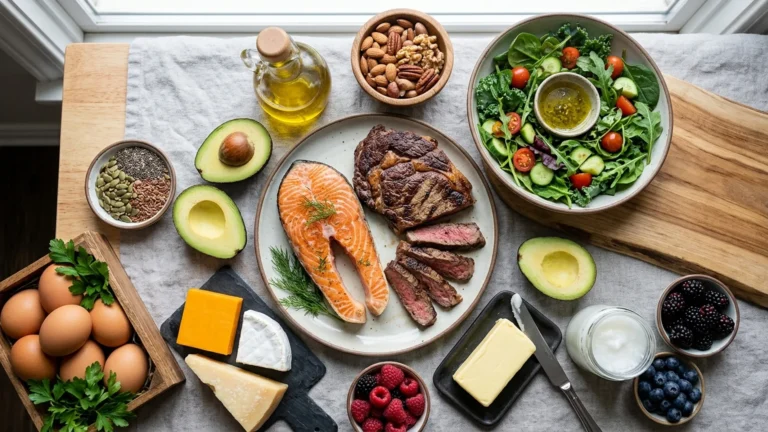
A reusable shopping template turns this food list into a weekly habit. Anchor it with the cheap, reliable staples: a dozen eggs, a few pounds of fattier protein (chicken thighs, ground beef), a fatty fish, butter, olive oil, and a couple of blocks of cheese. Add two or three bags of low-carb vegetables (fresh or frozen, both work), a bag of spinach or salad greens, and an avocado or two. Round it out with a small bag of low-carb nuts and a box of berries for the week.
Keep the list organized by store section so shopping is fast and you are not wandering past the bakery and the snack aisle where temptation lives. Build the template once, save it on your phone, and adjust the proteins and vegetables for variety each week while keeping the structure fixed. The discipline of shopping from a list, rather than browsing, is what keeps the red-list foods out of your cart in the first place, which is far easier than resisting them once they are in your kitchen. Over a month this becomes second nature and the food list lives in your head rather than on a page.
The Red List: Foods to Avoid
Keep these off the plate entirely while you are eating keto: all sugar and syrups; grains and grain products (bread, pasta, rice, cereal, oats, crackers, tortillas); starchy vegetables (potato, sweet potato, corn, peas); legumes (beans, lentils, chickpeas); most fruit (banana, apple, grapes, mango, pineapple, orange); beer and sweet drinks; and low-fat or sweetened dairy. These are not foods you eat in moderation on keto; they are the foods that will reliably knock you out of ketosis even in small servings.
The practical way to use this whole list is to build a personal shopping template from the green sections, keep the gray foods as occasional measured additions, and never put the red list in your cart. Print or save the categories you reach for most, and over a few weeks the net-carb numbers stick and you stop needing to check. For recipe and technique reference on cooking the proteins, vegetables, and sauces above, authorities like America’s Test Kitchen and Cook’s Illustrated are dependable, and our own keto basics guide ties the food list back to daily macros.
Frequently Asked Questions
What foods are unlimited on keto?
No food is truly unlimited because calories still count, but unprocessed meat, fish, eggs, and pure fats and oils are all 0 net carbs, so they never threaten your carb budget. Build meals around them and spend your carb allowance on vegetables.
Can I eat fruit on a keto food list?
Only berries comfortably: raspberries, blackberries, and strawberries at 3 to 4 net carbs per half cup. Lemon and lime juice in small amounts is fine for flavor. Higher-sugar fruit like banana, apple, and grapes will blow your daily carb budget.
Are condiments allowed on keto?
Many are, but they are a hidden carb source. Mustard, mayonnaise, hot sauce, and vinegar are near 0; ketchup, barbecue sauce, teriyaki, and most bottled dressings hide 4 to 6 carbs per serving. Read labels or make your own.
Is cheese on the keto food list?
Yes. Full-fat hard cheeses run about 0.5 to 1 net carb per ounce and deliver fat and protein, making them one of the most flexible keto ingredients. Avoid only the low-fat and processed cheese products that add starch.
What sweeteners are keto-friendly?
Erythritol, allulose, monk fruit, and stevia have negligible blood-sugar impact and are the reliable choices. Avoid sugar, honey, agave, and maple syrup. Be cautious with maltitol, which does raise blood sugar despite appearing on sugar-free labels.
Why does the list use net carbs instead of total carbs?
Fiber and certain sugar alcohols like erythritol do not raise blood sugar or interrupt ketosis, so subtracting them gives a truer picture of a food’s impact. Net carbs are what you track against your 20 to 30 gram daily limit, and using them keeps high-fiber vegetables in your diet instead of pushing them out unnecessarily.
Keto food list mastery is really just memorizing the net carbs of the twenty or so foods you eat most, then leaning on this reference for everything else. Stock the green list, measure the gray list, avoid the red list, and the diet runs on autopilot. Keep this page handy for the first month and you will rarely need it after that. The deeper benefit of learning the list this way is confidence: when you know the carbs in the foods you eat, you stop second-guessing every meal, you order without stress at restaurants, and you can rebuild your diet quickly after any slip without feeling like you have to start over from scratch.