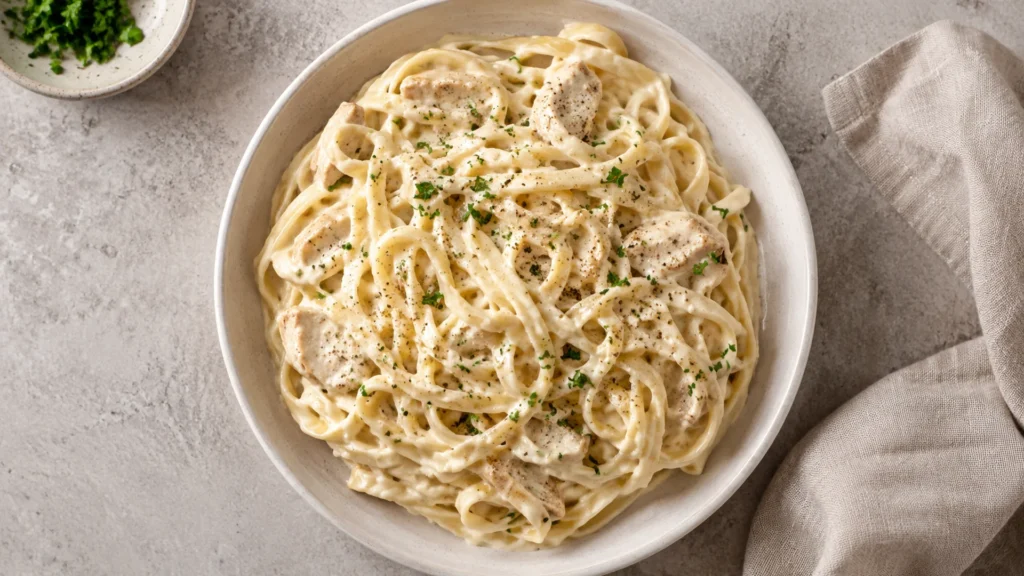
Keto pasta is any noodle that lets you eat a bowl of something twirlable without spending your whole daily carb budget, which rules out wheat and points you to shirataki, hearts of palm, zucchini, kelp, and the high-protein bean and lupin pastas. Real pasta runs about 40 grams of net carbs a cup cooked, which is an entire strict keto day in one side dish. The swaps below range from 0 to about 8 grams net carbs a serving, so you get the format back. The catch nobody tells you is that most of these noodles cook badly by default. They come out rubbery, fishy, watery, or chalky, and that is why people try one, hate it, and quit. This guide ranks every option by net carbs, then shows you how to cook each one so it is not garbage, and which sauce makes it eat like the real thing.
Most articles on keto pasta hand you a list of brand names and move on. That is the gap. A name does not tell you which one actually tastes good, how to keep it from turning to rubber, or what sauce hides its weaknesses. So this guide does three things the others skip: it ranks every alternative side by side in one net-carb table, it gives you the specific cooking fix for the specific way each noodle fails, and it matches sauces to noodles so the swap survives dinner. If you want the bigger picture of what fills a keto plate around the noodle, the keto meals formula covers the protein and fat that go with it.
What counts as keto pasta
Keto pasta is not one product, it is a category of stand-ins that all clear the same bar: low enough net carbs to fit a 20 to 50 gram day, and a shape or texture close enough to noodles that a sauce behaves the way you expect. There is no wheat version that works. Wheat is starch, starch is chained sugar, and a single cup of cooked spaghetti carries roughly 40 grams of net carbs. You cannot portion your way out of that on strict keto, so the move is replacement, not moderation.
The replacements fall into three families. The first is the near-zero-carb fiber noodles: shirataki and konjac, made from the glucomannan fiber of the konjac root, which pass through you almost entirely and land around 0 to 1 gram net carbs. The second is the vegetable noodles: zucchini, hearts of palm, kelp, and spaghetti squash, which run 2 to 7 grams a serving and bring real food and some nutrients. The third is the high-protein legume pastas: edamame, black bean, and lupin, which are the highest in carbs of the group but the closest in chew and the highest in protein. Knowing which family you are reaching for sets your expectations before the water even boils.
The net carb ranking of every keto pasta alternative
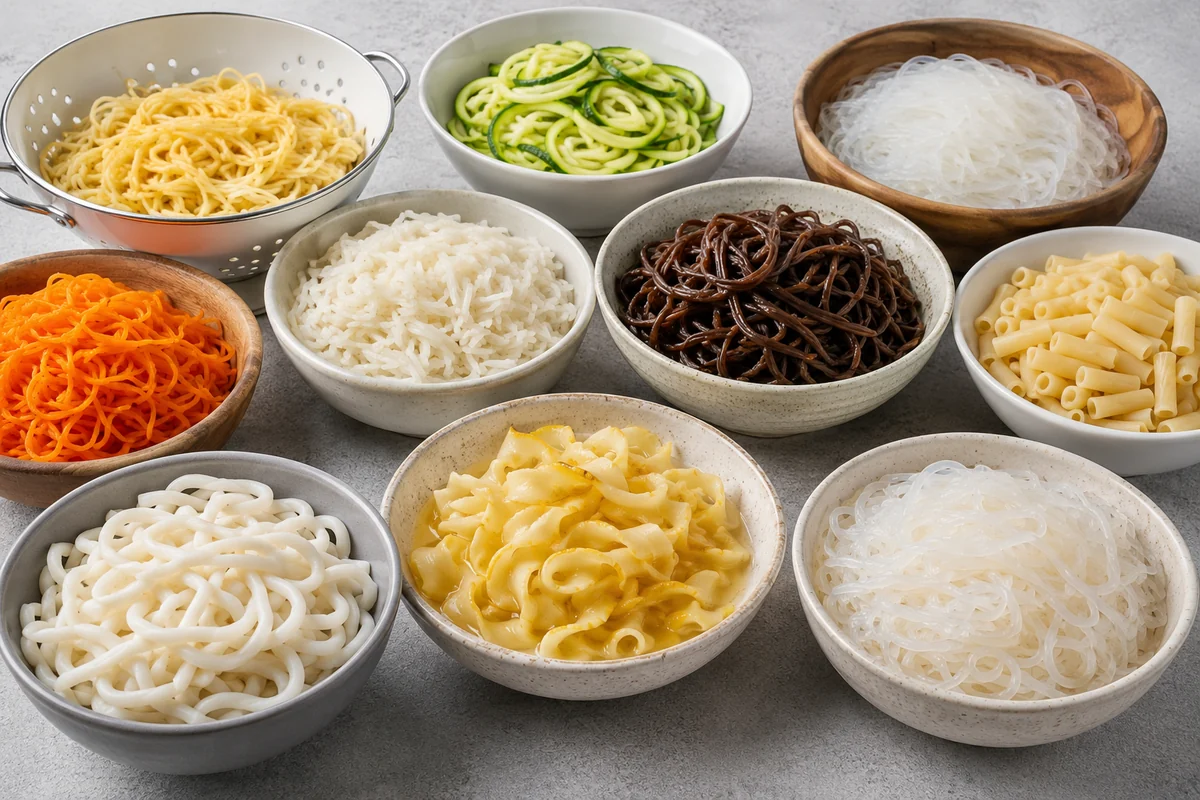
Here is the whole field in one place, sorted from lowest net carbs to highest, per a realistic single serving. Calories are rounded, texture notes are indicative, and best use is where each one actually shines instead of where the box says it works.
| Alternative | Net carbs | Calories | Texture | Best use |
|---|---|---|---|---|
| Shirataki / konjac noodles | 0 to 1 g | 10 to 15 | Springy, slightly chewy when dried right | Stir-fries, brothy bowls, pad thai style |
| Kelp noodles | 1 g | 6 | Crunchy raw, softens in acid or heat | Cold sesame salads, soups |
| Hearts of palm (Palmini) | 2 to 4 g | 20 | Tender, faint brine, holds a bite | Marinara, alfredo, lasagna sheets |
| Zucchini noodles (zoodles) | 3 g | 20 | Soft, watery if overcooked | Light olive-oil or pesto sauces |
| Spaghetti squash | 6 to 7 g | 40 | Stringy, mild sweet squash flavor | Baked dishes, hearty meat sauces |
| Edamame pasta | 4 to 5 g | 180 | Firm, true al dente chew | Anything you would eat real pasta with |
| Lupin pasta | 4 to 6 g | 150 | Wheat-like, sturdy | Baked pasta, bolognese, casseroles |
| Black bean / chickpea pasta | 7 to 8 g | 180 | Grainy, soft, can go mushy | Bold sauces that mask the bean note |
Two things jump out. The fiber noodles win on carbs and calories but lose on satisfaction, since 15 calories of noodle does not fill you the way 180 calories of edamame pasta does. And the legume pastas, despite the higher carb count, are the only ones that genuinely chew like pasta, so they are worth their carbs on a night you want the real experience. Pick by the meal, not by a single number.
Shirataki done right, no rubber and no smell
Shirataki is the lowest-carb keto pasta on earth and the one most people give up on, because straight out of the bag it is rubbery and carries a faint fishy odor from the konjac. Both problems are fixable and the fix takes four minutes. The odor lives in the packing liquid, so step one is to drain and rinse the noodles under cold running water for a full thirty seconds, longer than feels necessary. Step two is the part everyone skips: dry-fry them. Tip the rinsed noodles into a hot dry skillet with no oil and toss for two to three minutes until they squeak and you hear them go from wet to dry. This drives off the residual water that makes them rubbery and tightens the texture into something springy instead of slimy.
Glucomannan, the konjac fiber that makes up shirataki, is a soluble fiber that absorbs water, which is exactly why the dry-fry matters: you are pulling that absorbed water back out so sauce can take its place. Healthline has a clear rundown of how glucomannan behaves in the body if you want the science on why these noodles are nearly carb-free. Once dry-fried, add your sauce directly to the same pan and let the noodles simmer in it for a minute so they drink up flavor. Skip that and the sauce just slides off. Treated this way, shirataki carries Asian sauces beautifully, peanut, sesame, soy and ginger, gochujang, because those bold flavors meet the noodle halfway.
Hearts of palm and Palmini
Hearts of palm noodles, sold most often under the Palmini brand, are the pick for the closest tender-pasta feel without a legume carb load. They come from the inner core of palm stems, arrive already noodle-shaped in a can or pouch, and land around 2 to 4 grams net carbs a serving. The one flaw is a faint brine or sourness from the packing acid, and there are two ways to beat it. The fast way is a thorough rinse plus a ten-minute soak in plain water or milk, which mellows the tang. The better way, if you have the time, is to simmer the drained noodles in water for ten minutes, which softens them from a slight crunch toward true pasta tenderness and washes out more of the acid.
Because hearts of palm hold their shape and do not water out the way zucchini does, they are the vegetable noodle best suited to a heavy sauce. They take alfredo and cream sauces without collapsing, they layer into lasagna as flat sheets, and they stand up to a long-simmered marinara. If you are building a creamy bowl, the same logic that governs a good keto dressing applies to the sauce, fat-forward and lightly thickened. The keto dressing guide breaks down which thickeners stay low-carb so your sauce clings instead of pooling.
Zucchini and vegetable noodles
Zucchini noodles, zoodles, are the easiest keto pasta to make and the easiest to ruin. Their entire problem is water. A zucchini is roughly 95 percent water, and heat releases all of it, so a careless cook ends up with a sad puddle and limp strands swimming in watery sauce. The fix is to never fully cook them. Spiralize, then salt the raw noodles lightly and let them sit in a colander for ten to fifteen minutes so the salt pulls moisture out, then press them in a clean towel. When you cook, go fast and hot: two minutes maximum in a hot pan, or skip the pan entirely and just pour hot sauce over raw zoodles, which warms them through without cooking out more water.
Zucchini stays light, so it wants a light sauce. Pesto, garlic and olive oil, a quick cherry-tomato saute, lemon and parmesan. It buckles under heavy cream or a long-cooked meat sauce, both of which add more liquid to a noodle that is already fighting water. If you want more low-carb produce to spiralize or build a vegetable side around, the lowest carb vegetables for keto rankings show which ones stay under the line. Spaghetti squash is the other vegetable option worth a mention: roast it cut-side down until the strands pull free with a fork, then squeeze the strands gently to shed water. It carries more carbs at 6 to 7 grams and a mild sweetness, so it pairs best with assertive meat sauces that balance the squash.
Lupin and edamame pastas

If you miss the actual chew of pasta, this is the family that delivers, and it is worth understanding the trade. Edamame and lupin pastas are made from beans rather than wheat, so they bring 20 plus grams of protein a serving and a firm, true al dente bite that no vegetable or fiber noodle can match. The cost is carbs: edamame runs 4 to 5 grams net a serving, lupin 4 to 6, and chickpea or black bean pasta climbs to 7 or 8, which is real spend on a strict day but entirely doable on a 50 gram ceiling. The protein also makes them far more filling, so a smaller portion satisfies, which partly offsets the carbs.
Cook these like real pasta with one rule: pull them early. Bean pastas go from firm to mush faster than wheat, so set a timer for a minute or two under the box time, taste, and drain the second they hit al dente. Salt the water as you would for any pasta, and do not rinse after draining unless the recipe is a cold salad, because the surface starch helps sauce grip. Lupin in particular behaves the most like wheat and is the best pick for baked pasta and casseroles where it has to hold up to the oven. Edamame is the everyday workhorse for any sauce you would normally twirl. The grainier black bean and chickpea versions need a bold sauce to cover the bean note, so save those for a heavy bolognese or a spicy arrabbiata.
Homemade keto noodles
You do not need a specialty product to eat keto pasta. Two homemade routes give you real chew with ingredients you probably already have. The first is fathead dough, the same mozzarella-and-almond-flour dough that powers low-carb bagels and pizza. Melt shredded mozzarella with a little cream cheese, beat in an egg and almond flour, knead it smooth, then roll it thin and cut it into ribbons with a knife or pizza cutter. Boil the ribbons for sixty to ninety seconds, no longer, and you get a sturdy fettuccine-style noodle at roughly 3 to 4 grams net carbs a serving that holds a cream sauce like the real thing.
The second route is even simpler: egg noodles, sometimes called egg-fast crepe noodles. Whisk eggs with a spoonful of cream cheese and a pinch of salt, pour thin into a hot nonstick pan to make a flat crepe, cook it through, let it cool, then roll and slice into ribbons. Net carbs land near zero because it is essentially egg and cheese, and the strips behave like a soft fresh pasta in soups and stir-fries. Both homemade options are forgiving once you have made them twice, and they scratch the pasta itch on a night when you want something that did not come from a pouch. For more ways to turn these noodles into a full plate, the keto dinner ideas roundup builds whole meals around them.
Sauce pairing that makes the swap work
The single biggest reason a keto pasta swap fails is a sauce mismatch. Each noodle has a texture personality, and the right sauce flatters it while the wrong one exposes it. Match them and even shirataki passes for the real thing. Here is the map.
| Noodle | Best sauces | Avoid |
|---|---|---|
| Shirataki / konjac | Peanut, sesame, soy-ginger, gochujang, broth | Delicate cream sauces that need a starchy noodle |
| Hearts of palm / Palmini | Alfredo, marinara, vodka cream, lasagna layers | Very thin oily sauces that slide off |
| Zucchini noodles | Pesto, garlic oil, lemon-parm, fresh tomato | Heavy cream, long-simmered meat sauce |
| Edamame / lupin | Anything: bolognese, carbonara, cacio e pepe | Nothing, they handle it all |
| Black bean / chickpea | Bold arrabbiata, spicy sausage, heavy ragu | Light butter sauces that let the bean note show |
The principle underneath the table is simple: low-flavor noodles want bold sauces that bring the taste, and watery noodles want thick sauces or none of the extra liquid. America’s Test Kitchen has reliable guidance on building emulsified pasta sauces that cling, and the technique carries straight over to these noodles, since a sauce that grips a fiber strand is the difference between dinner and disappointment. Reserve a splash of the cooking water from bean pastas to loosen and emulsify a cream or cheese sauce, exactly as you would with wheat. When you want a sauce-forward pasta night without doing the math yourself, the pasta night hub has lighter sauces you can adapt to a low-carb noodle.
The brand label reality check
Not every box that says keto pasta is telling the truth, and the trick is the same fiber math that fools people on protein bars. A label can show a scary total carb number, then subtract a big fiber figure to land on a tiny net carb claim. With shirataki and real vegetable noodles that subtraction is honest, because the fiber genuinely passes through you. With some processed legume and specialty pastas, the math leans on added isolated fibers and sometimes sugar alcohols, and not all of those subtract cleanly. Maltitol, when it shows up as a binder, raises blood sugar and should be counted closer to a full carb, so a noodle that claims 2 grams net might behave like 5 in your body.
The protection is to read the panel, not the front. Check total carbohydrate, dietary fiber, and any sugar alcohols, do the subtraction yourself, and treat maltitol and unfamiliar fiber blends with suspicion. Watch serving size too, since some boxes quote a 2 ounce dry serving that nobody actually eats as a single portion. The word keto on the front of a package is unregulated and means nothing on its own. The same skill you would use scanning a keto diet foods label applies here: trust the panel, recount the suspicious subtractions, and let the noodle earn its place by the numbers rather than the badge.
Frequently asked questions
What is the lowest carb keto pasta?
Shirataki and konjac noodles are the lowest, at 0 to 1 gram net carbs and about 10 to 15 calories a serving, because they are made almost entirely of glucomannan fiber that passes through you. Kelp noodles are a close second at around 1 gram. The trade-off is that these are the least filling, so pair them with a protein and a bold sauce to make a real meal.
Is any wheat pasta keto?
No. All wheat pasta is starch, which is chained sugar, and a single cooked cup runs about 40 grams of net carbs, an entire strict keto day in one serving. There is no portion small enough to make regular spaghetti fit a 20 gram day. The only path is replacement with a low-carb noodle, not eating less of the wheat version.
How do I keep shirataki noodles from being rubbery and smelly?
Drain and rinse them under cold water for thirty seconds to clear the odor from the packing liquid, then dry-fry them in a hot pan with no oil for two to three minutes until they squeak and stop releasing water. The dry-fry pulls out the absorbed moisture that causes rubberiness. Then simmer them in your sauce for a minute so they take on flavor.
Which keto pasta tastes the most like real pasta?
Edamame and lupin pastas, because they are bean-based and deliver a firm, true al dente chew that vegetable and fiber noodles cannot match. They cost more carbs, 4 to 6 grams net a serving, but they bring 20 plus grams of protein and are the only options that genuinely eat like pasta. Pull them a minute early so they do not turn to mush.
Are hearts of palm noodles good on keto?
Yes, hearts of palm noodles like Palmini are one of the best, at 2 to 4 grams net carbs with a tender bite that holds up under heavy sauces like alfredo and marinara. Beat the faint brine taste by rinsing well and either soaking ten minutes or simmering them ten minutes in water, which also softens them toward true pasta tenderness.
Can I make keto pasta at home without buying special noodles?
Yes. Fathead dough, made from melted mozzarella, cream cheese, egg, and almond flour, rolls thin and cuts into ribbons that boil in about ninety seconds for a sturdy fettuccine at 3 to 4 grams net carbs. Egg-and-cream-cheese crepe noodles are even lower, near zero net carbs, and work in soups and stir-fries. Both give real chew from ingredients you likely already have.
Bottom line
Keto pasta works once you stop expecting one perfect noodle and start matching the noodle to the night. For the lowest carbs and a quick Asian-style bowl, dry-fry shirataki and hit it with a bold sauce. For a tender stand-in under cream or marinara, reach for hearts of palm. For a light summer plate, salt and barely cook zucchini. And for the night you want pasta to actually taste like pasta, spend the carbs on edamame or lupin and pull them early. Cook each one for its specific weakness, pair the sauce to the texture, and recount any suspicious label, and the swap stops feeling like a compromise. The format comes back to your plate at a fraction of the carbs, which is the whole point.