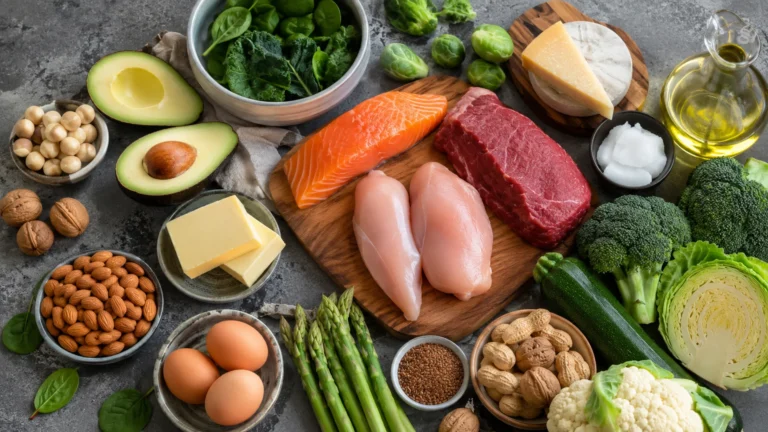
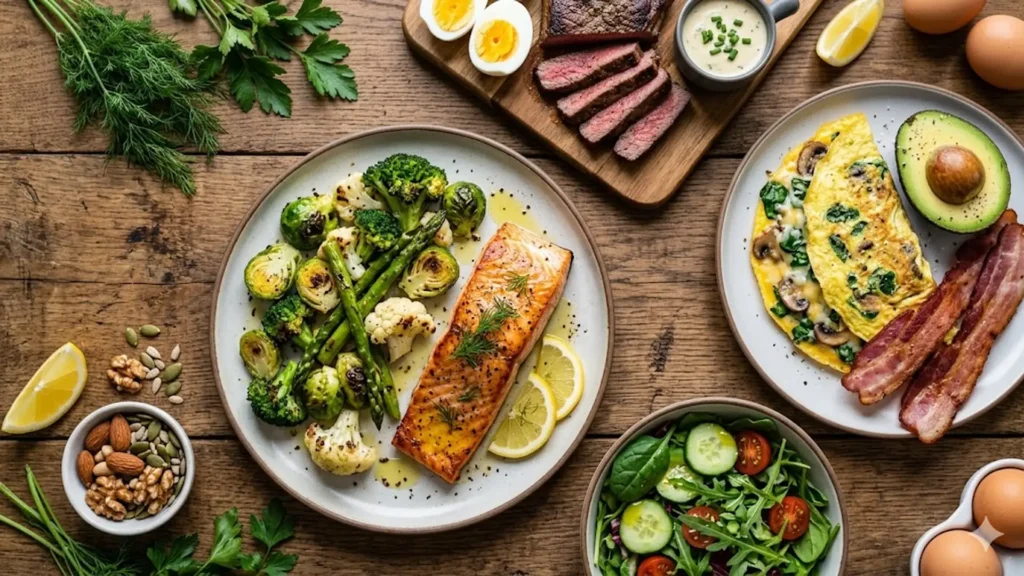
Keto diet foods are the high-fat, moderate-protein, very-low-carb foods that keep you in ketosis: meat, fish, eggs, cheese and full-fat dairy, leafy and non-starchy vegetables, nuts and seeds in measured amounts, avocado, olives, and healthy oils. The core rule is simple. Build plates from foods that carry almost no sugar, add fat freely, keep protein moderate, and treat every carb as something you spend on purpose. Stay under roughly 20 to 50 grams of net carbs a day and your food choices fall into place.
Most keto food lists hand you a wall of names and stop there. That is the gap. A name does not tell you how much you can eat, where it sits on your daily budget, or what to grab when you are standing in the grocery aisle. So this guide sorts foods into three tiers by net carbs, gives you a first shopping cart you can actually fill in one trip, and shows you how to read a label so the marketing on the front does not fool you. If you want the macro targets behind all of it, the keto diet guidelines lay out where the percentages come from.
The three-tier system that replaces a food list
Forget memorizing two hundred foods. Memorize one threshold instead. Sort everything by net carbs per realistic serving and a food falls into one of three tiers.
Green tier is under 5 grams net carbs per serving. Eat these freely, build most meals from them. Meat, fish, eggs, hard cheeses, leafy greens, avocado, olives, most oils. Yellow tier is 5 to 10 grams per serving. Eat these, but portion them and count them. Nuts, berries, higher-carb vegetables like Brussels sprouts and onion, full-fat yogurt. Red tier is over 10 grams per serving. Bread, pasta, rice, potatoes, most fruit, sugar, anything breaded or battered. These do not fit a strict day, full stop.
The power of the tiers is what they do to borderline foods. Onion, for example, reads scary to beginners. But two tablespoons of diced onion is about 1.5 grams net carbs, which is green-tier in cooking amounts even though a whole onion would be yellow. The tier tells you the food is fine if you watch the portion, instead of banning it. That single shift, from yes-or-no lists to portion-gated tiers, is what keeps people on keto past week two.
Green-tier keto diet foods to build meals around
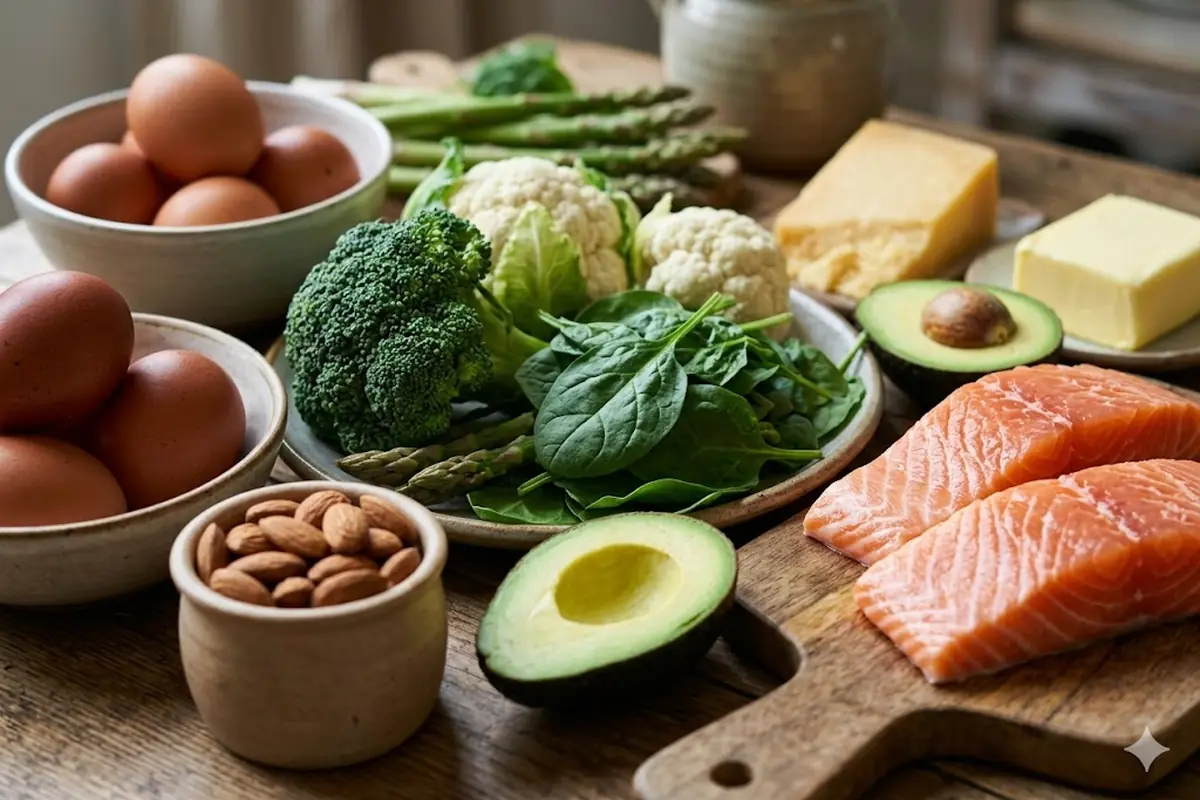
These are your foundation. Net carbs are per typical serving, rounded.
- Beef, pork, lamb, chicken, turkey: 0 grams. Unprocessed meat carries no carbs.
- Salmon, tuna, cod, shrimp, sardines: 0 to 1 gram. Fatty fish doubles as your fat source.
- Eggs: under 1 gram each. The most flexible keto food there is.
- Cheddar, mozzarella, parmesan, cream cheese: 0 to 1 gram per ounce.
- Spinach, kale, romaine, arugula: 1 gram per cup raw.
- Avocado: 2 grams per half.
- Olives: 1 gram per ten.
- Olive oil, butter, ghee, coconut oil: 0 grams. Fat with no carb cost.
- Zucchini, cucumber, celery, bell pepper: 2 to 3 grams per cup.
Notice how a meal assembles itself from this list. Eggs scrambled in butter with spinach and cheese is a full breakfast under 4 grams. Salmon with a green salad and olive oil is dinner under 5. You are not depriving yourself, you are building from a different shelf. For dozens more low-carb grab options sorted the same way, the keto food list goes category by category.
Yellow-tier foods: eat them, but count them
Yellow tier is where people stall, because these foods feel safe and the carbs add up quietly. Almonds at 3 grams per quarter cup sound harmless until you eat half a cup watching TV and it is 6, then the second handful makes it 12. Nuts are the classic trap. Same with berries at 3 to 4 grams a half cup, full-fat Greek yogurt at 4 to 6 grams a serving, and vegetables like Brussels sprouts at about 5 grams a cup or cherry tomatoes at 4.
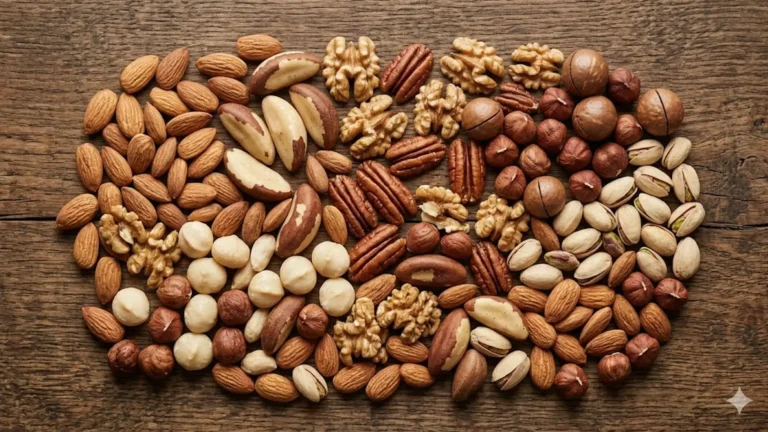
The rule for yellow tier is one portion, measured, counted into your day. A quarter-cup scoop kept in the nut jar puts an end to free-pouring. That one piece of plastic can do more for a carb count than any app. Pumpkin seeds, macadamias, walnuts, sunflower seeds all live here, and macadamias are the lowest at about 2 grams per ounce, which makes them a sensible default nut. America’s Test Kitchen has solid guidance on toasting nuts to deepen flavor so a smaller measured portion still satisfies.
Fats and oils, ranked by what they do
Fat is the part beginners underuse, then wonder why they feel hungry and cold. On keto, fat is fuel, not a topping you tolerate. All cooking fats are zero carbs, so the choice is about heat and flavor, not carb count. Here is how the ones worth keeping rank.
For high-heat searing, use avocado oil or beef tallow, which hold up past 400 degrees without breaking down. For medium-heat cooking and finishing, butter and ghee bring flavor; ghee has the milk solids removed so it browns less and stores longer. For dressings and cold use, extra virgin olive oil is the everyday pick, with a deeper flavor than refined oils. Coconut oil is fine but its flavor carries into everything, so it suits specific dishes rather than everyday use. Skip the industrial seed oils where you can, not for carbs but for quality. The point is to cook with enough fat that a meal actually fills you, because a dry, lean keto plate is the fastest road to a 9 p.m. carb raid.
Dairy: where it helps and where it hides carbs
Dairy is a keto workhorse, but not all of it behaves the same. Hard, aged cheeses are green-tier and nearly carb-free because the aging ferments away most of the lactose. Cheddar, parmesan, gouda, and swiss all sit at 0 to 1 gram per ounce. Cream cheese, heavy cream, and sour cream are also low, around 1 to 2 grams per serving, which is why heavy cream is the keto coffee staple instead of milk.
Milk itself is the trap. A cup of regular milk carries about 12 grams of carbs from lactose, which is why it is yellow bordering on red. Sweetened yogurts are worse, often 20 plus grams a cup once you count the fruit and added sugar. Plain full-fat Greek yogurt is the keto-friendly version at 4 to 6 grams a serving, and it strains out much of the lactose. The rule of thumb: the harder and more aged the dairy, the lower the carbs; the more liquid and sweetened, the higher. Cottage cheese sits in the middle at about 4 grams a half cup, fine in a portion.
Your first keto cart: shop in one trip
Here is what the big lists never give you, an actual cart. If you walked into a store today with nothing in your kitchen, these twelve anchors cover a week of keto meals:
- A dozen eggs, a block of cheddar, and a tub of cream cheese.
- Two pounds of chicken thighs and a pound of ground beef.
- A bag of frozen salmon or shrimp.
- Two avocados and a bag of mixed leafy greens.
- A zucchini, a cucumber, and a bag of broccoli or cauliflower.
- Butter and a bottle of olive oil.
- A quarter-cup-portioned bag of macadamias or almonds.
- A small carton of heavy cream and a bag of frozen raspberries for the week’s dessert.
That cart runs under 5 grams net carbs per meal if you assemble plainly, and it leaves room for the yellow-tier extras. Frozen proteins are deliberate. They do not spoil, so a tough week does not end with a fridge full of waste and a drive-through dinner. WebMD has a reasonable keto shopping breakdown if you want a longer reference list once the basics are habit.
How to restock so the easy grab is the right grab
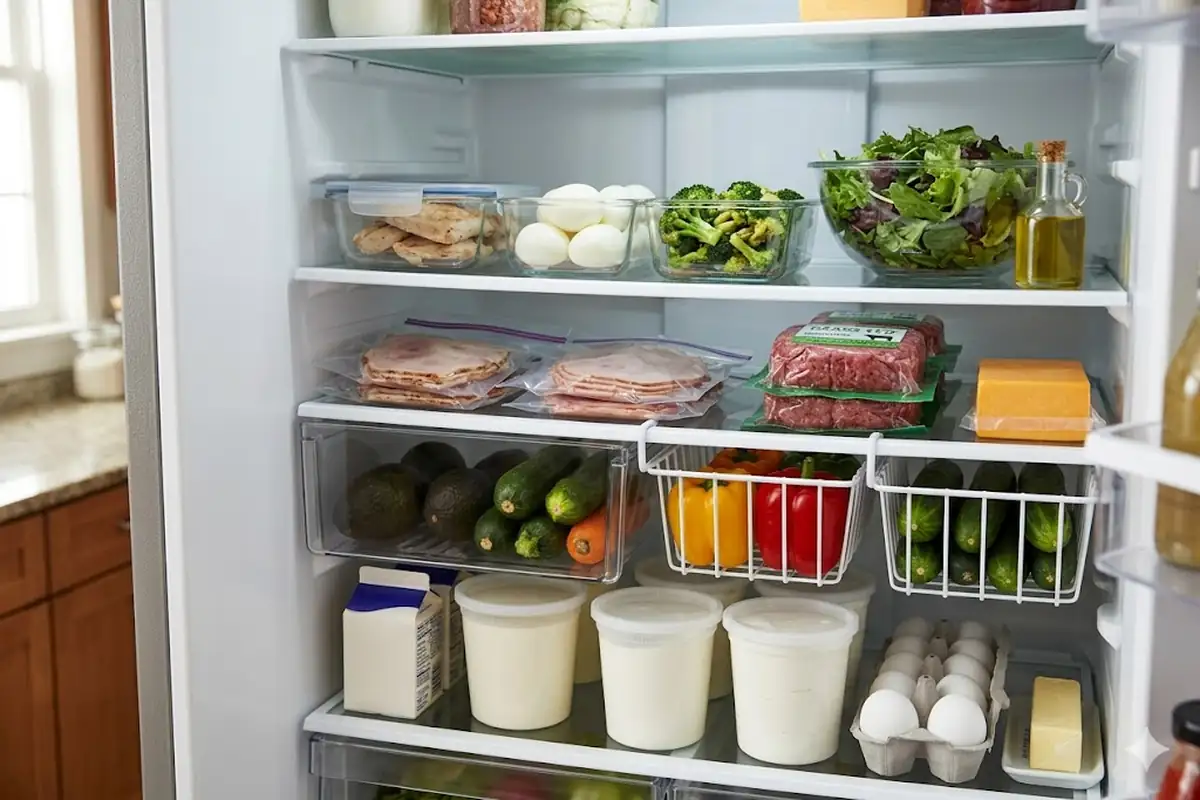
The single habit that keeps things consistent is putting green-tier food at eye level. A Sunday routine helps: hard-boil eight eggs, pre-portion nuts into snack bags, slice cucumbers and peppers into a container, and shove the leftover takeout-temptation stuff to the back of a bottom shelf where you have to bend down for it. Then, when you open the fridge hungry and tired, the first thing your hand lands on is already keto. No willpower required, because the willpower was spent on Sunday.
This sounds like a small thing. It is the whole thing. People do not fall off keto because they crave bread in a thoughtful moment. They fall off at 9 p.m. when they are tired and the fastest food in the house is the wrong one. Engineering the fridge so the fast food is the keto food removes the decision entirely. For ready-made options when even slicing feels like too much, the keto friendly snacks roundup covers grab-and-go choices with the net carbs already counted.
Reading a label without getting fooled
Front-of-package keto marketing is mostly noise. The truth is in the nutrition panel, and you only need three numbers. Total carbohydrate, dietary fiber, and sugar alcohols. Net carbs equals total carbs minus fiber minus sugar alcohols. So a “keto” bar that says 22 grams total carb, 12 grams fiber, and 8 grams sugar alcohol is really 2 grams net carbs. The big scary number on the front is doing nothing.
One caution on sugar alcohols. Erythritol and allulose subtract cleanly, but maltitol does not. Maltitol raises blood sugar and you should count it closer to full carbs, so a “sugar-free” candy sweetened with maltitol is not the freebie it pretends to be. Check the ingredient line, not just the math. And ignore the word “keto” itself, which is unregulated. A product earns its place by the panel, not by the badge. Saucegrove has a guide to asian sauces that shows how fast hidden sugar piles up in bottled condiments, which is the same label-reading skill applied to flavor.
Eating out without breaking ketosis
Restaurants are where good plans die, but the green tier travels. The move is to think in swaps, not sacrifices. Order the burger without the bun and ask for it on a bed of greens. Get the steak or grilled fish and swap the fries or potato for a side salad or extra vegetables. At a breakfast spot, eggs any style with bacon or sausage is keto by default; just skip the toast and hash browns. Mexican food works as a bowl with no rice, no beans, no tortilla, loaded with meat, cheese, guacamole, and sour cream.
The hidden carbs are in the extras. Breading on anything fried adds 15 to 30 grams. Sweet sauces, glazes, teriyaki, barbecue, and most ketchup carry sugar. Thickened soups and gravies use flour or cornstarch. Even a “salad” can hide candied nuts, croutons, dried cranberries, and a sweet dressing that doubles the carb count. Ask for oil and vinegar and you sidestep the dressing trap entirely. The skill is the same one from the label section, just applied to a menu instead of a panel: assume sauces and breading carry sugar until proven otherwise.
Foods to keep out of the cart
Red tier is short and worth stating plainly. Bread, bagels, pasta, rice, potatoes, corn, oats, and breakfast cereal are starch, which is just chained sugar. Sugar itself, honey, maple syrup, and agave all spike you. Most fruit beyond berries lands here, as do beans and lentils, which surprise people because they read healthy but carry 20 plus grams of carbs a cup. Beer is liquid bread. Sweetened drinks, juice, and most smoothies are sugar water. None of this is about morality. These foods simply cost more carbs than a keto day can spend, so they sit outside the plan until you choose to spend big on purpose.
A word on where these numbers come from, because precision matters here. Every net-carb figure in this guide traces to USDA FoodData Central entries for the raw item, with fiber and sugar alcohols subtracted from total carbohydrate the standard way. After several years of building keto plates and untangling other people’s stalls, the pattern is always the same: the food list was never the problem, the portions and the hidden carbs were. That is why this guide spends more time on tiers, portions, and labels than on naming foods you already know are meat and vegetables. Get the system right and the list takes care of itself.
Frequently asked questions
What can I eat freely on keto?
You can eat green-tier foods freely: unprocessed meat, fish, eggs, hard cheeses, leafy greens, avocado, olives, and oils, all under 5 grams net carbs per serving. Build most meals from these and you stay in ketosis without counting every bite. Fat in particular carries no carb cost, so cook generously with butter and olive oil.
How many carbs a day for keto diet foods?
Most people stay in ketosis under 20 to 50 grams of net carbs per day, with 20 being the strict target and 50 a more flexible ceiling. Net carbs means total carbohydrate minus fiber and sugar alcohols. Where you land in that range depends on your activity and how readily your body holds ketosis, so start at 20 and loosen only if it works for you.
Are eggs and cheese unlimited on keto?
Eggs and most hard cheeses are green-tier at under 1 gram net carbs each, so they are close to unlimited on carbs. The limit is calories and protein, not carbs. Eat them freely, but remember cheese is calorie-dense and very easy to overeat, so portion it if weight loss has stalled.
Why are beans and lentils not keto?
Beans and lentils are high in carbohydrate despite being nutritious, often 20 to 40 grams net carbs per cup, which is an entire keto day in one side dish. They read healthy because they are high in fiber and protein, but the net carbs are simply too high for ketosis. A couple tablespoons as a garnish can fit; a full serving cannot.
Can I eat nuts on keto?
Yes, nuts are keto in measured portions. Macadamias at about 2 grams net carbs per ounce and pecans and Brazil nuts are the lowest; cashews are the highest and least keto. The trap is volume, since a quarter cup is one serving and most people pour three. Use a scoop and count one portion into your day.
How do I read a keto food label?
Check three numbers on the nutrition panel: total carbohydrate, dietary fiber, and sugar alcohols. Subtract fiber and most sugar alcohols from total carbs to get net carbs. Ignore the word “keto” on the front, which is unregulated, and watch for maltitol, which does not subtract cleanly and should be counted closer to full carbs.
What is the easiest keto meal for a beginner?
Eggs scrambled in butter with cheese and a handful of spinach is the easiest, at under 4 grams net carbs and five minutes of work. It uses only green-tier foods, needs no recipe, and works for any meal of the day. Keep eggs, butter, cheese, and greens stocked and you always have a fallback.