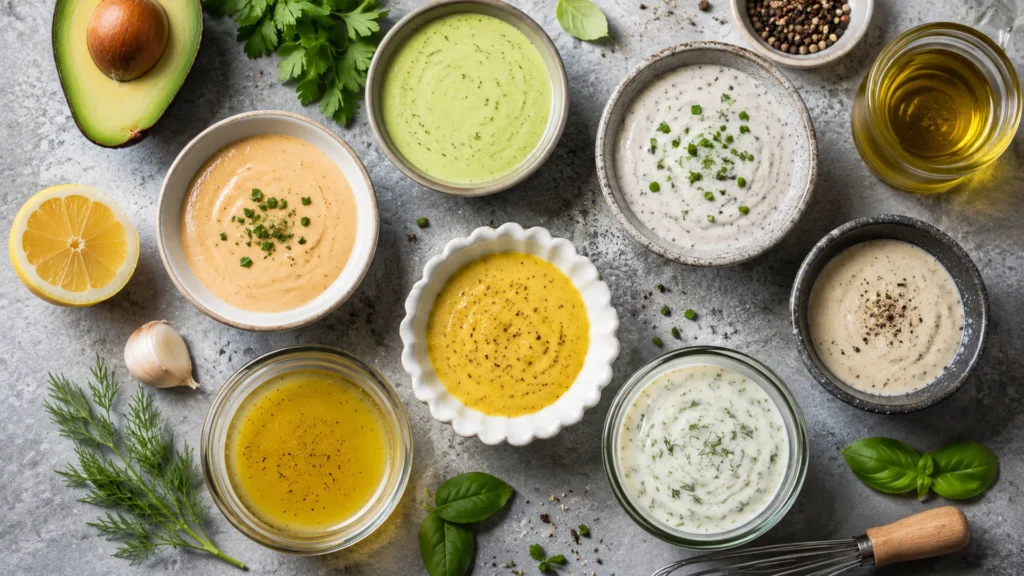
Dressing for keto diet eating is where a lot of people accidentally blow their carb count, because salad dressing is one of the sneakiest places sugar hides. A salad is supposed to be the safe choice, then two tablespoons of the wrong bottled dressing adds eight or ten grams of net carbs and quietly knocks you off plan. The fix is simple once you know what to look for: a keto dressing leads with fat, carries little or no sugar, and lists an oil as its first ingredient. This guide covers which dressings are naturally keto, which to avoid, the carb counts that matter, and homemade recipes you can make in two minutes with real macros attached.
None of this is medical advice, and your daily numbers are yours to manage. But if you want your salads working for you instead of against you, here is exactly how to handle dressing on keto, with net carbs counted and US measures throughout.
What Makes a Dressing Keto-Friendly
A keto dressing follows one rule above all others: fat first, sugar last. When you flip a bottle over, the first ingredient should be an oil or a fat, olive oil, avocado oil, or something built on mayonnaise, sour cream, or cheese. That tells you the dressing delivers the fat keto runs on. The second thing to scan for is sugar, and not just the word sugar. High-fructose corn syrup, honey, agave, maple syrup, cane juice, and fruit concentrate all count, and they show up constantly in bottled dressings. If a fat leads the list and sugar is absent or near the bottom in tiny amounts, the dressing is almost certainly keto-friendly.
The trap that catches the most people is light and fat-free dressing. Stripping the fat out forces manufacturers to add sugar and starch to make the product taste like anything, so light dressings are usually higher in carbs than their full-fat versions. On keto, full-fat is the right choice every time. Fat is the point, not the enemy.
The Best Keto Dressings, by Type
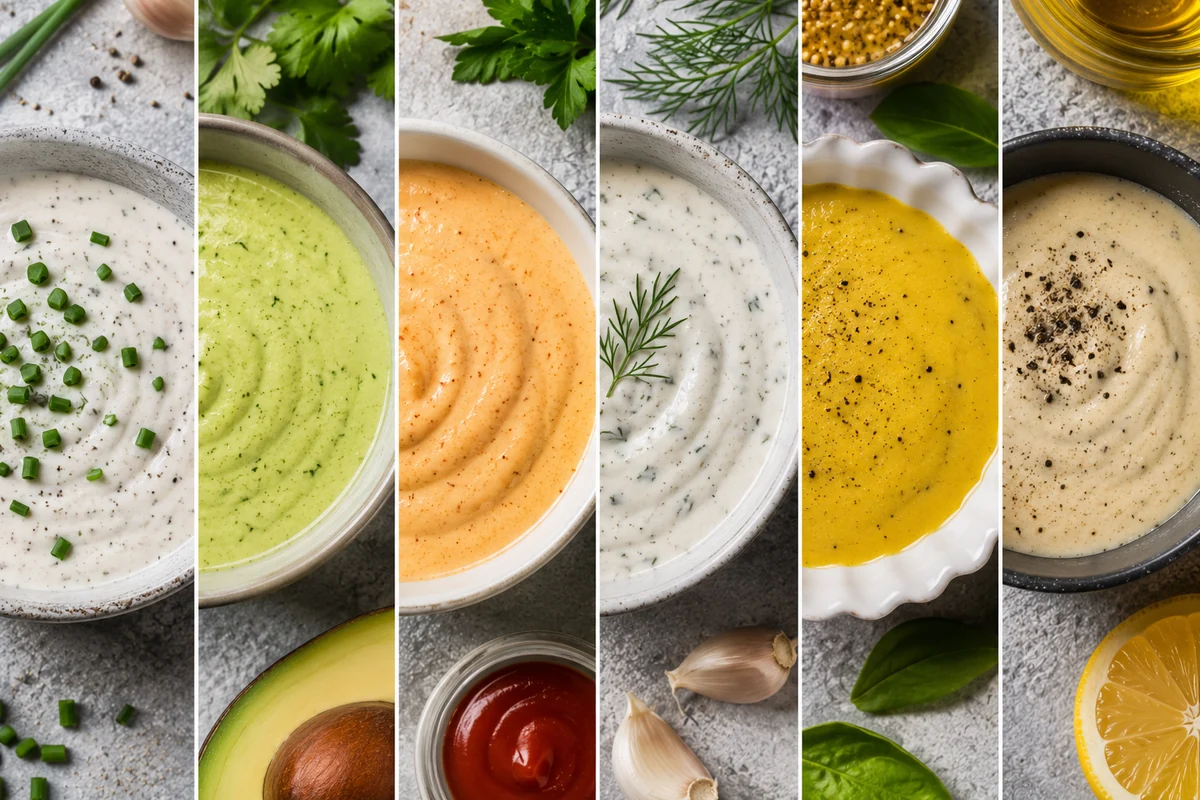
Several classic dressings are naturally low in carbs when made properly. Vinaigrette built from olive oil and vinegar is about as keto as a dressing gets, often under one gram of net carbs per serving. Ranch made with sour cream, mayonnaise, and herbs is rich and low-carb as long as it has no added sugar. Blue cheese dressing, built from mayo, cream, and real blue cheese, is high in fat and very low in carbs. Caesar dressing, the genuine kind made with oil, egg yolk, anchovy, parmesan, and lemon, is keto-friendly, though bottled versions sometimes sneak in sugar. Italian dressing can be fine if it is oil-based, but the sweet sub-types are not. Greek and oil-and-vinegar styles are reliable. The dressings to be wary of are honey mustard, French, Catalina, Thousand Island, and most so-called fat-free or light options, all of which tend to be sugar-forward.
| Dressing | Typical net carbs (2 tbsp) | Keto verdict |
|---|---|---|
| Oil and vinegar vinaigrette | 0-1 g | Excellent |
| Blue cheese | 1-2 g | Excellent |
| Ranch (no sugar added) | 1-2 g | Great |
| Caesar (real) | 1-2 g | Great |
| Honey mustard | 6-8 g | Avoid |
| French / Catalina | 5-8 g | Avoid |
| Fat-free / light | 5-10 g | Avoid |
Why Homemade Beats the Bottle
Making dressing yourself is the single best move for keto, and it takes less time than you think. When you build it, you control the oil, you skip the sugar, and you know the exact carb count of every spoonful. Most homemade dressings come together in a jar or a small bowl with a whisk in under two minutes, and they keep in the fridge for several days. The cost is lower too, since a bottle of olive oil and a few pantry staples make far more dressing than any store jar for the same money. Once you have made your own a few times, the bottled stuff starts to taste oddly sweet by comparison.
There is a quality difference too. Fresh dressing made with good olive oil, real herbs, and proper cheese simply tastes better than something that has sat on a shelf for months with preservatives and stabilizers holding it together. The bottled product has to survive shipping and storage, which is why it leans on gums and acids that a fresh batch never needs. When the fat is the whole point of the food, using a fat you actually enjoy makes the entire diet more pleasant, and that pleasure is a big part of why people stick with keto long enough to see results.
Quick Keto Dressing Recipes
Two-minute vinaigrette
Whisk three tablespoons of extra-virgin olive oil with one tablespoon of red wine vinegar, half a teaspoon of Dijon mustard, a pinch of salt, and a crack of pepper. That makes about four tablespoons at roughly half a gram of net carbs total, almost all of the calories from fat. Add a pressed garlic clove or a pinch of dried oregano to turn it Italian.
Creamy ranch
Stir together a quarter cup of mayonnaise, a quarter cup of sour cream, a tablespoon of buttermilk or heavy cream thinned with water, and a teaspoon each of dried dill, parsley, garlic powder, and onion powder, plus salt to taste. This lands around one gram of net carbs per two-tablespoon serving and is rich enough to double as a dip for low-carb vegetables.
Blue cheese
Mash a quarter cup of crumbled blue cheese into a quarter cup of mayo and two tablespoons of heavy cream, with a splash of vinegar or lemon and plenty of black pepper. It comes in near one to two grams of net carbs per serving and is excellent on a wedge salad or a steak.
Smart Add-Ins and Flavor Boosters
You can keep dressings interesting without adding carbs. Fresh herbs like basil, cilantro, dill, and chives bring big flavor for essentially no carbs. Acid is your friend, so lean on lemon juice, lime, and the various vinegars, all of which are very low in carbs in dressing-sized amounts. A spoonful of grated parmesan, a little crumbled bacon, or a mashed anchovy adds savory depth and fat. For heat, hot sauce, chili flakes, and fresh chili add flavor with no carb cost. If you want a touch of sweetness, a few drops of liquid monk fruit or a pinch of erythritol does it without the sugar that ordinary sweet dressings rely on.
Choosing the Right Oil for Your Dressing
The oil you build a dressing on shapes both the flavor and the nutrition. Extra-virgin olive oil is the default for good reason: it is rich in monounsaturated fat, it tastes great, and it suits almost any salad. For a more neutral base that lets other flavors lead, avocado oil works beautifully and carries a high smoke point if you ever warm a dressing. Both are zero-carb fats, so neither affects your count. Where people go wrong is reaching for cheap seed oils high in processed omega-6, or for vegetable oil blends that taste flat. You do not need to fear all seed oils, but on keto, where fat is the bulk of your intake, it is worth making that fat olive or avocado oil most of the time. A small amount of toasted sesame oil or walnut oil can add character to an Asian-style or autumn salad without adding meaningful carbs.
Texture matters as much as the oil itself. A vinaigrette needs an emulsifier to stay together, and a small spoon of Dijon mustard does that job while adding flavor and almost no carbs. Whisk the mustard with your acid first, then drizzle the oil in slowly while whisking, and the dressing holds together instead of separating the moment it hits the bowl. That one technique is the difference between a dressing that coats every leaf and one that pools at the bottom.
Matching Dressings to Different Salads
Not every dressing fits every salad, and pairing them well makes keto eating more satisfying. A crisp wedge of iceberg or romaine loves a thick blue cheese or ranch that clings to the leaves and brings fat to an otherwise watery green. A delicate mix of arugula and spinach does better with a light vinaigrette that does not weigh it down. A chopped salad full of cucumber, olives, feta, and tomato wants a Greek-style oil-and-oregano dressing. A protein-heavy salad with grilled chicken or steak can take a bold Caesar or a creamy avocado dressing that turns it into a full meal. Thinking about the salad first, then the dressing, keeps things interesting across a week of low-carb lunches so you never feel like you are eating the same plate twice.
Creamy avocado dressing
Blend half a ripe avocado with a quarter cup of sour cream, the juice of half a lime, a small handful of cilantro, a clove of garlic, salt, and enough water to thin it to a pourable consistency. It runs about two grams of net carbs per serving, most of the calories from the avocado fat, and doubles as a dip. Use it the day you make it, since avocado browns over time.
Dressing When You Eat Out
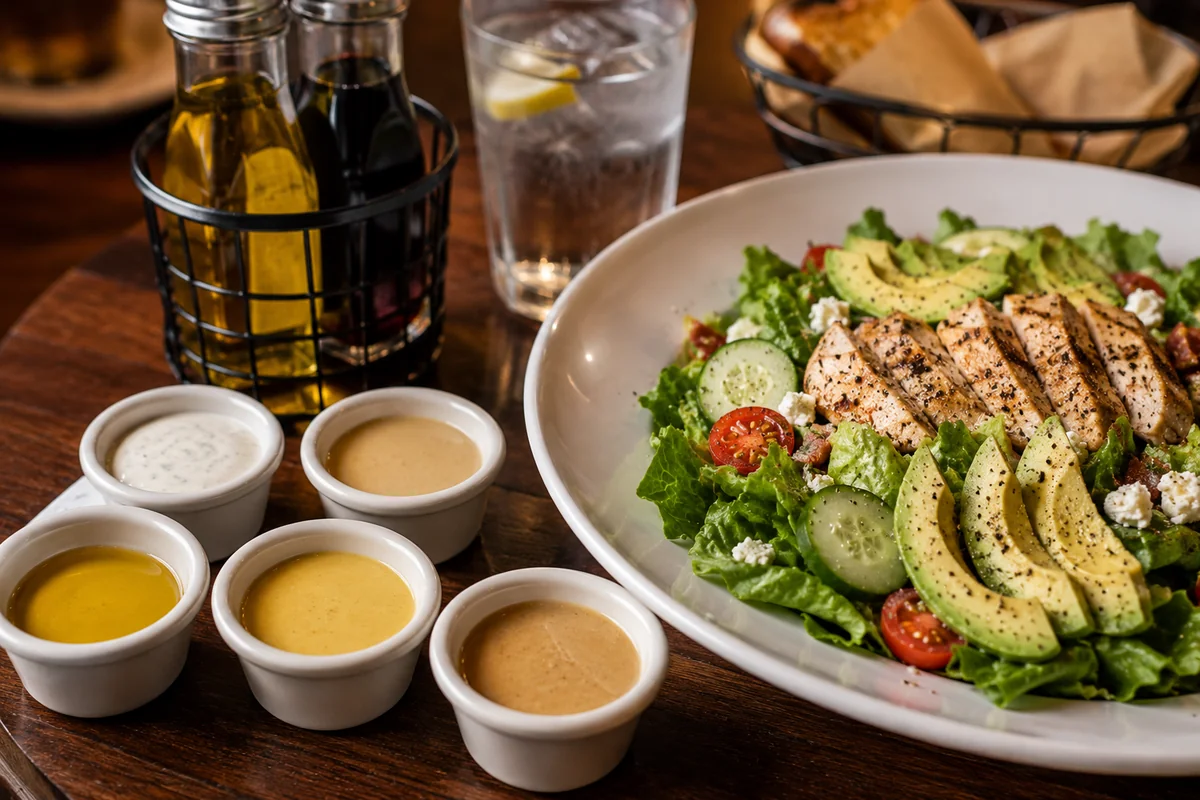
Restaurants are where dressing trips people up most, because you cannot read a label. The safest move is to ask for oil and vinegar on the side, which nearly every kitchen has, then dress the salad yourself so you control the amount. If you want a house dressing, ask whether it is sweetened; ranch, blue cheese, and Caesar are usually safe bets, while anything described as sweet, glazed, honey, or balsamic-reduction is likely loaded with sugar. Balsamic vinegar itself is sweeter and higher in carbs than red wine or white wine vinegar, so use it sparingly. Ordering dressing on the side rather than tossed also lets you stop at a reasonable amount instead of getting a salad drowned in three times the carbs you planned for.
Common Keto Dressing Mistakes
A few errors come up again and again. The first is trusting the front of the bottle, where words like natural or garden-fresh mean nothing about carbs; only the panel tells the truth. The second is forgetting that balsamic vinegar and balsamic glaze carry real sugar, unlike most other vinegars, so they need portion control. The third is over-pouring, since the listed carbs assume a modest two-tablespoon serving most people blow past. The fourth is buying light or low-fat versions out of old diet habits, which adds sugar exactly when you want fat. Avoid those four and your dressings will quietly support your day instead of undermining it.
Watching Hidden Carbs and Portions
Two habits keep dressing from sabotaging your day. First, read the label on anything bottled, every time, because recipes change and the carb counts are not intuitive. A dressing that looks savory can still carry several grams of added sugar per serving. Second, mind the serving size, because the carb number on a label is usually for two tablespoons, and it is easy to pour double or triple that over a big salad without noticing. If a dressing is two grams of net carbs per two tablespoons and you use six, that is six grams, which matters when your ceiling is twenty. Measuring for a week trains your eye so you can pour by feel after that. For the bigger picture on how these grams fit your daily plan, see our guide on how many carbs a day on keto, and since dressings often go on fiber-rich vegetables, our notes on how to get fiber on keto pair naturally with a good salad. For technique-driven dressing ideas, food authorities like Cook’s Illustrated dig into emulsification and balance, and Bon Appetit has a deep archive of vinaigrette variations easy to adapt to low carb.
How Dressing Fits Your Keto Macros
Dressing is one of the easiest ways to hit your fat target, which is something keto beginners often overlook. Many people cut carbs but stay nervous about fat, end up under-fueled, and feel flat. A good dressing fixes that. Two tablespoons of olive-oil vinaigrette adds roughly fourteen grams of fat for under a gram of carbs, turning a plain salad into a meal that actually keeps you full. A creamy ranch or blue cheese does the same while adding richness. Rather than seeing dressing as a carb risk to minimize, treat a low-carb dressing as a tool to push your fat intake up where keto wants it. The key is choosing the version that is fat-forward and sugar-free, then using a real portion that carries meaningful fat without smuggling in carbs.
If you batch-make a jar of vinaigrette and a tub of ranch at the start of the week, dressing your salads becomes automatic, and you remove one of the most common points where a keto day quietly goes wrong. Both keep well in the fridge, the vinaigrette for a week or more and the creamy dressings for several days, so a few minutes of prep on a Sunday pays off all week.
Frequently Asked Questions
Is ranch dressing keto-friendly?
Yes, as long as it has no added sugar. Full-fat ranch built on mayonnaise and sour cream runs about one to two grams of net carbs per two tablespoons. Check the label on bottled versions for hidden sugar, or make your own from the recipe above to be sure.
What is the lowest-carb salad dressing?
A simple oil and vinegar vinaigrette is the lowest, often under one gram of net carbs per serving, since it is essentially fat and acid. Olive oil with lemon juice or any vinegar, salt, and pepper is the most keto dressing there is.
Can I have Caesar dressing on keto?
Real Caesar dressing made with oil, egg yolk, anchovy, parmesan, and lemon is keto-friendly at roughly one to two grams of net carbs per serving. Watch bottled versions, which sometimes add sugar or starchy thickeners, so read the label or make it fresh.
Why are light and fat-free dressings bad for keto?
Removing the fat strips out flavor, so manufacturers replace it with sugar and starch to compensate. That makes light and fat-free dressings higher in carbs than the full-fat versions, the opposite of what keto needs. On keto, choose full-fat every time.
How much dressing can I use on keto?
There is no fixed limit, but you have to count it. A low-carb dressing at one to two grams of net carbs per two tablespoons fits easily if you stick to a normal portion. The trouble starts when you pour three or four times the serving size, so measure until you can judge it by eye.
Are store-bought keto dressings worth buying?
Some are well made, with oil first and no added sugar, and they save time. The skill is reading the label using the same rules: fat as the first ingredient, sugar absent or minimal, and low net carbs per serving. If a bottle passes those checks it is a fine choice, but homemade is cheaper and gives you full control.
Is balsamic vinaigrette keto?
Balsamic is the one vinegar to watch. Balsamic vinegar is sweeter and higher in carbs than red wine, white wine, or apple cider vinegar, and a balsamic glaze is essentially reduced sugar. A small splash in a vinaigrette is fine, but a balsamic-heavy or glazed dressing can carry several grams of sugar per serving. Use it in moderation or swap in a sharper vinegar.
Can I add sweetness to a keto dressing?
Yes, without the sugar that ordinary sweet dressings use. A few drops of liquid monk fruit or a small pinch of erythritol or allulose gives a honey-mustard or sweet vinaigrette its rounded flavor while keeping the carbs near zero. Start with a tiny amount, since keto sweeteners are potent and easy to overdo.