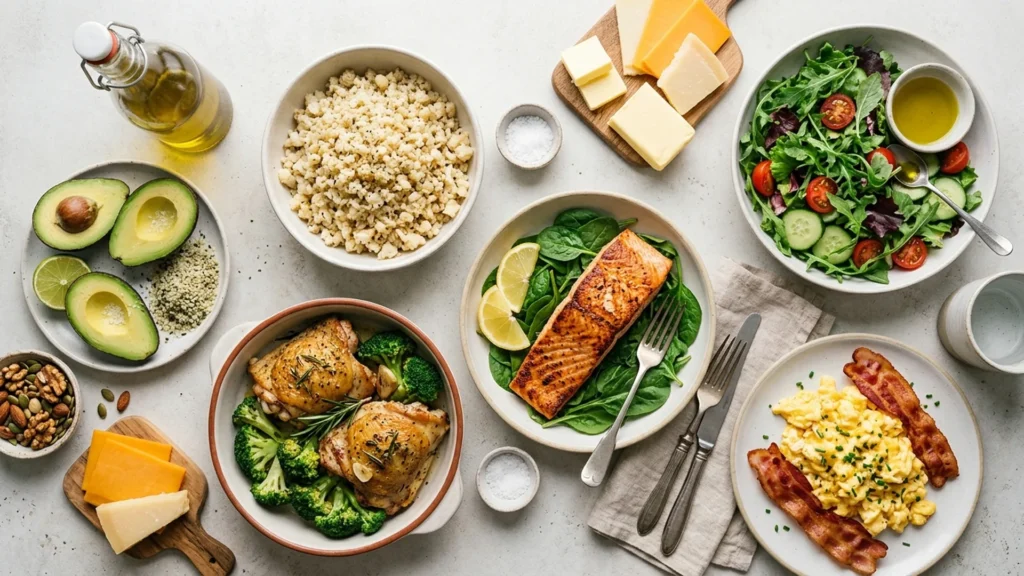
Keto meals are easy once you stop hunting for recipes and learn the formula instead. Every keto meal in this guide follows the same skeleton: a palm of protein, a fist of low-carb vegetables, and a deliberate source of fat, assembled to land under about 8 net carbs per plate. Master that pattern and you can walk into any kitchen, open the fridge, and put together a compliant meal without a recipe card or a calculator. Most keto meal guides give you a gallery of links and a net-carb number; they leave out the per-meal protein and fat, the prep schedule, and the template that lets you improvise. This guide gives you all of it, plus a full seven-day plan with macros.
Net carbs, the number these meals are built around, is total carbohydrates minus fiber and minus non-impact sugar alcohols like erythritol. A meal with 10 grams total carbs and 3 grams fiber costs you 7 net carbs, which is what determines whether it fits your day.
The Keto Meal Formula
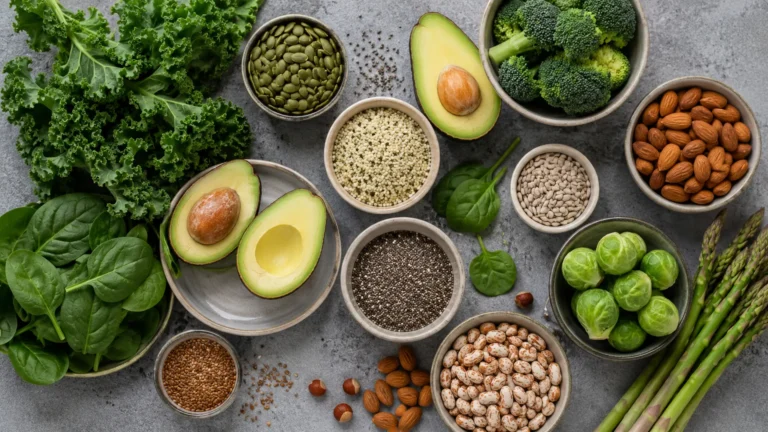
Build every meal from three slots and one rule. Slot one is protein: a palm-sized portion (roughly 4 to 6 ounces cooked) of meat, poultry, fish, or eggs, supplying 25 to 40 grams of protein. Slot two is vegetables: one to two fists of non-starchy vegetables, which spend 3 to 7 net carbs and bring fiber, potassium, and volume so the plate feels like a real meal. Slot three is fat: a deliberate addition such as a tablespoon of olive oil, a pat of butter, a quarter avocado, or a sprinkle of cheese, tuned up or down depending on whether you are losing or maintaining.
The rule is to set protein first, spend carbs on vegetables second, and add fat to satiety third. That ordering keeps you full, protects muscle, and holds the plate under your carb ceiling automatically. A grilled chicken thigh (protein), roasted broccoli (vegetables), tossed in butter with parmesan (fat) is a complete keto meal that took thirty seconds to design. Once the formula is automatic you stop needing recipes for everyday eating and save the recipe hunting for variety. Our overview of how keto works and what to eat is at keto basics if you want the metabolic background behind the formula.
Keto Breakfasts That Hold Until Lunch
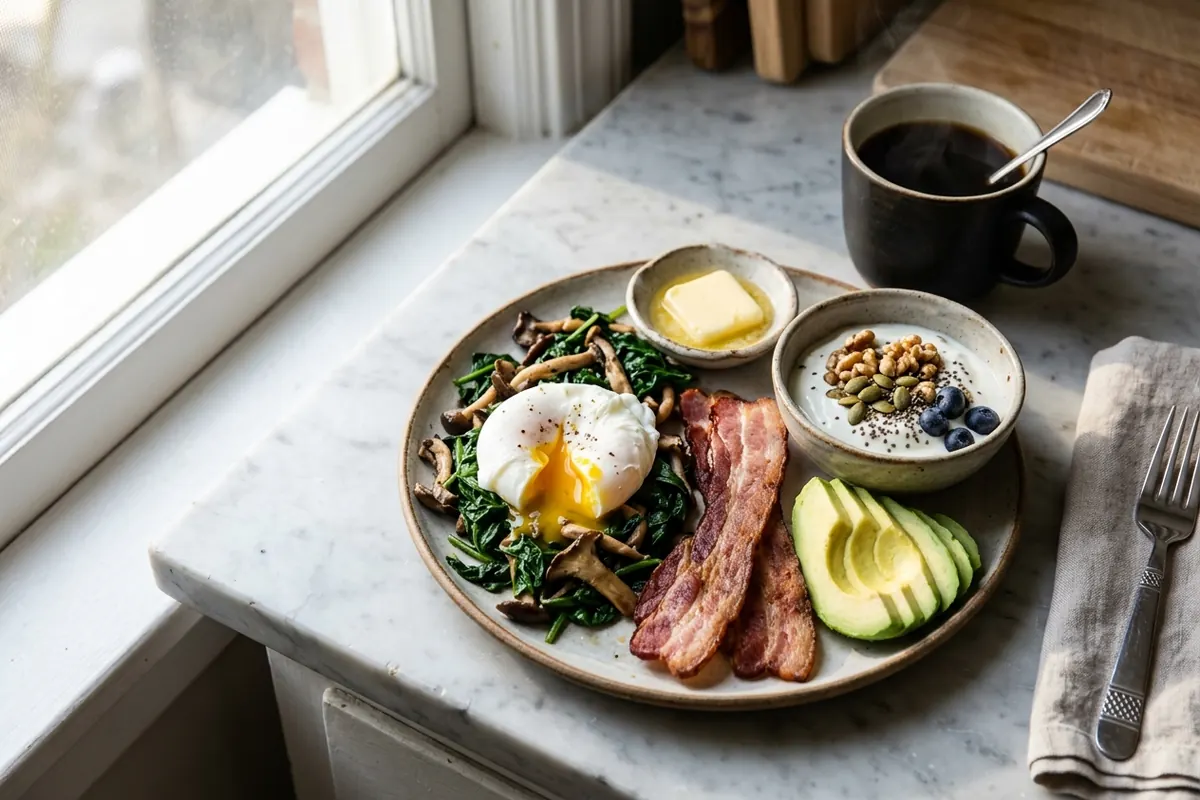
Breakfast is where keto is easiest, because eggs, bacon, and avocado are made for it. A three-egg scramble cooked in butter with spinach and cheese lands around 3 net carbs, 30 grams of fat, and 24 grams of protein, and it keeps most people full for four or five hours with no mid-morning crash. If you are rushed, a batch of egg muffins (eggs baked in a tin with cheese, peppers, and sausage) gives you grab-and-go breakfast at roughly 1 net carb each that holds five days in the fridge.
For variety, full-fat Greek yogurt with a few raspberries and crushed pecans runs about 6 net carbs and 18 grams of protein, and chia pudding made with unsweetened almond milk sits near 4 net carbs with a fiber boost that helps the constipation many people hit early on keto. If you skip breakfast and prefer to break your fast at noon, that is fine on keto; fasting and ketosis work well together. More fast morning options are in our keto breakfast ideas roundup, all built on the same formula.
Keto Lunches for Work and Meal Prep
Lunch is the meal most likely to derail you, because the default workplace options are sandwiches, wraps, and bowls built on grains. The fix is to bring your own, and the formula makes that trivial. A big salad of greens, grilled chicken, cheese, olives, and an olive-oil dressing is around 6 net carbs, 40 grams of fat, and 35 grams of protein, and it survives a morning in the fridge without wilting if you keep the dressing separate. Lettuce-wrapped deli meat and cheese with mustard is a five-minute no-cook lunch at about 3 net carbs.
For prep, cook a tray of protein on Sunday (chicken thighs, ground beef, or salmon) and a tray of roasted vegetables, then assemble bowls each morning by combining a portion of each with a fat and a sauce. This batch approach means lunch decisions disappear and you never face a noon scramble that ends in a carb-heavy takeout order. Our keto lunch ideas page has no-cook and meal-prep versions that all reheat or hold well.
Keto Dinners the Whole Table Will Eat
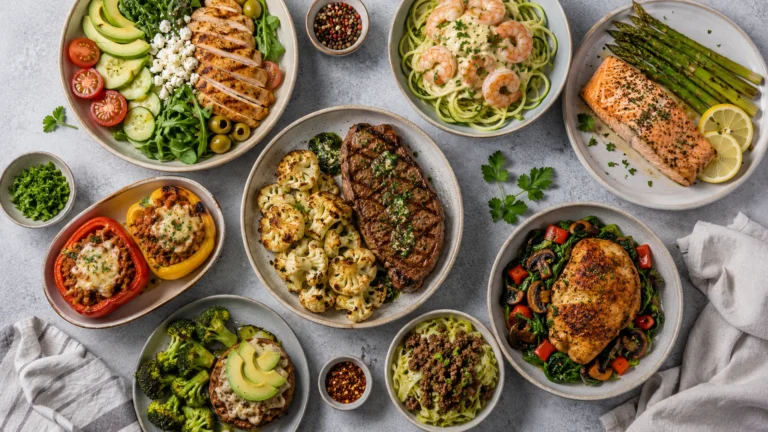
Dinner is where keto shines because most classic dinners are already protein plus vegetables; you only swap the starchy side. Steak with roasted asparagus and garlic butter, salmon with sauteed green beans, pork chops with creamed spinach, and a burger (no bun) with a side salad are all complete keto dinners under 8 net carbs that no one at the table reads as diet food. The trick is replacing the potato, rice, or pasta with a vegetable side or a low-carb stand-in like mashed cauliflower or zucchini noodles.
One-pan dinners save cleanup and prep: sheet-pan chicken thighs with broccoli and olive oil, or a skillet of ground beef with peppers and cheese (a deconstructed taco bowl) at around 7 net carbs. Stir-fries work if you skip the rice and the sugary sauce, leaning on coconut aminos and sesame oil instead. When the table wants comfort food, look for the keto version rather than cooking two meals; mashed cauliflower under pot roast gravy satisfies the same craving as mashed potato at a fraction of the carbs.
A Full Seven-Day Keto Meal Plan With Macros
Here is a week that stays near 20 net carbs a day with adequate protein, written so you can see the pattern. Day 1: egg scramble with avocado (4nc); chicken salad with olive oil (6nc); steak with asparagus and butter (5nc). Day 2: Greek yogurt with raspberries and pecans (6nc); lettuce-wrapped turkey and cheese (3nc); salmon with green beans (6nc). Day 3: egg muffins (2nc); leftover salmon over greens (5nc); burger no bun with side salad (7nc).
Day 4: bacon and eggs (1nc); tuna salad in avocado halves (5nc); pork chops with creamed spinach (6nc). Day 5: chia pudding (4nc); cobb salad (6nc); sheet-pan chicken and broccoli (7nc). Day 6: scramble with cheese and spinach (3nc); deconstructed taco bowl (7nc); shrimp stir-fry with cauliflower rice (8nc). Day 7: cheese omelet (2nc); leftover taco bowl (7nc); roast chicken with mashed cauliflower (6nc). Every day clears 100 grams of protein and stays under 22 net carbs. Notice how leftovers from one dinner become the next day’s lunch, which is the single biggest time-saver on keto.
Meal Prep Schedule and Storage Times
A two-hour Sunday session covers most of a week. Hard-boil a dozen eggs, bake a tray of egg muffins, roast two trays of vegetables (broccoli, asparagus, peppers), and cook a large batch of protein (a tray of chicken thighs plus a pound of seasoned ground beef). Portion the protein and vegetables into containers, and store sauces and dressings separately so nothing goes soggy. With those components ready, every meal becomes assembly rather than cooking.
Storage timelines matter so you do not waste food or risk eating something off. Cooked chicken, beef, and pork keep 3 to 4 days refrigerated; cooked salmon and shrimp, 2 to 3 days. Hard-boiled eggs keep a week in the shell. Roasted vegetables hold 4 to 5 days. Egg muffins and chia pudding both make it to five days. For anything beyond that window, freeze portions; cooked ground beef, soups, and casseroles freeze and reheat well, while leafy salads and high-water vegetables do not. Label each container with the date so the week runs without guesswork.
Swapping Out the Carbs: Low-Carb Stand-Ins That Actually Work
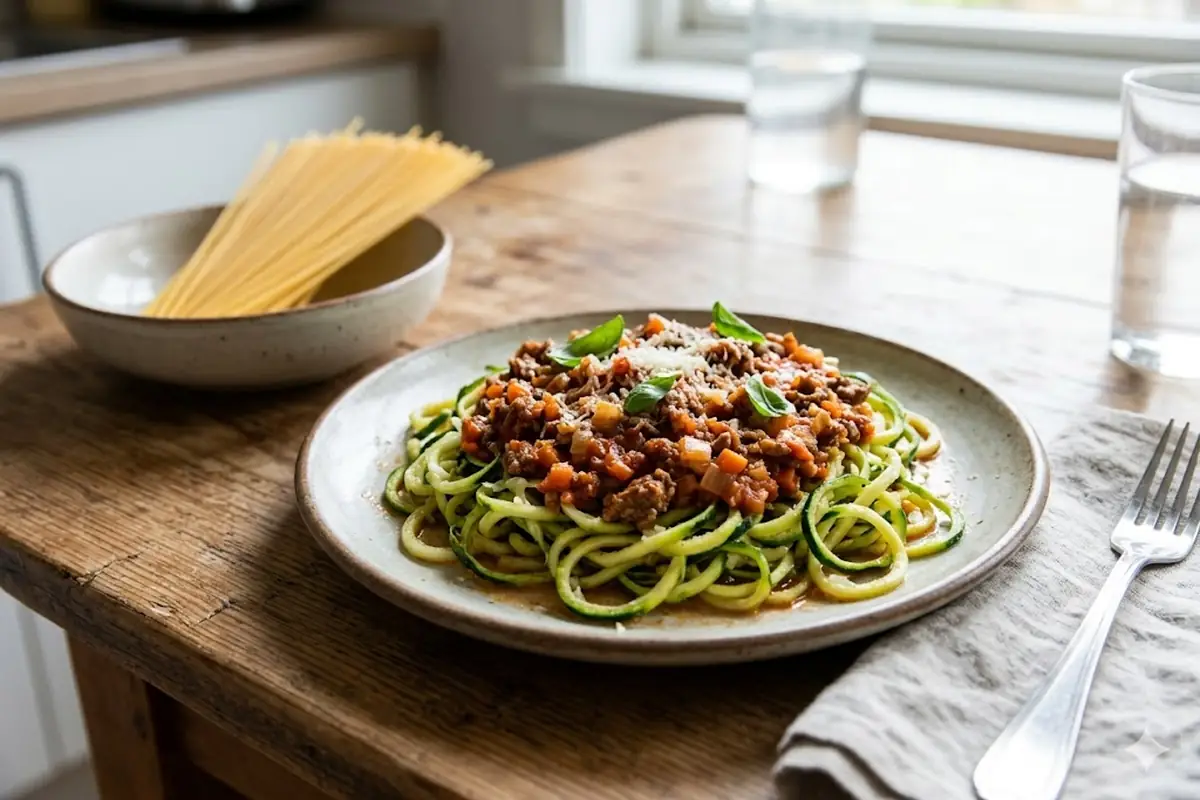
The single skill that makes keto meals feel normal is knowing the swap for every starch you used to eat. Mashed cauliflower replaces mashed potato: steam cauliflower until soft, blend with butter, cream, and salt, and it carries gravy the same way at about 4 net carbs per cup versus 30 for potato. Zucchini noodles or shirataki noodles replace pasta; toss them with a real meat sauce and the dish reads as spaghetti at a fraction of the carbs. Cauliflower rice replaces white rice under stir-fries and curries, soaking up sauce while spending only 3 net carbs per cup.
Lettuce leaves and large cabbage leaves replace tortillas and sandwich bread for wraps. Cheese crisps and pork rinds replace chips for scooping dip. Almond-flour and coconut-flour baking replaces wheat flour in pancakes, muffins, and quick breads, though the texture differs and takes a few tries to get right. The point is that almost every comfort meal has a working keto version, so you rarely have to give up the dish itself, only the high-carb component. Build a mental list of your five most-missed foods and find the swap for each; once you have those, the diet stops feeling like restriction and starts feeling like substitution.
Common Keto Meal Mistakes
The first mistake is undereating protein. People hear high-fat and pour oil on everything while skimping on meat and eggs, then feel weak and lose muscle. Protein anchors every keto meal; set it first. The second mistake is treating fat as a target to chase rather than a lever to fill the gap. Adding fat bombs and bulletproof coffee on top of full meals can stall fat loss, because your body burns dietary fat before its own. If you want to lose, ease off added fat and let stored fat cover the difference.
The third mistake is forgetting vegetables, which leads to constipation, low potassium, and boredom. Spend most of your carb budget on non-starchy vegetables for the fiber and minerals. The fourth is hidden carbs in sauces, dressings, marinades, and condiments, which can quietly add 10 or more net carbs to a meal that looked clean; check labels and make your own when you can. The fifth is relying on processed keto products instead of whole-food meals, which costs more and often delivers worse satiety than a plate of eggs, meat, and vegetables. Anchor your week in real food and use packaged keto items only as occasional convenience.
Keto Meals on a Budget
Keto has a reputation for being expensive, but the cheapest keto meals are some of the best. Eggs are the most cost-efficient protein on the plan. Ground beef, chicken thighs (cheaper and fattier than breast, which suits keto perfectly), and canned tuna and sardines all deliver protein and fat for little money. Frozen vegetables cost less than fresh, lose nothing nutritionally, and never spoil before you use them. Buying cheese in blocks and shredding it yourself beats pre-shredded on both price and carbs (pre-shredded uses anti-caking starch).
The expensive parts of keto are usually optional: specialty low-carb breads, branded snack bars, and exotic ingredients. Skip those and build meals from eggs, ground beef, chicken thighs, frozen vegetables, butter, and block cheese, and a week of keto can cost less than a week of takeout. Batch cooking compounds the savings, because buying protein in bulk and portioning it yourself is cheaper per serving and eliminates the impulse spending that happens when you are hungry with no plan.
Scaling Keto Meals for Your Goal and Activity
The same formula flexes to fit fat loss, maintenance, or athletic performance by adjusting two slots. For fat loss, keep protein high to protect muscle, keep vegetables generous for fullness, and trim added fat so your body taps its own stores; a leaner plate of chicken breast, a big pile of greens, and just a drizzle of olive oil does the job. For maintenance, add more fat back: cook in butter, finish with cheese or avocado, and the same meals hold your weight steady while keeping you satisfied.
For active people and athletes, scale protein up toward the top of the range (a full gram per pound of lean mass) and add more total food across the day, since training raises both protein needs and appetite. If you train hard and find standard keto leaves you flat, targeted keto, eating a small dose of fast carbs right around your workout, can bridge the gap without breaking ketosis the rest of the day. Whatever your goal, the meal skeleton stays identical; you only move the fat dial and the portion sizes. That is the advantage of building from a formula instead of a fixed recipe list: one framework serves every objective, and you adjust by feel as your weight, energy, and training change week to week.
Frequently Asked Questions
How many meals a day should I eat on keto?
Most people do well on two or three meals with no snacking, because the high fat and protein keep you full and frequent eating keeps insulin elevated. Eat to genuine hunger rather than to a clock, and many find they naturally drop to two meals once fat-adapted.
What is the simplest keto meal?
Protein plus a low-carb vegetable plus a fat: a grilled chicken thigh, roasted broccoli, and butter. It takes one pan, follows the formula exactly, lands under 7 net carbs, and needs no recipe once you have made it once.
Can I eat the same keto meals every day?
Yes, and many people do for simplicity, but rotate your vegetables and protein sources to cover a range of micronutrients. Eating only beef and broccoli works for weight loss but can leave gaps in potassium and other minerals over time.
How do I make keto meals for a non-keto family?
Cook a shared protein and vegetable, then add a starch on the side only for the non-keto eaters. A roast chicken with roasted vegetables works for everyone; the family gets potatoes or rice alongside while you take mashed cauliflower or a bigger vegetable portion.
Are restaurant keto meals possible?
Yes. Order a protein and a vegetable or salad, swap fries or rice for extra vegetables, skip the bun or bread, and ask for sauces on the side since many are sugar-heavy. Grilled meats, eggs, and salads with oil-based dressing are reliable nearly anywhere.
How much protein should each keto meal have?
Aim for 25 to 40 grams per meal so you hit a daily total of roughly 0.7 to 1.0 grams per pound of lean body mass. A palm-sized portion of meat or three eggs lands in that range and anchors the plate’s satiety.nnKeto meals stop being a chore the moment you trade recipe-hunting for the protein-vegetable-fat formula, batch a few components on the weekend, and let leftovers carry into the next day. Use the sample week as a template, swap freely within each slot, and lean on cheap staples like eggs, chicken thighs, and frozen vegetables to keep costs down. For cooking technique on the proteins and vegetables at the center of every keto plate, references like America’s Test Kitchen and Bon Appetit are dependable. Give the formula two weeks, keep notes on which meals you actually look forward to, and trim your rotation down to the eight or ten plates you genuinely enjoy. A short list of reliable favorites beats an endless recipe folder, because the meals you repeat without thinking are the ones that keep you on keto long after the initial motivation fades.