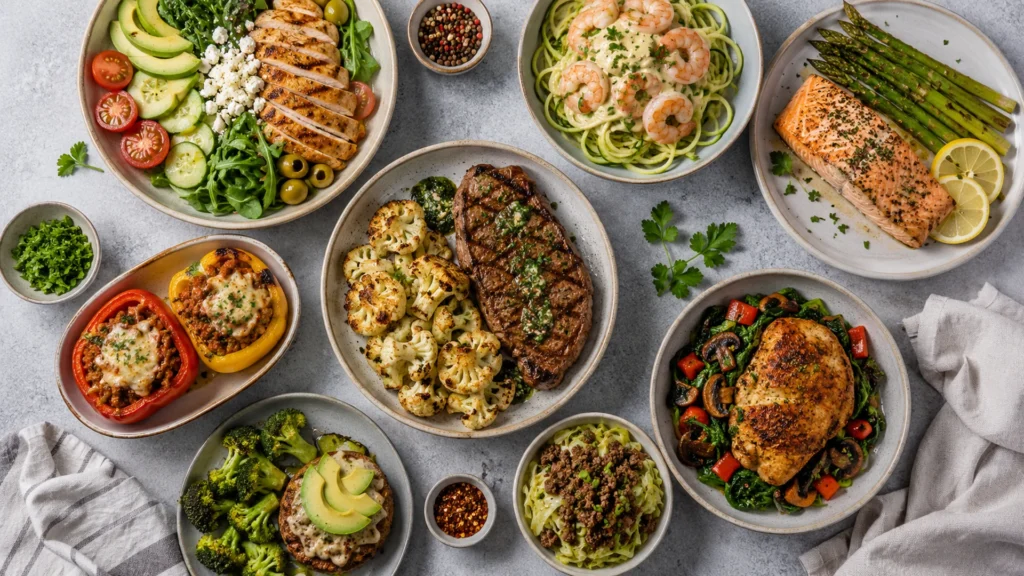
Keto dinner ideas all share one structure: a protein, a fat, and a low carb vegetable, assembled so the whole plate lands under roughly 10 grams of net carbs. Once you see dinner as that simple equation rather than a search for special recipes, the options open up fast, because almost any meat, fish, egg, or cheese dish becomes keto the moment you swap the starch for vegetables and add fat. This guide gives you a working framework, a stack of specific dinners with their net carb counts, the fastest weeknight options, sheet-pan and one-pan methods, and the swaps that turn your old favorites keto. Every idea here states the carbs so you can plan a plate that keeps you in ketosis.
Dinner is the meal where most keto plans either hold or fall apart, usually because people run out of ideas and reach for the carbs out of boredom. A short list of templates works better than memorized recipes, and that is what this article hands you. Eating some version of chicken and broccoli four days running is the problem this template system solves, so dinner stops being a daily decision to dread. None of this is medical advice; it is a practical set of dinners with the net carbs counted and US measures throughout.
The Keto Dinner Formula
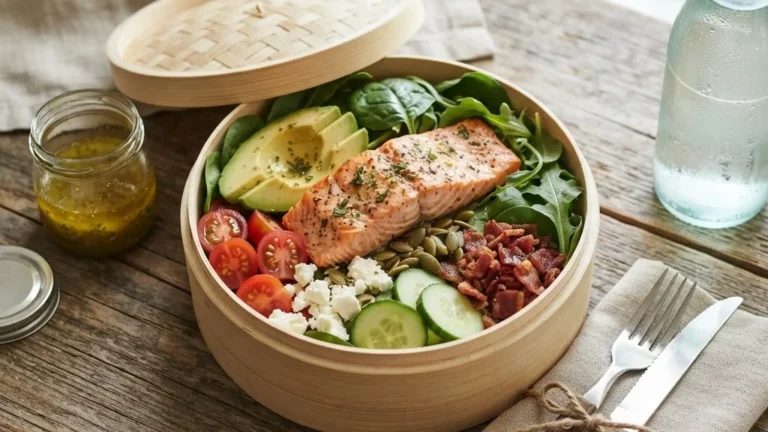
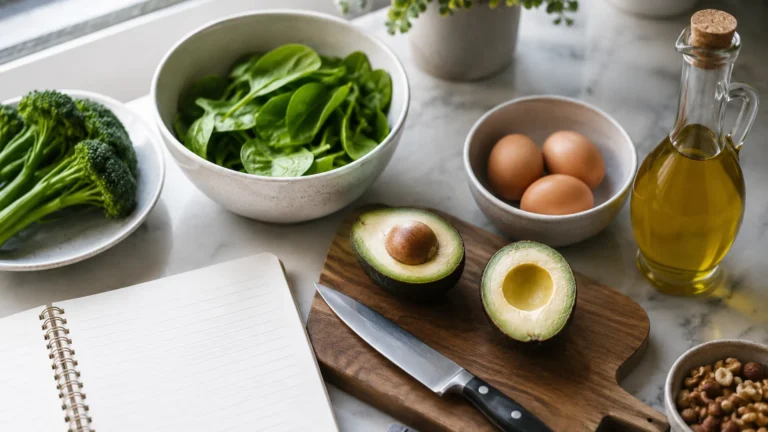
Build every dinner from three slots. The first slot is protein: chicken, beef, pork, salmon, shrimp, eggs, or for vegetarians tofu and cheese. Protein carries no carbs and keeps you full, so it anchors the plate. The second slot is fat: butter, olive oil, cheese, avocado, cream, or a fatty cut of meat. Fat is your fuel on keto, so dinner should be generous with it. The third slot is a low carb vegetable: broccoli, cauliflower, zucchini, green beans, asparagus, leafy greens, or mushrooms, which add volume, fiber, and color without much carbohydrate.
Fill those three slots and skip the fourth slot that wrecks most dinners, the starch: no rice, no pasta, no potatoes, no bread. Replace it with a vegetable version, cauliflower rice instead of rice, zucchini noodles instead of pasta, mashed cauliflower instead of mashed potato, and the plate stays under your limit while still feeling like a full dinner. That single swap is the heart of every idea below.
The reason this formula works so reliably is that it puts the carbs where you control them. On a normal dinner plate, the starch is the biggest carb load and the hardest to measure once it is cooked into a dish. By cutting it out and rebuilding with a vegetable, you start from near zero carbs and add only the few grams the vegetable brings. That means you almost never have to weigh or calculate at dinner; if the plate is protein, fat, and a green or white vegetable, it is keto by construction. The only time you need to do math is when a sauce or a starchy vegetable enters the picture, which is why the rest of this guide spends so much time on those two spots.
Fast Weeknight Dinners Under 10 Net Carbs
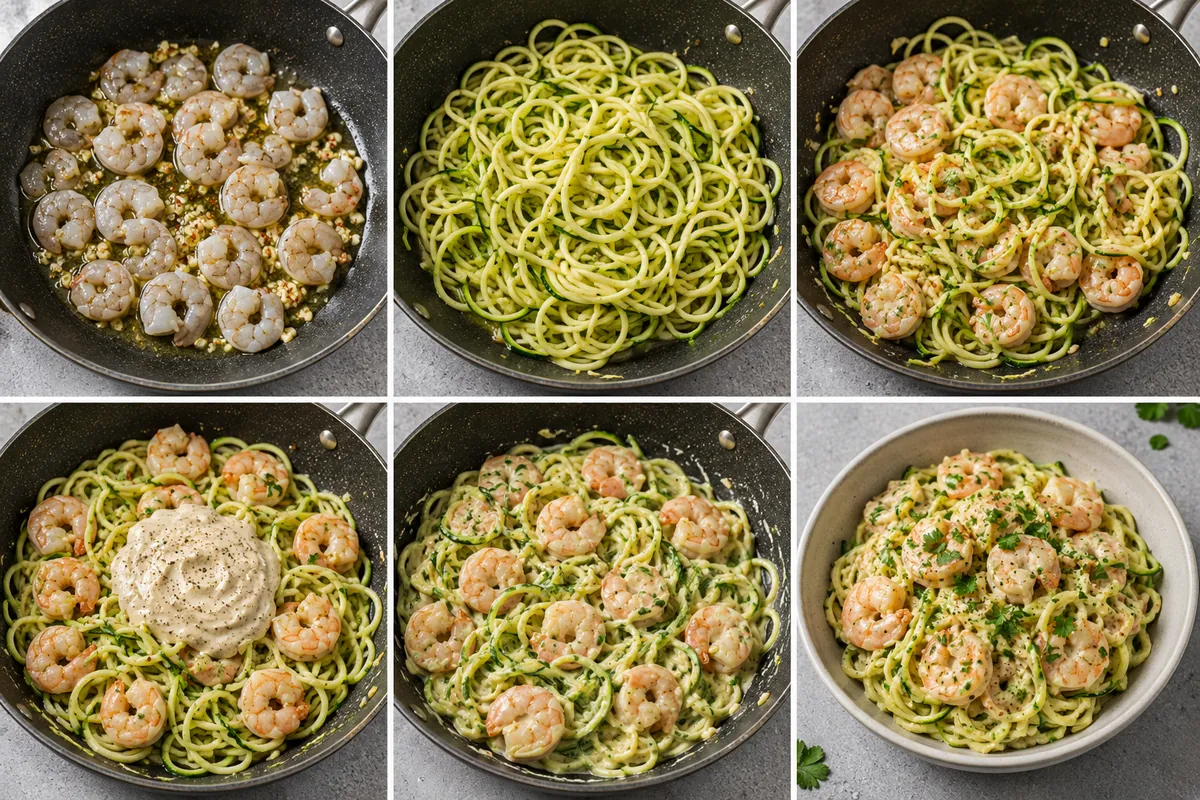
These come together in 30 minutes or less and need almost no planning.
| Dinner | Net carbs | Time |
|---|---|---|
| Garlic butter shrimp with zucchini noodles | 6 g | 20 min |
| Pan-seared salmon with roasted asparagus | 4 g | 25 min |
| Cheeseburger bowl (no bun) with avocado | 7 g | 20 min |
| Chicken thighs with cauliflower rice | 8 g | 30 min |
| Egg and cheese frittata with spinach | 5 g | 25 min |
A standout is the shrimp and zucchini noodle dinner: saute shrimp in butter and garlic, toss in spiralized zucchini for two minutes so it stays firm, finish with parmesan and lemon. It is on the table in 20 minutes and lands at about 6 grams of net carbs. The cheeseburger bowl is just as easy, a seasoned beef patty broken over greens with cheese, pickles, and avocado, which gives you the burger experience with none of the bun’s 25 carbs. The frittata is the one to remember for empty-fridge nights: whisk six eggs, pour them over whatever vegetables and cheese you have, and finish it under the broiler. It costs almost nothing, feeds two, and reheats for breakfast the next day.
Sheet-Pan and One-Pan Dinners
When you want minimal cleanup, the sheet pan is the keto cook’s best friend. Toss a protein and a low carb vegetable in oil and seasoning, spread them on one pan, and roast. Chicken thighs with broccoli, sausage with bell peppers and onions, or salmon with green beans all work on a single pan at 400 degrees Fahrenheit for 20 to 25 minutes. The fat from the meat bastes the vegetables, and you get a complete dinner with one pan to wash. These run 6 to 10 grams of net carbs depending on the vegetable, and they scale easily for leftovers.
One-pan skillet dinners follow the same logic on the stovetop. Brown a protein, push it aside, wilt or saute the vegetables in the same pan to pick up the flavor, then combine and finish with cheese or cream. A skillet of ground beef, cauliflower rice, taco seasoning, and cheese is a 30-minute keto taco bowl at around 8 grams of net carbs. A chicken and broccoli skillet finished with a splash of cream and parmesan is a one-pan alfredo without the pasta.
Comfort-Food Swaps That Stay Keto
The dinners people miss most on keto are the carb-heavy comfort classics, and almost all of them have a clean swap. Spaghetti becomes zucchini noodles or spaghetti squash under the same meat sauce. Lasagna swaps the pasta sheets for thin slices of zucchini or eggplant, keeping the ricotta, meat, and cheese. Pizza moves to a crust made from almond flour or a fathead dough of mozzarella and almond flour, which holds toppings like real crust. Fried chicken gets a coating of crushed pork rinds or almond flour instead of breadcrumbs. Shepherd’s pie tops the meat with mashed cauliflower instead of potato. In every case the flavor lives in the protein, fat, and seasoning, not the starch, so removing the starch costs you far less than you would think.
Creamy sauces are a quiet keto advantage here. Heavy cream, butter, and cheese are all keto-friendly, so alfredo, garlic cream, and cheese sauces are fully on the menu and make vegetables taste indulgent. A pile of roasted cauliflower under a real cheese sauce does not feel like diet food, and it costs only a few grams of net carbs.
The one swap that takes practice is the noodle. Zucchini noodles release water as they cook, so they can turn a sauce watery if you are not careful. The fix is to cook them hot and fast, two minutes at most, and to salt and drain them first if you have time, which pulls out the excess moisture before they hit the pan. Spaghetti squash behaves differently; you roast it whole, then scrape the strands out with a fork, and it holds a sauce better than zucchini but tastes slightly sweet. Cauliflower rice is the most forgiving stand-in of all, since you just pulse raw cauliflower in a food processor and saute it for five minutes in butter. Knowing the quirk of each vegetable stand-in is what separates a keto dinner that tastes good from one that tastes like a compromise.
Dinner Ideas by Protein
If you would rather start from what is in the fridge, here is a quick map from protein to dinner. Each of these stays under 10 grams of net carbs when you pair it with a low carb vegetable.
Chicken is the most flexible. Roast thighs with the skin on for crisp, fatty results, or poach and shred breast meat for a salad bound with mayo and celery. Buffalo chicken over greens with blue cheese dressing is a 5-carb dinner. Chicken parmesan works with an almond-flour crust over zucchini noodles. Beef gives you steak with garlic butter, ground beef taco bowls, meatballs in marinara over spaghetti squash, or a quick stir-fry of strips and broccoli in a sugar-free sauce. Pork covers chops seared in butter, sausage and peppers on a sheet pan, pulled pork with no sweet sauce, and bacon-wrapped anything. Salmon and shrimp cook in minutes: salmon roasted with lemon and asparagus, shrimp scampi over zoodles, or a shrimp and avocado salad. Eggs are not just breakfast; a loaded frittata, a vegetable omelet with cheese, or shakshuka-style eggs poached in a low carb tomato sauce all make a fast, cheap dinner under 6 grams of net carbs.
Slow Cooker and Instant Pot Dinners
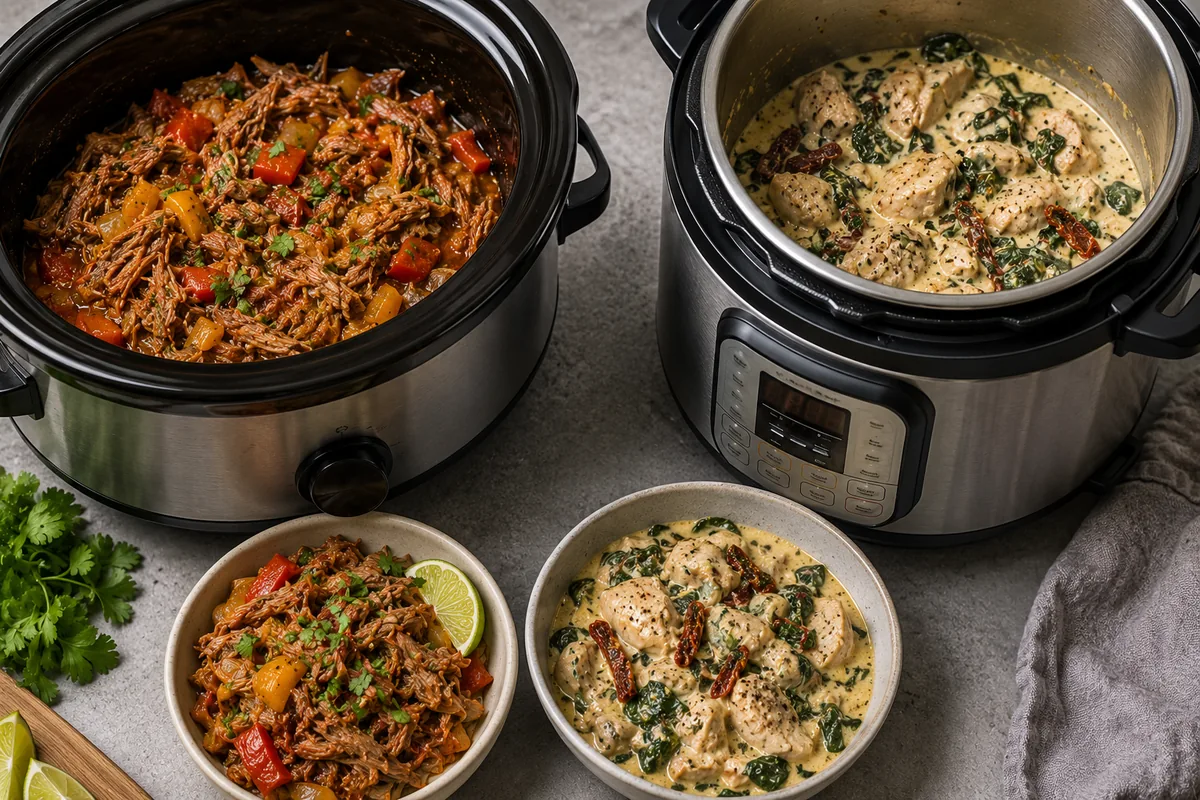
Hands-off cooking suits keto well because the foods that braise best, fatty cuts of meat, are exactly the ones the diet favors. A slow cooker pot roast with a few low carb vegetables, a batch of pulled pork seasoned with a dry rub instead of sweet sauce, or a creamy chicken stew thickened with cream cheese rather than flour all cook themselves while you do other things. The pressure cooker shortcut does the same in a fraction of the time: chicken thighs in salsa for shredded taco filling, beef short ribs, or a whole chicken in under an hour. These dinners run 5 to 9 grams of net carbs depending on the vegetables, and they produce leftovers that reheat into lunches, which is the quiet secret to staying on keto through a busy week. Cook once, eat three times, and you remove most of the decisions where carbs sneak back in.
Eating Out and Entertaining
Keto dinner ideas do not stop at home. At a restaurant, the formula still works: order a protein, ask for a double vegetable or a salad instead of the starch, and add fat with butter, oil, or avocado. A steak with a side of broccoli, grilled salmon with a salad, or a bunless burger are keto at nearly any restaurant. Skip the bread basket, watch for sugar in sauces and dressings, and you can eat out without breaking ketosis. When you are the host, the same plate that works for you works for guests: a roast or a grilled protein, a couple of roasted vegetable sides, and a good salad is a dinner that happens to be keto without announcing it. Nobody at the table needs to know the meal is low carb, because protein, fat, and vegetables done well is just good food.
Don’t Forget the Dressing and the Vegetables
Two small choices decide whether a keto dinner stays under its carb count. The first is the vegetable, because the gap between a low carb and a high carb vegetable is large. Broccoli and zucchini are nearly free; peas and corn are not. The full ranking in the lowest carb vegetables for keto shows exactly where the line falls so you never accidentally turn a clean dinner into a carb-heavy one. The second is the sauce or dressing, since a sweet barbecue sauce or a sugary dressing can add more carbs than the rest of the plate combined. The options in the best dressings for a keto diet keep your salads and sides on track.
For the macro framework these dinners fit inside, the daily ceiling is set out in the complete keto diet guide. And for technique on searing meat, roasting vegetables, and building pan sauces, the test kitchens at America’s Test Kitchen and Cook’s Illustrated have deep, tested methods that apply directly to keto cooking once you drop the starch.
Planning a Week of Keto Dinners
The way to keep dinner from becoming the weak point of your keto week is to rotate templates rather than chase new recipes. Pick three proteins for the week, say chicken, ground beef, and salmon, and three cooking methods, say sheet pan, skillet, and grill. That gives you nine combinations before you even change the vegetable, which is more variety than most people cook in a month. Buy the proteins and a few low carb vegetables, keep butter, cheese, and avocado stocked for fat, and you can assemble any of these dinners without a recipe. The structure does the planning for you, which is what makes keto dinners sustainable past the first enthusiastic week.
A stocked keto pantry makes this almost automatic. Keep butter, olive oil, and heavy cream for fat; a few hard cheeses and a block of cream cheese for sauces; canned tomatoes with no added sugar, garlic, and onion powder for flavor bases; and a rotation of frozen low carb vegetables for the nights you did not shop. With those staples and whatever fresh protein is in the fridge, you can build any dinner in this article without a trip to the store. The freezer is your safety net: a bag of frozen broccoli or cauliflower rice turns a lone chicken breast into a full keto dinner in fifteen minutes, which is exactly the situation where a tired cook would otherwise order a pizza.
Bottom Line
Keto dinner ideas are less about special recipes and more about a repeatable formula: protein, fat, and a low carb vegetable, with the starch swapped for a vegetable stand-in. Lean on fast skillet and sheet-pan dinners for weeknights, use comfort-food swaps like zucchini noodles and cauliflower rice to keep your favorites, and watch the vegetable and the sauce, the two places carbs sneak in. Rotate a few proteins and methods and you will never run out of dinners that land under 10 grams of net carbs and keep you firmly in ketosis.
FAQ
What is a good keto dinner?
A good keto dinner pairs a protein, a fat, and a low carb vegetable to land under about 10 grams of net carbs. Pan-seared salmon with roasted asparagus, a bunless cheeseburger bowl, or chicken thighs over cauliflower rice are all solid examples.
What can I eat for dinner on keto instead of rice and pasta?
Swap rice for cauliflower rice, pasta for zucchini noodles or spaghetti squash, and mashed potato for mashed cauliflower. These vegetable stand-ins carry a fraction of the carbs and let you keep the protein and sauce you already like.
What keto dinners are quick for weeknights?
Garlic butter shrimp with zucchini noodles, a skillet taco bowl of beef and cauliflower rice, or a sheet pan of sausage and peppers all cook in 30 minutes or less and stay between 6 and 10 grams of net carbs.
Can I eat comfort food on keto?
Yes, with swaps. Lasagna with zucchini sheets, pizza on a fathead or almond-flour crust, and fried chicken coated in crushed pork rinds all deliver the comfort-food experience while staying low in carbs.
How many carbs should a keto dinner have?
Aim to keep dinner under about 10 grams of net carbs so it fits inside a 20 to 30 gram daily limit alongside your other meals. Most protein-and-vegetable plates land between 4 and 9 grams without much effort.
How do I plan a week of keto dinners?
Rotate three proteins and three cooking methods, which gives nine combinations before you change the vegetable. Stock protein, low carb vegetables, and fats like butter, cheese, and avocado, and you can assemble dinners without a recipe.