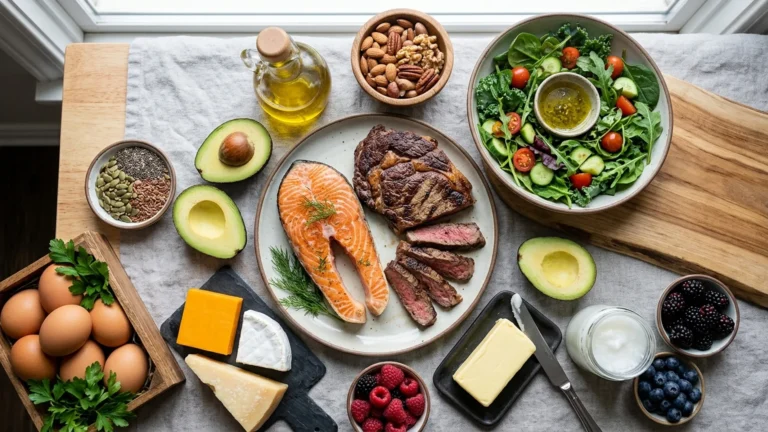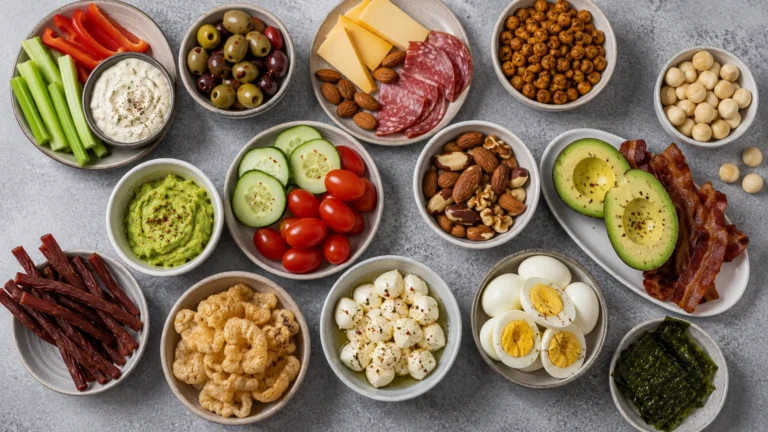
Learning how to get fiber on keto is easier than it sounds, because the best low-carb foods happen to be some of the highest in fiber. Avocado, chia seeds, flax, nuts, and low-carb vegetables like broccoli and Brussels sprouts deliver plenty of fiber for very few net carbs, so you can hit your fiber goal without ever threatening ketosis. The reason this works is that fiber does not count toward net carbs at all: your body cannot digest it, so it does not raise blood sugar or knock you out of ketosis. That makes fiber effectively free on keto, and getting enough of it is one of the simplest ways to feel better and avoid the constipation that trips up so many beginners.
This guide explains why fiber matters on keto, why it does not count against your carb limit, the best high-fiber low-carb foods with their numbers, how much fiber to aim for, what a high-fiber keto day looks like, and when a supplement makes sense. None of this is medical advice, but as a practical plan for keeping your fiber up on a ketogenic diet, it covers everything a beginner needs.
Why Fiber Matters on Keto
Fiber tends to drop when people start keto, because they cut out the grains, beans, and fruit that supply most of it on a standard diet, and that shortfall causes real problems. The most common is constipation, one of the most frequent complaints in the early weeks of keto, which adequate fiber and water largely prevent. Beyond digestion, fiber feeds the beneficial bacteria in your gut, supports healthy cholesterol levels, and adds bulk that helps you feel full, which aids the appetite control keto is known for. Soluble fiber in particular slows digestion and supports steady energy. Because keto removes the usual high-fiber foods, you have to be a little more deliberate about replacing them, but the foods that do the job are exactly the ones keto encourages anyway, so it is a small adjustment rather than a sacrifice. If you are still setting up your diet, our guide on how to start the keto diet builds these foods into the plan from the beginning.
Why Fiber Does Not Count Against Your Carbs
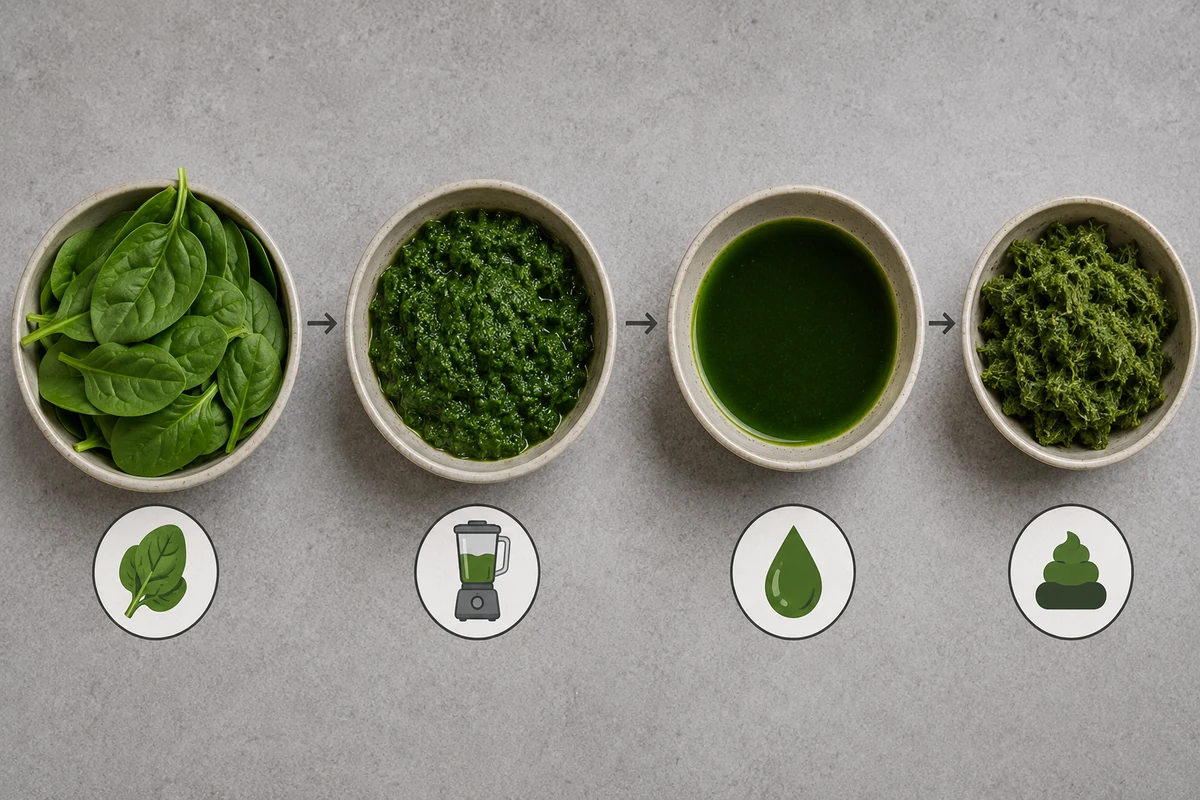
This is the key idea that makes high-fiber keto possible: fiber is a carbohydrate your body cannot break down into usable glucose, so it passes through largely undigested without raising blood sugar or insulin. That is why keto dieters count net carbs, which is total carbohydrate minus fiber. A food with ten grams of total carbs and seven grams of fiber has just three grams of net carbs, the number that matters for ketosis. So the more of a food’s carbohydrate that comes from fiber, the more of it you can eat while staying low. This is exactly why a high-fiber vegetable or a spoonful of chia seeds is so keto-friendly despite having carbs on the label. Understanding this turns fiber from a worry into an advantage, and our guide on how many carbs a day on keto explains the net carb math in full.
The Best High-Fiber, Low-Carb Foods
These foods give you the most fiber for the fewest net carbs, and they should be the backbone of a high-fiber keto diet.
| Food | Fiber | Net carbs |
|---|---|---|
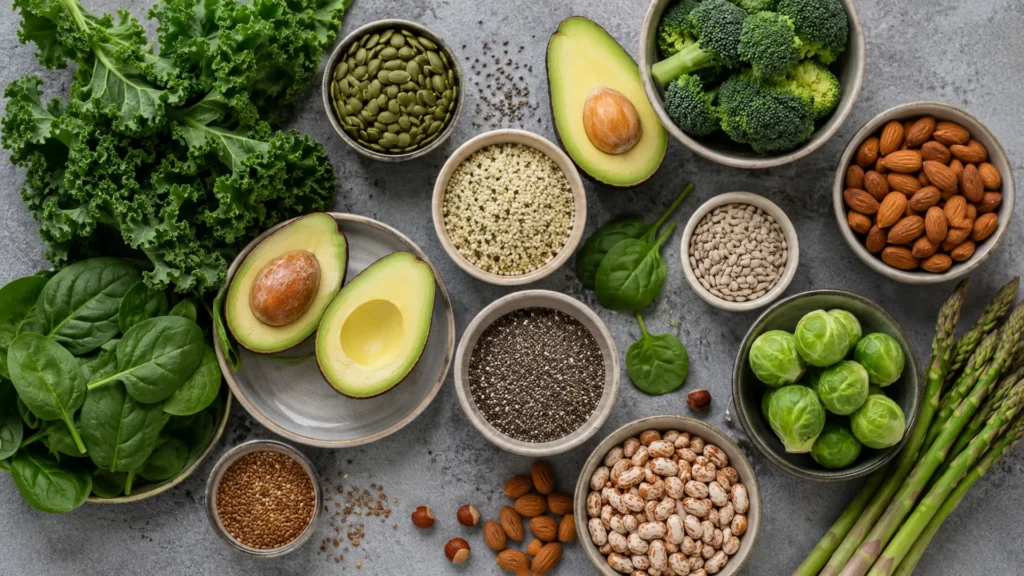
| Chia seeds (1 oz) | about 10 g | about 1 g |
| Psyllium husk (1 tbsp) | about 8 g | under 1 g |
| Avocado (1/2 large) | about 7 g | about 2 g |
| Flaxseed (2 tbsp) | about 5 g | about 0 g |
| Broccoli (1 cup cooked) | about 5 g | about 6 g |
| Brussels sprouts (1 cup) | about 4 g | about 5 g |
| Cooked spinach (1/2 cup) | about 4 g | about 1 g |
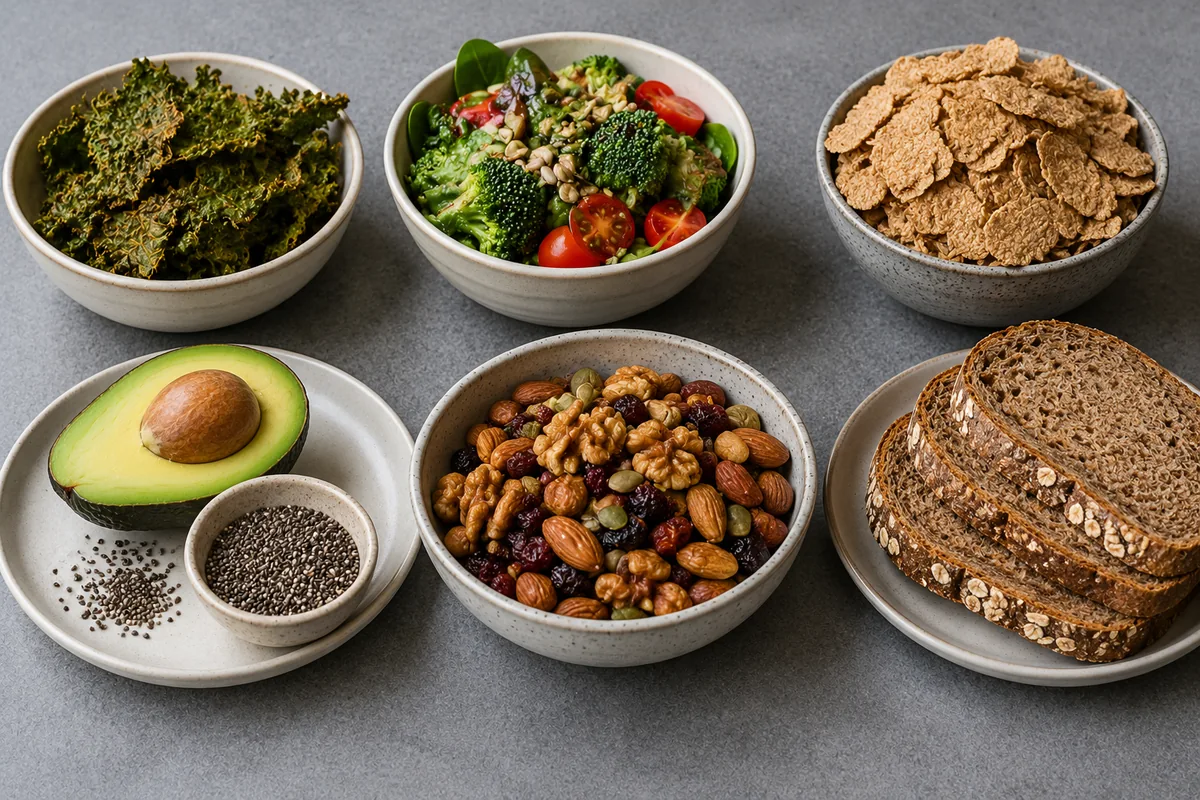
Avocado is the easiest win, since it is high in fiber and healthy fat at once. Chia and flax are fiber powerhouses you can stir into almost anything for almost no net carbs. Nuts like pecans and almonds add fiber alongside their fat. And the cruciferous vegetables, broccoli, Brussels sprouts, and cauliflower, plus leafy greens, give you fiber, volume, and nutrients for a modest carb cost. Building meals around these foods makes hitting your fiber target almost automatic.
How Much Fiber Should You Aim For?
A common target is around twenty-five to thirty grams of fiber a day, in line with general healthy-eating guidance, though there is room to adjust to what your body needs. The encouraging part is that because fiber does not count toward net carbs, you can eat plenty of it while staying under your carb limit. A practical way to picture it is to spread fiber across the day: an avocado or chia pudding at breakfast, nuts and a few berries midday, and a generous serving of a cruciferous vegetable at dinner can get you most of the way there. You do not need to obsess over the exact gram count, but aiming for a couple of high-fiber foods at each meal keeps you comfortably in a healthy range and heads off the digestive issues that low-fiber keto can bring.
A High-Fiber Keto Day
Seeing it laid out makes it concrete. Breakfast could be a chia pudding made with coconut milk, or eggs with half an avocado, which alone delivers a big chunk of your fiber. A midday snack of a small handful of almonds with a few raspberries adds more. Dinner built around a protein and a large serving of roasted Brussels sprouts or broccoli with olive oil tops you up, and a piece of pan-fried salmon with a pile of greens is a perfect high-fiber, high-fat plate. A warming bowl like keto chicken chili loaded with low-carb vegetables is another easy way to pack fiber into one dish. Built this way, a keto day reaches a healthy fiber intake without any supplements at all, just whole foods that fit the diet naturally.
Soluble vs Insoluble Fiber
Fiber comes in two types, and both matter on keto. Soluble fiber dissolves in water to form a gel, which slows digestion, helps you feel full, supports steady blood sugar, and feeds beneficial gut bacteria; it is found in foods like avocado, chia, flax, and Brussels sprouts. Insoluble fiber does not dissolve and instead adds bulk that moves things through the digestive tract, which is what most directly prevents constipation; it comes from the skins and structural parts of vegetables, nuts, and seeds. A good high-fiber keto diet naturally includes both, since the foods that are best on keto, avocado, seeds, leafy greens, and cruciferous vegetables, contain a mix of the two. You do not need to track them separately or worry about ratios. Simply eating a variety of whole, high-fiber, low-carb foods gives you both kinds, and together they deliver the digestive, satiety, and gut benefits that make fiber worth prioritizing in the first place.
Fiber and Your Gut on Keto
One worry people raise about keto is gut health, since cutting carbs can mean cutting the fiber that feeds your microbiome, and this is exactly why deliberate fiber matters. The beneficial bacteria in your gut ferment certain fibers into compounds that support the gut lining and overall health, so feeding them well is part of doing keto in a balanced way. The good news is that many keto-friendly foods are excellent for this: avocados, chia, flax, nuts, and a range of low-carb vegetables provide the fermentable fiber your gut bacteria use. Variety is the key, because different fibers feed different bacteria, so rotating through several high-fiber foods rather than relying on just one keeps your gut better supported. People who eat a vegetable-forward keto diet with plenty of avocado, seeds, and cruciferous vegetables generally maintain good digestive health, while those who eat a meat-and-cheese-only version of keto are the ones most likely to run into problems. Treating keto as low-carb-and-high-fiber rather than just low-carb is the difference.
Common Fiber Mistakes on Keto
- Going meat-and-cheese only. A keto diet with no vegetables, seeds, or avocado is where fiber problems start. Build in plants.
- Adding fiber too fast. A sudden jump in fiber without enough water can worsen bloating and constipation. Increase it gradually.
- Forgetting water. Fiber needs fluid to do its job, so more fiber means more water, not less.
- Trusting sugary fiber supplements. Some fiber gummies and powders add sugar that breaks ketosis. Read the label and choose unsweetened.
- Skipping the avocado. It is one of the easiest high-fiber, high-fat keto foods, and many people overlook it.
Easy Ways to Add Fiber to Any Meal
Hitting your fiber target gets easier when you have a few no-effort habits. Stir a tablespoon of chia or ground flax into yogurt, a smoothie, or a sauce, where it disappears while adding several grams of fiber and almost no net carbs. Add half an avocado to a meal that does not have one, whether sliced on eggs, mashed into a dressing, or alongside a protein. Reach for cruciferous vegetables as your default side, roasting a tray of broccoli or Brussels sprouts to keep on hand. Sprinkle nuts or seeds over salads and bowls for a fiber and texture boost. And use psyllium husk or flax in keto baking so even your treats contribute. None of these require a special recipe; they are small additions that, stacked across a day, quietly push your fiber into a healthy range without any sense of effort or restriction.
Fiber Supplements on Keto
If whole foods are not getting you there, a fiber supplement can fill the gap, and psyllium husk is the keto favorite because it is almost all fiber with negligible net carbs and works well for regularity. You can stir it into water, smoothies, or baked goods, and it also helps bind keto baking. The one caution is to read the label carefully, because some popular fiber supplements and gummies contain added sugar or maltodextrin that can disrupt ketosis, so choose an unsweetened, sugar-free version and check the net carbs. Ground flaxseed and chia are essentially whole-food fiber supplements you can add to almost anything for the same effect. Increase any fiber gradually and drink plenty of water alongside it, since adding a lot of fiber quickly without enough fluid can actually worsen constipation rather than relieve it.
Does Cooking Change a Vegetable’s Fiber?
Cooking does not destroy fiber, which is reassuring, but it does change a few things worth knowing. The total fiber in a vegetable stays largely intact whether you eat it raw or cooked, so a cup of cooked broccoli still delivers its fiber. What cooking changes is volume and digestibility: cooked vegetables shrink down, so a cup of cooked spinach packs far more fiber than a cup of raw, and gentle cooking can make some fiber easier on a sensitive gut. Roasting, steaming, and sauteing all preserve fiber well, while boiling can leach some water-soluble nutrients into the cooking water, though the fiber itself remains. For keto, this means you can prepare your high-fiber vegetables however you like best, since the fiber comes along either way. Eating a mix of raw and cooked vegetables gives you variety in texture and a gentle range of fiber types, and cooking often lets you eat a larger quantity comfortably, which can actually raise your total fiber for the day. If your digestion is sensitive when you first add a lot of vegetables, lean toward cooked over raw for a week or two, since cooked fiber tends to be gentler, then add raw vegetables back as your gut adjusts to the higher intake.
Frequently Asked Questions
How do you get enough fiber on keto?
Focus on high-fiber, low-carb foods like avocado, chia seeds, flax, nuts, and cruciferous vegetables such as broccoli and Brussels sprouts. Spread a couple of them across each meal and you can reach twenty-five to thirty grams of fiber a day while staying under your carb limit, since fiber does not count toward net carbs.
Does fiber count as carbs on keto?
No. Fiber is a carbohydrate your body cannot digest into glucose, so it does not raise blood sugar or affect ketosis, and you subtract it from total carbs to get net carbs. That is why high-fiber foods are so keto-friendly, since most of their carbohydrate does not count against your daily limit.
Why am I constipated on keto?
Constipation is common early on because cutting grains, beans, and fruit removes most of the fiber from a standard diet, and dehydration adds to it. The fix is to eat more high-fiber low-carb foods like avocado, chia, and cruciferous vegetables, drink plenty of water, and keep your electrolytes up.
What are the best high-fiber keto foods?
The top sources are chia seeds, psyllium husk, avocado, flaxseed, and cruciferous vegetables like broccoli, Brussels sprouts, and cauliflower, along with leafy greens and nuts. These deliver a lot of fiber for very few net carbs, making them ideal for keeping fiber up on keto.
How much fiber do you need on keto?
Aiming for about twenty-five to thirty grams a day is a reasonable target, in line with general guidance. Because fiber does not count toward net carbs, you can comfortably eat that much while staying in ketosis by building meals around high-fiber, low-carb whole foods.
Does fiber help with the keto flu?
Indirectly, yes. Fiber itself does not treat the keto flu, which is mainly an electrolyte and hydration issue, but the high-fiber foods that are best on keto, like avocado and leafy greens, are also rich in potassium and magnesium, the very minerals you need to replace. So building meals around fiber-rich whole foods supports both your digestion and your electrolytes at the same time, which helps you feel better through the early adjustment.
Can you take a fiber supplement on keto?
Yes, psyllium husk is the keto-friendly favorite since it is almost pure fiber with negligible net carbs. Read the label to avoid versions with added sugar or maltodextrin, choose unsweetened, and increase fiber gradually with plenty of water. Ground flax and chia work as whole-food alternatives.
Bottom Line
Getting fiber on keto is straightforward once you know that fiber does not count toward your net carbs, which makes high-fiber foods some of the most keto-friendly choices there are. Build your meals around avocado, chia, flax, nuts, and cruciferous vegetables, aim for around twenty-five to thirty grams of fiber a day, and drink plenty of water to keep digestion smooth. Reach for psyllium husk if whole foods fall short, choosing a sugar-free version, and you will avoid the constipation that catches beginners while feeling fuller and more energetic on keto. For dependable low-carb cooking technique, America’s Test Kitchen and Cook’s Illustrated are reliable references. Treat fiber not as an afterthought but as a daily target on par with your carbs and protein, and the version of keto you end up eating, full of avocado, seeds, greens, and cruciferous vegetables, is not only better for digestion but more varied, more filling, and far easier to sustain than the bare meat-and-cheese stereotype that gives the diet a bad name.