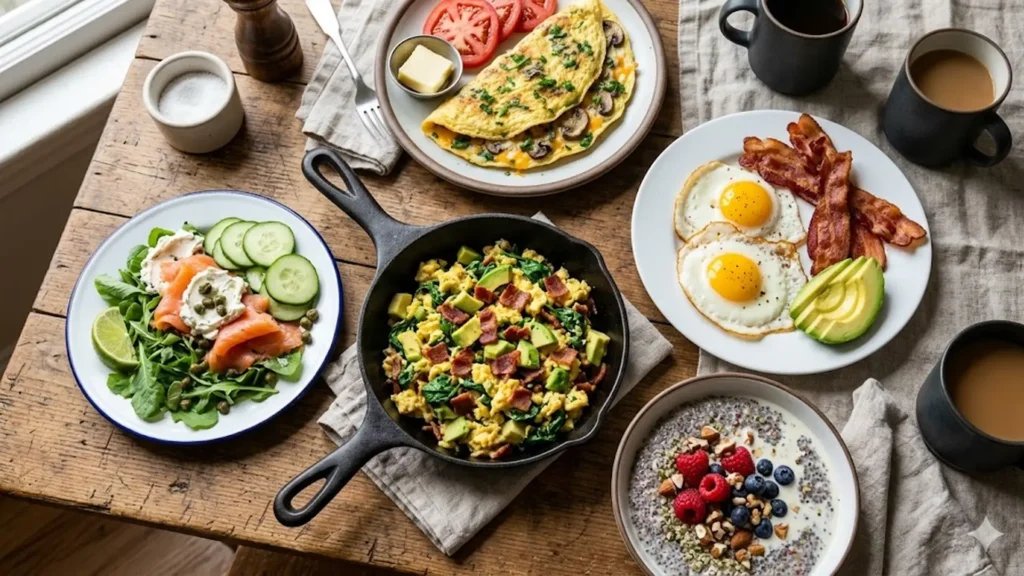
Keto breakfast ideas come down to one rule: build the meal from protein and fat, keep net carbs under about 5 grams, and skip the cereal, toast, oatmeal, juice, and fruit that make up most conventional breakfasts. A typical bowl of cereal with milk and a glass of orange juice can run 60 grams of net carbs before you have even had coffee, which is more than two full days of a keto budget. The fix is not complicated, but it does mean rethinking what breakfast looks like. This guide lays out fast options for busy mornings, make-ahead meals you can batch on Sunday, egg-free ideas for people tired of eggs, grab-and-go choices, and a few sweet options, all with net carbs stated and US measures throughout. None of this is medical advice; it is a practical set of low carb breakfasts with the numbers counted.
The honest first point is that you may not need breakfast at all. A diet built on fat and protein flattens morning hunger for a lot of people, and skipping breakfast, which is just a short fast, is fully compatible with keto and often makes the day easier to manage. So the real question is whether you are hungry in the morning or eating out of habit. If you are hungry, the meals below will hold you for hours. If you are not, a cup of coffee with cream and waiting until lunch is a perfectly good keto breakfast and one fewer meal to plan. Either way, the worst move is reaching for a carb-heavy breakfast on autopilot, because the blood sugar spike and crash from cereal or toast leaves you hungrier by mid-morning than if you had eaten nothing.
The Five-Minute Breakfasts
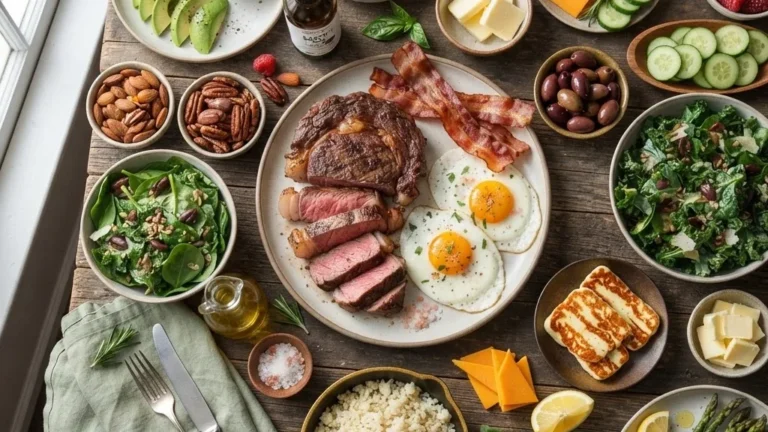
On a busy weekday you want something that takes minutes. Eggs are the obvious base and the most flexible: two or three scrambled in butter, or fried with the yolks runny, land under 1 gram of net carbs and cook in three minutes. Add cheese, a few sauteed spinach leaves, or some pre-cooked bacon and you have a real meal for around 1 to 2 grams. An omelet with cheese and ham is the same idea with slightly more effort. If you want zero cooking, a bowl of full-fat Greek yogurt or cottage cheese with a few raspberries and a sprinkle of chopped nuts comes together in a minute at around 5 grams, and it feels more like a treat than diet food.
Two more fast options worth keeping in rotation. Avocado, halved, salted, and topped with a fried egg or a spoon of cottage cheese, is filling and low at about 2 to 3 grams of net carbs thanks to the avocado’s fiber. And leftovers from dinner are an underrated keto breakfast: a few slices of last night’s roast chicken, a wedge of frittata, or cold steak with mustard is protein-dense, needs no cooking, and breaks the idea that breakfast has to be breakfast food. This is also the cheapest option, since you are using food you already cooked, and it sidesteps the morning decision entirely because the meal is already in the fridge. Many cultures eat savory, meat-based first meals as a matter of course, so there is nothing strange about cold chicken at seven in the morning once you drop the cultural expectation that breakfast means something sweet or grain-based. For more savory protein-forward options that double as a morning meal, the keto dinner ideas guide overlaps heavily, since a keto dinner reheated is a keto breakfast.
Make-Ahead and Meal Prep
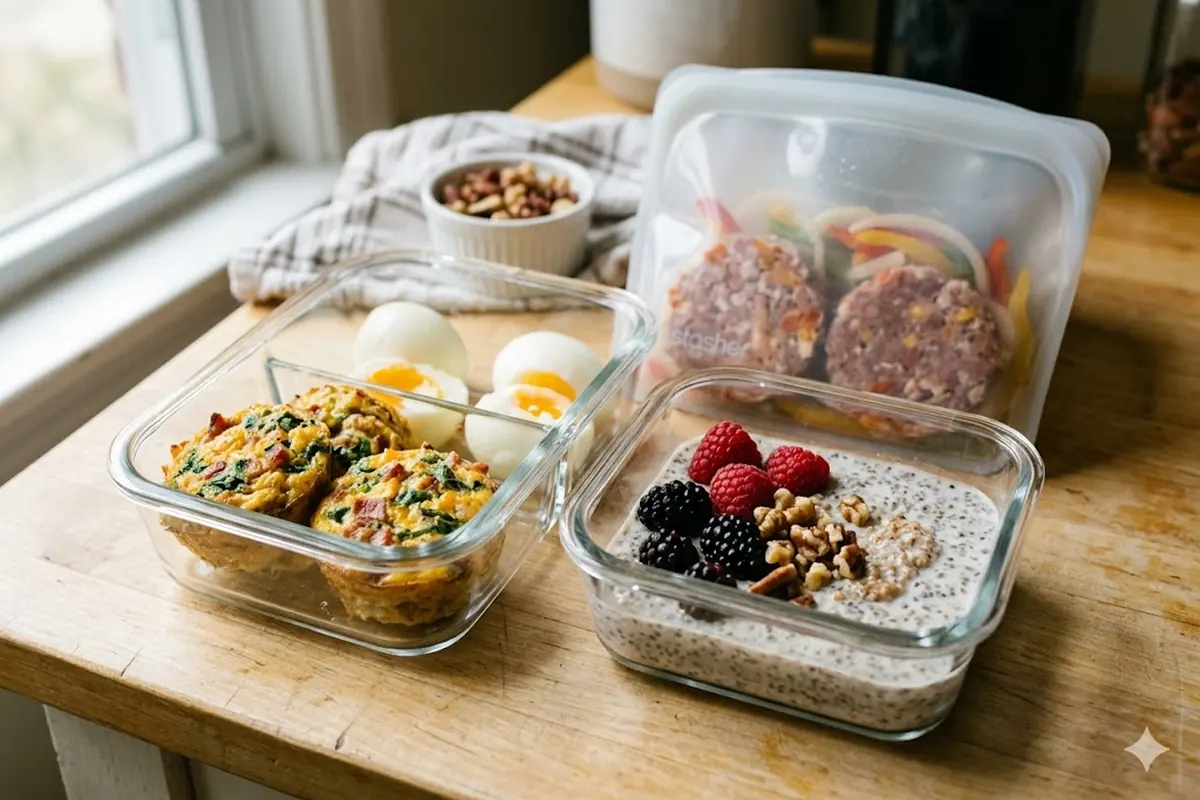
The single best move for keto breakfast is to cook once and eat for a week. A crustless breakfast casserole, baked from eggs, breakfast sausage or bacon, cheese, and a low carb vegetable like spinach or peppers, comes out around 1.5 to 3 grams of net carbs per slice and keeps four to five days in the fridge. Cut it into portions, reheat a slice each morning, and breakfast is solved with no daily effort. A sheet-pan frittata works the same way and bakes evenly across a whole tray.
Egg muffins are the portable version of the same idea: whisk eggs with cheese, diced ham or cooked sausage, and chopped vegetables, pour into a muffin tin, and bake until set. Each muffin runs about 1 to 2 grams of net carbs, they freeze well, and you can grab two on the way out the door. The technique that matters here is not overbaking, because eggs turn rubbery and weep water when cooked too long; pull them as soon as the centers are just set. For tested methods on baked eggs, frittatas, and getting custard-set rather than rubbery results, the test cooks at America’s Test Kitchen have detailed, reliable techniques that transfer directly. Batch cooking on a weekend is what turns keto breakfast from a daily decision into a non-issue.
| Breakfast | Net carbs | Type |
|---|---|---|
| Scrambled eggs with cheese | 1-2 g | Fast |
| Crustless breakfast casserole (slice) | 1.5-3 g | Make-ahead |
| Egg muffins (2) | 2-3 g | Grab-and-go |
| Chia pudding | 4 g | Egg-free, sweet |
| Greek yogurt with berries and nuts | 5 g | No-cook |
| Bulletproof coffee | 0-1 g | Liquid |
Keto Breakfast Without Eggs
Plenty of people get tired of eggs or cannot eat them, and keto breakfast does not require them. Chia pudding is the standout: stir chia seeds into unsweetened almond milk with a little keto sweetener and vanilla, let it set overnight, and you have a spoonable, fiber-rich breakfast at around 4 grams of net carbs that you can make a few jars of at once. A keto smoothie blended from unsweetened almond milk, avocado or coconut cream for fat, a scoop of low carb protein powder, and a few berries lands around 5 grams and drinks fast. Full-fat cottage cheese or Greek yogurt with nuts and cinnamon is another egg-free option, as is a plate of avocado with smoked salmon, which is rich, savory, and under 3 grams.
For something more substantial without eggs, sausage patties, bacon, or a couple of meatballs reheated from a batch are pure protein and fat at near-zero carbs. A keto granola made from nuts, seeds, and coconut flakes toasted with a little sweetener gives you a cereal-style breakfast with milk or yogurt at around 3 to 4 grams. The point is that the egg is one option among many, not a requirement, and the make-ahead logic applies just as well to chia jars and granola batches as it does to casseroles. Several of these double as a mid-morning hold-over rather than a full meal, and the overlap with portable low carb bites is large, so the options in the keto snacks guide are worth raiding when you want something even faster than a breakfast.
The Coffee Question and Bulletproof Coffee
Coffee is fine on keto, and how you take it is the only thing to watch. Black coffee is zero carbs, and so is coffee with heavy cream, which is the simplest keto upgrade; just skip the milk and sugar, since milk carries lactose carbs and sugar is obviously out. Bulletproof coffee, which blends coffee with butter and a spoon of MCT or coconut oil, is a popular breakfast in its own right: it is calorie-dense, keeps you full for hours on essentially zero carbs, and suits people who are not hungry for solid food in the morning. It is not magic and it is not mandatory, but as a liquid breakfast that holds you to lunch, it works.
One caution on coffee drinks: flavored syrups, sweetened creamers, and oat or almond milk with added sugar can quietly add 10 or more grams of carbs to a single cup. Use heavy cream or an unsweetened plant milk, and sweeten with a keto sweetener if you want it sweet. The coffee itself is never the problem; what people put in it usually is.
Hitting Your Macros at Breakfast
Breakfast is a good place to front-load protein, which helps with fullness and preserving muscle, so a target of 20 to 30 grams of protein at breakfast is a sensible aim. Three eggs and a couple of slices of bacon, a slice of casserole, or a protein smoothie all clear that. Fat comes along for the ride in most keto breakfasts and is easy to hit; the harder macro for many people is keeping carbs genuinely low, which is why the vegetable and fruit choices matter. Spinach, peppers, mushrooms, and avocado are low carb additions that fit, while onions, tomatoes, and fruit beyond a few berries add up faster than people expect. The breakdown of which produce stays low is the same logic that governs the rest of the day, and the broader reviewed approach to cooking eggs and vegetables well applies directly to making a low carb breakfast taste like more than diet food.
Breakfasts That Look Keto But Are Not
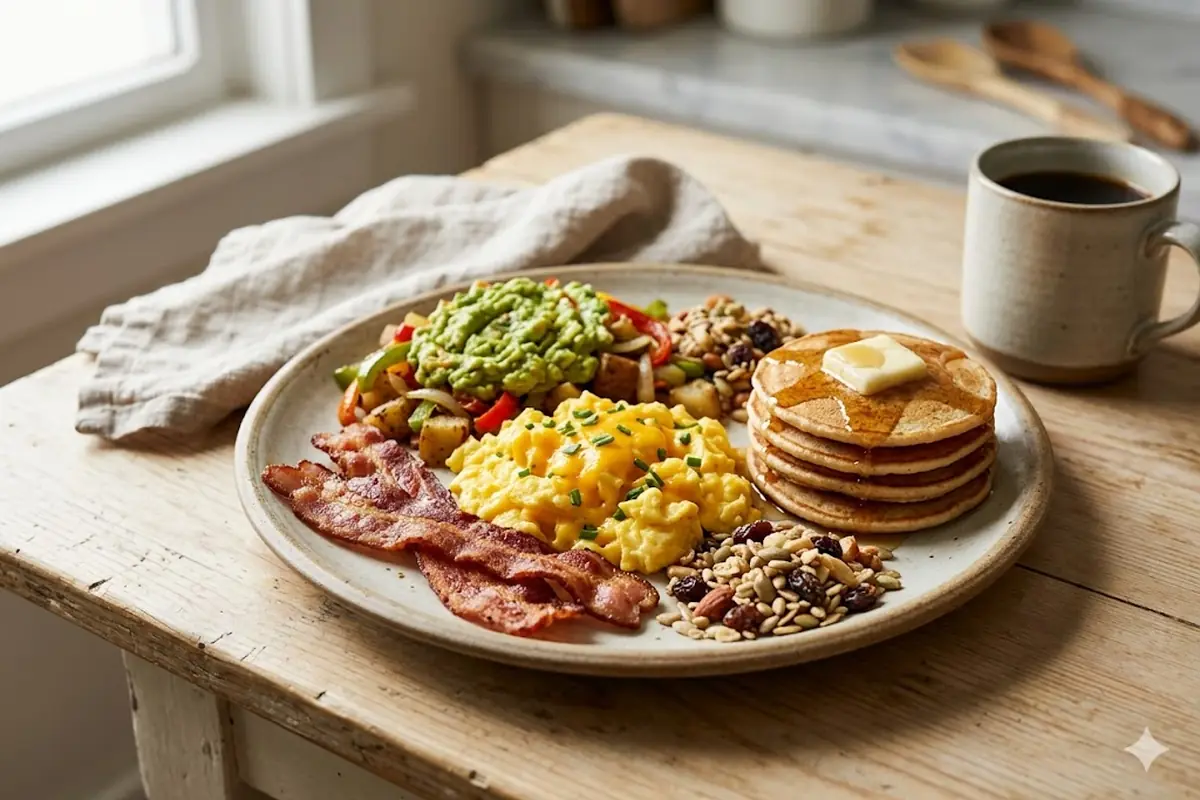
A few breakfast foods carry a healthy reputation that does not survive a look at the carbs. Oatmeal is the classic trap; it is marketed as wholesome but is nearly all carbohydrate, and so is granola built on oats and dried fruit. Smoothies made from banana, mango, and fruit juice are a sugar load even when they are green. Flavored yogurts hide a lot of sugar, where plain full-fat yogurt is the keto version. Whole-grain toast and breakfast cereal, even the fiber-heavy ones, run far too high in net carbs for keto. And fruit beyond a small portion of berries, especially banana, is a carb load disguised as a healthy start. The lesson is the one that runs through all of keto eating: healthy and keto are not the same thing, and a breakfast can be one without being the other.
Troubleshooting: Common Keto Breakfast Problems
A few issues come up often, and each has a fix.
Hungry an hour later. Not enough protein and fat. A two-egg breakfast alone is light; add bacon, cheese, or avocado to push the protein and fat up so the meal actually holds you to lunch.
Bored of eggs. Rotate in the egg-free options, chia pudding, yogurt with nuts, a smoothie, or dinner leftovers, so eggs are two or three mornings a week rather than every day.
No time in the morning. Shift to make-ahead. A tray of egg muffins or a casserole on Sunday removes all weekday decisions, and chia jars do the same on the egg-free side.
Rubbery, weeping eggs. Overcooked. Cook scrambled eggs low and slow and pull them while still slightly wet, and bake egg muffins only until the centers just set, since eggs keep cooking from residual heat.
Coffee sabotaging the day. A sweetened creamer or syrup is adding carbs. Switch to heavy cream or unsweetened plant milk and a keto sweetener, and the cup goes back to near zero.
Constipation in the first weeks. Cutting cereal, fruit, and whole grains can drop fiber sharply. Add chia pudding, a tablespoon of ground flax to a smoothie, or sauteed leafy greens to your eggs, all of which raise fiber without raising net carbs much, and drink enough water with electrolytes.
Breakfast feels boring fast. A single rotation of plain eggs every day burns out quickly. Build a short menu of four or five breakfasts, two egg-based, two egg-free, plus a leftovers option, and cycle through them so no single meal repeats more than a couple of times a week.
How Breakfast Fits Your Daily Carbs
The math is straightforward. If your daily ceiling is 25 grams of net carbs, a breakfast at 2 to 5 grams leaves plenty of room for lunch and dinner. The trouble starts when breakfast quietly creeps up, a sweetened yogurt here, a piece of fruit there, a flavored coffee, and you have spent 20 grams before noon. Keep breakfast simple and protein-forward, count whatever vegetables or berries you add, and you protect the budget for the rest of the day. And if you are not hungry, remember that the lowest-carb breakfast of all is the one you skip, which is fully keto and frees up your whole day’s carbs for meals you actually want.
Bottom Line
Keto breakfast ideas all follow the same shape: protein and fat at the center, carbs kept under about 5 grams, and the cereal, toast, oatmeal, juice, and fruit left off the plate. Keep a few five-minute options like eggs and yogurt for busy mornings, batch a casserole or egg muffins on the weekend so weekdays need no decisions, and lean on chia pudding, smoothies, and leftovers when you are tired of eggs. Take your coffee with cream rather than sugar, aim for 20 to 30 grams of protein to stay full, and avoid the impostors that look healthy but blow your carb budget. Count breakfast against your daily ceiling, and if you are simply not hungry, skipping it is the most keto move of all. Done this way, breakfast stops being the hardest meal to keep low carb and becomes the easiest.
FAQ
What is a good keto breakfast?
Eggs cooked any way with cheese, bacon, or avocado is the classic, landing under 2 grams of net carbs. Other strong options include a crustless breakfast casserole, egg muffins, full-fat yogurt with berries and nuts, chia pudding, and coffee with heavy cream. All keep net carbs under about 5 grams while delivering protein and fat.
Can I eat a keto breakfast without eggs?
Yes. Chia pudding, a keto smoothie with protein powder, full-fat Greek yogurt or cottage cheese with nuts, avocado with smoked salmon, sausage or bacon, and keto granola are all egg-free options under about 5 grams of net carbs. The egg is one choice among many, not a requirement for a keto breakfast.
How many carbs should a keto breakfast have?
Aim for under about 5 grams of net carbs so breakfast leaves plenty of room inside a 25-gram daily ceiling for lunch and dinner. Most egg-based breakfasts come in at 1 to 3 grams, while yogurt, chia pudding, or berry-based options run closer to 4 to 5 grams.
Is bulletproof coffee a good keto breakfast?
It can be. Bulletproof coffee blends coffee with butter and MCT or coconut oil for a calorie-dense, near-zero-carb drink that keeps many people full until lunch. It suits those who are not hungry for solid food in the morning, but it is optional rather than necessary and is not required to be in ketosis.
What breakfast foods should I avoid on keto?
Oatmeal, cereal, granola, toast, bagels, pancakes, fruit juice, flavored yogurts, and most fruit beyond a few berries all carry too many carbs for keto. Smoothies made with banana or fruit juice are also a hidden sugar load. Many of these have a healthy reputation that does not match their carb count.
Can I make keto breakfast ahead of time?
Yes, and it is the easiest way to stay consistent. A crustless casserole or sheet-pan frittata keeps four to five days refrigerated, egg muffins freeze well and reheat in a minute, and chia pudding can be made in several jars at once. Batch cooking on the weekend removes all weekday breakfast decisions.