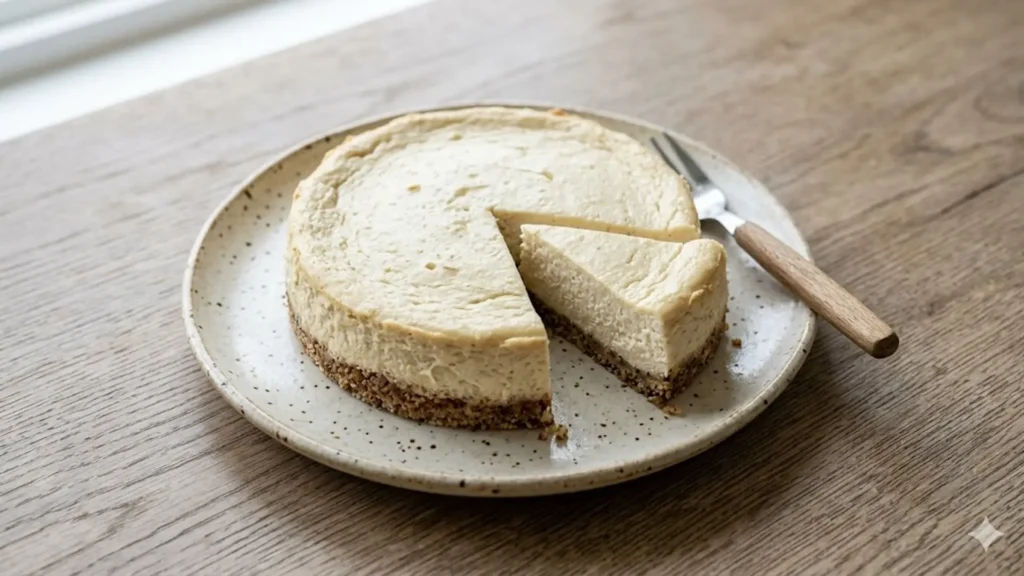
Keto tofu cheesecake is a low-carb, dairy-free dessert that swaps the usual brick of cream cheese for blended silken tofu, landing at about 4 grams of net carbs per slice instead of the 40 plus you get from a classic. The tofu does the creamy heavy lifting, a sugar-free sweetener handles the sweetness, and a nut crust keeps it firmly keto. Done right, nobody at the table guesses there is tofu in it.
This guide is for the version without any cream cheese, which is exactly where most recipes leave you stranded. The top keto cheesecake results either lean entirely on cream cheese or skip the net-carb math altogether. So here you get the silken-versus-firm tofu decision, the two tricks that kill the beany taste, the actual carb count per slice, and a troubleshooting tree for when the filling weeps or sets soft. If you want a dairy version too, the keto desserts roundup covers both camps.
Why skip the cream cheese at all?
Three honest reasons. Cost, because a tofu base runs cheaper than two or three blocks of cream cheese. Dairy, because plenty of people on keto do better without it, and tofu makes the whole thing plant-based. And calories, since silken tofu is far lighter than cream cheese while still blending glassy-smooth, so a slice satisfies without sitting like a brick. The carbs land in the same low range either way, around 4 grams a slice, so you are not trading away the keto part. You are trading dairy and cost for a slightly lighter, equally creamy result.
The catch is that tofu has its own personality, a faint beany note and more water than cream cheese. Ignore that and you get a dessert that tastes vaguely of soy and weeps liquid in the fridge. Manage it, and tofu disappears into pure creaminess. The rest of this guide is mostly about managing those two things.
Silken or firm: the tofu decision that sets the texture
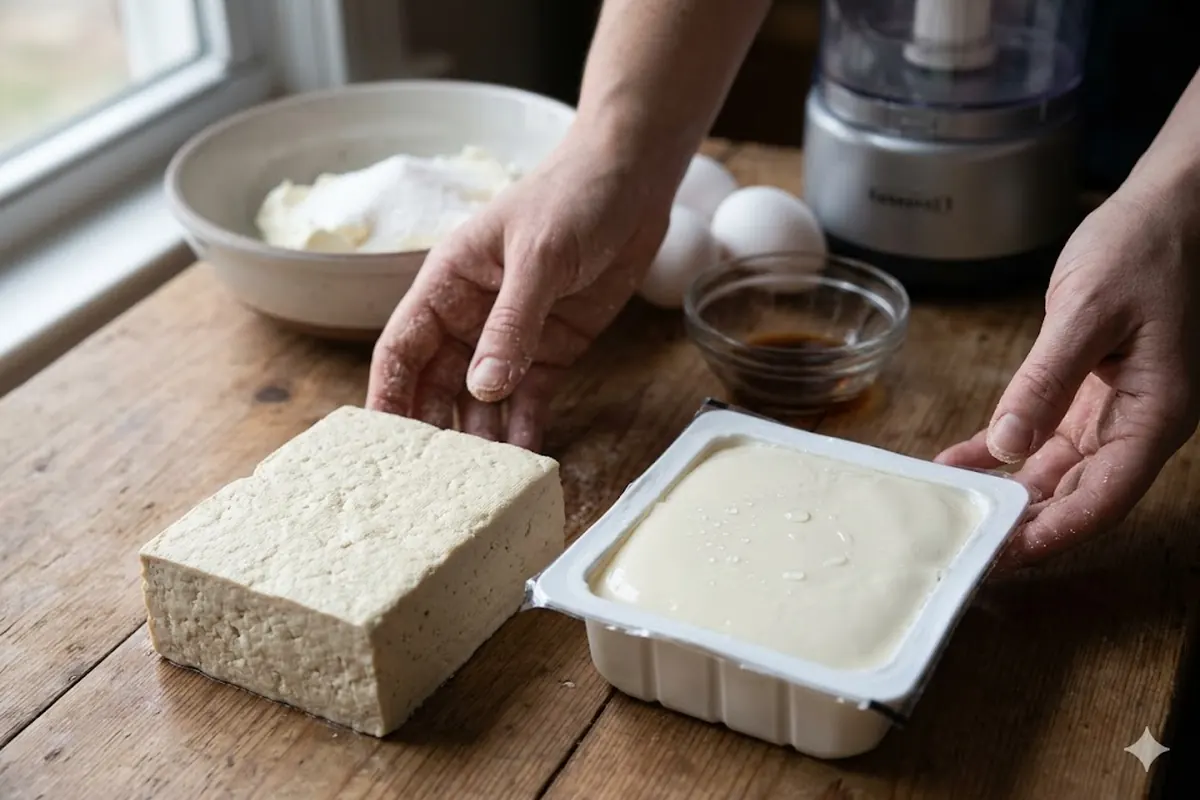
This is the choice that makes or breaks the cake, and most recipes do not explain it. Silken tofu blends into a custard-smooth, pourable filling with no graininess, which is what you want for a no-bake or gently baked cheesecake. Firm and extra-firm tofu give a denser, slightly more structured filling that holds up better in a pressure-cooked or fully baked version, but they need more blending to lose their grain.
My default is silken for a no-bake cake and firm for a baked one. Here is the reason. No-bake cheesecakes set with a stabilizer, not heat, so you want the filling already smooth and the structure to come from gelatin or chilled coconut oil. Silken gives you that smoothness for free. Baked or Instant Pot versions set with heat and egg or egg-replacer, so a firmer tofu holds its shape through cooking without splitting. Pick the tofu to match the method, not the other way around. The one mistake to avoid is using soft regular tofu for a baked cake, which traps too much water and weeps.
The two techniques that kill the tofu taste
Here is what the recipes that just say “blend tofu” leave out. Tofu carries a beany note and surface water that both need handling before it ever meets the sweetener.
First technique, the hot rinse. Drain the tofu, then pour just-boiled water over it and let it sit two minutes before draining again. Heat drives off the volatile soy compounds that read as “beany,” and you can taste the difference immediately. For firm tofu, press it under a weighted plate for 15 minutes after the rinse to pull out the water that would otherwise weep into your filling. Silken is too delicate to press hard, so just blot it well with paper towels.
Second technique, the acid bloom. Blend in about a tablespoon of fresh lemon juice per 12 ounces of tofu before anything else. The acid does two jobs. It mimics the tang of cream cheese, which is the flavor your brain is expecting in a cheesecake, and it further mutes the soy. Add a teaspoon of vanilla and a pinch of salt at the same time. Taste the base before you sweeten. If it tastes clean and slightly tangy, you have already won. America’s Test Kitchen has a useful breakdown of how acid balances dairy-style desserts, and the logic carries straight to a tofu base.
A working keto tofu cheesecake, with the carb math
Here is the cream-cheese-free version, scaled to a small springform pan that yields eight slices.
For the crust, blend 1 cup almond flour, 3 tablespoons melted butter or coconut oil, 2 tablespoons powdered erythritol, and a pinch of salt, then press into the pan and chill. For the filling, blend 12 ounces silken tofu (hot-rinsed and blotted), 1 tablespoon lemon juice, 1 teaspoon vanilla, a pinch of salt, half a cup of powdered allulose or erythritol, and 2 tablespoons melted coconut oil until completely smooth. For a no-bake set, bloom 1 teaspoon gelatin in 2 tablespoons warm water and blend it in. Pour over the crust and chill at least 6 hours, ideally overnight.
The carbs come out to roughly 4 grams net per slice. The crust contributes about 2 grams from almond flour, the filling about 1 to 2 grams depending on your sweetener, and allulose and erythritol both subtract cleanly so they add nothing. Compare that to a traditional no-bake cheesecake at 40 plus grams a slice and you can see why this fits a keto day with room to spare. For more on which sweeteners count and which do not, the keto food list sorts them out.
Those carb figures are not guesses. Total carbs and fiber for each ingredient come from USDA FoodData Central and are divided by the eight slices, which is the same net-carb method any registered-dietitian resource uses. Silken tofu lists around 2 grams net per half cup, almond flour about 2 grams net per quarter cup, and the sugar alcohols contribute nothing once subtracted. Run your own brands through the same math if your tofu or flour differs, because a sweeter almond flour or a firmer tofu can move the per-slice number by half a gram either way. Precision here is what keeps a “keto dessert” from quietly costing you a third of your day.
Choosing the crust so the whole slice stays low-carb
The crust is where a “keto” cheesecake quietly stops being keto, because graham-style crumbs are pure carbs. Three crusts keep it honest. Almond flour is the everyday pick, pressed with melted butter and a little sweetener, adding about 2 grams net per slice and tasting closest to a classic graham base. Pecan or walnut crust, made by pulsing nuts with butter, brings a richer, more buttery floor and works beautifully under a chocolate filling. Coconut crust, shredded unsweetened coconut bound with butter, is the lowest in carbs but carries a distinct flavor, so save it for tropical or lime versions.
Whichever you pick, chill the crust before the filling goes on. A cold crust firms up and resists the moisture from the filling, which is one more guard against a soggy bottom. If you want a no-crust version to cut carbs further, pour the filling into ramekins and treat them as set custards; you lose the crunch but drop close to a gram a serving. The almond version is the default choice when you want something that reads as a real cheesecake to a skeptical guest.
Why the tofu needs blotting
Skipping the blotting step on silken tofu is a common mistake, since no-bake seems to mean no fuss. It looked perfect going into the fridge. Six hours later there was a quarter inch of cloudy liquid pooled around the edge and the top had gone soft and slumpy. The flavor was fine; the texture was a wet disappointment.
The fix turned out to be embarrassingly simple. Blot the silken tofu between paper towels until it stops dampening them, usually three or four changes, and add the full teaspoon of gelatin rather than skimping. The next batch set firm and sliced clean. That weeping liquid is just the surface water tofu carries, and pulling it out before you blend is the whole difference between a cheesecake and a soggy pudding. Blotting every time, with no exceptions, prevents the weeping. Cookiegrove has good notes on chocolate chip cookies that show the same lesson about controlling moisture for a clean set.
Troubleshooting: match the symptom to the cause
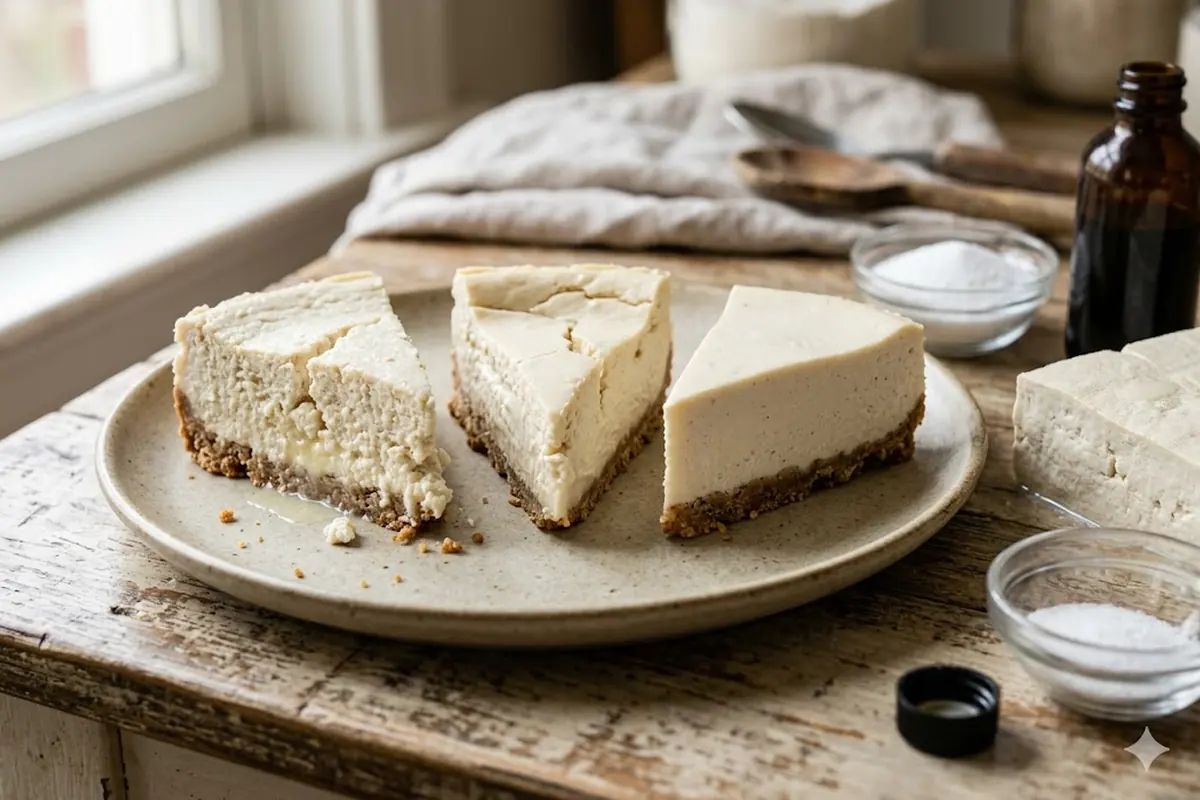
When a tofu cheesecake goes wrong, the cause is almost always one of four things. Use this as a decision tree.
- Filling weeps liquid in the fridge: too much water in the tofu. Blot or press harder next time, and add more gelatin.
- Set is too soft to slice: not enough stabilizer or not enough chill time. Use the full teaspoon of gelatin and give it overnight, not three hours.
- Beany or soy aftertaste: you skipped the hot rinse or the lemon. Both are non-negotiable; do them and re-taste the base before sweetening.
- Eggy or rubbery in a baked version: overcooked, or too much egg-replacer. Pull it when the center still has a slight jiggle and let carryover heat finish it.
Run the symptom through that list and you will almost always land on the cause. The two that catch beginners most are weeping (water) and softness (stabilizer), and both trace back to the tofu prep, which is why the rinse-and-blot step earns its keep.
Flavor variations that stay keto
Once the base is dialed in, the cake takes flavor easily. For chocolate, blend in 2 tablespoons cocoa powder and a little extra sweetener. For a lemon version, double the lemon juice and add zest. For a “cheesecake” tang closer to the dairy original, a tablespoon of apple cider vinegar alongside the lemon sharpens it. A swirl of sugar-free berry sauce on top adds color and only a gram or so of carbs if you use raspberries. Bon Appetit has a smart piece on building dessert flavor without sugar that applies cleanly here. Keep any add-ins low-carb and the slice stays under 5 grams.
Tofu version versus the dairy classic
It is worth being straight about the tradeoffs, because the tofu cake is not strictly better, it is different. On texture, a cream cheese cheesecake is denser and richer; the tofu version is lighter and more custard-like, closer to a Japanese-style cheesecake than a New York one. On flavor, cream cheese brings a built-in tang the tofu has to borrow from lemon and vinegar, and a die-hard cheesecake purist may notice. On macros, the two land in the same low-carb range, around 4 grams a slice, but the tofu version is meaningfully lower in calories and saturated fat, which matters if you are eating keto for weight loss rather than just carb control.
Where the tofu version clearly wins is dairy-free eating and cost. If dairy bothers your stomach or you are cooking for someone who avoids it, tofu solves the problem without a specialty ingredient. And a block of silken tofu costs a fraction of the cream cheese it replaces, so a cake that feeds eight is genuinely cheap to make. The dairy version suits a special occasion when maximum richness is the goal, and the tofu version suits everyday, because it is lighter. For a fuller picture of low-carb sweets, the keto friendly snacks guide covers the grab-and-go end of the spectrum.
Make-ahead and serving notes
This cake is a make-ahead dream. It needs the long chill anyway, so making it the day before a gathering is a feature, not a chore. Pull it from the fridge about ten minutes before serving so the filling loses its hard-cold edge and the flavor opens up; straight from the fridge it tastes flatter. Slice with a knife dipped in hot water and wiped between cuts for clean edges, the same trick that works on any chilled dessert. A few fresh raspberries or a dusting of cocoa dresses each slice up for almost no carbs. If you are plating it for guests who do not know it is tofu, say nothing until after they have praised it, then enjoy the look on their faces.
Frequently asked questions
Does keto tofu cheesecake taste like tofu?
Not if you prep it right. A hot-water rinse drives off the beany soy note and a tablespoon of lemon juice adds the tang your brain expects from cheesecake. After both steps, the tofu reads as pure creaminess and most people cannot tell it is there. Skip the rinse and the soy flavor does come through, which is why those two steps matter.
How many net carbs are in a slice?
About 4 grams net carbs per slice for an eight-slice cake, mostly from the almond-flour crust. The filling adds only 1 to 2 grams because silken tofu is low in carbs and allulose or erythritol subtract cleanly. That compares to 40 plus grams in a traditional cheesecake slice, which is the whole point of the swap.
Which tofu should I use?
Use silken tofu for a no-bake cheesecake and firm tofu for a baked or Instant Pot version. Silken blends glassy-smooth for a set that relies on gelatin, while firm holds its shape through heat. Avoid soft regular tofu, which traps too much water and weeps into the filling.
Can I make it without gelatin?
Yes. For a vegetarian set, agar-agar works in place of gelatin, though it sets firmer and needs to be simmered first. Chilled coconut oil also adds structure as it solidifies in the fridge. Without any stabilizer the cake stays pudding-soft, so use at least one of these if you want clean slices.
What sweetener works best?
Allulose and erythritol both work and both subtract cleanly from net carbs. Allulose dissolves more like sugar and browns better, while erythritol can have a slight cooling aftertaste in large amounts. Use the powdered form of either so the filling stays smooth, and avoid maltitol, which raises blood sugar.
How long does it keep?
A keto tofu cheesecake keeps about four days in the fridge, covered, and freezes well for up to two months. Because it is dairy-free and stabilized, it actually holds its texture better than many cream-cheese versions. Thaw frozen slices in the fridge overnight rather than at room temperature to keep the set firm.
Is tofu actually keto?
Yes, tofu is keto-friendly. Silken tofu carries roughly 2 grams net carbs per half cup and firm tofu even less, with a good amount of plant protein. It fits comfortably in a low-carb day, which is exactly why it works as a cream-cheese stand-in here without pushing the carbs up.