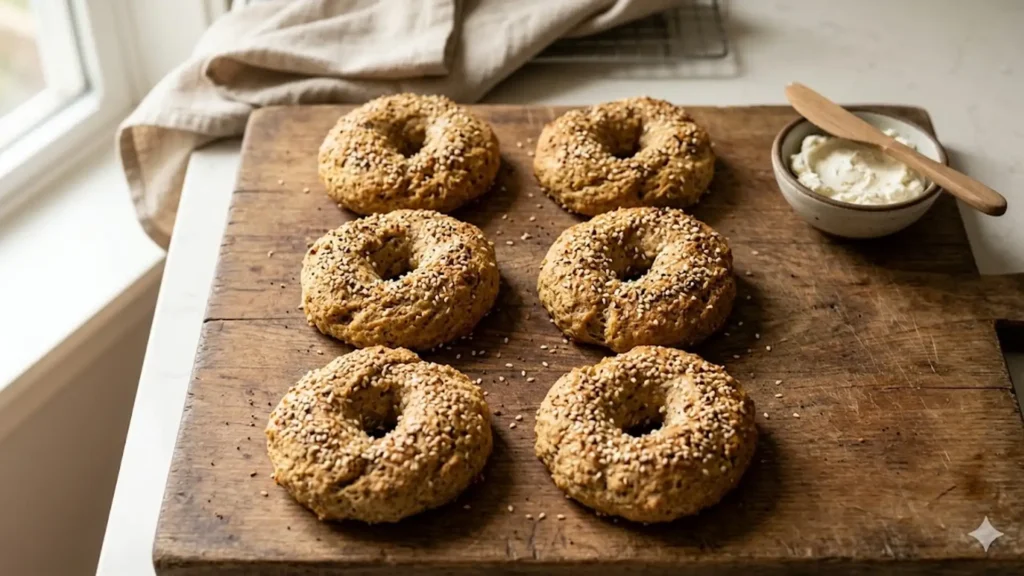
Keto bagels are completely doable at home, and the version most people land on, fathead dough, can be chewy and satisfying instead of the crumbly, eggy hockey pucks that put beginners off. The whole game is technique: how you melt the cheese, how thoroughly you blend, and a couple of additions that the popular recipes leave out. Below is a method for a bagel with a real chew, plus a troubleshooting section for every way they go wrong, a dairy-free option, and an honest comparison with the store-bought brands. Each homemade bagel lands around 4 to 5 net carbs.
Net carbs here means total carbohydrates minus fiber, which is the figure that counts against your daily keto limit of roughly 20 to 30 grams. A bagel at 5 net carbs is a real budget item, so it is a once-in-a-while treat, not an everyday food, and the recipe below is sized so you can freeze a batch and pull one when you want it.
What Makes a Keto Bagel Work
A standard bagel gets its chew from wheat gluten and its structure from a boil-then-bake process. Keto bagels cannot use wheat, so they borrow structure from melted cheese and almond flour instead. The base is fathead dough: shredded mozzarella and cream cheese melted together, then mixed with almond flour, egg, and baking powder. The melted mozzarella is doing the job gluten normally does, stretching and binding, which is why the cheese has to be fully melted and fully incorporated or the bagel turns out crumbly.
The two upgrades that separate a good keto bagel from a sad one are a teaspoon of xanthan gum (it mimics gluten’s stretch and stops crumbling) and an egg-white wash plus a brief broil at the end for a glossy, chewy crust. Without xanthan gum, the dough relies entirely on cheese for cohesion and tends to fall apart; with it, the texture comes much closer to a real bagel. Almond flour gives the closest crumb; coconut flour works but drinks more liquid and needs extra egg.
The Chewy Keto Bagel Recipe
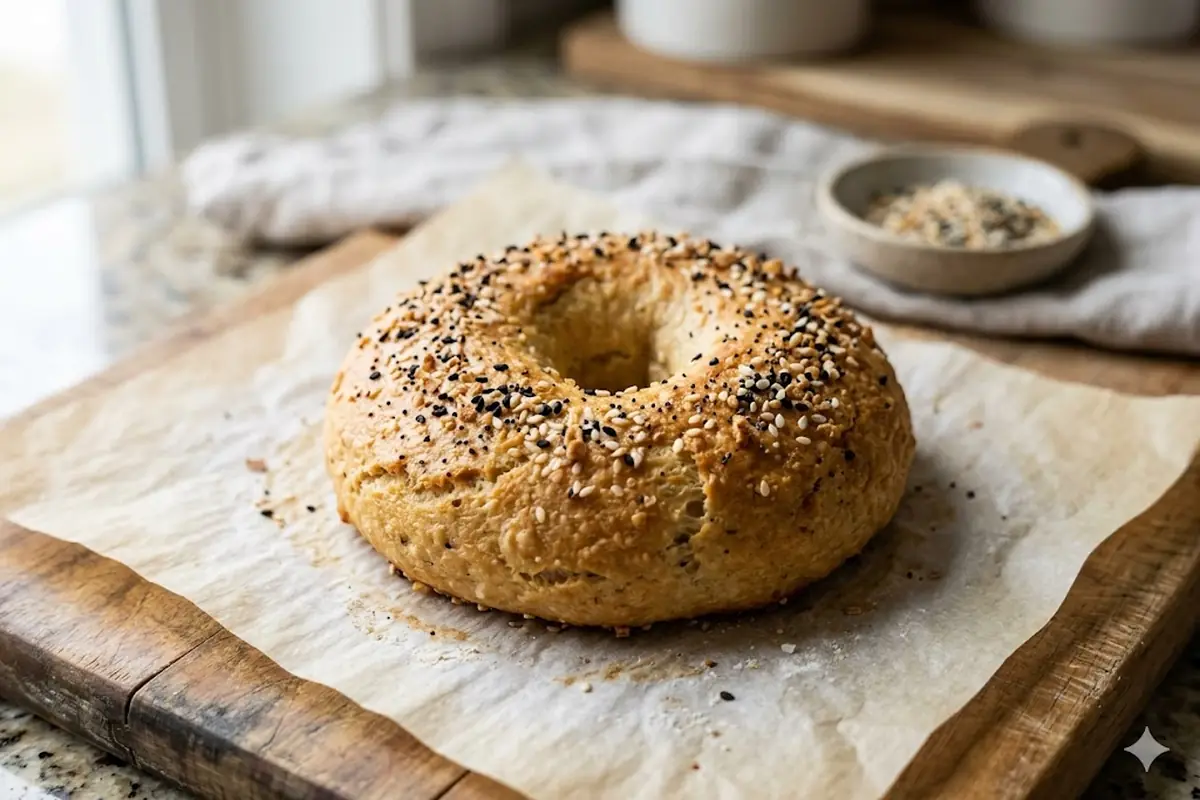
For six bagels you need: 2.5 cups shredded low-moisture part-skim mozzarella, 2 ounces cream cheese, 1.5 cups blanched almond flour, 1 teaspoon xanthan gum, 1 tablespoon baking powder, 2 large eggs, and a half teaspoon salt. Salt matters and most recipes skip it; without it the bagels taste flat. Optional everything-bagel seasoning for the top.
Method: combine almond flour, xanthan gum, baking powder, and salt in a food processor and pulse to blend. Microwave the mozzarella and cream cheese together in 30-second bursts, stirring between, until fully molten and uniform, about 90 seconds total. Add the hot cheese and the eggs to the food processor and run until the dough is completely smooth and uniform, with no streaks of cheese or flour. This thorough blending is the single biggest factor in a non-crumbly result. Divide into six pieces, roll each into a rope, join the ends into a ring, and place on parchment. Brush with beaten egg white, add seasoning, and bake at 375F for 14 to 17 minutes until deep golden, then broil 60 seconds for a glossy top. Cool at least 15 minutes before slicing, because the structure sets as it cools.
How to Get an Authentic Chewy Texture
Chew is where homemade keto bagels usually fall short, and three habits fix it. First, do not skip the xanthan gum; it is the closest thing to gluten you can add and it transforms the bite. Second, blend the dough longer than you think you need to, because under-mixed fathead dough has pockets of unmelted cheese that bake into greasy, crumbly spots. Third, let them cool fully before eating; fathead dough is gummy when hot and sets into proper texture only as it cools, so the bagel you tear into straight from the oven will mislead you about the recipe.
A fourth trick borrows from real bagels: a brief egg-white wash gives the crust the slight sheen and chew that dry-topped keto bagels lack. Some bakers add a teaspoon of apple cider vinegar to the dough, which reacts with the baking powder for a bit more rise and a lighter interior. If you want the holes to stay open and the bagels to look the part, make the center hole larger than seems right, because the dough puffs and closes a small hole during baking. For the science behind getting low-carb baking right, references like King Arthur Baking are excellent on technique even when adapting their methods to keto flours.
Troubleshooting: Why Your Keto Bagels Failed
Crumbly, falls apart: the dough was under-blended or you skipped xanthan gum. Blend until perfectly smooth and add the gum next time. Greasy or oily: the cheese was overheated or separated; melt gently in short bursts and stop the moment it is uniform. Too eggy in taste: too many eggs relative to flour, common when people add an extra egg to wet, stiff dough; add a tablespoon of water instead. Did not rise or rise flat: your baking powder is old (it loses potency in months) or the dough was overworked after the leavening was added.
Dense and heavy: not enough leavening, or the dough was packed too tightly when shaped; handle it lightly. Burnt bottoms, raw centers: oven too hot or rack too low; bake on the middle rack and tent with foil if the tops brown before the centers set. Gummy interior: you ate them too soon; cooling is not optional. Stuck to the pan: always use parchment, never grease alone, because the cheese sticks. Run through this list and almost every keto bagel failure traces back to blending, leavening age, or cooling time.
Dairy-Free and Variation Options
Dairy-free keto bagels are harder because cheese is the structure, but they are possible. Replace the mozzarella with a firm dairy-free shredded cheese that actually melts (brand matters enormously here, and some simply will not work), keep the xanthan gum since it is doing extra structural work, and expect a slightly different texture. An alternative dairy-free route skips fathead entirely and uses an almond-flour-and-psyllium-husk dough, which relies on psyllium for chew rather than cheese; it bakes into a denser, more bread-like bagel.
For flavor variations on the standard recipe, fold ingredients into the dough or top before baking. Everything seasoning is the classic. Cinnamon and a keto sweetener make a cinnamon-raisin-style bagel (use a few chopped nuts instead of raisins to keep carbs down). Shredded cheddar mixed into the dough makes an asiago-style cheese bagel. Sesame, poppy, or za’atar on top all work. Because the base dough is neutral, it carries sweet or savory equally well, so one recipe becomes a dozen.
Choosing the Right Cheese and Flour
The single ingredient that decides your keto bagel is the mozzarella, so it pays to choose well. Use low-moisture, part-skim, pre-shredded mozzarella. Fresh mozzarella holds far too much water and turns the dough into a wet, ungovernable mess. Pre-shredded is actually better here than block you grate yourself, because the anti-caking coating helps it melt evenly and the carb difference is negligible at the amount used. Whole-milk low-moisture mozzarella also works and gives a richer result, but part-skim is the most forgiving for melting.
Almond flour quality matters too. Use blanched, finely ground almond flour, not almond meal, which is coarser and made with the skins on. Almond meal produces a gritty, speckled bagel that never gets smooth; blanched flour gives a fine, even crumb. Store almond flour in the fridge or freezer, because its high oil content means it goes rancid faster than wheat flour and a stale bag tastes off. If you swap in coconut flour for a nut-free version, remember it is roughly three times as absorbent, so cut the amount to about a third and add an extra egg and a splash of water to compensate, adjusting until the dough is soft but not sticky.
Serving Ideas Beyond Cream Cheese
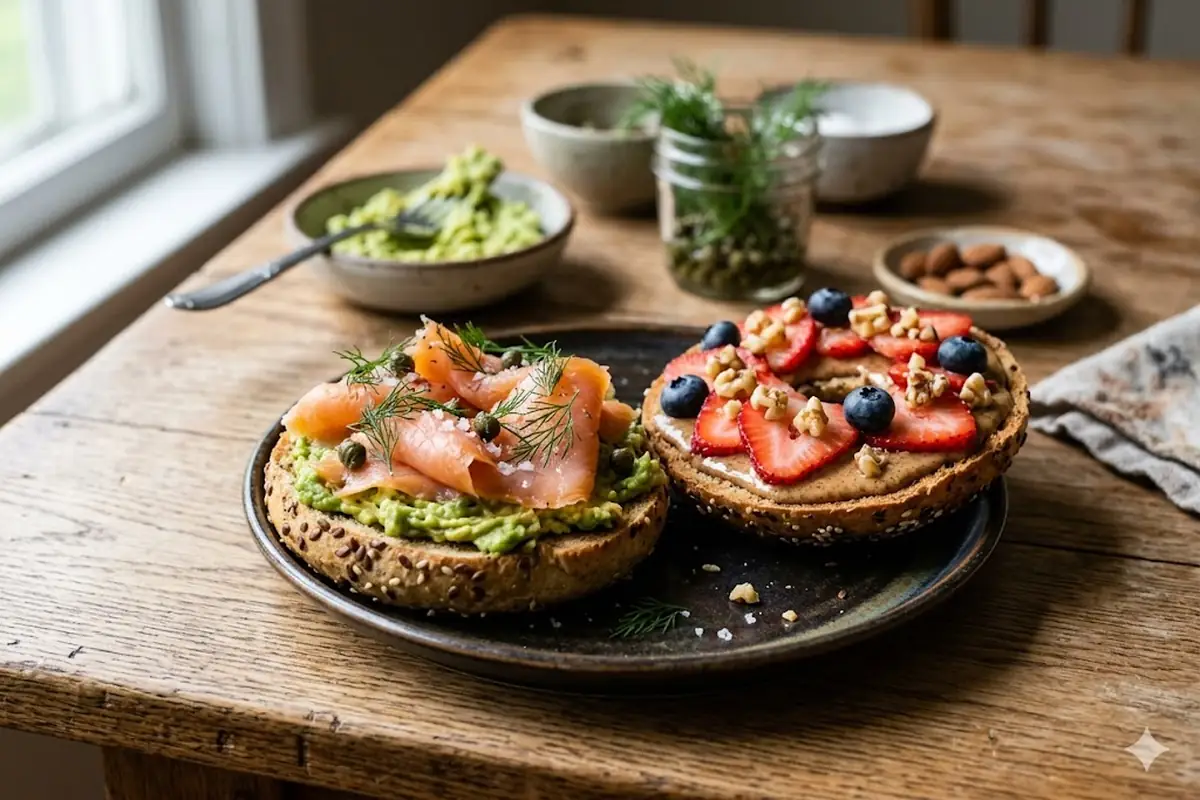
A keto bagel is a blank canvas, and leaning only on cream cheese sells it short. For a savory breakfast, split and toast the bagel, then top with a fried egg, sliced avocado, and a little hot sauce, which together stay well under 8 net carbs for the whole plate. A lox bagel works beautifully: cream cheese, smoked salmon, capers, a few thin cucumber slices, and dill, all near-zero carbs on top of the bagel itself. For lunch, build an open-faced melt with deli ham, cheese, and mustard under the broiler.
On the sweet side, the cinnamon variation toasted and spread with butter and a dusting of keto sweetener scratches the cinnamon-roll itch. Almond butter and a few crushed berries make a quick sweet topping that adds only 2 to 3 net carbs. Because the base dough is neutral, you can keep one batch in the freezer and take it in completely different directions across a week, which is exactly what keeps a keto staple from getting boring. Pairing a bagel half with eggs or smoked fish also balances the macros, adding protein to what is otherwise a fat-and-carb-leaning food.
Store-Bought Keto Bagels: Are They Worth It?
Several brands now sell keto bagels, and they are a real convenience if you do not want to bake. Thomas’ Keto Bagel Thins run about 2 net carbs per serving at only 80 calories, which is lower in both than a homemade fathead bagel because they are thinner and use added fibers for structure. Other brands like Royo also sell low-carb bagels. The tradeoff is the ingredient list: store-bought keto breads lean on isolated fibers (like modified wheat starch or chicory root) and additives to hit a low net-carb number, and some people find those fibers cause digestive upset or do not affect their blood sugar the way a true fiber would.
Homemade wins on ingredient quality and on taste, since fathead dough is just cheese, almond flour, and egg. Store-bought wins on convenience, calories, and consistency. A reasonable approach is to bake a batch, freeze them, and keep a bag of a trusted store brand as backup. Whichever you choose, verify the net carbs yourself from the label, because the front-of-package claims do not always survive the maltitol-and-fiber math. Our broader look at how packaged low-carb products hide carbs is in the keto friendly tortilla chips breakdown, and the same label-reading skill applies to bagels.
Storing and Freezing Keto Bagels
Fathead bagels keep about 3 to 4 days in the fridge in an airtight container; leave them at room temperature and the cheese-based dough goes off faster than wheat bread would. They freeze beautifully for up to a few months, which makes batch-baking the smart move. Slice them before freezing so you can drop a half straight into the toaster from frozen, and stack with parchment between halves so they do not fuse.
To serve from frozen, toast straight from the freezer; the toaster crisps the cut face and revives the chew better than microwaving, which turns them rubbery. If you are building breakfast sandwiches ahead, you can assemble with egg and cheese, wrap individually, and freeze the whole sandwich, then reheat gently. A toasted keto bagel with cream cheese, smoked salmon, or an egg makes a substantial low-carb breakfast; for more morning ideas built around it, see our keto breakfast ideas, and our keto basics guide explains where a 5-net-carb bagel fits in a daily budget.
Fitting Keto Bagels Into Your Daily Carb Budget
A 5-net-carb bagel is a meaningful chunk of a 20-to-30-gram daily limit, so plan the rest of the day around it rather than treating it as free. If you eat a bagel at breakfast, lean low-carb for lunch and dinner: a salad with protein and an olive-oil dressing, then a meat-and-vegetable plate, both of which leave you well inside budget. The store-bought thins at 2 net carbs are easier to fit daily, while the heartier homemade version is better saved for a weekend brunch when you want the full experience.
Watch the toppings too, because they can quietly double the carb cost. Cream cheese is near zero, but jam, honey, and sweetened spreads are pure sugar; use the keto sweetener versions or stick to savory toppings. The smart move is to decide in advance when a bagel fits your week, bake or buy accordingly, and enjoy it without guilt because it was planned. Treating it as an occasional, budgeted indulgence is what keeps a higher-carb keto treat from derailing the whole day.
Frequently Asked Questions
How many carbs are in a keto bagel?
A homemade almond-flour fathead bagel runs about 4 to 5 net carbs. Store-bought keto bagel thins can be as low as 2 net carbs because they are thinner and use added fibers. A regular wheat bagel, by contrast, has 40 to 50 net carbs.
Why are my keto bagels crumbly?
The dough was under-blended or lacked xanthan gum. Blend the hot cheese, eggs, and flour until completely smooth with no streaks, and add a teaspoon of xanthan gum, which mimics gluten and holds the bagel together so it does not fall apart when sliced.
Can I make keto bagels without almond flour?
Yes. Coconut flour works but is far more absorbent, so use about a third of the amount and add an extra egg. The texture is slightly drier. Almond flour gives the closest-to-real crumb, so it is the better default unless you have a nut allergy.
Do keto bagels need to be boiled like real bagels?
No. Fathead dough does not contain gluten or yeast, so boiling does the nothing it does for wheat bagels and would just make them soggy. The chew comes from the melted cheese, xanthan gum, and an egg-white wash with a brief broil instead.
How do I store and reheat keto bagels?
Keep them 3 to 4 days refrigerated or freeze for a few months. Slice before freezing and toast straight from frozen, which crisps the cut face and restores the chew far better than microwaving, which makes them rubbery.
Are store-bought keto bagels healthy?
They are low in net carbs but lean on isolated fibers and additives to get there, which some people do not tolerate well. Homemade fathead bagels use simpler ingredients. Either way, read the label and calculate net carbs yourself rather than trusting the front of the package.
Keto bagels reward a little technique: melt the cheese gently, blend the dough completely, add xanthan gum and salt the popular recipes leave out, and cool them fully before you judge them. Bake a batch, freeze sliced halves, and you have a 5-net-carb bagel ready whenever the craving hits. For baking technique you can adapt to keto flours, America’s Test Kitchen is a reliable reference on the fundamentals behind a good bake. Make the recipe once exactly as written, note where your oven and your cheese behaved differently, and adjust on the second batch; within two or three tries you will have a keto bagel dialed in to your own kitchen that beats anything on the shelf.