Is mayonnaise keto friendly? Yes, real mayonnaise is one of the most keto friendly condiments you can buy, because a standard tablespoon carries about 90 to 100 calories, 10 to 12 grams of fat, and 0 to 1 gram of net carbs. That macro profile, almost pure fat with a trace of carbohydrate, is exactly what a ketogenic diet is built around. The catch is that the word “mayonnaise” on a label hides a wide range of products, and a few of them will quietly add sugar, starch, or a cheap seed oil that drags the carb count up and the quality down. So the honest answer is yes, with conditions, and this guide walks through every one of those conditions with the numbers stated plainly.
Net carbs add up on every plate, and mayo is the rare condiment that almost always wins that math. A jar flipped over in the store might be expected to hide a carb trap, the way ketchup often does. Nope. Zero sugar, zero net carbs, one ingredient line that was basically oil and an egg. Below, the whole thing is broken down: macros tablespoon by tablespoon, oils ranked best to worst, the brands that pass and the ones that quietly do not, a ten second jar check, and a five minute homemade version that beats every store option on cost and on the oil it uses. None of this is medical advice. It is just how mayonnaise actually fits a low carb day.
The Macros: Why Mayo Fits Keto So Easily
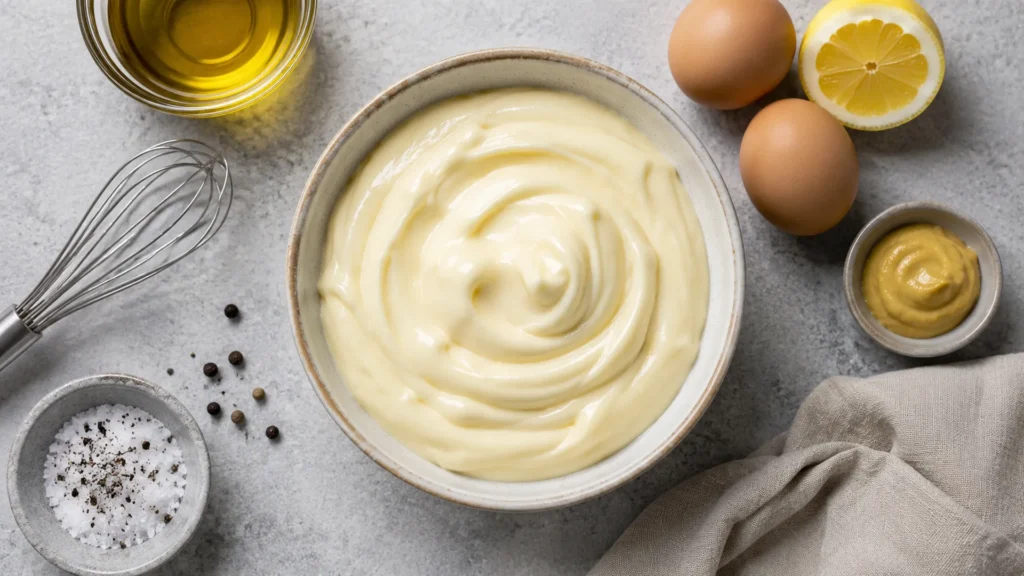
Mayonnaise is an emulsion of oil, egg yolk, and an acid like vinegar or lemon juice. Oil is fat with zero carbohydrate. Egg yolk is fat and protein with a trace of carbohydrate. Vinegar and lemon juice add almost nothing. Put those together and you get a condiment that is roughly 99 percent fat by calorie, which is why a real mayonnaise lands at 0 to 1 gram of net carbs per tablespoon. Compare that to ketchup at about 4 grams of net carbs per tablespoon or barbecue sauce at 6 to 7 grams, and you can see why mayo is the default keto sauce.
Here is the macro picture for a single tablespoon of full-fat mayonnaise made with a clean oil. These numbers are typical; always confirm against the jar in your hand, because brands vary.
| Per 1 tablespoon (about 14 g) | Amount | Keto note |
|---|---|---|
| Calories | 90-100 | Dense fuel, easy to overshoot calories |
| Fat | 10-12 g | Almost all of the calories |
| Protein | 0-0.2 g | Negligible |
| Total carbs | 0-1 g | Net carbs equal total here (no fiber) |
| Sugar | 0 g | Should be zero in real mayo |
The one number that should make you pause is calories. Fat carries nine calories per gram, so two generous tablespoons of mayo is roughly 200 calories before you have eaten the food underneath it. On keto that is usually fine, since fat is your fuel, but if your goal is fat loss and your weight has stalled, mayo is one of those foods that is easy to pour without counting. The carbs are not your problem with mayo; the calories can be.
It also helps to know why the carb number stays so low. Carbohydrate enters mayo only through the egg yolk and the trace of sugar in vinegar, and both are tiny. A single large egg yolk has well under half a gram of carbohydrate, and a batch of mayo spreads that across a dozen or more tablespoons. That is the structural reason mayo reads as 0 grams on most panels: the carbohydrate is rounded down because there is barely any to begin with. When you do see a mayo with 2 or 3 grams of carbs, it did not come from the egg or the oil. It was added on purpose as sugar or starch, which is your signal to put the jar back.
The Oil Is the Whole Story
The oil is the whole story. Oil makes up 65 to 80 percent of the jar by weight, so when you pick a mayo you are really picking an oil with a little egg stirred in. The carb count barely moves from one oil to the next. Quality, fatty acid profile, and flavor swing hard. Here is how the common oils rank for a keto kitchen, best to worst.
Avocado oil (best)
Avocado oil mayonnaise is the cleanest mainstream option. The oil is mostly monounsaturated fat, similar to olive oil, with a neutral taste that does not fight the food. Net carbs stay at 0 grams per tablespoon. The downside is price; avocado oil mayo costs two to three times what supermarket mayo costs. Read the ingredient list closely, because some jars labeled “avocado oil mayo” actually blend a little avocado oil into a base of canola or soybean oil. The real ones list avocado oil first and nothing else for the oil.
Olive oil (good, with a flavor caveat)
Olive oil mayo is fine on macros and rich in monounsaturated fat. The catch is taste. Pure olive oil makes a mayo that can turn bitter or sharp, so most “olive oil mayo” jars use a blend, often a small amount of olive oil cut with a neutral oil. That is not a keto problem, just a quality and labeling one. Check whether the olive oil is the only oil or just a flavor accent.
Soybean and canola oil (acceptable but not ideal)
The vast majority of supermarket mayo, including the big national brands, is built on soybean or canola oil. On carbs, these are still keto friendly, sitting at 0 to 1 gram of net carbs per tablespoon. The objection is not ketosis; it is that these are heavily refined oils high in omega-6 linoleic acid. A diet already heavy in omega-6 and light in omega-3 is something many nutrition writers flag as a possible driver of inflammation, though the evidence is still debated and the effect of a tablespoon or two of mayo is small. If budget rules and you want mayo on your eggs, soybean oil mayo will not knock you out of ketosis. It is a quality trade, not a carb trade.
Light, low-fat, and “olive oil reduced fat” (avoid)
This is where mayo stops being keto friendly. To cut the fat and keep the texture, light and reduced-fat mayonnaise replace oil with water and thickeners, and the thickeners are usually modified food starch or sugar. A light mayo can carry 1 to 3 grams of net carbs per tablespoon, sometimes more, which defeats the entire reason you reached for mayo in the first place. On keto, full fat is the goal, not the compromise. Skip anything that says light, lite, reduced fat, or low fat.
How to Read a Mayo Jar in Ten Seconds
You do not need to memorize brands. You need three checks, in order.
First, look at the oil, which is almost always the first ingredient. If it says avocado oil or olive oil and lists no other oil, you have a premium jar. If it says soybean or canola oil, it is acceptable but lower quality. Second, scan the ingredient list for sugar in all its names: sugar, cane sugar, high fructose corn syrup, dextrose, honey, or anything ending in -ose. Real mayo needs none of it, and any sweetener is a red flag. Third, glance at the nutrition panel for carbs and sugar. You want 0 to 1 gram of total carbs and 0 grams of sugar per tablespoon. If those three checks pass, the jar is keto friendly regardless of the brand name on the front.
One more trap: “miracle whip” style salad dressing is not mayonnaise. It is a sweetened dressing that uses sugar and runs around 2 grams of carbs per tablespoon with sugar listed high in the ingredients. It looks like mayo and sits next to mayo on the shelf, but it is a different product and it is not keto friendly.
Brands That Pass and Brands to Watch
Using the three checks above, here is how the common categories shake out. Confirm the panel yourself, because formulas change.
| Type | Net carbs / tbsp | Keto verdict |
|---|---|---|
| Avocado oil mayo (clean, single oil) | 0 g | Best choice |
| Olive oil blend mayo | 0-1 g | Good, check the blend |
| Classic full-fat (soybean/canola) | 0-1 g | Fine on carbs, lower quality oil |
| Light / reduced-fat mayo | 1-3 g | Avoid (added starch/sugar) |
| Salad dressing (miracle-whip style) | about 2 g, with sugar | Not keto |
The premium avocado oil jars from the major clean-label makers run about 90 to 100 calories, 10 to 12 grams of fat, and 0 grams of net carbs per tablespoon, which is the gold standard. The classic national brands hit the same carb number but use refined seed oils, so they are a budget-versus-quality decision rather than a keto decision. Reputable food testers at outlets like America’s Test Kitchen and Bon Appetit have run blind mayo tastings if you want to weigh flavor alongside ingredients before you commit to a jar.
Homemade Keto Mayo Beats the Jar
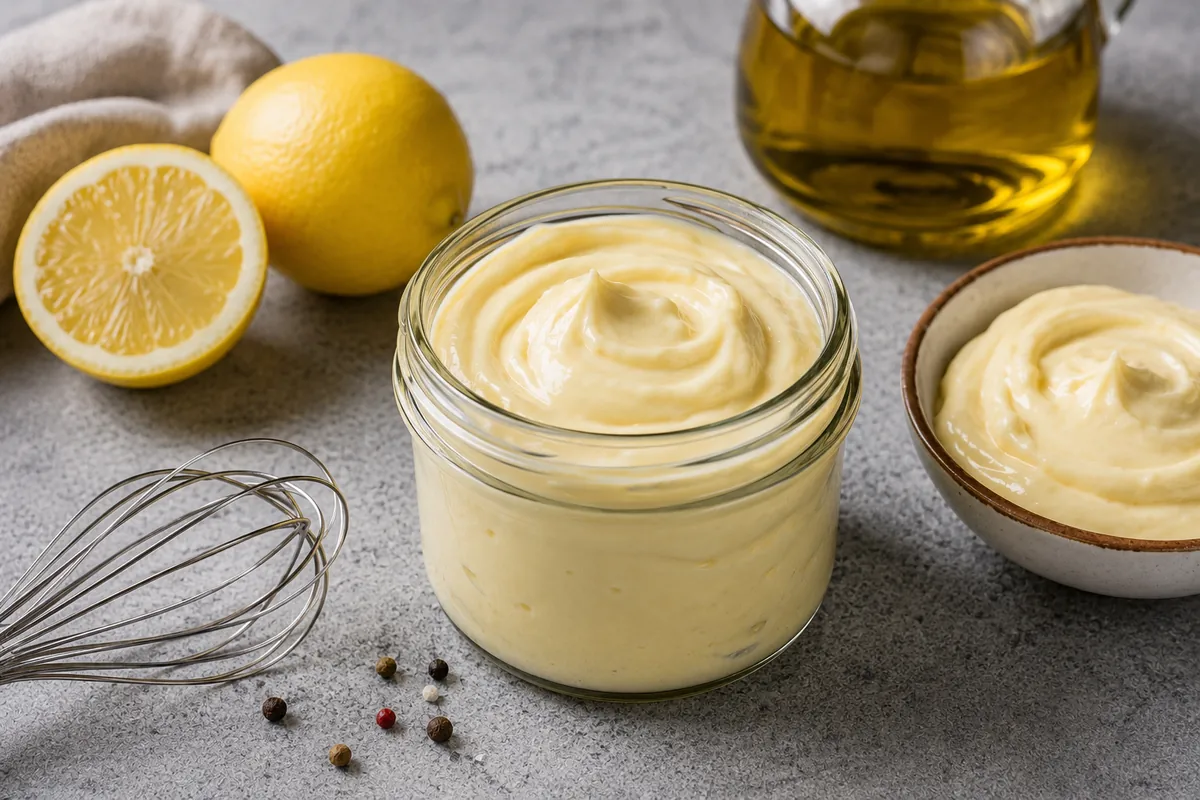
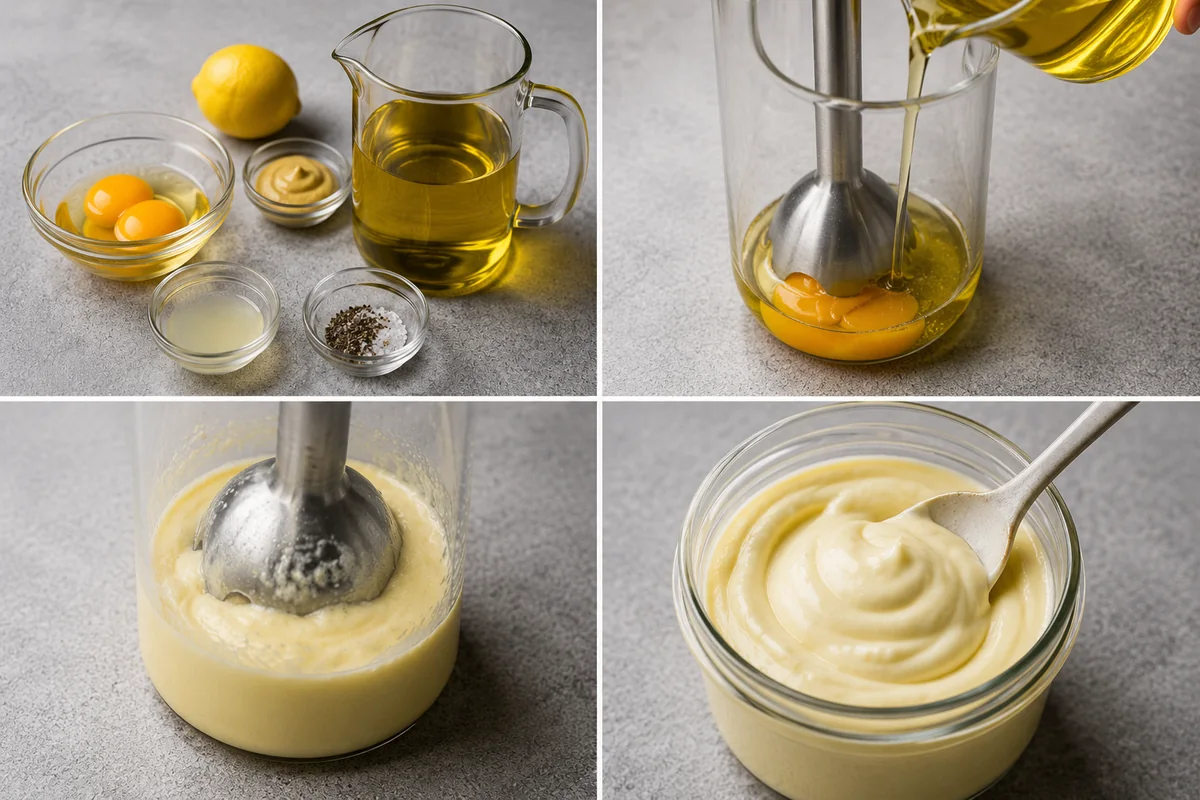
The cheapest way to get a perfect oil and a 0 carb count is to make mayo yourself. It takes five minutes with an immersion blender and you control every ingredient. The carbs are effectively zero because the only ingredients are fat, egg, and acid. Making your own can sound fussy. It is not. The immersion blender method is nearly reliable, turning the mixture into thick white mayo in under a minute, for far less than eight dollars a jar.
Use one whole egg at room temperature, one teaspoon of Dijon mustard, one tablespoon of lemon juice or white wine vinegar, a quarter teaspoon of salt, and one cup of avocado oil or light olive oil. Put the egg, mustard, lemon juice, and salt in the bottom of a tall narrow jar, then pour the oil on top. Lower an immersion blender all the way to the bottom, turn it on, and hold it still for ten seconds until the bottom turns creamy and white. Then slowly lift the blender up through the oil over another ten to fifteen seconds. It emulsifies into thick mayo as you go. That is the whole method.
The macro result is roughly 100 calories and 11 grams of fat per tablespoon with 0 grams of net carbs, matching the best store jars at a fraction of the cost. Homemade mayo keeps in the refrigerator for about one week in a sealed jar; it uses a raw egg, so do not push it past that, and if you are pregnant, elderly, or immune-compromised, use a pasteurized egg or stick to a jarred mayo made with pasteurized eggs.
If Your Homemade Mayo Breaks
A broken emulsion, where the mayo stays thin and oily instead of thickening, is the only thing that goes wrong, and it is fixable. The usual cause is a cold egg or pouring the oil too fast. To rescue a broken batch, put one fresh egg yolk in a clean bowl, then drizzle the broken mixture into it slowly while blending. The new yolk gives the emulsion something to grab and it comes back together. To avoid the problem entirely, start with a room temperature egg and let the immersion blender sit still at the bottom before you lift it. The slow, steady lift is what builds the stable emulsion.
How Mayo Fits a Keto Day
Because mayo is almost pure fat, it is a useful tool for hitting your fat macro without adding carbs, which is exactly the situation a lot of keto eaters face at lunch. A tuna salad bound with two tablespoons of mayo adds about 200 calories of fat and 0 net carbs, turning a lean protein into a proper keto meal. The same logic applies to egg salad, chicken salad, deviled eggs, and as a dip for low carb vegetables. Mayo is also the base for most keto sauces: stir in sriracha for spicy mayo, garlic and lemon for aioli, or chipotle for a smoky dip, all without meaningful carbs.
There is a practical reason this matters more on keto than on a normal diet. When you cut carbs, you have to replace those calories with something, and for most people that something is fat. Mayo is one of the most convenient fat sources in the kitchen because it requires no cooking, mixes into cold dishes, and carries flavor rather than just adding grease. A person aiming for 150 grams of fat a day can cover a meaningful slice of that target with a couple of tablespoons folded into lunch, then forget about it. The key discipline is to count those tablespoons the same way you count everything else, because two tablespoons is a real 200 calories whether you measured it or eyeballed it.
Pair it with the right food and the carb count stays flat. A scoop of chicken salad over a bed of greens, or mayo as the dip for a plate of the lowest carb vegetables for keto, keeps the whole plate under your limit. If you are building a low carb dressing rather than a dip, mayo also functions as the creamy base, and you can see how it plays against other options in the rundown of the best dressings for a keto diet. For the broader macro framework that all of this sits inside, the complete keto diet guide lays out the daily net carb ceiling these numbers are working against.
Bottom Line
Mayonnaise is keto friendly, full stop, as long as you buy or make the real thing. Full-fat mayo at 0 to 1 gram of net carbs per tablespoon fits any ketogenic plan and is one of the easiest ways to add fat and flavor without touching your carb budget. The decisions that matter are quality, not ketosis: choose avocado or olive oil over refined seed oil when you can, avoid anything labeled light or low fat, skip the sweetened salad-dressing imposters, and watch your total calories since fat adds up fast. Make it at home for the cleanest, cheapest version, and keep a jar of clean store mayo for the days you do not want to break out the blender.
FAQ
How many carbs are in a tablespoon of mayonnaise?
A real full-fat mayonnaise has 0 to 1 gram of net carbs per tablespoon, with 0 grams of sugar. Light and reduced-fat versions can carry 1 to 3 grams because they replace oil with starch and sometimes sugar, so they are the ones to avoid.
Which mayo is the most keto friendly?
Mayo made with a single clean oil, ideally avocado oil, is the most keto friendly. It holds at 0 grams of net carbs and avoids the refined seed oils used in classic supermarket brands. Homemade mayo with avocado oil matches that profile for far less money.
Is Hellmann’s or other classic mayo keto?
Classic national-brand mayonnaise is keto on carbs, usually 0 to 1 gram of net carbs per tablespoon with no sugar. The only knock is that it is built on soybean or canola oil rather than avocado or olive oil, which is a quality preference, not a ketosis problem.
Can mayonnaise kick me out of ketosis?
Real mayo will not. With essentially zero net carbs, a normal serving has no effect on ketosis. The thing to watch is calories, because mayo is dense fat, so if fat loss has stalled, measure your servings rather than pouring freely.
Is light or low-fat mayo okay on keto?
No. Light and low-fat mayo cut the oil and replace it with water, thickeners, and often sugar, which pushes net carbs up to 1 to 3 grams per tablespoon. On keto you want the full-fat version, since the fat is the point.
How long does homemade keto mayo last?
About one week in a sealed jar in the refrigerator. It is made with a raw egg, so do not stretch it longer. Use a pasteurized egg, or choose a jarred mayo made with pasteurized eggs, if you are pregnant, elderly, or immune-compromised.