Keto diet eating comes down to one idea: cut carbohydrates low enough that your body switches from burning sugar to burning fat for fuel. That metabolic state is called ketosis, and reaching it is what separates a ketogenic diet from a generic low-carb plan. On keto you keep net carbs very low, usually twenty to fifty grams a day, eat fat as your main energy source, and keep protein moderate. The rules are short, but the execution is where most people stumble, so this guide covers the macros, the foods, the science, the mistakes, and the troubleshooting in plain terms, with net carbs counted and US measures throughout.
None of this is medical advice. Keto changes how your body handles fluid, electrolytes, and blood sugar, so talk to your doctor before starting, especially if you take medication for diabetes or blood pressure or have a kidney or liver condition. With that said, here is a practical, specific walkthrough of how the keto diet actually works and how to run it well.
What the Keto Diet Is, in Plain Terms
The ketogenic diet is a very low carbohydrate, high fat way of eating. When you drop carbs far enough, your body runs low on glucose, its default fuel, and the liver starts converting fat into molecules called ketones. Your brain and muscles burn those ketones instead. That fuel switch is ketosis, and it usually takes two to four days of staying under roughly twenty to fifty grams of net carbs to get there. The whole diet is built around reaching and holding that state, so every food decision is really one question: does this keep me under my carb limit for the day?
Net carbs are the number that matters most. Net carbs are total carbohydrate minus fiber, because fiber is not digested into glucose and does not raise blood sugar the way starch and sugar do. A cup of raw spinach has about one gram of net carbs even though the label shows more total carbohydrate, which is why low-carb vegetables fit easily while a slice of bread does not.
The Macros: Fat, Protein, and Carbs
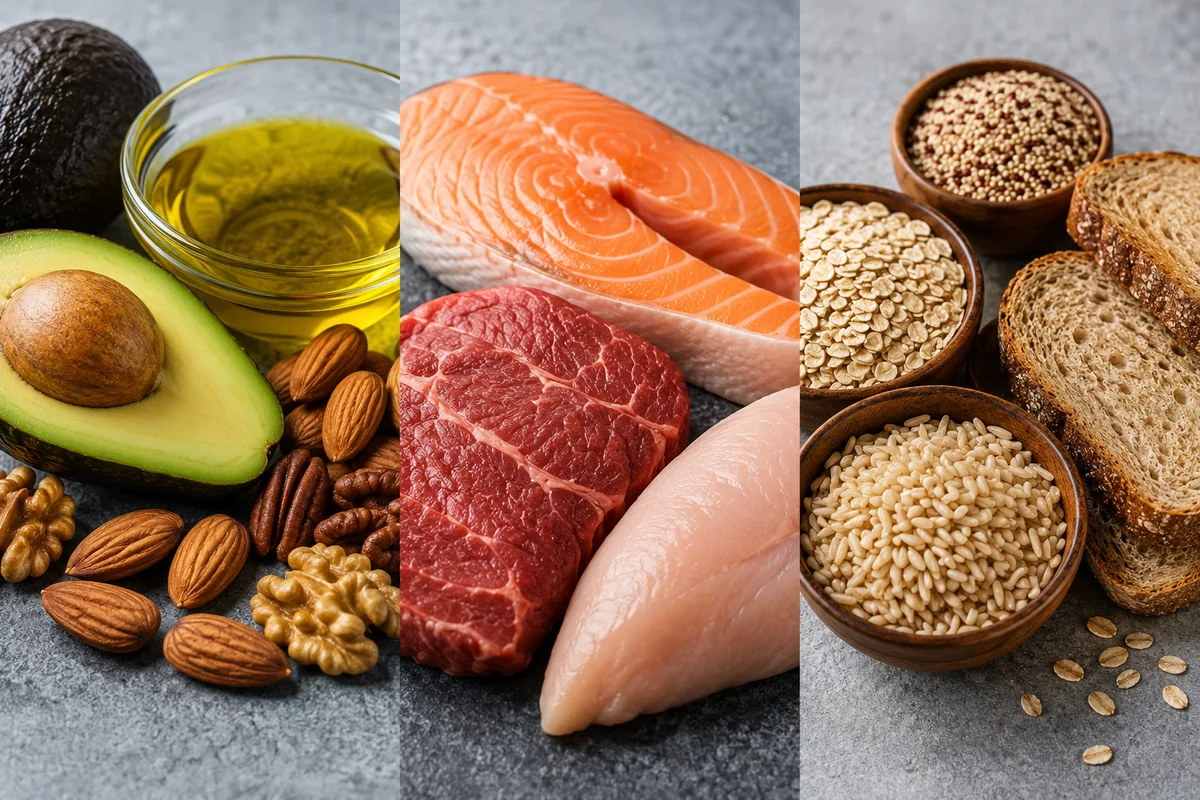
Keto is defined by its macronutrient split. A standard ketogenic plan lands around seventy to seventy-five percent of calories from fat, twenty to twenty-five percent from protein, and about five to ten percent from carbohydrate. In food terms, fat does the heavy lifting, protein stays moderate, and carbs are kept to a strict daily ceiling. Most beginners aim for twenty to thirty grams of net carbs to reach ketosis quickly and reliably, then some loosen toward fifty grams once they are adapted and know they can stay in ketosis.
| Macronutrient | Share of calories | Role on keto |
|---|---|---|
| Fat | 70-75% | Main fuel source |
| Protein | 20-25% | Preserves muscle, keeps you full |
| Net carbs | 5-10% (20-50 g/day) | Kept low to reach ketosis |
Protein deserves a note because it trips up a lot of beginners. Too little protein costs you muscle and leaves you hungry. A useful target is roughly 0.6 to 1.0 grams of protein per pound of your goal body weight, adjusted up if you lift weights. Protein does not knock you out of ketosis at normal intakes, so eat enough to stay strong and satisfied rather than fearing it.
Foods to Eat on Keto
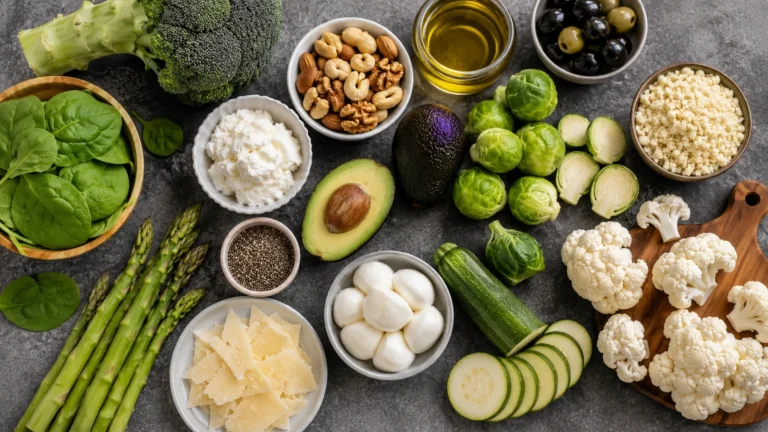
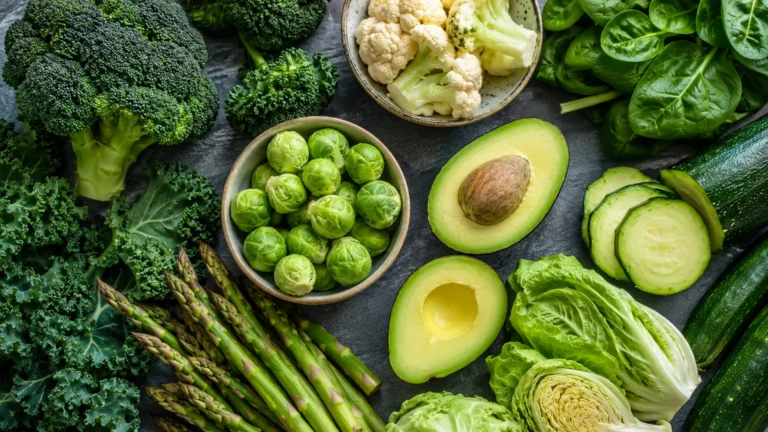
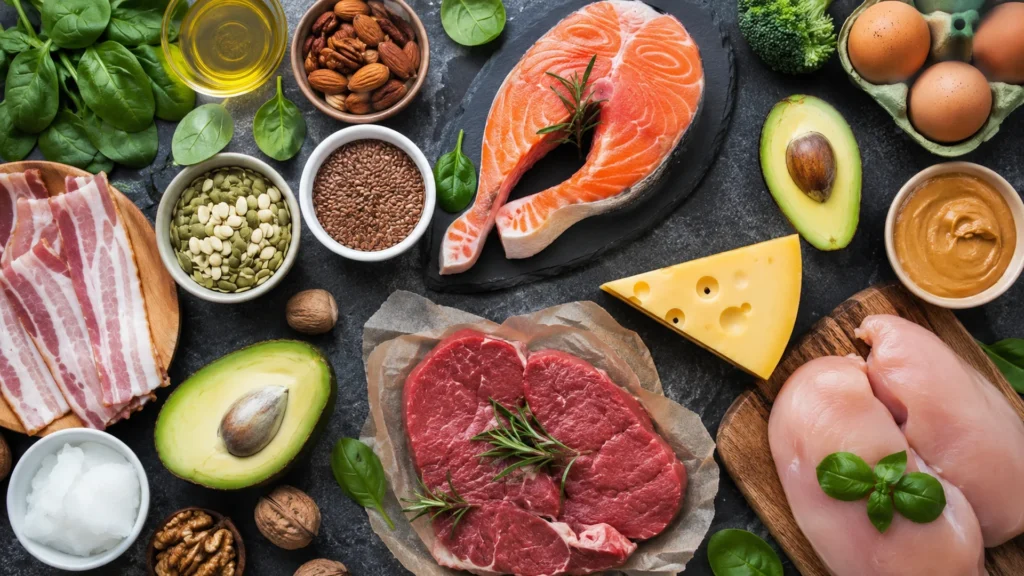
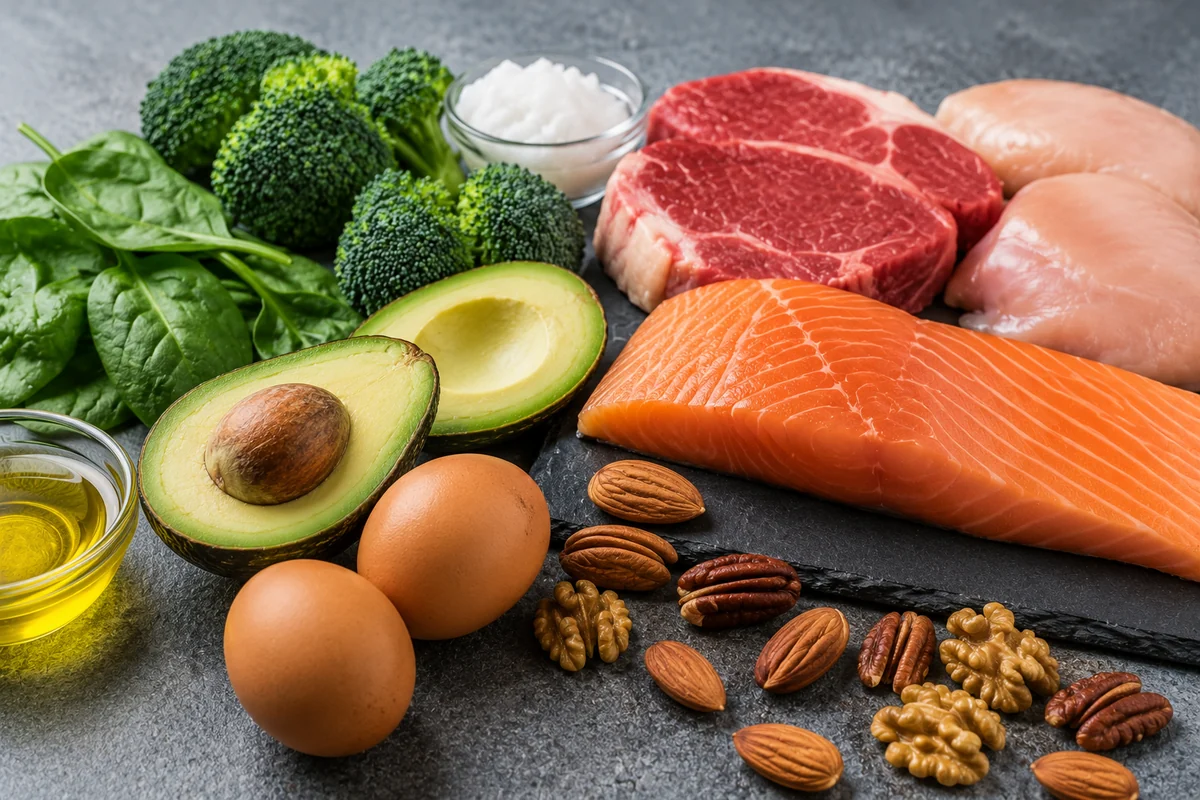
Build meals from whole foods that are naturally low in carbs and generous in fat. Proteins include eggs, chicken, beef, pork, lamb, and fatty fish like salmon and sardines. Fats come from olive oil, butter, avocado, coconut oil, and the fat that comes attached to meat. Full-fat dairy works well, including cheese, heavy cream, and plain Greek yogurt in small amounts. Nuts and seeds such as almonds, pecans, walnuts, macadamias, chia, and flax add fat and fiber. Round it out with low-carb vegetables, mostly the ones that grow above ground.
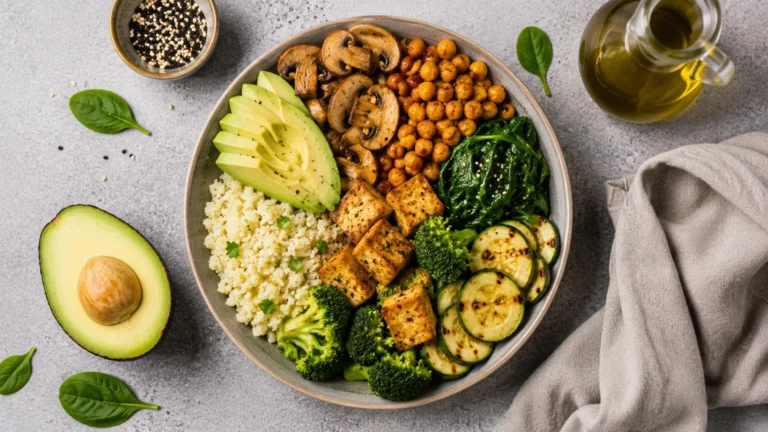
A reliable keto plate is a protein, one or two low-carb vegetables, and a clear source of fat. A piece of pan-fried salmon with sauteed spinach and butter hits every macro without a single special product. The simpler your meals, the easier it is to stay under your carb ceiling.
Foods to Avoid
The foods that break keto are the obvious starches and sugars plus a few hidden ones. Cut grains and grain products: bread, pasta, rice, oats, and most breakfast cereal. Cut sugar in all its forms, including soda, juice, candy, and desserts. Skip starchy and root vegetables like potatoes, sweet potatoes, corn, and peas. Most fruit is too high in sugar, with berries in small portions being the main exception. Beans and lentils are surprisingly carb-dense, so they are out on strict keto. Watch low-fat and diet products, which often swap fat for added sugar, and read labels on sauces and dressings, where sugar hides constantly.
Types of Keto Diets
There is more than one way to run keto, and knowing the variants helps you pick what fits your life. The standard ketogenic diet is the one most people mean: consistently very low carb, high fat, moderate protein, every day. It is the most studied and the simplest to follow, and it is where every beginner should start. The high-protein ketogenic diet nudges protein up toward thirty percent of calories with a bit less fat, which suits people who lift heavily or struggle with hunger, and it still keeps you in ketosis at normal intakes.
The targeted ketogenic diet adds a small amount of fast-digesting carbs right around workouts to fuel hard training, then returns to strict keto the rest of the day. The cyclical ketogenic diet alternates several strict keto days with one or two higher-carb refeed days, a pattern some athletes use to restock muscle glycogen. Both targeted and cyclical approaches are advanced, are not well studied, and are easy to get wrong, so save them until standard keto feels automatic. For almost everyone, standard keto is the right and only version worth running.
A Simple Day of Keto Eating
Seeing a real day makes the macros concrete. Breakfast might be three eggs scrambled in butter with half an avocado and a handful of spinach, which lands around two to three grams of net carbs with plenty of fat. Lunch could be a green salad topped with grilled chicken, olive oil and vinegar, and shredded cheese, roughly four grams of net carbs. A snack of a small handful of macadamia nuts or some cheese carries almost no carbs. Dinner might be a fatty cut of steak or salmon with roasted broccoli or cauliflower finished in butter, around five to six grams of net carbs. That whole day sits comfortably under twenty grams of net carbs while delivering enough fat and protein to feel full, which is exactly the pattern keto runs on.
The point is that you do not need exotic ingredients or branded products. Eggs, meat, fish, leafy greens, above-ground vegetables, oils, butter, cheese, nuts, and avocado cover an enormous range of meals. Keep a few of those on hand at all times and you will never be stuck without something to eat that fits your day.
How to Reach Ketosis Faster
If you want to reach ketosis quickly, start at the low end of the carb range, around twenty grams of net carbs a day, and hold it there for the first week. Cut all obvious sugar and grains on day one rather than tapering, because a clean break gets you into ketosis sooner. Keep protein moderate and lean into fat so your body has a clear fuel to burn. Light activity, even daily walking, burns through stored glucose and speeds the switch. Some people use a blood ketone meter or urine strips to confirm they are in ketosis, which can be motivating in the first couple of weeks even though it is not required.
Tracking helps enormously at the start. Log everything you eat for the first two weeks using a carb-counting app. It is the fastest way to learn where carbs hide, and it stops the slow creep that keeps people out of ketosis without their knowing why.
The Keto Flu and How to Prevent It
The keto flu is the cluster of symptoms some people feel in the first week: fatigue, headache, irritability, muscle cramps, brain fog, and lightheadedness. It is not a real flu. It happens because cutting carbs drops your insulin, your kidneys flush water, and you lose sodium, potassium, and magnesium along with that fluid. The fix is electrolytes and hydration, not more carbs. Drink plenty of water, salt your food deliberately, and consider sipping broth. Add potassium from avocado and leafy greens, and magnesium from nuts, seeds, or a supplement. Most people who manage electrolytes from day one barely notice the transition. If symptoms hit hard, our guide to the keto flu breaks down the exact electrolyte targets that shut it down.
Benefits and the Evidence Behind Them
The most studied benefit is weight loss. Cutting carbs lowers insulin, reduces appetite for many people, and makes it easier to eat at a calorie deficit without constant hunger. Research generally finds keto produces weight loss at least equal to low-fat diets, and often with better short-term appetite control. Keto also improves blood sugar and insulin sensitivity, which is why people with type 2 diabetes sometimes use it under medical supervision to reduce medication needs. The ketogenic diet was first developed to treat drug-resistant epilepsy, and it still has strong evidence in that setting. Other proposed benefits, from heart markers to cognitive effects, are less settled and depend heavily on the quality of food you eat on the plan. For deeper reading on the cooking side of low-carb eating, America’s Test Kitchen tests low-carb techniques that translate well to keto, and food publications like Bon Appetit are good for adapting recipes to lower-carb swaps.
Risks and Who Should Be Careful
Keto is high in fat, and depending on your food choices it can be high in saturated fat, which raises LDL cholesterol in some people. Building the plan around olive oil, fish, nuts, and avocado rather than only bacon and butter keeps that in check. Early side effects beyond the keto flu can include constipation, which fiber and water usually solve, and in rare cases kidney stones with very long-term strict keto. People on certain diabetes medications, particularly SGLT2 inhibitors, should avoid keto because of a real ketoacidosis risk, and anyone with pancreatic, liver, thyroid, or gallbladder conditions should only do keto with a doctor’s guidance. Pregnant and breastfeeding people should not start keto without medical advice.
It is also worth being honest about sustainability. Keto works only if you can keep doing it, and the strictest version is socially demanding around bread, pasta, and dessert. Many people run keto for a defined stretch to lose weight or reset their relationship with sugar, then move to a slightly higher-carb low-carb pattern they can hold for years. There is nothing wrong with that. The diet is a tool, and the best version is the one you will actually follow without feeling deprived or fighting constant cravings.
Common Beginner Mistakes
The biggest mistake is not eating enough fat. People cut carbs, stay afraid of fat out of old habits, end up under-fueled, and feel terrible. Fat is the engine of this diet, so eat it. The second mistake is ignoring electrolytes, which is what causes most keto flu misery. The third is hidden carbs in sauces, dressings, rubs, and so-called keto products, so read every label. A fourth is too little protein, which costs muscle and leaves you hungry. Finally, many people quit during week one before their body has adapted. Push through the adjustment with good electrolytes and the diet usually gets much easier by the end of the second week.
Eating Out and Staying on Plan
Keto survives restaurants better than most diets because protein and fat are everywhere on a menu. Order a steak, burger, grilled fish, or roast chicken, then swap the starch for a side salad or extra vegetables. Ask for butter or olive oil rather than sweet sauces, and skip the bun, the breading, and the fries. At a burger place, a bunless burger with cheese, bacon, lettuce, and tomato is a clean keto meal. At a steakhouse, almost everything works if you trade the potato for greens. The two traps are hidden sugar in sauces, glazes, and dressings, and the bread basket, so send the bread back and ask how a sauce is made before you pour it on.
Fast food is workable too. Most chains will serve a burger or grilled chicken without the bun, wrapped in lettuce, and a side salad with oil-based dressing keeps the carbs down. Coffee with heavy cream instead of milk and sugar fits fine. The skill you are building is reading any menu and rebuilding a meal around protein, fat, and low-carb vegetables, which becomes second nature within a few weeks.
What to Expect Over the First Month
Week one is the adjustment: an early drop in water weight, possible keto flu if electrolytes lag, and a body still learning to burn fat. By week two most people feel energy stabilize and hunger quiet down. By weeks three and four many report steadier focus, fewer cravings, and a comfortable rhythm of meals that no longer need constant tracking. Fat loss continues at a moderate, sustainable pace once the initial water drop is past. The people who succeed treat keto as a way of eating they can maintain, not a sprint, and they keep their meals simple, whole, and built around foods they actually enjoy.
Frequently Asked Questions
How many carbs can I eat on the keto diet?
Most people stay between twenty and fifty grams of net carbs per day. Beginners who want to reach ketosis quickly start near twenty to thirty grams. Net carbs are total carbohydrate minus fiber. If you are unsure where to set your ceiling, our guide on how many carbs a day on keto walks through finding your personal number.
How long does it take to get into ketosis?
For most people it takes two to four days of staying under twenty to fifty grams of net carbs. Starting at the lower end and adding light activity like daily walking speeds it up. A ketone meter or urine strips can confirm you have reached it.
Will eating too much protein kick me out of ketosis?
At normal intakes, no. Protein at roughly 0.6 to 1.0 grams per pound of goal body weight supports muscle and satiety without blocking ketosis. The fear of protein is overstated for most people; getting too little is the more common problem.
Can I drink alcohol on keto?
Some options fit in moderation. Dry wine and spirits like vodka, gin, and whiskey have minimal carbs when taken straight or with a zero-carb mixer. Beer, sweet cocktails, and liqueurs are high in carbs. Alcohol also slows fat burning while your liver processes it, so it can stall progress even when the carb count is low.
Is the keto flu dangerous?
For most healthy people it is uncomfortable but not dangerous, and it passes within a few days. It is caused by fluid and electrolyte loss, so water plus sodium, potassium, and magnesium usually resolves it. If you have a heart, kidney, or blood pressure condition, talk to your doctor before manipulating electrolytes.
Can I eat fruit on the keto diet?
Most fruit is too high in sugar for strict keto. The practical exceptions are small portions of berries, such as a quarter to half cup of raspberries, blackberries, or strawberries, which are lower in sugar and high in fiber. Avocado and olives, technically fruits, are excellent keto foods because they are mostly fat.