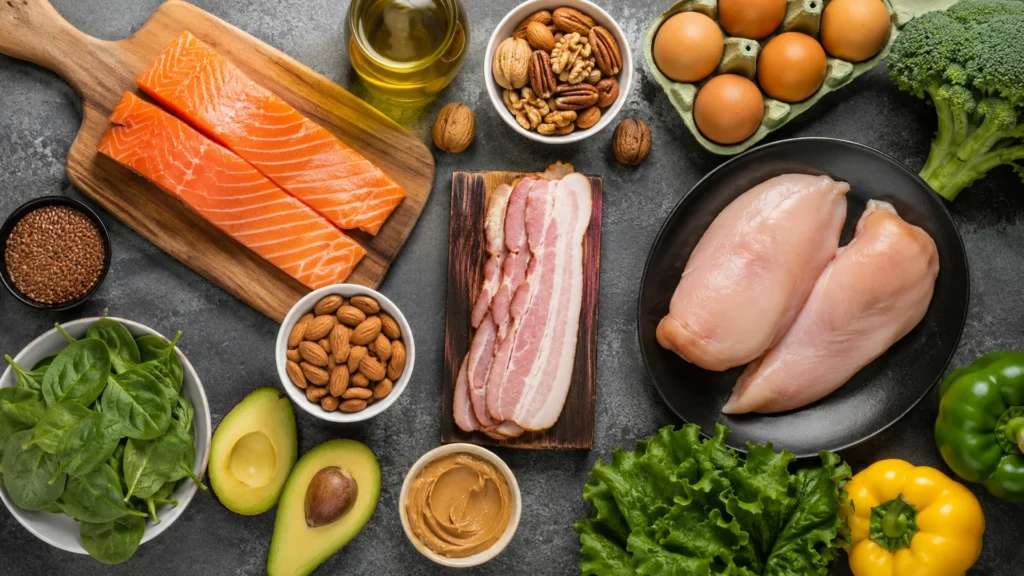
How to start keto diet successfully comes down to two things: getting your carbs low enough to reach ketosis, and managing the transition so the first week does not derail you. Keto is a very low carbohydrate, high fat way of eating that shifts your body from burning sugar to burning fat for fuel. The rules are simple, around twenty to fifty grams of net carbs a day, plenty of fat, and moderate protein, but the difference between a smooth start and a miserable one is in the details: clearing out the carbs, building meals around the right foods, and staying ahead of hydration and electrolytes. Get those right and the first two weeks feel manageable instead of brutal.
This guide walks through exactly how to begin: what keto is and how it works, the macros to aim for, a step-by-step plan to set up your first week, the foods to eat and the ones to drop, how to head off the keto flu, the beginner mistakes that trip most people up, and what to expect as your body adapts. None of this is medical advice, and you should talk to your doctor before making a big dietary change, especially if you take medication or have a health condition, but as a practical roadmap this is everything a beginner needs.
What Is the Keto Diet, in Plain Terms
The ketogenic diet works by drastically cutting carbohydrates so your body runs low on its usual fuel, glucose, and switches to making and burning ketones from fat instead. That metabolic state is called ketosis. To get there and stay there, you keep carbs very low, eat fat as your main energy source, and keep protein moderate. The appeal for many people is steady energy without the blood sugar swings of a high-carb diet, reduced appetite, and weight loss, though individual results vary and keto is not the right fit for everyone. Understanding that the whole diet is built to reach and maintain ketosis is the key, because every food choice below is really a question of whether it keeps you under your carb limit.
The Macros: What to Aim For
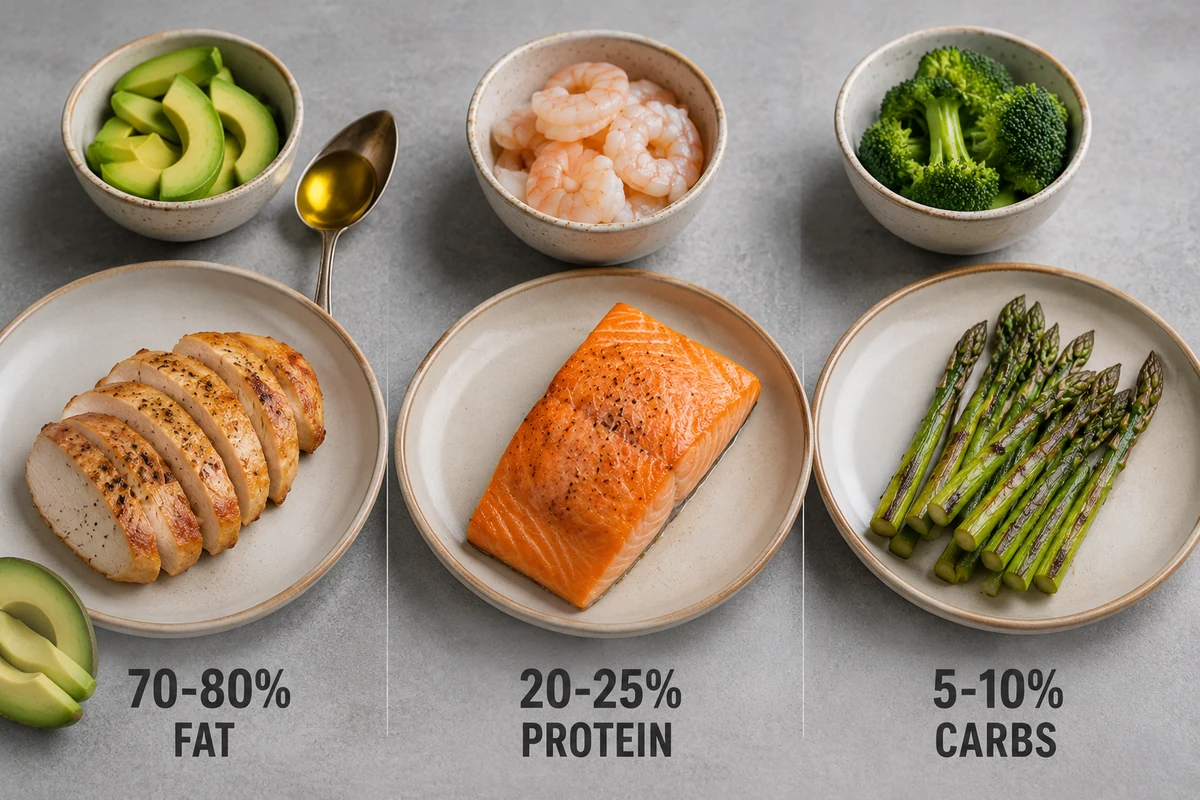
Keto is defined by its macronutrient split, the balance of fat, protein, and carbohydrate. A standard ketogenic plan lands around seventy to seventy-five percent of calories from fat, twenty to twenty-five percent from protein, and only about five percent from carbohydrate. In practical terms, the number that matters most is net carbs, which is total carbohydrate minus fiber, and most beginners aim for twenty to fifty grams of net carbs per day. Starting at the lower end, around twenty to thirty grams, makes reaching ketosis faster and more reliable. Protein should be moderate, enough to preserve muscle and keep you full but not so much that it works against ketosis. Fat fills the rest, which is a mental shift for anyone used to low-fat eating.
| Macronutrient | Share of calories | Role |
|---|---|---|
| Fat | 70-75% | Main fuel source |
| Protein | 20-25% | Muscle and satiety |
| Net carbs | About 5% (20-50 g/day) | Kept low to reach ketosis |
Step by Step: Your First Week on Keto
Step 1: Define your why and your numbers
Start by knowing why you are doing this, whether it is weight loss, steady energy, or another goal, because that reason will carry you through the adjustment period. Then settle on a daily net carb target, twenty to thirty grams to begin, and a rough calorie range for your goal. You do not need to weigh every gram forever, but tracking for the first couple of weeks teaches you where carbs hide.
Step 2: Clear out the carbs
Go through your kitchen and remove or set aside the foods that will sabotage you: bread, pasta, rice, cereal, sugar, candy, soda, and most snack foods. It is far easier to stay on plan when the temptation is not in the cupboard. Replace them with keto staples so there is always something to eat.
Step 3: Build your plate
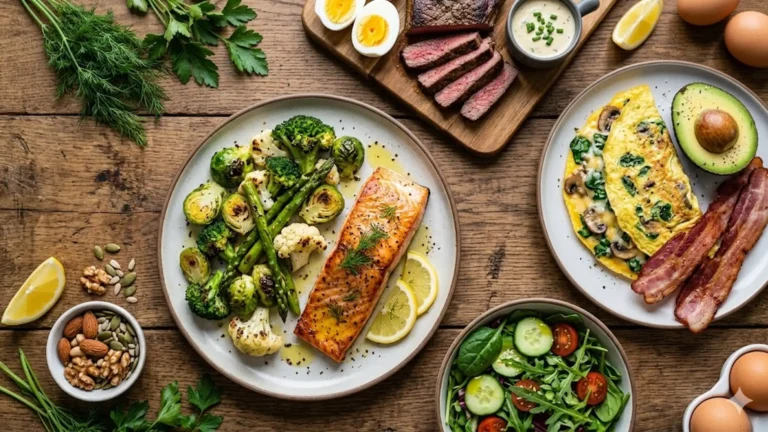
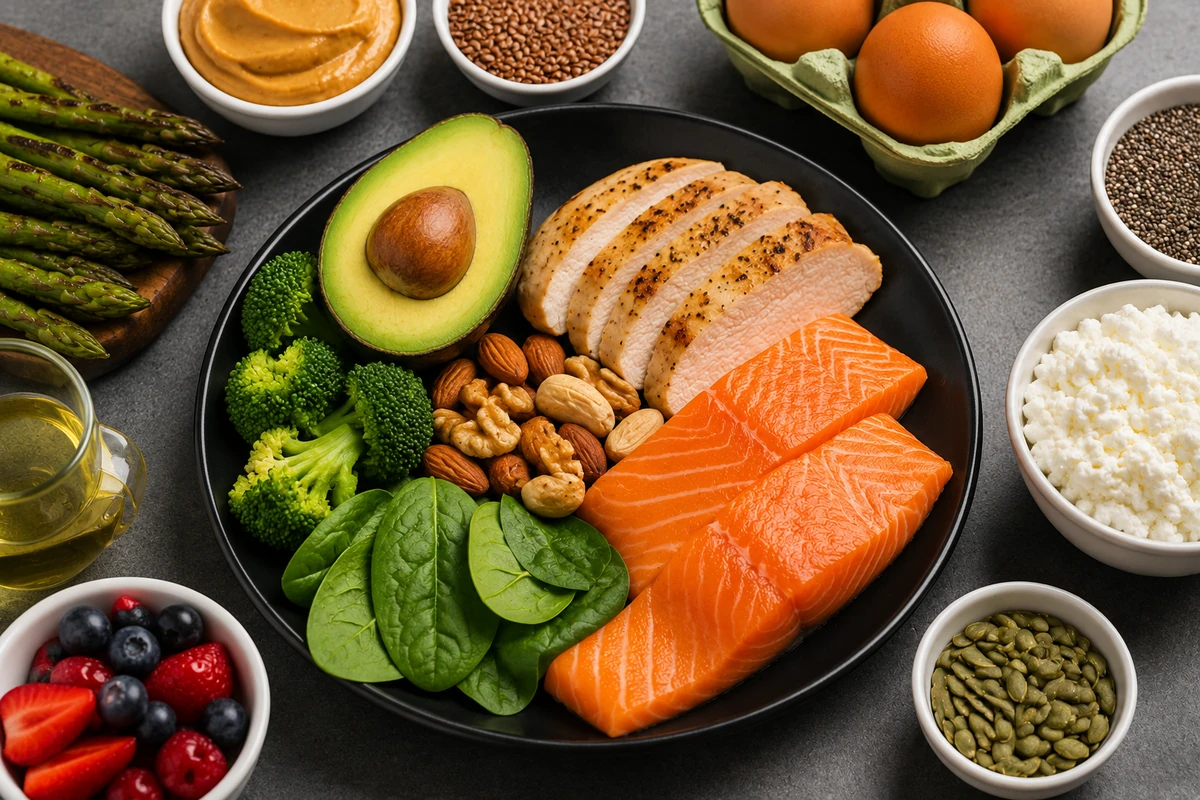
A simple keto meal is a protein, one or two low-carb vegetables, and a source of fat. Pick a protein like eggs, chicken, beef, salmon, or pork; add above-ground vegetables like leafy greens, broccoli, cauliflower, or zucchini; and finish with fat from olive oil, butter, avocado, or cheese. A plate of pan-fried salmon with greens and butter is keto without any special products at all.
Step 4: Plan a few days of meals
Decide on breakfasts, lunches, and dinners for the first few days so you are never caught hungry with nothing to eat, which is when carbs sneak back in. Batch-cooking a protein and keeping easy options on hand removes most of the early friction. Snacks like nuts, cheese, or salt and vinegar wings keep you satisfied between meals.
Step 5: Hydrate and mind your electrolytes
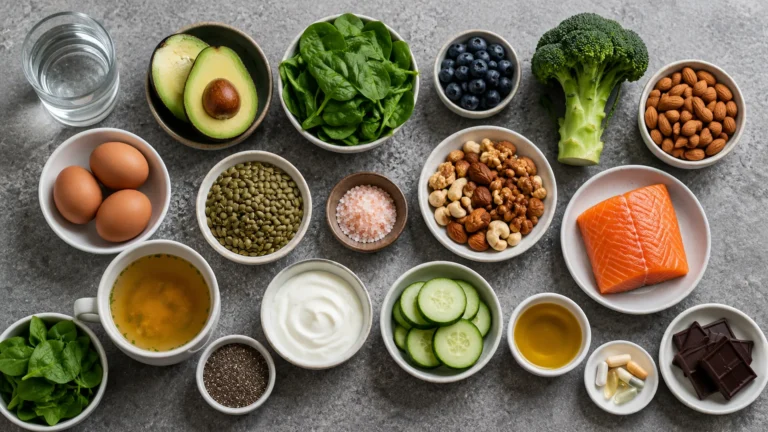
This is the step beginners skip and regret. As you cut carbs, your body sheds water and minerals quickly, which is the main driver of the keto flu. Drink plenty of water and deliberately replace sodium, potassium, and magnesium through salty broths, leafy greens, avocados, and, if needed, a supplement. Staying ahead of electrolytes is the single best thing you can do to feel good in week one.
Foods to Eat and Foods to Avoid
Keto becomes easy once you internalize the two lists. Eat freely from proteins, healthy fats, and low-carb vegetables, and avoid the carb-dense foods that will knock you out of ketosis.
| Eat | Avoid |
|---|---|
| Meat, poultry, fish, eggs | Bread, pasta, rice, cereal |
| Leafy greens and above-ground veg | Sugar, candy, soda, juice |
| Avocado, olive oil, butter | Most fruit, except berries in small amounts |
| Cheese, nuts, seeds | Beans, lentils, and legumes |
| Berries in moderation | Potatoes and starchy root vegetables |
The trickiest categories for beginners are fruit, which is mostly too high in sugar apart from a few berries, and starchy vegetables like potatoes and corn, which feel healthy but are carb bombs on keto. When in doubt, above-ground vegetables are usually low carb and root vegetables usually are not.
The Keto Flu and How to Beat It
In the first several days, many people feel tired, headachy, foggy, or irritable, a cluster of symptoms nicknamed the keto flu. It is not a real flu; it is mostly your body adjusting to burning fat and, more importantly, losing water and electrolytes as carbs drop. The fix is straightforward: drink enough water, salt your food generously, and get extra potassium and magnesium from foods like avocado and leafy greens or a supplement. Easing into keto by lowering carbs over a week or two rather than overnight also softens the transition. The keto flu typically passes within a few days to a week as your body adapts, and staying ahead of hydration and minerals is what keeps it mild.
Common Beginner Mistakes
- Ignoring electrolytes. The number one cause of feeling awful in week one. Salt your food and replace minerals from the start.
- Eating too little fat. Old low-fat habits leave people hungry and miserable. On keto, fat is the fuel, so do not fear it.
- Too much protein. Very high protein can work against ketosis, so keep it moderate rather than piling it on.
- Hidden carbs. Sauces, dressings, and processed foods sneak in sugar and starch. Read labels and count net carbs.
- Not planning. Getting hungry with no keto food ready is when people cave. Keep easy options on hand.
- Expecting instant results. Adaptation takes a couple of weeks. Give it time before judging how you feel.
What to Expect in the First Few Weeks
The early days often bring a quick drop on the scale, which is largely water weight as your body releases stored carbohydrate and its bound water. Some people feel the keto flu for a few days, then a noticeable lift in energy and a drop in appetite as they become fat-adapted. Cravings for sugar and snacks usually fade within the first couple of weeks, which many find is the biggest relief. Fat adaptation, where your body becomes efficient at running on fat, builds over several weeks, so endurance and steady energy tend to improve with time rather than immediately. Patience through the adjustment is what separates people who stick with keto from those who quit in the rough first week. If you cook for variety from the start, a rotation that includes dishes like keto chicken chili keeps the diet from feeling restrictive.
Is Keto Right for You?
Keto suits many people looking for weight loss, appetite control, or steady energy, but it is not universal. It can be harder for very active endurance athletes, and it is not appropriate for everyone, including some people with certain medical conditions or those who are pregnant. Anyone on medication, particularly for diabetes or blood pressure, should speak with a doctor before starting, because the diet can change how those medications need to be dosed. This guide is educational and not a substitute for personalized medical advice. With that caution in mind, for a healthy adult curious about keto, starting carefully and listening to your body is a reasonable way to see whether it works for you. For broader cooking technique that translates to any diet, America’s Test Kitchen and Cook’s Illustrated are reliable references, and low-carb baking overlaps heavily with allergy-aware gluten-free approaches.
Reading Labels and Spotting Hidden Carbs
One skill separates people who reach ketosis quickly from people who wonder why they cannot: reading labels for net carbs. On a nutrition label, find the total carbohydrate, then subtract the fiber to get net carbs, which is the number that counts on keto, since fiber is a carbohydrate your body does not turn into usable glucose. Sugar alcohols can also be partly subtracted, though they vary, so go gently with them. The bigger trap is hidden carbs in foods that seem savory or healthy: ketchup, barbecue sauce, salad dressings, and marinades are often loaded with sugar, and many processed or breaded foods carry far more carbs than you would guess. Even seemingly innocent items like a flavored yogurt or a granola bar can use up your whole daily allowance in one go. The habit to build is checking the label of anything packaged before it goes in your cart, because a few unnoticed sources can quietly keep you out of ketosis no matter how disciplined the rest of your day looks.
How Keto Compares to Other Low-Carb Diets
Keto is the strictest member of the low-carb family, and knowing the difference helps you set expectations. A general low-carb diet might keep carbs anywhere from fifty to a hundred and fifty grams a day, which reduces sugar and starch but does not necessarily produce ketosis. Keto goes further, holding carbs low enough, usually under fifty and often under thirty grams, to push the body into burning ketones as a primary fuel, which is the defining feature. Other approaches like Atkins begin very low and gradually add carbs back, while keto aims to stay in ketosis consistently. The practical takeaway is that keto asks for more precision than a casual low-carb approach, but in return it delivers the specific metabolic state, and the appetite and energy effects, that people are usually after. If full keto feels too strict, a moderate low-carb diet is a gentler on-ramp that still cuts the sugar and refined starch doing the most damage.
Tracking Your Intake and Testing for Ketosis
For the first couple of weeks, a food-tracking app makes keto far easier by counting your net carbs automatically and showing where they come from, which quickly teaches you portion sizes and hidden sources without endless math. You do not have to track forever, but the early education is worth it. Some people also like to confirm they are in ketosis, which you can do with inexpensive urine strips that detect ketones, a breath meter, or a blood ketone meter for the most accurate reading. Testing is optional and not required to succeed, but it can be motivating in the first weeks to see objective proof that the diet is working, and it helps you connect how you feel with whether you are actually in ketosis. Once you know your staple meals and your numbers, most people find they can maintain keto by feel, checking in only when something changes.
Frequently Asked Questions
How do I start the keto diet as a beginner?
Set a daily net carb target of about twenty to thirty grams, clear high-carb foods from your kitchen, and build meals from protein, low-carb vegetables, and fat. Plan a few days of meals ahead, drink plenty of water, and replace electrolytes from the start to avoid the keto flu. Talk to your doctor first if you have any health concerns.
How many carbs can you eat on keto?
Most people stay between twenty and fifty grams of net carbs per day, with twenty to thirty grams being a reliable starting point for reaching ketosis. Net carbs means total carbohydrate minus fiber. Beginning at the lower end makes it easier to get into ketosis in the first week.
How long does it take to get into ketosis?
For most people it takes about two to four days of eating under twenty to thirty grams of net carbs, though it varies with activity, metabolism, and how strictly you keep carbs low. Easing in over a week can take a little longer to reach ketosis but tends to feel gentler on the body.
What can I eat on the keto diet?
Focus on meat, poultry, fish, and eggs; low-carb vegetables like leafy greens, broccoli, and cauliflower; and fats like avocado, olive oil, butter, and cheese. Berries are fine in small amounts. Avoid bread, pasta, rice, sugar, most fruit, legumes, and starchy vegetables like potatoes.
How do you avoid the keto flu?
Stay hydrated, salt your food, and replace potassium and magnesium through foods like avocado and leafy greens or a supplement, since the keto flu is mostly water and electrolyte loss. Lowering carbs gradually over a week or two rather than all at once also helps reduce the symptoms.
Do I have to count calories on keto?
Not strictly, since the appetite-reducing effect of keto leads many people to eat less naturally. Tracking net carbs is more important than counting calories, especially at first. If weight loss stalls, paying closer attention to portions and calories can help.
Bottom Line
Starting keto is mostly about preparation: pick a net carb target around twenty to thirty grams, clear the carbs from your kitchen, and build every meal from protein, low-carb vegetables, and plenty of fat. Stay ahead of hydration and electrolytes to keep the keto flu mild, plan a few days of food so you are never stuck, and give your body a couple of weeks to adapt before judging the results. Check with your doctor if you have any health conditions, ease in at your own pace, and the transition into ketosis becomes far smoother than the horror stories suggest.