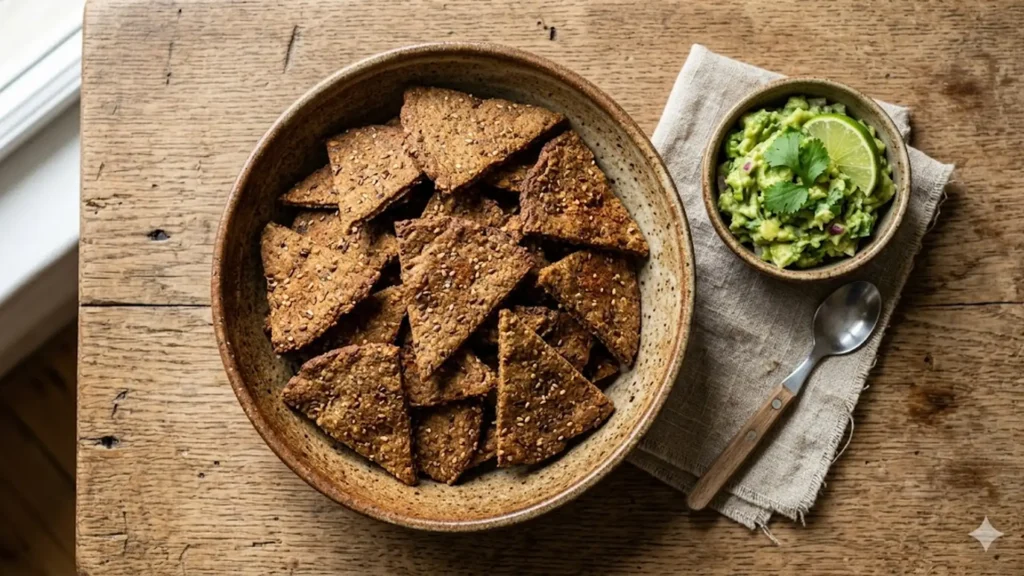
Keto friendly tortilla chips are low carb chips that deliver the salt and crunch of a corn chip while landing around 1 to 3 grams of net carbs per serving instead of the 15 or more grams a handful of regular tortilla chips carries. That gap is the whole problem: a single ounce of standard corn tortilla chips, about ten to twelve chips, runs roughly 15 to 18 grams of net carbs, which can eat your entire daily keto budget in one bowl of nachos. The good news is that there are three solid routes to a keto chip that actually crunches: a homemade dough you bake or fry, store-bought low carb tortillas you cut and crisp, and packaged keto chips off the shelf. This guide covers all three, with the real carb counts, the brands worth buying, the cooking methods compared, and a troubleshooting section for the soft, chewy, or burned chips that trip people up. US measures throughout, and none of this is medical advice.
The reason corn chips are off the table is simple: they are made of corn masa, which is almost pure carbohydrate. There is no trimming that down to keto levels, so every keto chip works by replacing the corn entirely. The best replacements are fat head dough, which is melted mozzarella plus almond flour, and almond-flour-based low carb tortillas. Both give you a real chip with bubbles, snap, and the ability to hold a dip, and once you know the technique, a batch takes about twenty minutes. The chewiness most people complain about comes from one or two fixable mistakes, not from the ingredients themselves.
Why Regular Tortilla Chips Wreck Keto
Put the numbers side by side and the case is obvious. A 1-ounce serving of regular corn tortilla chips carries about 15 to 18 grams of net carbs, and nobody eats one serving with salsa in front of them. A keto chip made from fat head dough lands closer to 1.5 to 2 grams for the same handful, and store-bought keto chips run 2 to 4 grams. On a 25-gram daily ceiling, the regular chips are a non-starter and the keto versions barely register. The point is not that keto chips are healthier in some vague sense, it is that they fit inside a carb budget where corn chips cannot. The texture and salt are close enough that most people stop missing the original within a week.
The Best Homemade Method: Fat Head Dough
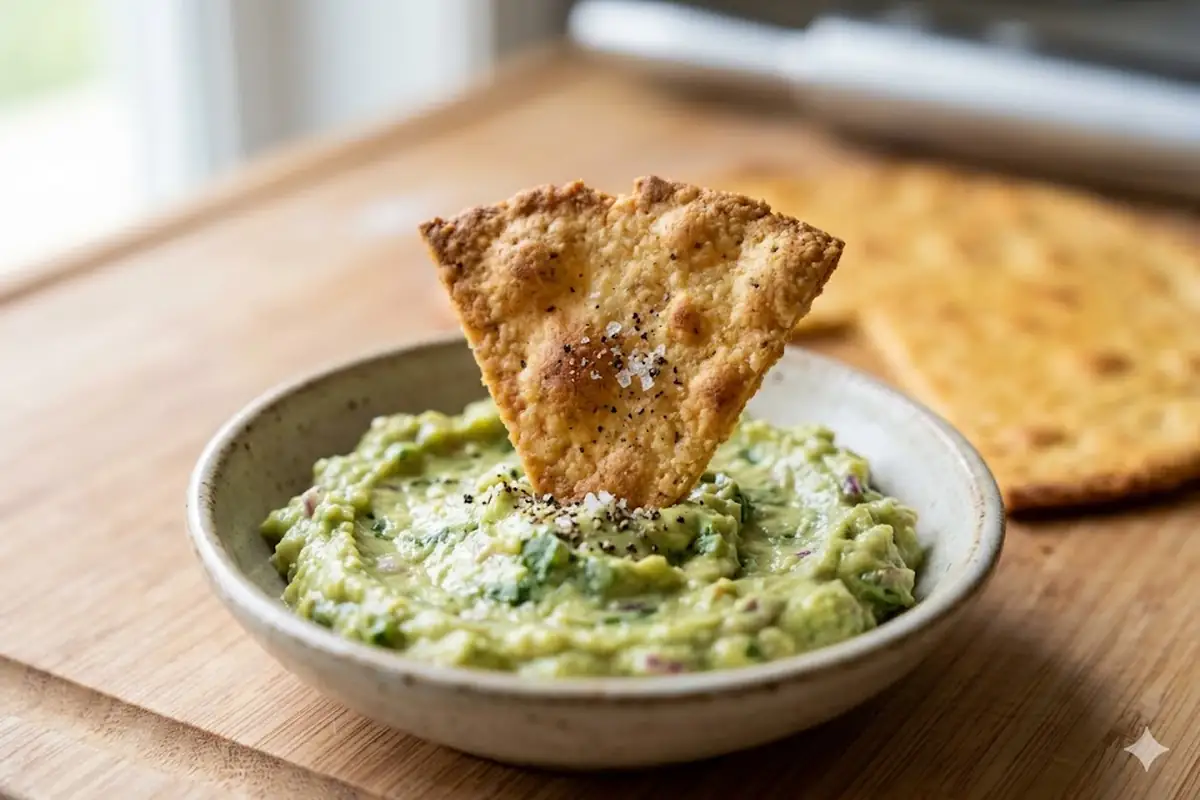
Fat head dough is the gold standard for a keto chip because it crisps and bubbles like a real one. The base is three ingredients: about 2 cups of shredded mozzarella, three-quarters of a cup of almond flour, and 2 tablespoons of psyllium husk powder, plus salt and any seasoning you want. Melt the mozzarella in the microwave for about 90 seconds until it is fully liquid, then mix in the almond flour and psyllium and knead it into a smooth, slightly tacky dough while it is still warm. The psyllium is the part most recipes leave out and it is what gives the chip its crunch rather than a chewy snap, so do not skip it.
Roll the dough thin between two sheets of parchment, aiming for about 1.5 to 2 millimeters, roughly the thickness of a real tortilla chip. Thickness is the single biggest factor in crispness: too thick and the center stays chewy no matter how long you bake. Cut into triangles with a pizza cutter, spread them on a lined sheet without overlapping, and bake at 350 degrees Fahrenheit for 6 to 10 minutes until the edges are golden and the centers look set. They crisp further as they cool, so pull them when they are golden, not dark, and let them rest a few minutes before tasting. A full batch lands around 1.5 to 2 grams of net carbs per serving of five chips. The same fat head dough is the base of many other low carb bakes, and the technique carries over to the cheese-and-almond-flour items in the keto snacks guide.
The Shortcut: Crisp a Low Carb Tortilla
If you do not want to make dough, the fastest route is to buy low carb tortillas and turn them into chips. Brands like Mission Carb Balance, La Banderita Low Carb, Mama Lupe, and Tia Lupita keto tortillas run roughly 3 to 5 grams of net carbs each thanks to added wheat fiber or almond flour. Brush a tortilla lightly with avocado or olive oil, sprinkle with salt, stack a few, and cut into six or eight wedges. Then crisp them by your preferred method below. One tortilla makes a generous single serving of chips, and the carbs come out to about 3 to 5 grams depending on the brand, which is higher than fat head but far below corn.
Read the label even on these, because low carb does not always mean keto. Some low carb tortillas lean on wheat fiber and net out low, while others are higher than they look once you account for digestible starch. Pick the lowest net-carb option your store carries, and treat the chips as a 3-to-5-gram item in your daily count rather than a freebie.
Three Ways to Cook Them: Bake, Air Fry, or Deep Fry
All three methods work for both fat head triangles and cut tortillas, and each has a tradeoff. Baking is the easiest and most hands-off: 350 degrees Fahrenheit on a lined sheet, flipping once, for around 8 to 12 minutes for tortilla wedges or 6 to 10 for fat head, until golden. Give them space, because crowding traps steam and leaves you with soft chips. The air fryer is faster and gets a more even crunch: around 325 degrees Fahrenheit for about 7 minutes, a flip, then another 5 to 7 minutes, working in batches so the basket is not packed. Deep frying gives the most authentic corn-chip texture and the fastest cook, dropping wedges into oil at about 355 degrees Fahrenheit for 2 to 2.5 minutes until golden, then draining on paper towels.
For most home cooks the air fryer is the sweet spot: faster than the oven, crisper than baking, and far less oil and mess than frying. Deep frying is worth it when you want chips that genuinely pass for the real thing for a party, and baking is the move when you are making a big batch and do not want to babysit a fryer. Whatever the method, salt the chips while they are still warm and oily so the salt sticks.
Store-Bought Keto Chips Worth Buying
The keto chip aisle has real options now, and they fall into a few families. Cheese-based crisps, like baked parmesan or cheddar crisps, are near-zero carbs and intensely crunchy, working well with guacamole or a cheese dip. Protein chips, such as the ones built on a protein-and-seed base, typically run 2 to 4 grams of net carbs and come in tortilla-style flavors. Seed and nut crackers fill a similar role. And pork rinds, while not chips in shape, are the best zero-carb crunchy vehicle for dips and deserve a place on this list because they scratch the chip itch completely for 0 grams of net carbs.
The rule for any packaged keto chip is the same as for any keto food: turn it over and read the panel rather than trusting the front of the bag. The word keto on the package is marketing, not a guarantee. Check net carbs, watch for added starches or maltodextrin that quietly add carbs, and favor short ingredient lists. The deeper logic of reading labels and spotting the impostor snacks that look keto but are not is covered in the broader snack rundown, and it applies directly here. For tested technique on getting cheese crisps and fried foods crisp rather than greasy, the test cooks at America’s Test Kitchen have detailed methods that transfer to keto chips cleanly.
Seasoning: Make Them Taste Like the Flavors You Miss

Plain salted chips are fine, but the seasoning is where keto chips can beat the original. Mix your seasoning into the fat head dough or sprinkle it on oiled tortilla wedges before cooking. A nacho cheese flavor comes from nutritional yeast plus paprika and a little garlic powder. A taco or chili-lime profile uses cumin, chili powder, garlic, and a finish of lime salt. Ranch is dried dill, onion powder, garlic powder, and salt. For a sweet option, cinnamon and a little granulated keto sweetener turns the same dough into a churro-style chip for dessert. Because none of these add meaningful carbs, you can flavor freely, which is one of the real advantages of making your own. A useful trick is to toss the chips in seasoning immediately after they come out hot, when a light coat of oil is still on the surface, so the spices cling instead of falling to the bottom of the bowl. For building balanced spice blends from scratch rather than buying premixed packets that often hide sugar and starch, the recipe developers at Bon Appetit publish well-reviewed ratios for taco, ranch, and chili-lime seasonings that you can scale to a batch of chips without adding any carbs.
Troubleshooting: Soft, Chewy, or Burned Chips
This is where homemade keto chips go wrong, and every failure has a clear fix.
Chewy, not crunchy. The dough was too thick, the chips were crowded, or you pulled them too early. Roll to 1.5 to 2 millimeters, leave space on the sheet, and bake until the edges are clearly golden. Remember they firm up as they cool, so judge by color, not by feel in the oven.
Soft again after a few hours. Moisture crept back in. Store them in an airtight container at room temperature, never the fridge, and re-crisp in a hot oven or air fryer for a couple of minutes before serving. Fat head chips keep about a week this way.
Burned edges, raw centers. Almond flour browns fast. Drop the temperature by 25 degrees Fahrenheit and roll more evenly, since thin spots scorch while thick spots stay doughy. An even roll is more important than the exact temperature.
Chips spread or fuse together. The dough was too warm and soft when cut, or the pieces touched. Chill the rolled dough for a few minutes before cutting and leave gaps between triangles.
Greasy chips. Too much oil, or you did not drain fried chips. Use a light brush of oil for baking and air frying, and drain fried chips on paper towels while hot.
Bland fat head chips. Mozzarella is mild, so an unseasoned chip can taste flat. Salt the dough itself, not just the surface, and work in a half teaspoon of garlic or onion powder so the flavor is built in rather than sitting only on the outside. A finish of flaky sea salt while the chips are still warm fixes most blandness on its own.
How Chips Fit Your Daily Carbs
The math is the part that keeps you in ketosis. Fat head chips at under 2 grams a serving barely move your daily total, so a real bowl with guacamole is genuinely fine on keto. Tortilla-based chips at 3 to 5 grams are still reasonable but worth counting, especially if salsa or a sweet dip adds more. The trap is treating any chip as free and grazing through a whole batch while watching a game, because even at 2 grams a serving, four servings is 8 grams you did not budget. Portion the chips onto a plate rather than eating from the tray, count them against your daily ceiling, and they cause no trouble. For where a snack like this fits across a full day of eating, the breakdown of meals and portions in the keto dinner ideas guide shows how to leave room for chips alongside a real meal.
Bottom Line
Keto friendly tortilla chips solve the one snack keto seems to take away, and you have three good routes. Make fat head chips for the lowest carbs and the best crunch, cut and crisp a low carb tortilla when you want speed, or buy packaged cheese crisps, protein chips, or pork rinds when you want zero effort. Roll homemade dough thin, give the chips space, salt them warm, and judge doneness by color so they crisp as they cool. Read the label on anything packaged, because keto on the front of the bag means nothing without the net carbs on the back. Count the chips against your daily budget rather than treating a bowl as free, and a crunchy, salty chip with salsa or guacamole becomes a normal part of eating keto rather than the thing you gave up.
FAQ
Are there keto friendly tortilla chips?
Yes. Homemade fat head chips made from mozzarella and almond flour run about 1.5 to 2 grams of net carbs per serving, cut-and-baked low carb tortillas land at 3 to 5 grams, and packaged keto chips like cheese crisps and protein chips run 2 to 4 grams. Regular corn chips, at 15 or more grams, are the only version that does not fit.
How many carbs are in keto tortilla chips?
It depends on the base. Fat head chips are the lowest at around 1.5 to 2 grams of net carbs per serving of five chips, low carb tortilla chips run 3 to 5 grams, and store-bought keto chips run 2 to 4 grams. All are far below the 15 to 18 grams in a serving of regular corn tortilla chips.
What can I dip keto chips in?
Guacamole, fresh salsa, sour cream, queso, and cheese dips are all low carb and pair well. Watch jarred salsas and sweet dips for added sugar, and skip bean dips, which carry significant carbs. Guacamole is the best match because it adds healthy fat on top of the chip.
Why are my homemade keto chips chewy?
Almost always because the dough was rolled too thick, the chips were crowded on the pan, or they came out of the oven too soon. Roll to about 1.5 to 2 millimeters, leave space between pieces, and bake until the edges are clearly golden, since the chips crisp further as they cool.
Are pork rinds a good chip substitute on keto?
Yes, pork rinds are the best zero-carb crunchy option and hold dips like guacamole and queso well. They carry 0 grams of net carbs and plenty of crunch, making them the easiest chip replacement when you do not want to make or buy keto chips. Choose plain ones to avoid sugary coatings.
Can I make keto chips in an air fryer?
Yes, and it is often the best method. Brush fat head triangles or cut low carb tortillas with oil, salt them, and air fry at about 325 degrees Fahrenheit for 7 minutes, flip, then cook another 5 to 7 minutes until crisp. Work in batches so the basket is not crowded, which would steam the chips instead of crisping them.