How long to go into keto is usually 2 to 4 days of eating under 20 to 50 grams of net carbs per day, though the honest range runs from 24 hours to well past a week depending on your body. That first number is the one every medical page repeats. The part they skip is what you actually put on your plate while your metabolism flips over, and why you can be technically in ketosis by Wednesday and still feel like a wrung-out dishrag by the following Monday.
This guide splits the two things almost everyone confuses: being in ketosis (fast, measured in days) and being fat-adapted (slow, measured in weeks). It pairs the timeline with a concrete Day 1 to Day 3 meal plan and a grocery list that pushes you over the edge faster. Cleveland Clinic, Harvard Health Publishing, WebMD, and the American Diabetes Association all get cited where the science matters, with real figures, not vibes.
Quick answer: Most people go into ketosis within 2 to 4 days of eating under 20 to 50 grams of carbs per day, though it can take anywhere from 24 hours to over a week. Being in ketosis is not the same as being fat-adapted, which takes roughly 2 to 12 weeks. You speed the switch with fasting, exercise, strict carb limits, and MCT oil. You confirm it with a blood BHB meter. The early scale drop is mostly water, not fat.
How Long to Go Into Keto: The 2-to-4-Day Answer and Its Range
Ketosis typically begins within 2 to 4 days of very low carb intake, but the full range spans 24 hours to more than 7 days depending on the individual. Cleveland Clinic puts the standard window at 2 to 4 days while eating 20 to 50 grams of carbs daily. WebMD lists a slightly tighter figure: ketosis usually kicks in after 3 or 4 days of staying under 50 grams of carbs per day, for healthy people who are not diabetic or pregnant. Both are correct. The spread comes from your starting point.
Why the gap between one day and seven? Your liver holds about 100 grams of glycogen and your muscles hold another 300 to 500 grams. Your body burns through that stored sugar before it seriously reaches for fat.
Someone who trained hard yesterday and skipped breakfast arrives at ketosis quickly. Someone coming off a high-carb baseline, sleeping badly, and eating hidden sugars drags the process out. The number on your test strip is a lagging report of a switch that has been flipping for days.
Body size and activity level also shift the number in ways that rarely get mentioned. A larger person carrying more muscle mass usually stores more glycogen in absolute terms, which can mean an extra day of depletion before ketones show up. Someone who trains daily and arrives already glycogen-depleted from a hard workout schedule tends to cross into ketosis sooner than someone starting from a full glycogen tank. A sedentary person eating the same 30 grams of carbs a day might sit at day 5 or 6 before a strip or meter shows a clear reading. None of this means the diet is not working; it means the clock starts from a different glycogen baseline for every person.

In Ketosis vs Fat-Adapted: Why Day 3 Success Still Feels Awful
Being in ketosis and being fat-adapted are two different milestones, and mixing them up is the single biggest reason beginners quit. Ketosis means your blood shows ketones because you cut carbs; it arrives in days. Fat adaptation means your muscles and brain have rebuilt the machinery to run efficiently on those ketones and fatty acids; it takes roughly 30 days to 12 weeks. You can pass a ketone test on day 3 and still feel foggy, weak, and irritable through week 2, because the second process has barely started.
Harvard Health Publishing notes the body can drift toward ketosis after about 12 hours of fasting. That is the fast lever. Adaptation is the slow one.
- Day 0 to 4: glycogen empties, ketones rise, you enter ketosis.
- Week 1 to 2: keto flu peaks, energy dips, performance drops.
- Week 2 to 12: fat-burning enzymes ramp up, energy stabilizes, cravings fade.
Fat oxidation capacity roughly doubles in the first 3 to 4 weeks, moving from about 0.7 grams per minute toward about 1.5 grams per minute. That climb is why week 6 feels effortless when week 1 felt like punishment. If you judge keto by how you feel on day 5, you are grading the exam before the course is over. A hearty, filling dinner helps here, and a batch of this comforting keto chicken pot pie keeps you satisfied while the adaptation clock runs.
Think of the two milestones as separate contracts with your body. Ketosis is a chemistry test: are your ketone levels elevated, yes or no. Fat adaptation is a training effect: has your body actually built the enzyme pathways to burn that fuel efficiently at rest and during exercise. A runner who has never trained hills can still stand on top of one; that does not mean their legs are conditioned for the climb. The same gap explains why some people report worse gym performance in week 2 of keto than in week 1: they have the ketones on board chemically, but the muscular machinery to use them well has not caught up yet. That machinery is exactly what the 30-day to 12-week window builds.
What to Eat on Day 1 to Day 3 to Go Into Keto Faster
The fastest way to go into keto is to eat almost nothing that spikes insulin in the earliest days, and the cooking pages that dominate this topic never tell you what that plate looks like. Aim for standard keto macros: roughly 70 to 75 percent of calories from fat, 20 to 25 percent from protein, and 5 to 10 percent from carbs, a split Keto-Mojo publishes as the working baseline. Keep total net carbs under the 20-to-50-gram ceiling. Front-load fat and salt, because both blunt the crash that is coming.
Turning that percentage split into real numbers helps more than the ratio alone. You do not need to hit these numbers with surgical precision on day 1, but tracking your intake for the first week trains your eye to spot where hidden carbs are sneaking in, usually from sauces, dressings, or a “healthy” fruit snack that quietly costs more carbs than expected.
Here is a plain three-day template that keeps carbs low and hunger quiet:
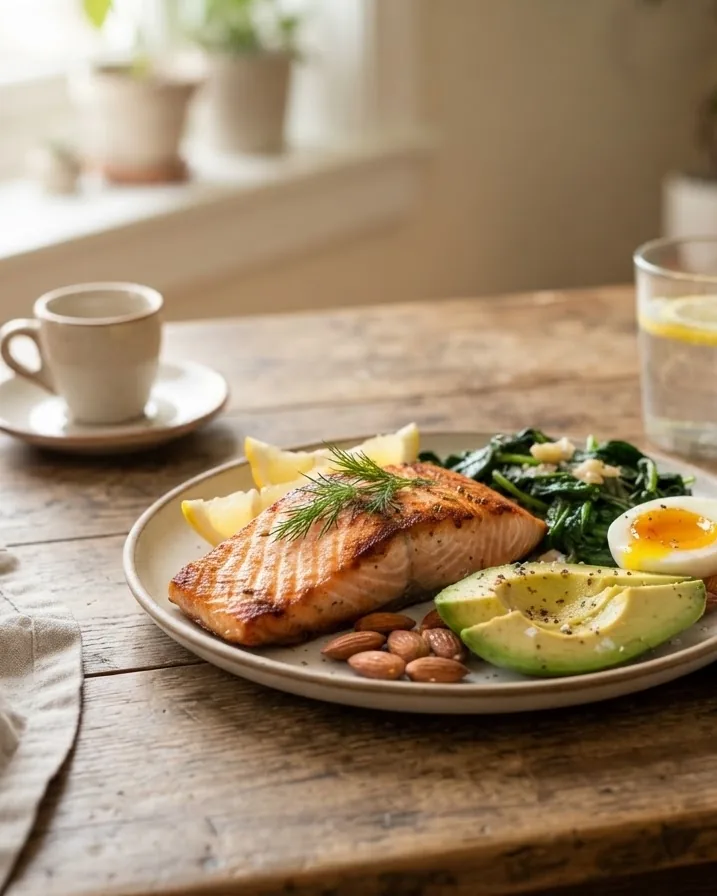
- Day 1: eggs cooked in butter, black coffee; a green salad with olive oil and grilled chicken; salmon with roasted asparagus.
- Day 2: a fat-forward coffee with MCT oil; tuna and avocado; pork with sauteed spinach.
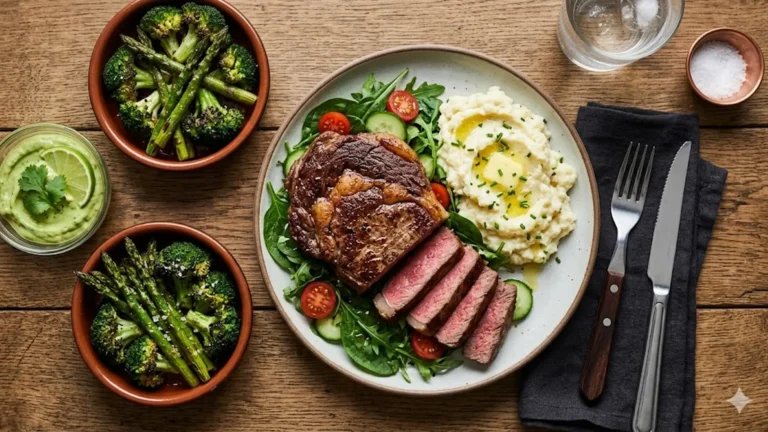
- Day 3: an omelet with cheese; leftover salmon over greens; a slow-cooked beef dish with buttered broccoli.
Protein-heavy anchors make this easier to sustain, and the roundups at high-protein recipes are a useful bench when you get bored of eggs. For a savory side that fits the carb budget, this crunchy keto broccoli salad travels well for lunch. If you want a make-ahead protein snack, the crisp air fryer keto deviled eggs are electrolyte-friendly and hold in the fridge.
Watch the hidden carbs. Ketchup, most salad dressings, cured-meat glazes, and “sugar-free” sauces smuggle in enough grams to stall you. Read labels for the first week; after that your eye calibrates.
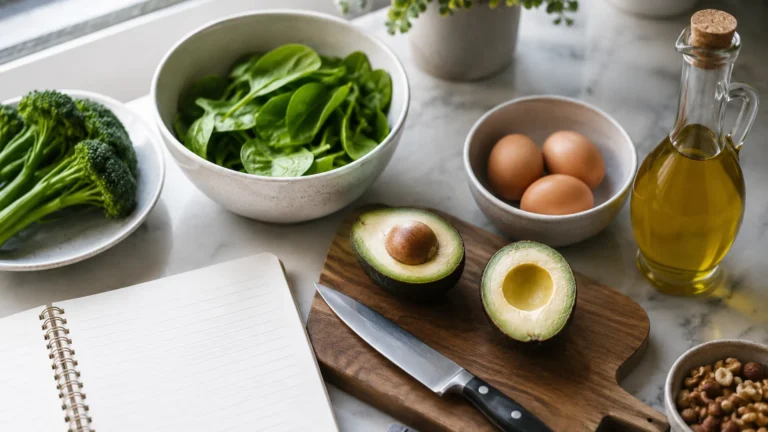
A simple grocery list for the fast-track version of these three days keeps decision fatigue low: eggs, butter, olive oil, avocados, salmon or another fatty fish, chicken thighs, ground beef, leafy greens, broccoli, asparagus, cheese, MCT oil, and a plain electrolyte source like broth or a no-sugar electrolyte powder. Notice what is missing: no bread, no rice, no fruit beyond the occasional berry, and no starchy vegetables like potatoes or corn. Keep the list on your phone for the first shopping trip so day 1 does not stall out because the fridge is empty of anything that fits.
The Keto Flu: Onset, Duration, and the Electrolyte Fix
Keto flu is the cluster of headaches, fatigue, stomach upset, and irritability that hits as your body detoxes from carbs, and it usually starts 2 to 7 days after you begin. Cohort data catalogued in the National Library of Medicine repository (study PMC7082414) puts median symptom resolution at about 4.5 days, with the full range running 3 to 14 days. WebMD lists the same symptom set. Cleveland Clinic frames it as a transient adjustment, not a true illness. The cause is largely electrolyte loss: as glycogen empties, so does the water and sodium bound to it.
Remember that glycogen binds about 3 to 4 grams of water per gram stored. Emptying your glycogen stores in the first few days flushes out a proportional amount of water, plus the minerals riding in it.
The fix is minerals, not toughing it out. Prioritize three:
- Sodium: salt your food generously and sip salted broth.
- Potassium: avocado, leafy greens, salmon.
- Magnesium: nuts, seeds, or a supplement if cramps hit at night.
Broth-based meals do double duty here, delivering sodium and fluid at once. A pot of this creamy Marry Me chicken soup is a low-carb-friendly way to load salt and fat during the worst two days. Keep it in the fridge and reheat as needed.
A rough daily target that many people find workable during the flu window is 3000 to 5000 milligrams of sodium, 1000 milligrams of potassium beyond normal food intake, and 300 to 400 milligrams of magnesium, though anyone with kidney issues or on blood pressure medication should check with a doctor before pushing sodium that high. Headaches that do not respond to salt and water within a day or two are worth flagging to a physician rather than pushing through, since dehydration and low blood pressure can produce similar symptoms and the fix differs.
Common Mistakes That Quietly Delay Ketosis
Most people who fail to hit ketosis on schedule are not failing biology, they are making one of a handful of repeatable mistakes. The first is undercounting protein. Eating steak, cheese, and nuts without limit feels like keto, but a large enough protein load gets partially converted to glucose through a process called gluconeogenesis, which can keep blood sugar and insulin high enough to blunt ketone production.
The second mistake is treating “low carb” and “keto” as the same thing. A sandwich on low-carb bread, a protein bar with 12 grams of net carbs, and a splash of flavored creamer can each seem harmless, but stacked together they blow through the 50-gram ceiling before dinner. The third mistake is skipping electrolytes entirely and then quitting during the keto flu because it feels like the diet itself is making things worse, when the actual cause is a sodium deficit that a pinch of salt would fix.
A fourth, less obvious mistake is chronic under-sleeping. Poor sleep raises cortisol, and elevated cortisol pushes the liver to release more glucose even when you are eating almost none, which can stall ketone readings for days despite a technically clean diet. If your strips or meter refuse to move after five or six days of honest tracking, sleep and stress are worth auditing before you assume the food is the problem.
How to Confirm You Are in Ketosis: Blood vs Breath vs Urine
You confirm ketosis by measuring ketones, and the three methods are not equally trustworthy. A blood meter reads beta-hydroxybutyrate, the BHB ketone, directly from a finger prick and is the most accurate option available to consumers. Breath analyzers measure acetone and correlate reasonably well without the pricking. Urine strips are the cheapest, and the least reliable: they only show excess ketones your kidneys dump, and they grow inaccurate the longer you stay on the diet, because an adapted body excretes fewer of them.
Here is how the three compare on the axes that matter:
- Blood BHB meter: most accurate, costs per strip, best for dialing in a target.
- Breath acetone: reusable device, no consumables, decent daily trend.
- Urine strips: cheapest, fine for the first week, misleading after adaptation.
If you buy one tool, buy a blood meter and test in the morning before eating. Do not chase a specific number obsessively. The presence of measurable ketones plus falling appetite and clearing brain fog is the practical signal that the switch worked. If your strips read zero after a full week of strict eating, the problem is almost always hidden carbs or a portion of protein large enough to convert to glucose.
For context on the numbers themselves, a blood reading of 0.5 to 1.0 millimoles per liter is generally considered light nutritional ketosis, 1.0 to 3.0 is the range most people target for steady fat burning, and readings above 3.0 usually mean you are fasting hard or restricting very aggressively. Anything above roughly 8 to 10 millimoles per liter is a different situation entirely, associated with diabetic ketoacidosis rather than nutritional ketosis, and is a medical emergency rather than a diet milestone. This is one more reason the diabetic safety flag below matters and is not just boilerplate caution.
What Speeds It Up, What Slows It Down, and Getting Back After a Cheat
The levers that decide how long to go into keto are mostly in your control, and stacking a few of them can compress a five-day process into two. Fasting is the strongest: skipping food for 12 hours or more nudges the body toward ketosis on its own, per Harvard Health Publishing, because it forces glycogen down without any food-tracking math. Exercise depletes muscle glycogen fast, so a hard training session on day 1 clears the runway. Strict carb restriction and MCT oil round out the accelerators.
The brakes are just as real, and they are why two people on the same plan land days apart.
- Speeds it up: fasting 12h+, glycogen-depleting exercise, hard carb limits, MCT oil or exogenous ketones.
- Slows it down: hidden carbs, poor sleep, chronic stress, insulin resistance, a high prior-carb baseline.
Slipped up and ate the birthday cake? Re-entering ketosis after leaving it usually takes 1 to 3 days, faster if you fast or train the next morning. One meal does not erase weeks of adaptation the way it erases a beginner’s day-3 progress, which is a quiet advantage of sticking it out to fat-adapted status. The science of ketones extends well beyond food, and the metabolic notes at coffee science are worth a read if caffeine and fasting are part of your morning stack.
A practical way to combine the accelerators without overdoing it: eat your last meal early in the evening, train a fasted workout the next morning, then break the fast with a high-fat, low-carb meal and a spoon of MCT oil. That single sequence stacks fasting, exercise, and fat intake back to back, and is often enough to shave a full day or two off the timeline for someone who has already been eating under the carb ceiling for a day or so. It is not necessary to do this every day; doing it once or twice in the first week is usually enough of a nudge.
Permits, Food Safety, and What Compliance Costs a Keto Kitchen Operator
If you plan to sell keto meals, not just cook them at home, food-safety compliance becomes a hard cost line, and several federal bodies govern it. The Food and Drug Administration (FDA) sets nutrition-labeling rules, so any packaged keto product with a Nutrition Facts panel and a carb claim falls under its authority. The United States Department of Agriculture (USDA) and its Food Safety and Inspection Service (FSIS) govern meat and poultry, which matters when your menu leans on salmon, pork, and chicken the way a keto menu does.
Consumer-facing guidance flows through FoodSafety.gov and nutrition.gov, both of which publish the handling and storage rules an inspector will check against.
What does that cost in practice? It varies by state, but the recurring line items are consistent: a food handler’s certification, a commercial kitchen or cottage-food permit, product-labeling review, and periodic inspection. The Centers for Disease Control and Prevention (CDC) supplies the illness data that justifies those refrigeration and hold-temperature rules. Cold storage discipline is not optional, and a cook’s safety guide to how long homemade soup lasts in the fridge covers the same 4-day fridge logic that governs your batch-cooked keto broths and stews.
The safety caveat that actually saves people is medical, not regulatory. The American Diabetes Association (ADA) flags real risk for anyone on insulin or prone to hypoglycemia: cutting carbs sharply while medicated can drop blood sugar dangerously. Anyone with pancreas, liver, or metabolic conditions, or who is pregnant, should clear a keto plan with a doctor before day 1. The Academy of Nutrition and Dietetics governs the scope of registered dietitians, who are the right professionals to build a medically supervised version.
For an authoritative primer on the diet’s food handling and macros before you scale a menu, the diet and health conditions hub at nutrition.gov is a solid federal starting point. When your operation grows to a mobile setup, the logistics roundups at food trucks map neatly onto a low-carb menu built for the road.
Even at home-cook scale, a few of these rules are worth borrowing. Batch-cooked keto meals lean heavily on fatty proteins and dairy, both of which spoil faster than a plain rice-and-vegetable dish, so treat the 4-day fridge rule as a hard ceiling rather than a guideline, and label containers with the date they were cooked. If you are prepping several days of the Day 1 to Day 3 plan at once, cool everything to refrigerator temperature within two hours of cooking rather than leaving it on the counter, since the same bacterial-growth window that concerns a commercial kitchen inspector applies just as much to a home fridge.
Frequently Asked Questions
Can I get into ketosis in 24 hours?
Yes, but it is the fast end of the range, not the norm. Twenty-four hours is possible if you combine a hard fast of 12 hours or more with glycogen-depleting exercise and near-zero carbs. Harvard Health Publishing notes fasting alone nudges the body toward ketosis after about 12 hours. Most people still land at the typical 2-to-4-day mark instead.
Why am I not in ketosis after a week?
The usual culprit is hidden carbs pushing you over the 20-to-50-gram ceiling, often from sauces, dressings, or “sugar-free” products. Excess protein can also convert to glucose and stall you. Poor sleep, chronic stress, and insulin resistance slow the switch too. Tighten your tracking, test with a blood BHB meter, and cut carbs toward the lower 20-gram end for a few days.
Does fasting speed up getting into keto?
It does, and it is the single strongest lever you control. Fasting for 12 hours or more drains liver glycogen without any food math, which is why Harvard Health Publishing links roughly 12 hours of fasting to the onset of ketosis. Pair an overnight fast with morning exercise and you can compress a multi-day process into a day or two.
How long until I feel good on keto?
Expect the rough patch first. Keto flu can start 2 to 7 days in, with median symptom resolution around 4.5 days and a full range of 3 to 14 days per cohort data in the National Library of Medicine repository. Real energy stability arrives with fat adaptation, which takes about 30 days to 12 weeks as fat oxidation roughly doubles.
Do exogenous ketones get me into ketosis faster?
They raise your blood ketone reading immediately, but that is not the same as your own metabolism switching over. Exogenous ketones can make a meter or strip show ketosis even if your diet has not changed enough to trigger it naturally, which is a common source of confusion. They are more useful as a supplement during the transition, alongside carb restriction, than as a replacement for it.
Is the scale drop in the first week real fat loss?
Mostly not. Since glycogen binds 3 to 4 grams of water per gram stored, emptying your glycogen stores in the first few days releases a proportional amount of water weight. A 2 to 4 pound drop in the first week is common and largely water, not fat. Real fat loss continues at a steadier pace once ketosis and, later, fat adaptation are established.
The finish line worth aiming for is not the day your strip turns purple. It is the week your fat-burning capacity has doubled and food stops running your afternoon. Get into ketosis in a few days, ride out the flu with salt and broth, and give adaptation its full 2 to 12 weeks. A well-stocked kitchen makes all of it easier, so keep a batch of these fluffy keto cheddar biscuits on hand for the moments a craving tries to talk you off the plan.