Keto Kamp is the brand and method built by Ben Azadi, and it gets searched constantly by people who want the actual food rules, not another sales page. That is the gap this guide fills. You will find the carb-adaptation ladder written out week by week, the approved cooking methods that sit at the heart of the system, the exact anti keto-flu drink, and a clear line drawn between Azadi’s approach and the similarly named brain-health protocol it keeps getting confused with. Everything below is grounded in the published method and independent nutrition authorities so you can cook from it and trust the framing.
Quick answer: Keto Kamp is a low-carbohydrate, fat-adaptation method from Ben Azadi built on four pillars, a stepped carb reduction from 125 g down to 50 g per day over four weeks, gentle cooking at or below 320F (160C), and blood-based ketone testing. It emphasizes protein-focused plates, whole-food fats, and clean sweeteners like stevia and monk fruit. It is a brand system, not a clinical prescription, so treat health claims critically and check with a professional before big diet changes.
What Keto Kamp actually is, and who built it
Keto Kamp is a branded ketogenic method created by Ben Azadi, a Functional Diagnostic Nutrition Practitioner (FDN-P) who calls himself The Health Detective. The origin story is specific: Azadi lost 80 pounds (about 36 kg) starting in 2008, then turned that turnaround into a coaching brand, courses, and books. His flagship title Keto Flex, in its second edition, runs as a 45-day program and includes 21 recipes. His later book Metabolic Freedom was published by Hay House and reached the New York Times bestseller list. The audience is real, not hypothetical.
The reach matters because it shapes what shows up when you search. His YouTube channel has over 400,000 subscribers and roughly 25 million views, his TikTok sits above 330,000 followers, and his show was named Keto Podcast of the Year 2022 at the Metabolic Health Summit. These metrics reflect a substantial following that actively looks for the “Keto Kamp” stamp of approval on food and lifestyle products.
What that popularity does not give you is a plate of food. The brand hub sells courses and coaching, so if you came for something to cook tonight, keep reading. For a protein-forward main that fits the method, the juicy grilled pork tenderloin medallions recipe is a solid starting point.

The four pillars and the carb-adaptation ladder
The Keto Kamp system rests on four pillars: Adapt, which builds fat-adaptation; Fast, which layers intermittent fasting on top; Phase, which cycles carbohydrate restriction and periods that pull back anti-nutrients; and a biohacking layer built around glucose and ketone testing. The most concrete, copyable part is the adaptation ladder. Instead of slamming carbohydrates to near zero on day one, the method steps them down across four weeks so the metabolic switch happens with fewer crash symptoms. That gradual descent is the difference between quitting in week one and actually adapting.
Here is the published ladder, week by week:
- Week 1: up to 125 g of carbohydrate per day.
- Week 2: up to 100 g per day.
- Week 3: up to 75 g per day.
- Week 4: up to 50 g per day.
By week four you land near the general ketosis window that independent sources cite: roughly 20 to 50 g of net carbs per day to enter and stay in ketosis. The method also leans protein-focused rather than fat-at-all-costs, which is a meaningful nuance compared with older keto framing. If your tracking indicates you are exceeding these limits, the immediate troubleshooting step is to identify hidden carbs in sauces or dressings, which are common culprits in stalled progress.
Approved cooking methods vs the ones to avoid
The single most useful cooking rule in the Keto Kamp Blueprint is a temperature threshold: food baked at 320F (160C) or below is on the approved list. The methods flagged to avoid read like a barbecue menu, and that is the point. Broiled, barbecued, charred, blackened, deep fried, and microwaved preparations all land on the avoid side. The reasoning tracks with mainstream food chemistry: very high, dry, direct heat drives the formation of advanced glycation end-products and oxidized compounds, especially on animal fats and proteins. Gentle heat keeps fats intact and the plate cleaner.
Translated into a real kitchen, the rule is friendlier than it sounds. It steers you toward slow roasting, braising, poaching, gentle baking, and low sauteing rather than a screaming-hot grill or a fryer. By keeping your oven temperature at 160C (320F) or lower, you significantly reduce the production of acrylamides and heat-induced toxic byproducts. This approach turns kitchen time into a form of nutrient preservation.
| Approved | Avoid |
|---|---|
| Baked at 320F (160C) or below | Broiled, barbecued |
| Braised, poached | Charred, blackened |
| Gentle low sauteing | Deep fried, microwaved |
If you want a crisp finish without hitting the fryer, look at how other cooks manage texture at controlled heat, like these crispy air fryer pasta chips for the technique, and adapt the principle to keto ingredients. For a low-heat crowd-pleaser, the creamy spinach artichoke dip recipe bakes gently and fits the plate.
Foods, fats, and clean sweeteners on the plate
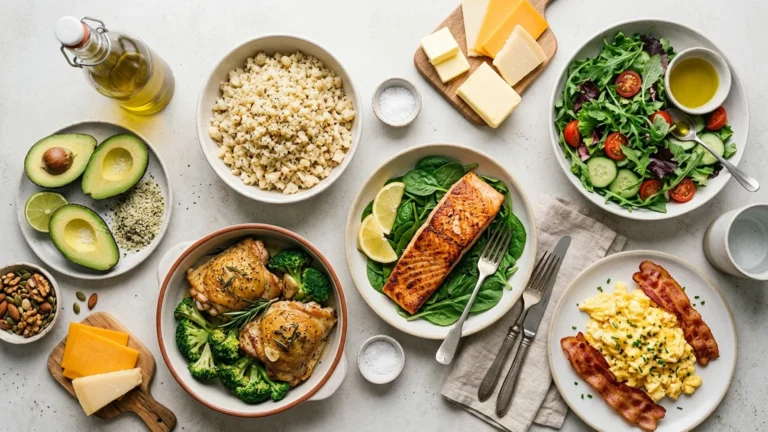
Keto Kamp builds plates around whole-food fats and protein while keeping sugar substitutes tight. The method names two sweeteners as approved: pure stevia and monk fruit. Everything else, especially refined sugars and most sugar alcohols, sits outside the plan. On the fat side, the daily add-ins are specific rather than vague: 2 tablespoons of coconut or MCT oil, 2 tablespoons of grass-fed butter or ghee, 2 tablespoons of olive or avocado oil, and 2 teaspoons of sea salt spread across the day. That salt figure is not an afterthought; electrolytes are a core part of feeling normal on low carb.
Fat quality is where this method earns its keep. Whole-food fats over industrial seed oils, and salt treated as a tool rather than a villain. When using MCT oil, start with one teaspoon to test digestive tolerance, as it can cause gastric distress if introduced too quickly in the recommended two-tablespoon dose.
- Fats to build on: coconut and MCT oil, grass-fed butter and ghee, olive and avocado oil.
- Sweeteners allowed: pure stevia, monk fruit.
- Salt: around 2 teaspoons of sea salt daily to hold electrolytes.
For hard numbers on any ingredient, USDA FoodData Central is the reference for macros, and you can pull net carbs, fat, and protein per gram straight from its database at USDA FoodData Central. For dinner inspiration that matches this fat-and-protein logic, the zesty Greek salmon salad leans on olive oil and fish rather than sugar.
The Keto Kocktail and beating the keto flu
The keto flu, that first-week fog of headaches and fatigue, is mostly an electrolyte and fluid problem as the body dumps water and sodium during early adaptation. Keto Kamp answers it with a named drink, the Keto Kocktail, and the recipe is precise: 16 oz of water (about 473 ml), 1 teaspoon of sea salt, 1 teaspoon of cream of tartar, and 1 tablespoon of apple cider vinegar. The cream of tartar supplies potassium, the sea salt supplies sodium, and the water carries it all in. It is a cheap, fast intervention for the exact deficit that early keto creates.
Drink it when symptoms hit, not on a rigid schedule. Pair it with the daily salt target above and most people move through the rough patch faster. Note that cream of tartar contains significant potassium; individuals with kidney issues or those taking medication that affects potassium levels must clear this drink with a doctor first.
Coffee often anchors the morning routine on this plan, and the extraction and roast choices genuinely change how a cup lands; the write-ups on coffee science are worth a read before you build a bulletproof-style drink. If you want a savory anchor for a low-carb spread, the creamy buffalo chicken dip holds up without added sugar.

Keto Kamp vs KetoFLEX 12/3: clearing up the confusion
Two brand names get blended together constantly, and untangling them saves you from following the wrong rules. Keto Kamp and Keto Flex belong to Ben Azadi. KetoFLEX 12/3 is a completely separate protocol from Dr. Dale Bredesen and Apollo Health, aimed at brain health and cognitive decline, not weight-focused fat adaptation. Same syllables, different authors, different targets. If you see grain limits and a strict fasting clock attributed to Azadi, someone crossed the wires.
The numbers make the split obvious. Bredesen’s KetoFLEX 12/3 defines a daily fast of at least 12 hours and at least 3 hours before bed, and it limits grains to under 50 g per day. Those figures belong to Bredesen, not to Keto Kamp.
- Keto Kamp / Keto Flex (Ben Azadi): four pillars, carb ladder from 125 g down to 50 g per day, cook at or below 160C, protein-focused.
- KetoFLEX 12/3 (Dr. Dale Bredesen, Apollo Health): 12-hour daily fast, 3 hours before bed, grains under 50 g per day, brain-health focus.
Keeping the attribution straight is not pedantry. When health claims are involved, knowing who made which claim, and for what outcome, is how you avoid applying a cognitive-health protocol as if it were a weight-loss plan. If you are comparing these two, consider the intent: if the focus is metabolic weight loss, Azadi’s system is the design target; if the goal is cognitive longevity and Alzheimer’s prevention, Bredesen’s clinical research is the appropriate source.
Fasting, meal timing, and testing your numbers
Intermittent fasting is the Fast pillar, and it works alongside the carb ladder rather than replacing it. The general principle across low-carb methods is to compress eating into a window and to stop eating a few hours before sleep so digestion is not competing with rest. Keto Kamp then adds a measurement layer, and this is where it separates from guess-based dieting. Instead of trusting how you feel, you check glucose and ketones directly. Blood testing of ketones is more accurate than urine strips, which fade in reliability once you are adapted and stop spilling ketones into urine.
Testing turns keto from a hopeful diet into a feedback loop. For example, if you find your blood ketones are low despite eating low carb, your specific protein intake might be too high for your metabolic state, or you may be consuming “hidden” carbohydrates. A blood ketone reading of 0.5 to 3.0 mmol/L is often cited as the target range for nutritional ketosis.
- Fasting window: eat within a set window, finish a few hours before bed.
- Net carbs: around 20 to 50 g per day is the general range to reach and hold ketosis.
- Measurement: blood ketone testing beats urine strips for accuracy over time.
For the diabetes and blood-sugar angle, the American Diabetes Association frames carbohydrate and glycemic management, and Virta Health has published clinical research on low-carbohydrate approaches to type 2 diabetes reversal. Named sources like these are the evidence-based counterweight to marketing. Always consult a physician before using blood glucose or ketone metrics to adjust medication dosage.
Real Keto Kamp-style meals you can cook tonight
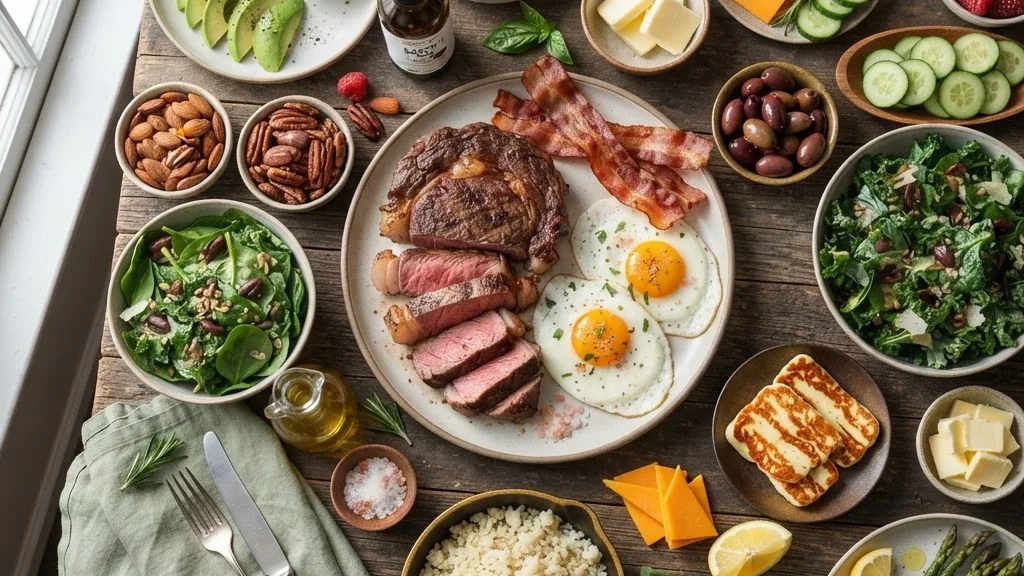
The biggest hole in the brand ecosystem is executable food. Sales pages promise fat-burning recipe packs, yet almost none show a full recipe with macros, net carbs, or a cook temperature you can actually follow. That gap is the whole reason to build plates around the published rules yourself: protein-focused, whole-food fats, sweetened only with stevia or monk fruit, and cooked at or below 320F (160C). Below is a simple framework for structuring meals across a day without breaking the method, using the daily fat add-ins and the salt target already covered.
Think in slots, not in willpower. Fill each slot with protein first, then a whole-food fat, then low-carb vegetables. This protein-first strategy ensures that you meet your basic muscle-maintenance requirements while keeping your carb intake low enough for adaptation.
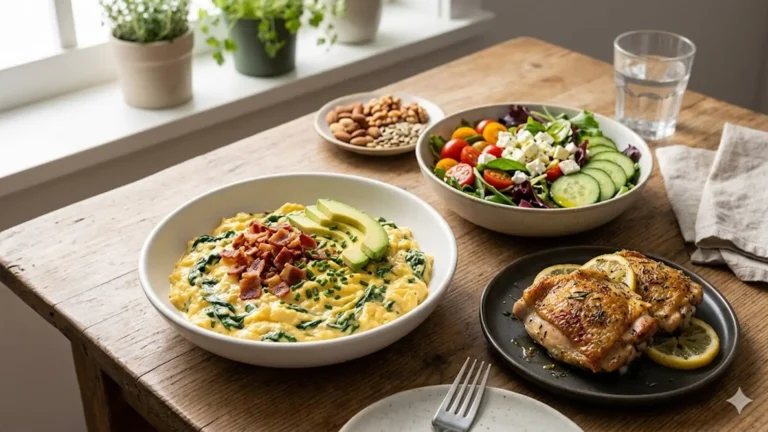
- Breakfast: eggs cooked low and slow in ghee, avocado, coffee with MCT oil.
- Lunch: a fish or chicken salad dressed in olive oil, like a Greek-style plate.
- Dinner: a gently roasted protein at 160C with leafy greens and butter.
- Dessert: full-fat dairy or nut base sweetened with monk fruit or stevia.
A crowd dish that fits the low-heat, low-carb brief is the hot pizza dip party starter, baked gently and served with vegetables instead of bread. For weeknight protein, keep the zesty grilled lime chicken in rotation, cooking it at controlled heat rather than a charred sear to stay inside the approved-methods rule. If you are baking, ensure your internal oven temperature is verified, as many ovens fluctuate significantly from the setting.
High-protein sides and honest safety caveats
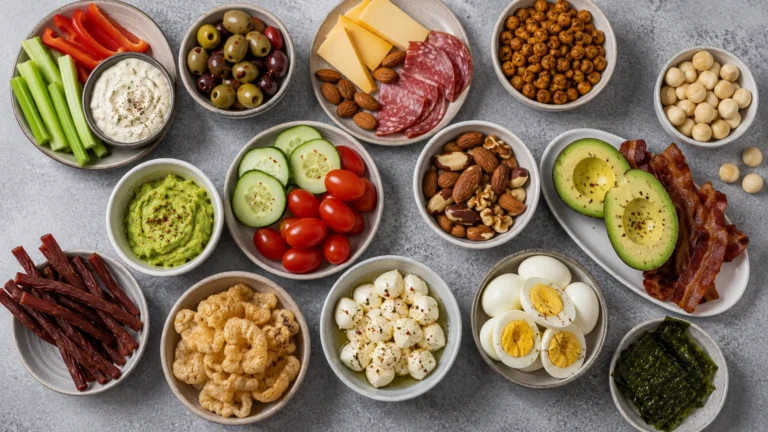
Keto Kamp leans protein-focused, so your side dishes should carry protein too rather than sitting as empty filler. Building meals with protein-dense components keeps you satiated on fewer carbohydrates and supports the fat-adaptation goal of the Adapt pillar. That said, the honest part matters: this is a branded system on a health topic, not a universal prescription, and keto is not right for everyone. People who are pregnant, have kidney disease, take blood-sugar medication, or have a history of disordered eating should talk to a clinician before starting.
Independent nutrition authorities add useful balance here. Harvard T.H. Chan School of Public Health, through its Nutrition Source, documents both the short-term effects and the open questions around long-term ketogenic eating. The Charlie Foundation for Ketogenic Therapies holds the clinical history of the diet, which began as an epilepsy therapy with strict therapeutic ratios. Examine.com publishes evidence syntheses on supplements the brand mentions, including MCT and electrolytes, without the hype. Reading brand claims next to these bodies is how you keep a health decision grounded.
For protein-forward side ideas beyond the keto niche, the roundups of high-protein recipes are a useful bank to adapt. And if a family member eats plant-based, a swap like this crispy eggplant vegan BLT shows how to keep a meal satisfying without meat while you keep your own plate keto. When adapting any recipe, the math is simple: keep the carbohydrates under your daily limit and avoid any cooking method that exceeds 160C.
Frequently asked questions
Is Keto Kamp free?
The core Keto Kamp brand runs on paid products: online courses, one-on-one coaching consults with Ben Azadi, and books such as Keto Flex and Metabolic Freedom. The method’s rules, including the carb ladder and cooking threshold, can be learned and applied without buying anything, but the branded coaching, recipe packs, and structured 45-day program are paid offerings, not a free service.
How many carbs does Keto Kamp allow?
Keto Kamp uses a stepped descent rather than one fixed number. Week 1 caps carbohydrates at 125 g per day, week 2 at 100 g, week 3 at 75 g, and week 4 at 50 g per day. After that you sit near the general ketosis window of roughly 20 to 50 g of net carbs daily, checking your own ketone levels with a blood meter to confirm you are actually in range. If you feel dizzy, ensure you are drinking the Keto Kocktail and consuming enough salt.
Can you eat grains on Keto Kamp?
Grains are effectively out on Keto Kamp because they push carbohydrates well past the plan’s limits. Note the confusion trap: the under 50 g per day grain allowance belongs to Dr. Dale Bredesen’s KetoFLEX 12/3 brain-health protocol, not to Ben Azadi’s method. Keto Kamp builds plates from protein, whole-food fats, and low-carb vegetables instead, with stevia or monk fruit as the only approved sweeteners.
How is Keto Kamp different from classic keto?
Classic keto often means slamming carbs low immediately and prioritizing fat above all. Keto Kamp instead steps carbohydrates down over four weeks, leans protein-focused rather than fat-maximal, insists on gentle cooking at or below 320F (160C), and layers in fasting plus blood ketone testing. The framework is more staged and measurement-driven than the standard high-fat approach, aiming at smoother adaptation and fewer instances of the keto flu.
What is the Keto Kocktail for?
The Keto Kocktail targets the keto flu, the early fatigue and headaches caused by losing sodium and fluid during adaptation. The recipe is 16 oz of water (about 473 ml), 1 teaspoon of sea salt, 1 teaspoon of cream of tartar, and 1 tablespoon of apple cider vinegar. The salt supplies sodium and the cream of tartar supplies potassium, replacing the electrolytes your body sheds in the first week. It is a tool for symptomatic relief during the transition phase.
Should I trust the health claims?
Treat brand claims as marketing until independent evidence backs them. Cross-check against groups like Harvard T.H. Chan School of Public Health, the American Diabetes Association, Virta Health, and Examine.com, which cover benefits, risks, and open questions without a product to sell. Because diet changes affect real health, especially with existing conditions or medications, confirm the plan with a qualified clinician before committing to it. Always prioritize objective, peer-reviewed clinical research over promotional content when assessing the impact of a diet on your long-term health.
Keto is a health topic, and it is not a fit for everyone. If you have an existing medical condition, are on medication, or have any history of disordered eating, treat this as general information and speak with a qualified professional before changing how you eat. Managing your metabolic health requires oversight, especially when implementing significant shifts in macronutrient composition and fasting timing.