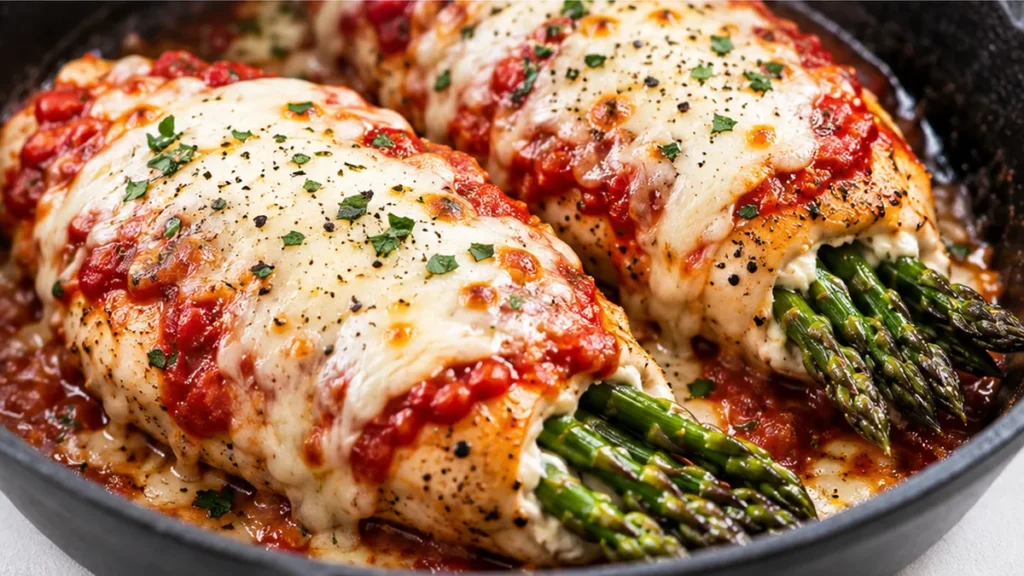
This Keto Asparagus Stuffed Chicken Parmesan recipe offers a delicious, low-carb twist on a classic comfort food, ready in just 30 minutes. It features tender chicken breasts filled with creamy cheese and fresh asparagus, topped with marinara and bubbly mozzarella. Perfect for a quick weeknight meal that feels incredibly indulgent. Unlike traditional Chicken Parmesan, this version is entirely keto and gluten-free, making it accessible for various dietary needs without sacrificing flavor or texture.
Key takeaways
- Use softened cream cheese for a smooth texture.
- Ensure chicken reaches 75°C (165°F) for safe consumption.
- Choose marinara sauce with whole tomatoes and minimal sugar.
- Layer mozzarella evenly for a gooey topping and golden crust.
Keto Chicken Parmesan Recipe
Ingredients
- 3 Chicken Breasts
- 1 teaspoon Garlic paste
- 12 Stalks Asparagus (stalks removed)
- 1/2 cup Cream Cheese
- 1 tablespoon Butter
- 1 teaspoon Olive Oil
- 3/4 cup Marinara Sauce
- 1 cup Mozzarella (shredded)
- Salt and Pepper to taste
Instructions
- Butterfly the chicken breasts by slicing horizontally almost all the way through.
- Season the chicken with salt, pepper, and garlic paste, then spread cream cheese inside.
- Place 4 asparagus stalks on one half of each breast, fold over, and secure with toothpicks.
- Heat butter and olive oil in a skillet over medium-high heat and sear chicken for 6-7 minutes per side.
- Top each chicken breast with marinara sauce and shredded mozzarella, then broil for 5 minutes.
Video
Notes
Understanding the Role of Cream Cheese in Chicken Parmesan
Cream cheese serves as a crucial ingredient in this keto chicken parmesan recipe, providing a rich, creamy texture that complements the chicken and marinara sauce. Its fat content contributes to the dish’s overall richness while keeping it low in carbohydrates, making it suitable for a keto diet. When using cream cheese, it’s essential to soften it before mixing to ensure a smooth consistency. This can be achieved by leaving it at room temperature for about 30 minutes or microwaving it briefly. The ideal temperature for cream cheese to blend well is around 21°C (70°F).
How to Achieve Perfectly Cooked Chicken Breasts
Cooking chicken breasts to perfection is a common challenge. The key is to ensure that the chicken is cooked through without becoming dry. For this recipe, using a meat thermometer is recommended; chicken should reach an internal temperature of 75°C (165°F) to be safe for consumption. Additionally, consider pounding the chicken breasts to an even thickness of about 1.5 cm (0.6 inches) before cooking. This step ensures that they cook evenly and helps prevent the outer portions from drying out while waiting for the center to finish cooking.
Choosing the Right Marinara Sauce for Flavor
The choice of marinara sauce can significantly impact the flavor profile of your chicken parmesan. Opt for a sauce that is low in sugar and high in flavor. Look for brands that list whole tomatoes as the first ingredient and avoid those with added sugars or preservatives. If you prefer homemade, simmer crushed tomatoes with garlic, basil, and a pinch of salt for a fresh, vibrant sauce. A good marinara should have a balance of acidity and sweetness, enhancing the overall dish without overpowering the chicken.
Mastering the Cheese Layering Technique
The layering of cheeses in this recipe is essential for achieving that classic chicken parmesan texture. Start with a base of marinara sauce, followed by a generous layer of mozzarella cheese. Distributing the cheese evenly helps it melt uniformly, creating a gooey, satisfying topping. For added flavor, consider mixing in some grated Parmesan cheese with the mozzarella. This combination not only enhances the taste but also contributes to a beautiful golden-brown crust when baked. Aim for a cheese layer of about 2.5 cm (1 inch) thick for optimal melting.
Understanding the Impact of Ingredient Quality on Chicken Parmesan
The quality of ingredients plays a crucial role in the final taste and texture of chicken parmesan. Fresh, high-quality chicken breasts yield a juicier and more flavorful dish. Opting for organic or free-range chicken can enhance the overall flavor profile. Similarly, the quality of marinara sauce affects the dish significantly; a homemade sauce often has more depth of flavor compared to store-bought varieties. Mozzarella cheese should be fresh and preferably whole milk for optimal melting and creaminess. When using cream cheese, ensure it is at room temperature for easier incorporation into the dish. The freshness of the asparagus also matters; vibrant green stalks indicate freshness and will add a nice crunch to the meal.
Scaling the Recipe for Larger Gatherings
Scaling up your chicken parmesan recipe for larger gatherings is straightforward, but it requires some adjustments in cooking time and equipment. For every additional pound of chicken, increase the marinara sauce and cheese proportionally. However, be mindful of your cooking vessel; if you are using a smaller baking dish, you may need to cook in batches to ensure even cooking. When scaling, remember that larger portions may require increased baking time. Monitor the internal temperature of the chicken, ensuring it reaches 75°C (165°F) for safety. Additionally, consider using a convection oven if available, as it can help maintain even cooking temperatures across larger batches.
Make-Ahead Strategies for Chicken Parmesan
Preparing chicken parmesan in advance can save time on busy weekdays. You can bread and assemble the chicken breasts a day ahead, storing them in the refrigerator before baking. This allows the flavors to meld and the breading to adhere better. Alternatively, fully cooked chicken parmesan can be frozen for later use. To do this, bake the dish until just cooked, then cool it completely before wrapping tightly in foil or an airtight container. When ready to serve, thaw in the refrigerator overnight and reheat in the oven until heated through, which helps maintain the crispiness of the breading.
Pairing and Serving Suggestions for Chicken Parmesan
Chicken parmesan is a versatile dish that pairs well with various sides and beverages. For a classic Italian experience, serve it alongside a simple arugula salad dressed with lemon vinaigrette, which balances the richness of the cheese and sauce. Garlic bread is another popular side, allowing diners to soak up the marinara sauce. When it comes to wine, a medium-bodied red, such as Chianti or Sangiovese, complements the dish beautifully. For a lighter option, consider a crisp white wine like Pinot Grigio. Presentation also matters; serve the chicken parmesan over a bed of pasta or with a side of roasted vegetables to create an appealing plate.
Understanding the Best Cooking Methods for Chicken Parmesan
The choice of cooking method can significantly impact the texture and flavor of chicken parmesan. Baking is often preferred for a healthier option, allowing the chicken to cook evenly while retaining moisture. A temperature of 200°C (400°F) is ideal for baking chicken, typically taking around 20-25 minutes. Alternatively, pan-frying can yield a crispy exterior, but it requires careful attention to prevent burning. When frying, maintaining an oil temperature of about 180°C (350°F) ensures the chicken cooks through without excessive oil absorption. Each method brings a unique texture to the dish, so consider your desired outcome when selecting your approach.
How to Properly Store and Reheat Chicken Parmesan
Storing chicken parmesan correctly is essential for maintaining its flavor and texture. After cooking, allow the dish to cool to room temperature before transferring it to an airtight container. It can be refrigerated for up to three days. When reheating, aim for a temperature of at least 74°C (165°F) to ensure food safety. The oven is the best method for reheating, as it helps restore the crispiness of the chicken. Heat at 180°C (350°F) for about 15-20 minutes. Microwaving is quicker but may result in a soggy texture, so if using this method, cover the dish with a damp paper towel to maintain moisture.
Adapting Chicken Parmesan for Seasonal Ingredients
Seasonality can greatly influence the quality and flavor profile of chicken parmesan. Fresh, in-season ingredients often yield a more vibrant dish. For instance, using ripe tomatoes for marinara in summer enhances the sauce’s natural sweetness. In contrast, winter months may call for canned tomatoes, which are typically harvested at peak ripeness. Additionally, consider incorporating seasonal vegetables such as zucchini or bell peppers for added nutrition and flavor. These adaptations not only make the dish more exciting but also allow for creativity in presentation and taste, ensuring that chicken parmesan remains a delightful meal year-round.
Understanding the Impact of Cooking Method on Chicken Parmesan Texture
The cooking method significantly influences the texture of chicken parmesan. Baking, frying, or air frying can yield different results. For example, frying typically creates a crispier exterior due to the high heat and quick cooking time, which promotes the Maillard reaction, enhancing flavor. In contrast, baking may result in a more tender and moist chicken but can lack that signature crunch. To achieve the perfect balance, consider frying the chicken until golden brown and then finishing it in the oven at 190°C (375°F) for about 15 minutes. This method ensures a crispy crust while keeping the chicken juicy.
Choosing the Right Cheese for Optimal Melting and Flavor
The choice of cheese can dramatically affect the final dish. While mozzarella is a classic choice for its meltability, experimenting with different cheeses such as provolone or parmesan can add unique flavors. Provolone offers a sharper taste, while parmesan can add a nutty depth. For best results, blend cheeses to enhance both flavor and texture. A combination of 70% mozzarella and 30% provolone can provide that perfect stretch and flavor. When using shredded cheese, ensure it’s not too finely shredded, as this can lead to clumping and uneven melting.
Pro tips
- Ensure asparagus stalks are fully removed and trimmed so they don’t pierce the chicken.
- Use toothpicks to securely hold the stuffed chicken breasts together during cooking.
- For extra flavor, add a pinch of Italian seasoning to the cream cheese.
- If you don’t have a broiler, bake at 400°F (200°C) for about 10-12 minutes until cheese is melted and bubbly.
Enjoy this flavor-packed, guilt-free Chicken Parmesan that proves healthy eating can be incredibly delicious and satisfying.
Frequently asked questions
How can I prevent the chicken from drying out?
Pound the chicken breasts to an even thickness before cooking and use a meat thermometer to ensure they reach an internal temperature of 75°C (165°F). This method helps cook the chicken evenly and prevents dryness.
Can I use a different type of cheese?
Yes, while mozzarella is traditional, you can experiment with other cheeses like provolone or gouda. Just keep in mind that each cheese will impart a different flavor and texture to the dish.
What should I serve with chicken parmesan?
Consider serving chicken parmesan with a side of roasted vegetables or a fresh salad to maintain the keto aspect of the meal. Zucchini noodles or cauliflower rice are also great low-carb options.
Can I make this dish ahead of time?
Yes, you can prepare the chicken and sauce ahead of time. Assemble the dish without baking, cover it, and refrigerate for up to 24 hours. Bake it just before serving for the best results.
More from Keto Dinners & Mains →