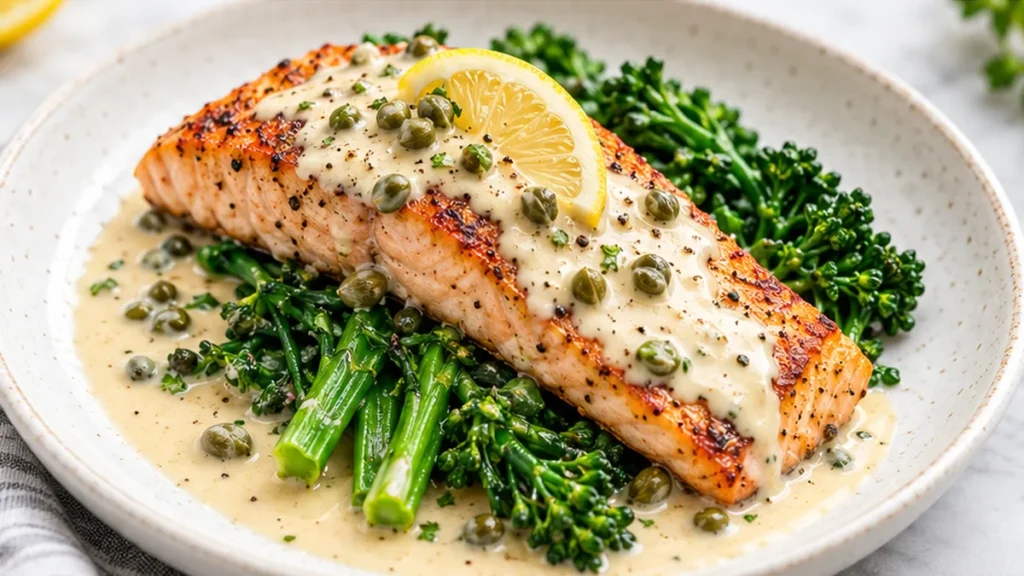
Salmon piccata features a perfectly balanced creamy sauce that complements the delicate fish without overpowering it. This recipe delivers just that: tender, flaky salmon fillets bathed in a luscious, tangy sauce infused with lemon, capers, and a touch of cream. Forget complicated restaurant techniques; this salmon piccata is designed for home cooks, proving that gourmet-quality meals can be achieved in under an hour with straightforward steps and common ingredients.
Key takeaways
- Control the heat to prevent curdling when adding cream.
- Cook salmon fillets for about 4-5 minutes per side for perfect doneness.
- Substituting ingredients can enhance or alter the flavor profile of the dish.
- The combination of lemon and capers is essential for balancing the richness of the sauce.
Creamy Salmon Piccata Recipe
Ingredients
- 1 tablespoon Olive Oil
- 1 tablespoon Butter
- 4 Salmon Fillets (about 1 inch in thickness, boneless)
- 1 teaspoon Salt
- ½ teaspoon Pepper
- ½ teaspoon Garlic (minced)
- ½ cup Chicken Broth
- Juice of 1½ Lemon
- 3 tablespoons Capers (drained)
- ½ cup Heavy Cream
Instructions
- Dry the salmon fillets well with a paper towel and sprinkle each side with salt and pepper.
- Heat olive oil and butter in a 10 or 12 inch skillet and slide in the salmon fillets. Cook for 5 minutes on each side, then remove to a plate.
- In the same pan, add minced garlic and sauté for 30 seconds. Add chicken broth and simmer for 3 minutes until reduced by half. Add lemon juice and capers, mixing well.
- Pour in the heavy cream and simmer on low for 2 minutes. Return the salmon fillets to the pan and spoon the sauce over them. Turn off the flame and serve immediately.
Video
Notes
Understanding the Emulsion in Creamy Salmon Piccata
The key to a successful creamy salmon piccata lies in the emulsion of the sauce. An emulsion is a mixture of two liquids that typically do not mix, such as oil and water. In this recipe, the heavy cream and chicken broth create a rich, velvety sauce when combined with the olive oil and butter used to cook the salmon. The right temperature is crucial; keep the heat moderate to prevent the cream from curdling. Aim for a cooking temperature of around 80-90°C (175-195°F) when adding the cream to ensure a smooth texture.
Common Pitfalls and Their Solutions
Many home cooks encounter issues when preparing salmon piccata. Here are some common problems and their solutions:
- Problem: Sauce curdles.
- Cause: Adding cream at too high a temperature.
- Fix: Lower the heat before adding the cream and stir gently.
- Problem: Salmon is overcooked.
- Cause: Cooking at too high a temperature or for too long.
- Fix: Cook salmon fillets for about 4-5 minutes per side, depending on thickness, at medium heat.
- Problem: Sauce is too thin.
- Cause: Insufficient reduction of chicken broth.
- Fix: Simmer the broth longer before adding cream to thicken.
Ingredient Swaps and Their Effects
While the recipe is designed to deliver a specific flavor profile, certain ingredient substitutions can be made without sacrificing the dish’s integrity:
- Swap: Use white wine instead of chicken broth.
- Effect: Adds acidity and complexity, enhancing the overall flavor.
- Swap: Replace capers with green olives.
- Effect: Provides a similar briny flavor, though less tangy.
- Swap: Substitute half-and-half for heavy cream.
- Effect: Results in a lighter sauce but may be less rich.
Unique Aspects of Salmon Piccata
What sets salmon piccata apart from other piccata dishes is the use of salmon, which has a distinctive flavor and texture compared to the traditional chicken or veal. Salmon’s natural oils contribute to the creaminess of the sauce, making it a delightful variation. Additionally, the combination of lemon juice and capers provides a bright, zesty contrast that complements the richness of the cream and the salmon.
Understanding the Impact of Ingredient Quality on Salmon Piccata
The quality of the ingredients used in salmon piccata can significantly affect the final dish. Fresh salmon fillets are crucial; they should have a firm texture and a bright color, indicating freshness. When using frozen salmon, ensure it is properly thawed and patted dry to avoid excess moisture, which can dilute the sauce. Additionally, the quality of the capers and chicken broth is essential. Opt for high-quality, non-pasteurized capers for a more vibrant flavor. Homemade chicken broth can elevate the dish, providing a richer taste compared to store-bought versions. The freshness of the lemons also plays a pivotal role; using recently juiced lemons enhances the overall brightness of the dish.
Making Salmon Piccata Ahead of Time: Tips and Tricks
Preparing salmon piccata ahead of time can be convenient, especially for gatherings. While the salmon is best cooked fresh, you can prepare the sauce in advance. To do this, sauté the garlic and deglaze with chicken broth and lemon juice, then add the capers. Store the sauce in an airtight container in the refrigerator for up to three days. When ready to serve, reheat the sauce gently before adding the salmon fillets for cooking. This method allows the flavors to meld beautifully. However, it’s important to note that reheating the salmon can lead to a change in texture, so it’s advisable to cook the salmon fresh if possible.
Scaling the Recipe: Adjusting Portions for Larger Gatherings
When scaling the salmon piccata recipe for larger gatherings, it’s essential to maintain the ratios of ingredients for a balanced flavor profile. For every additional salmon fillet, increase the olive oil and butter by a tablespoon each, and adjust the chicken broth and lemon juice proportionately. If doubling the recipe, consider using a larger pan to ensure even cooking and prevent overcrowding, which can cause steaming instead of searing. Additionally, when increasing the number of capers and cream, taste as you go to avoid overpowering the dish. Always remember to adjust cooking times slightly, as larger quantities may require more time to cook through.
Choosing the Right Equipment for Perfect Salmon Piccata
The equipment you use can influence the outcome of salmon piccata. A heavy-bottomed skillet or sauté pan is ideal for achieving a good sear on the salmon, as it distributes heat evenly. Non-stick pans are also a good option, especially if you are concerned about the salmon sticking. Using a fish spatula can help in flipping the salmon fillets without breaking them apart. If you have a food thermometer, use it to check the internal temperature of the salmon, which should reach 63°C (145°F) for optimal doneness. Lastly, having a juicer for the lemons can help extract maximum juice without seeds, ensuring a smooth sauce.
Understanding the Importance of Cooking Temperature for Salmon Piccata
Achieving the perfect doneness for salmon fillets is crucial in salmon piccata. Cooking salmon at a moderate temperature, around 180°C (350°F), allows for even cooking without drying out the fish. Overcooking can lead to a tough texture, while undercooking may pose food safety risks. Aim for an internal temperature of 63°C (145°F) for perfectly cooked salmon. Using a food thermometer can help ensure accuracy, and letting the fillets rest for about 5 minutes after cooking allows the juices to redistribute, enhancing flavor and moisture.
The Role of Capers in Flavor Balance and Pairing
Capers are a defining ingredient in salmon piccata, providing a briny, tangy flavor that complements the rich cream sauce and the freshness of lemon. Their unique taste profile can elevate the dish significantly. When selecting capers, choose high-quality, non-pareil capers for the best flavor. If you prefer a milder taste, rinsing them under cold water can reduce their saltiness. Additionally, consider pairing salmon piccata with sides that balance its richness, such as a light arugula salad or steamed asparagus, enhancing the overall dining experience.
Storage and Reheating Tips for Leftover Salmon Piccata
When storing leftover salmon piccata, allow it to cool completely before placing it in an airtight container. It can be stored in the refrigerator for up to 2 days. However, the creamy sauce may separate upon reheating. To minimize this, gently reheat the dish on low heat in a skillet, adding a splash of chicken broth or cream to help restore the sauce’s consistency. Avoid microwaving, as it can lead to uneven heating and further separation of the sauce. For best results, consume leftovers promptly to enjoy the dish at its peak flavor.
How to Achieve the Perfect Creamy Texture in Salmon Piccata
The key to a successful creamy salmon piccata lies in the proper emulsion of the sauce. Start by ensuring that your heavy cream is at room temperature before adding it to the pan. This helps prevent the cream from curdling when it meets the heat. Aim for a sauce temperature of around 85°C (185°F) when mixing in the cream, as this is hot enough to blend without boiling, which can separate the fat from the liquid. Stir the sauce gently but continuously to incorporate the cream evenly, creating a smooth texture. If the sauce appears too thick, you can add a splash of chicken broth to loosen it. Conversely, if it’s too thin, allow it to simmer for a couple of additional minutes to thicken up. The balance of acidity from the lemon juice and the richness of the cream is crucial; maintaining this balance will enhance the overall flavor and mouthfeel of the dish.
Pairing Salmon Piccata with Side Dishes and Wine
When serving salmon piccata, the right side dishes can elevate the meal. Light and fresh options work best to complement the rich, creamy sauce. Consider serving with a side of sautéed spinach or asparagus, which adds a pop of color and a slight bitterness that balances the creaminess. Roasted or mashed potatoes can also serve as a hearty side, absorbing the delicious sauce. For a grain option, try quinoa or a light couscous salad with herbs and lemon. When it comes to wine pairings, a crisp white wine, such as Sauvignon Blanc or Pinot Grigio, is ideal. These wines have acidity that mirrors the lemon in the dish and will refresh the palate between bites. For those who prefer red, a light-bodied Pinot Noir can also work, provided it is served slightly chilled. The key is to choose wines that enhance rather than overpower the delicate flavors of the salmon piccata.
Pro tips
- Use fresh lemon juice for the best tangy flavor.
- Don’t overcrowd the pan when searing salmon; cook in batches if necessary.
- For a thicker sauce, simmer a little longer, or for a thinner sauce, add a splash more chicken broth.
This creamy salmon piccata is a testament to how simple ingredients can create an elegant dish. Serve it with your favorite pasta or vegetables for a complete meal.
Frequently asked questions
Can I use frozen salmon fillets for this recipe?
Yes, you can use frozen salmon fillets. Just ensure they are fully thawed and patted dry before cooking to achieve a good sear and prevent excess moisture in the sauce.
What side dishes pair well with creamy salmon piccata?
Side dishes that complement creamy salmon piccata include steamed asparagus, garlic mashed potatoes, or a light arugula salad, which can balance the richness of the dish.
How do I store leftovers of salmon piccata?
Store leftovers in an airtight container in the refrigerator for up to 2 days. Reheat gently on the stovetop over low heat to prevent the sauce from separating.
Can I make this dish dairy-free?
To make a dairy-free version, substitute heavy cream with a non-dairy alternative such as coconut cream or cashew cream, and use olive oil instead of butter for cooking.
More from Keto Dinners & Mains →