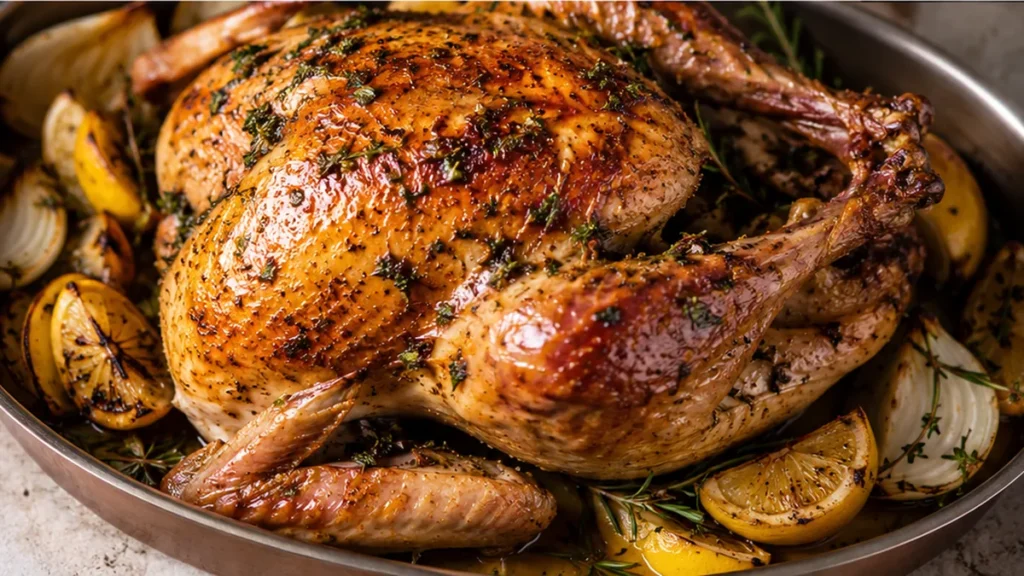
The secret to a truly memorable Thanksgiving turkey lies in two key areas: proper preparation and precise cooking to achieve that coveted crispy skin while keeping the meat incredibly juicy. This Thanksgiving turkey recipe is designed to guide you through each step, ensuring a spectacular result. Preparing a Thanksgiving turkey can seem daunting, but with the right techniques, it becomes a rewarding experience. This recipe focuses on infusing flavor deeply with a fragrant herb butter and utilizing a strategic cooking temperature to achieve perfection. Basting is crucial, but it is equally important not to open the oven too often and lose heat.
Key takeaways
- Pat the turkey skin dry for crispiness.
- Use an emulsion of butter and oil for flavor and moisture.
- Monitor internal temperature to prevent dryness.
- Truss the turkey for even cooking.
Juicy Thanksgiving Turkey: Crispy Skin Secret!
Ingredients
- 1 (12-20) lb turkey
- ½ cup unsalted butter, room temperature
- 2 tablespoons olive oil
- 2 tablespoons lemon juice
- ¼ cup finely chopped fresh herbs (1 tablespoon each of parsley, sage, rosemary, and thyme)
- 6 cloves garlic, minced
- 1 teaspoon salt
- ½ teaspoon ground pepper
- 1 lemon, quartered
- 1 yellow onion, peeled and quartered
Instructions
- Thaw your turkey: allow one day of thawing per 5lb in the fridge on a pan. Remove giblets and neck. Drain liquid, rinse, and pat dry with paper towels.
- Place the turkey on a rack in a roasting pan. Sprinkle the inside and outside generously with salt and pepper.
- Make the herb butter: In a bowl, combine butter, olive oil, lemon juice, herbs (parsley, sage, rosemary, thyme), minced garlic, salt, and pepper. Mix until well combined.
- Carefully separate the skin from the breast and rub 1/4 of the herb butter under the skin. Rub the remaining butter all over the skin, breast, legs, and wings. Tuck wings under to prevent burning.
- Stuff the turkey with the quartered onion and lemon. Tie the legs together with kitchen twine. If prepping ahead, refrigerate at this point.
- If time allows, let the turkey sit at room temperature for an hour before cooking. Preheat oven to 425°F. Adjust oven rack so the turkey sits in the center.
- Cook for 30 minutes at 425°F until the skin is crispy and golden. Reduce heat to 350°F. Tent loosely with foil. Bake for 13 minutes per pound at 350°F, or until the thickest part of the thigh reaches 165°F. Baste frequently with pan liquids.
- Remove from oven and let the turkey rest, loosely covered with foil, for one hour before slicing. This allows the juices to redistribute for a tender, moist bird.
Video
Notes
The technique that makes it
The key to achieving a juicy Thanksgiving turkey with crispy skin lies in the technique of emulsification and proper heat management. The combination of room temperature unsalted butter, olive oil, and lemon juice creates an emulsion that coats the turkey, ensuring even moisture distribution and flavor penetration. The butter not only adds richness but also helps in achieving that coveted crispy skin when exposed to high heat. Additionally, the use of fresh herbs and garlic enhances the flavor profile, while the quartered lemon and onion inside the cavity add aromatic steam during cooking, further contributing to moisture retention.
Troubleshooting
- Problem: Turkey skin is not crispy.
Fix: Ensure that the turkey skin is dry before applying the butter mixture. Pat the skin dry with paper towels and allow it to sit uncovered in the refrigerator for a few hours to dry out further. - Problem: Turkey is dry.
Fix: Avoid overcooking by using a meat thermometer. The turkey is done when the internal temperature reaches 165°F in the thickest part of the breast. Also, consider brining the turkey beforehand to enhance moisture retention. - Problem: Uneven cooking.
Fix: Make sure to truss the turkey properly to ensure even cooking. Also, rotate the turkey halfway through cooking if using a conventional oven to promote even heat distribution. - Problem: Lack of flavor.
Fix: Ensure that the herb and garlic mixture is thoroughly rubbed under the skin and inside the cavity. Adding aromatics like onion and lemon inside the cavity also boosts flavor.
Substitutions
- Unsalted butter: Use ghee or olive oil for a dairy-free option while still achieving a flavorful result.
- Fresh herbs: Dried herbs can be used in a pinch; use about 1 teaspoon each of dried herbs instead of fresh, but fresh will yield a more vibrant flavor.
- Lemon juice: Substitute with apple cider vinegar for a different acidity profile that complements the turkey well.
- Yellow onion: Shallots can be used instead for a milder, sweeter flavor that enhances the overall dish.
Pro tips
- For the most flavorful Thanksgiving turkey, let the herb butter-rubbed bird sit in the fridge overnight before roasting.
- Achieve perfect doneness: a meat thermometer inserted into the thickest part of the thigh (without touching bone) should read 165°F (74°C).
- If your turkey browns too quickly, tent it with foil. This prevents over-browning while allowing the inside to cook through.
This Thanksgiving turkey recipe promises a centerpiece that’s both beautiful and delicious. Share your perfectly roasted bird with loved ones and savor the compliments!
Frequently asked questions
How do I know when the turkey is fully cooked?
The turkey is fully cooked when the internal temperature reaches 165°F in the thickest part of the breast and thigh. Using a meat thermometer is the most reliable way to check for doneness.
Can I prepare the turkey ahead of time?
Yes, you can prepare the turkey a day in advance by applying the butter and herb mixture and letting it sit in the refrigerator overnight. This allows the flavors to penetrate the meat more deeply.
What if I don’t have fresh herbs?
If fresh herbs are unavailable, you can substitute with dried herbs. Use about one teaspoon of dried herbs for every tablespoon of fresh, but keep in mind that fresh herbs provide a more vibrant flavor.
Should I cover the turkey while it cooks?
It is best to start cooking the turkey uncovered to allow the skin to crisp up. You can tent it with foil if it starts to brown too much before the inside is fully cooked.
More from Keto Dinners & Mains →