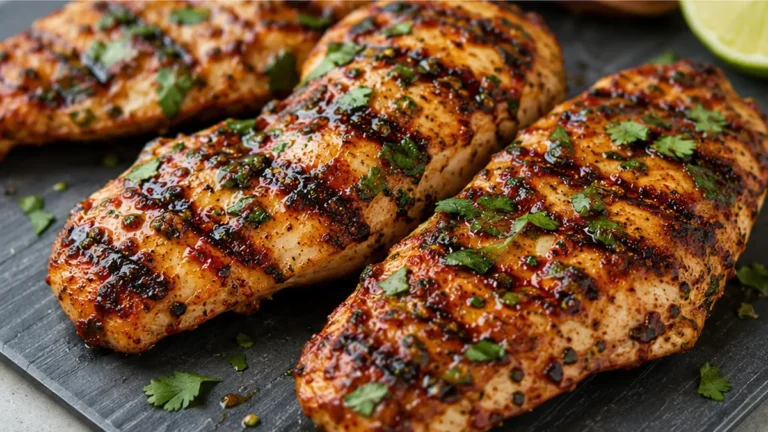
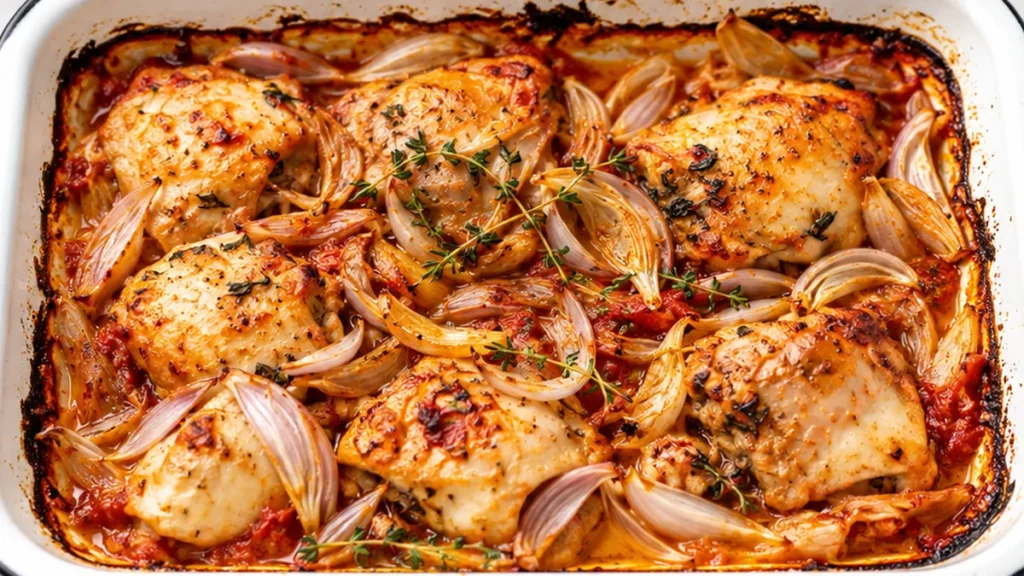
Baked boneless, skinless chicken thighs are the weeknight dinner hero you’ve been waiting for. This recipe is all about maximum flavor with minimum effort. We’re talking tender, juicy chicken thighs coated in a bright, slightly spicy Dijon-lemon glaze that caramelizes beautifully in the oven. Forget dry chicken – these thighs are reliable and ready in about 30 minutes total. Perfect for busy evenings when you crave a delicious, home-cooked meal without the fuss. What makes this baked chicken thighs recipe stand out is the simple yet powerful combination of ingredients. The Dijon mustard provides a tangy kick, balanced by the brightness of lemon juice and the sweetness of tomato paste. Fresh thyme and garlic add aromatic depth, while a touch of red chili pepper offers a gentle warmth. This isn’t just chicken; it’s a flavorful experience that requires just one dish for a complete meal.
Key takeaways
- Marinate chicken thighs for at least 30 minutes to enhance flavor.
- Cook at 200°C (400°F) for a crispy exterior and juicy interior.
- Use a meat thermometer to ensure proper doneness at 74°C (165°F).
- Consider ingredient substitutions to tailor the dish to your taste.
30-Minute Chicken Thighs
Ingredients
- 1 ½ – 1¾ pounds boneless, skinless chicken thighs
- 2 tablespoons Dijon mustard
- 2 tablespoons tomato paste
- 2 tablespoons fresh lemon juice
- 2 tablespoons extra virgin olive oil
- 1 tablespoon chopped fresh thyme
- 2 garlic cloves, finely chopped
- 1 teaspoon kosher salt
- ½ teaspoon freshly ground black pepper
- ½ teaspoon crushed red chili pepper
Instructions
- Preheat your oven to 425°F (220°C). Lightly spray a baking dish with cooking spray.
- Place the chicken thighs in the prepared baking dish in a single layer.
- In a bowl, whisk together Dijon mustard, tomato paste, lemon juice, olive oil, thyme, garlic, salt, pepper, and chili pepper.
- Pour the glaze over the chicken thighs, ensuring each piece is well-coated.
- Bake for 25-30 minutes until the chicken reaches 165°F (74°C).
- Let the chicken rest for 5 minutes before serving.
Video
Notes
The Science of Flavor in Chicken Thighs
Chicken thighs are known for their rich flavor and juicy texture, primarily due to their higher fat content compared to chicken breasts. This fat not only enhances taste but also helps in retaining moisture during cooking. When marinated with ingredients like Dijon mustard and tomato paste, the thighs benefit from a process called flavor infusion, where the acid in the mustard and the umami from the tomato paste penetrate the meat, enhancing its overall flavor profile. The ideal marinating time for chicken thighs is around 30 minutes to 2 hours, allowing the flavors to meld without overpowering the natural taste of the chicken.
Understanding Cooking Techniques for Perfectly Cooked Thighs
Achieving perfectly cooked chicken thighs requires attention to cooking temperature and time. A common mistake is cooking at too high a temperature, which can lead to uneven cooking and dry meat. For chicken thighs, a cooking temperature of 200°C (400°F) is recommended, allowing for a crispy exterior while ensuring the interior reaches a safe temperature of 74°C (165°F). Using a meat thermometer can help ensure doneness without overcooking.
Common Issues and Solutions
- Issue: Chicken thighs are dry.
- Solution: Ensure proper cooking temperature and avoid overcooking. Use a meat thermometer to check for doneness.
- Issue: Lack of flavor.
- Solution: Marinate the thighs for at least 30 minutes, allowing the flavors to penetrate the meat.
- Issue: Uneven cooking.
- Solution: Use a consistent cooking method, such as pan-searing followed by oven roasting, to ensure even heat distribution.
Ingredient Substitutions and Their Effects
- Dijon mustard: Can be replaced with whole grain mustard for a different texture and flavor, adding a bit of crunch.
- Tomato paste: Substitute with a similar amount of ketchup for sweetness, but be aware of the additional sugar content.
- Fresh thyme: Dried thyme can be used in a pinch, though the flavor will be less vibrant. Use about one-third of the amount.
- Crushed red chili pepper: Swap with black pepper for a milder flavor, reducing the heat level significantly.
Unique Characteristics of Chicken Thighs
Unlike other cuts of chicken, chicken thighs have a higher fat content, which contributes to their moistness and flavor. This makes them less prone to drying out during cooking, unlike chicken breasts, which can become tough if overcooked. Additionally, chicken thighs have a more robust flavor that pairs well with bold seasonings and marinades, making them an excellent choice for a variety of cuisines.
Understanding the Impact of Ingredient Quality on Chicken Thighs
The quality of your chicken thighs can significantly influence the final dish. Fresh, high-quality chicken thighs typically have a better texture and flavor compared to those that are frozen or processed. Look for thighs that are pinkish in color with a small amount of marbling, as this fat contributes to moisture and flavor during cooking. Additionally, organic or free-range chicken often has a richer taste due to the animal’s diet and living conditions. When using lower-quality chicken, consider marinating longer to enhance flavor absorption.
Scaling the Recipe for Larger Gatherings
When preparing chicken thighs for a larger group, scaling the recipe can be straightforward, but attention to cooking times and temperatures is crucial. For instance, if doubling the amount of chicken, ensure that the cooking vessel is large enough to accommodate the thighs without overcrowding. This allows for even cooking and proper browning. Adjust the cooking time accordingly, as larger quantities may require additional time in the oven or skillet. Always use a meat thermometer to ensure an internal temperature of 74°C (165°F) is reached for safety.
Make-Ahead Preparation and Storage Techniques
Chicken thighs are excellent candidates for make-ahead meals. You can marinate them a day in advance, allowing flavors to meld and intensify. After cooking, if you have leftovers, store them in an airtight container in the refrigerator for up to four days. For longer storage, consider freezing cooked thighs. Place them in freezer-safe bags, removing as much air as possible to prevent freezer burn. When reheating, do so gently to maintain moisture, ideally in the oven or on the stovetop with a splash of broth.
Equipment Variations and Their Effects on Cooking
The type of equipment used can greatly affect the cooking process of chicken thighs. For instance, using a cast-iron skillet allows for superior heat retention and browning compared to non-stick pans. If using an oven, a convection setting can cook the thighs faster and more evenly due to the circulating air. Always preheat your equipment adequately; for instance, an oven should be at the desired temperature before placing the chicken inside to ensure proper cooking from the start. Understanding these differences can help you achieve the best results based on your available tools.
Understanding the Importance of Marinades for Chicken Thighs
Marinating chicken thighs enhances their flavor and tenderness. A well-balanced marinade, like the one in this recipe, typically includes an acid (lemon juice), oil (olive oil), and seasonings (Dijon mustard, garlic, thyme). The acid helps break down proteins, making the meat more tender. Ideally, chicken thighs should marinate for at least 30 minutes, but longer marination (up to 24 hours) can deepen the flavor significantly. The ratio of acid to oil should be about 1:2 for an effective marinade, ensuring the chicken absorbs the flavors without becoming mushy.
Choosing the Right Cooking Surface for Optimal Browning
The cooking surface you choose can greatly affect the browning of chicken thighs. A heavy-bottomed skillet or cast-iron pan retains heat well, allowing for a more even sear. Preheating the pan is crucial; it should be hot enough that a drop of water sizzles on contact. Aim for a cooking temperature of around 190°C (375°F) for optimal browning without burning. If using a non-stick surface, keep in mind that it may not achieve the same depth of flavor as stainless steel or cast iron due to the lack of fond development.
Pairing Suggestions to Elevate Chicken Thighs
When serving chicken thighs, consider complementary side dishes that enhance the meal’s overall flavor profile. Roasted vegetables, such as Brussels sprouts or carrots, add a natural sweetness that contrasts nicely with the savory chicken. A fresh green salad with a citrus vinaigrette can add brightness and balance. Additionally, grains like quinoa or couscous can absorb the flavors of the chicken’s sauce, tying the dish together. Remember, the goal is to create a harmonious plate where each element enhances the other.
Understanding the Role of Marinades in Flavor Development
Marinades play a crucial role in enhancing the flavor of chicken thighs. The mixture of Dijon mustard, tomato paste, lemon juice, olive oil, thyme, and garlic not only tenderizes the meat but also creates a complex flavor profile. The acid from the lemon juice helps to break down the proteins in the chicken, making it more tender. Additionally, the fat from the olive oil aids in flavor absorption. For optimal marination, allow the chicken to sit in the marinade for at least 30 minutes, but if time permits, marinating for several hours or overnight can significantly deepen the flavors.
Adjusting Cooking Times for Different Thicknesses of Chicken Thighs
The thickness of chicken thighs can vary, which directly impacts cooking times. Thicker thighs may require slightly longer cooking times to ensure they are cooked through without being dry. A general rule of thumb is to cook chicken thighs at 200°C (400°F) for about 20-25 minutes for average-sized pieces. However, for thicker thighs, you may need to extend the cooking time by an additional 5-10 minutes. Always use a meat thermometer to check the internal temperature, ensuring it reaches at least 74°C (165°F) for safe consumption. Adjusting cooking times based on thickness not only ensures food safety but also helps maintain the juicy texture that chicken thighs are known for.
Understanding the Role of Marinades in Flavor Development for Chicken Thighs
Marinades are crucial in enhancing the flavor profile of chicken thighs. The combination of acidic components, such as lemon juice, and flavorful ingredients like Dijon mustard and garlic creates a complex interaction that tenderizes the meat while infusing it with taste. The ideal marinating time for chicken thighs is typically between 30 minutes to 2 hours. This balance ensures that the flavors penetrate without overpowering the natural taste of the chicken. For those looking to experiment, consider adding herbs like rosemary or spices such as cumin for a different flavor profile. The key is to maintain a ratio of 1 part acid to 3 parts oil for optimal results.
Scaling the Recipe for Larger Gatherings
When scaling the recipe for larger gatherings, it’s essential to maintain the same ratios of ingredients to ensure consistent flavor and texture. For instance, if increasing the chicken thighs to 3 pounds, you would use 4 tablespoons each of Dijon mustard, tomato paste, and lemon juice, along with 4 tablespoons of olive oil. Cooking time may vary, especially if using multiple pans or a larger cooking surface. It’s advisable to monitor internal temperature with a meat thermometer, ensuring it reaches 74°C (165°F) for safe consumption. Additionally, consider the cooking method; roasting in the oven may provide more even cooking compared to pan-frying when dealing with larger quantities.
Pro tips
- For maximum flavor, ensure the chicken thighs are evenly coated with the glaze.
- Don’t overcrowd the baking dish; give the chicken space to roast properly and develop a nice crust.
- Internal temperature is key: aim for 165°F (74°C) for perfectly cooked, safe chicken.
- Let the chicken rest for 5 minutes after baking; this allows the juices to redistribute, ensuring maximum tenderness.
Enjoy these incredibly easy and flavorful baked chicken thighs – a guaranteed weeknight win!
Frequently asked questions
How long should I marinate chicken thighs?
Marinating chicken thighs for at least 30 minutes is recommended to allow the flavors to penetrate the meat. For deeper flavor, marinating for up to 2 hours is ideal.
What is the best cooking temperature for chicken thighs?
The best cooking temperature for chicken thighs is 200°C (400°F). This allows the skin to become crispy while ensuring the meat is cooked through and remains juicy.
Can I use chicken breasts instead of thighs for this recipe?
While you can use chicken breasts, they tend to dry out more quickly than thighs. Adjust cooking time and monitor closely to avoid overcooking if you choose to substitute.
What can I substitute for Dijon mustard in the marinade?
You can substitute Dijon mustard with whole grain mustard for a different texture and flavor or use honey mustard for a sweeter taste. Adjust the quantity based on your preference.
More from Keto Dinners & Mains →