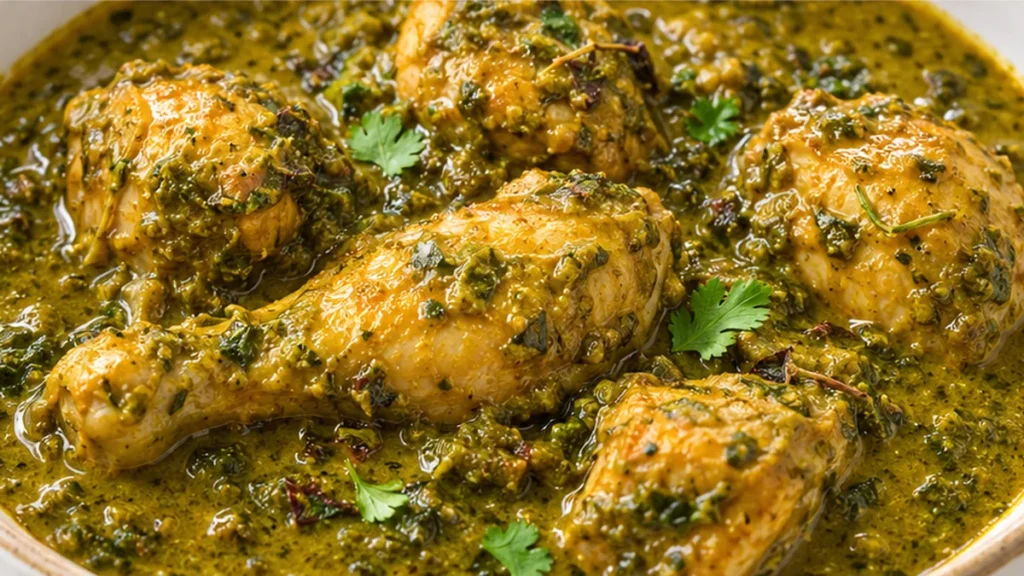
This saag chicken recipe combines chicken with spinach and spices. It’s a straightforward dish that highlights the flavors of its key ingredients.
Key takeaways
- Use fresh spinach for optimal flavor and nutrition.
- Toast spices to enhance their aromas before adding them to the dish.
- Marinate chicken in yogurt to ensure tenderness and flavor infusion.
- Adjust the sauce consistency by blending and simmering as needed.
Saag Chicken Recipe
Ingredients
- 500 Grams Chicken (skinless, bone-in, cut into 2 inch pieces)
- ½ teaspoon Chilli Powder
- 1 teaspoon Kasuri Methi
- ½ teaspoon Salt
- ¼ cup Mustard Oil
- 1 tablespoon Chopped Ginger
- 1 Bunch Spinach
- ¼ cup Coriander Leaves
- 2 Green Chillies
- 1 teaspoon Jeera
Instructions
- Marinate the chicken with spices and 2 tablespoons of mustard oil for 15 minutes.
- Blanch spinach for 1-2 minutes, then blend with coriander and green chillies.
- Heat mustard oil, sauté ginger and jeera for 30 seconds.
- Sear marinated chicken for 5-7 minutes until browned.
- Add spinach puree, cover, and simmer for 15-20 minutes until chicken is tender.
- Adjust salt and serve hot with naan or rice.
Understanding the Role of Spinach in Saag Chicken
The primary ingredient in saag chicken is spinach, which contributes not only to the dish’s signature green color but also to its unique flavor profile. Spinach is rich in vitamins A, C, and K, and its high iron content complements the protein in chicken. The cooking method is crucial; overcooking spinach can lead to a loss of nutrients and a bitter taste. Aim to cook the spinach just until wilted, which usually takes about 2-3 minutes. This preserves its vibrant color and nutritional benefits.
Balancing Spices for Optimal Flavor
In saag chicken, spices play a pivotal role in creating a harmonious flavor profile. Common spices include cumin, coriander, and garam masala. The key is to toast the spices in oil before adding other ingredients; this releases essential oils and enhances their flavors. For instance, toasting cumin seeds for about 30 seconds in hot oil can elevate the dish’s taste significantly. Be cautious with the heat level; too much chili can overpower the dish. Start with a small amount of chili powder and adjust according to your preference.
The Importance of Cooking Technique in Saag Chicken
Cooking technique is vital for achieving the perfect texture in saag chicken. The chicken should be marinated to tenderize the meat and infuse it with flavor. A marinade containing yogurt not only adds flavor but also helps in breaking down the protein, resulting in a more tender chicken. Cook the chicken over medium heat to ensure it cooks evenly without drying out. Using a meat thermometer can help; the internal temperature should reach 75°C (165°F) for safe consumption.
How to Achieve the Right Consistency in the Sauce
The consistency of the saag (spinach sauce) is essential for a satisfying dish. It should be creamy but not overly thick. To achieve this, blend the cooked spinach with a small amount of water or chicken stock until smooth. If the sauce is too thick, add more liquid gradually. Conversely, if it’s too thin, simmer it uncovered to reduce and thicken the sauce. The addition of cream or yogurt at the end can also enhance creaminess and richness without making it too heavy.
How to Properly Store and Reheat Saag Chicken
Proper storage of saag chicken is essential to maintain its flavor and texture. After cooking, allow the dish to cool to room temperature before transferring it to an airtight container. It can be refrigerated for up to 3-4 days. For longer storage, consider freezing it in portions. When reheating, use a stovetop over medium heat, adding a splash of water or broth to prevent drying out. Microwave reheating is also possible but may result in uneven heating. Aim for an internal temperature of 74°C (165°F) when reheating.
Scaling the Recipe for Larger Portions
When scaling the saag chicken recipe for larger gatherings, it’s crucial to adjust the cooking times and equipment accordingly. Doubling or tripling the recipe may require a larger pot or multiple batches, as overcrowding can lead to uneven cooking. Monitor the sauce’s consistency and flavor, as larger quantities may need additional spices or liquids to maintain balance. Be sure to taste as you go, adjusting seasonings to suit the larger batch size.
Understanding Equipment Impact on Cooking Saag Chicken
The type of equipment used can significantly affect the outcome of saag chicken. A heavy-bottomed pot or Dutch oven is ideal for even heat distribution, preventing scorching. Non-stick pans can also be useful for sautéing without sticking but may not develop the same depth of flavor through fond formation. Additionally, using an immersion blender can create a smoother sauce, while traditional blending may yield a chunkier texture. Be mindful of these factors as they can alter the final dish.
Pairing Saag Chicken with Complementary Dishes
Saag chicken pairs wonderfully with a variety of sides that enhance its rich flavors. Traditional pairings include basmati rice or naan, which help soak up the creamy sauce. For a healthier option, consider serving it with a side of roasted vegetables or a fresh salad. Yogurt-based raita can also provide a cooling contrast to the spices. Experimenting with different accompaniments can elevate your meal and create a well-rounded dining experience.
Understanding the Impact of Ingredient Quality on Saag Chicken
The quality of ingredients plays a crucial role in the final taste and texture of saag chicken. Fresh spinach, for instance, should be vibrant and free from blemishes. Older spinach can lead to a dull flavor and a less appealing texture. Additionally, the freshness of spices is vital; ground spices lose potency over time, so using freshly ground spices can significantly enhance the dish’s depth. For the chicken, using free-range or organic chicken can yield a more flavorful and tender result. The fat content in the chicken also affects the overall richness of the dish, so opting for thighs over breasts can provide a juicier outcome.
Make-Ahead Strategies for Saag Chicken
Preparing saag chicken in advance can be a time-saver for busy weeknights or gatherings. One effective strategy is to cook the saag (spinach mixture) ahead of time and store it separately from the chicken. The saag can be refrigerated for up to three days or frozen for longer storage. When ready to serve, simply reheat the saag and cook the chicken fresh for optimal texture. This approach ensures that the chicken remains juicy and tender, while the saag maintains its vibrant color and flavor. Additionally, marinating the chicken overnight in yogurt and spices can enhance its flavor and tenderness, making it a great make-ahead option.
Equipment Choices That Affect Saag Chicken Preparation
The choice of cooking equipment can greatly influence the outcome of saag chicken. A heavy-bottomed pot or Dutch oven is ideal for even heat distribution, which helps in preventing burning and allows for better flavor development. If using a non-stick pan, ensure it is of high quality to avoid any sticking issues, especially when sautéing the chicken. An immersion blender can be a handy tool for achieving a smooth saag, but a traditional blender may offer better control over texture. Additionally, using a pressure cooker can significantly reduce the cooking time for the chicken while infusing it with the flavors of the spices.
Seasonal Variations and Their Effects on Saag Chicken
Seasonal changes can greatly impact the preparation and flavor profile of saag chicken. In colder months, opting for sturdier greens like kale or mustard greens can provide a different but equally delicious base for the dish, as they hold up better to cooking. During spring, fresh herbs like mint and cilantro can be added to brighten the flavors. The availability of fresh, local ingredients can also enhance the taste; for instance, summer spinach is often sweeter and more tender than winter spinach. Adjusting the spice levels based on seasonal availability can also be beneficial, as some spices may have more robust flavors at different times of the year.
Understanding the Role of Cooking Time in Saag Chicken
The cooking time for saag chicken is critical to achieving the desired tenderness and flavor infusion. Chicken pieces should be cooked until they reach an internal temperature of 75°C (165°F) to ensure food safety. However, the cooking time can vary based on the size and cut of the chicken. For example, boneless chicken breasts may cook in about 15-20 minutes, while bone-in pieces may require up to 30-40 minutes. The key is to monitor the chicken closely, as overcooking can lead to dry meat. Additionally, allowing the dish to simmer for an extended period can help meld the flavors, but care must be taken not to let it boil vigorously, which can affect the texture of the spinach and the overall sauce consistency.
Choosing the Right Spinach for Optimal Flavor and Texture
The choice of spinach plays a significant role in the final outcome of saag chicken. Fresh spinach is typically preferred for its vibrant color and tender texture, which can enhance the dish’s visual appeal and mouthfeel. However, if fresh spinach is unavailable, frozen spinach can be a suitable alternative. When using frozen spinach, it is essential to thaw and drain it thoroughly to avoid excess moisture that can dilute the sauce. Additionally, the quality of the spinach can affect the flavor; younger, tender leaves tend to have a milder taste, while older leaves may be more bitter. To balance this, consider adding a touch of cream or yogurt to soften any bitterness and enrich the sauce.
Pro tips
Pro tip: Best served immediately while hot!
Frequently asked questions
What type of spinach is best for saag chicken?
For saag chicken, fresh spinach is ideal due to its vibrant flavor and nutritional value. However, if fresh spinach is unavailable, frozen spinach can be used. Just ensure to thaw and drain it thoroughly to avoid excess water in the dish.
Can I use other greens in saag chicken?
Yes, while spinach is traditional, you can substitute or mix other greens like mustard greens, kale, or collard greens. Each type will impart a different flavor and texture, so adjust the cooking time accordingly.
How can I make saag chicken less spicy?
If you prefer a milder saag chicken, reduce the amount of chili powder or omit it entirely. You can also balance the heat by adding a bit of cream or yogurt to the sauce, which will mellow the spice levels.
What can I serve with saag chicken?
Saag chicken pairs well with various sides, including basmati rice, naan, or roti. These accompaniments help to soak up the delicious sauce and enhance the overall meal experience.
More from Keto Dinners & Mains →