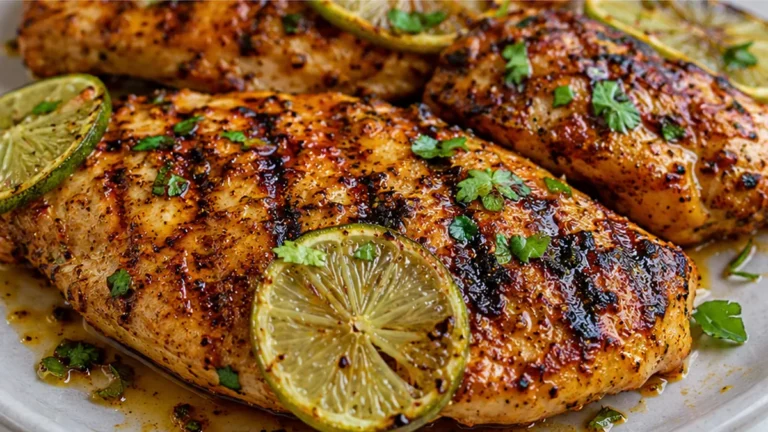
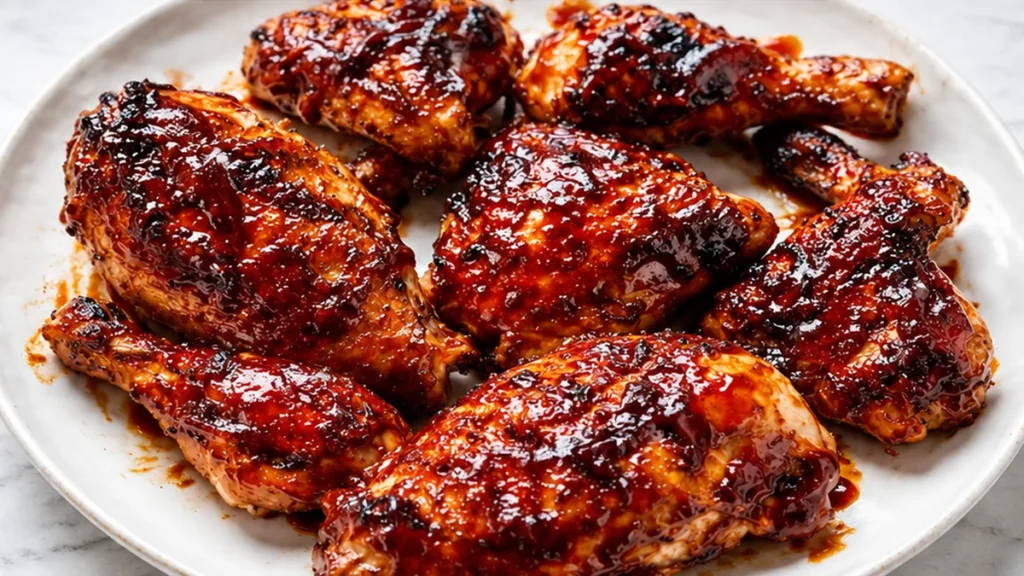
This recipe for juicy grilled bbq chicken is straightforward and effective. Using a simple marinade, you can achieve tender, flavorful chicken every time.
Key takeaways
- Marinate chicken for at least 4 hours for maximum flavor.
- Preheat the grill to 200°C (400°F) for optimal searing.
- Use a meat thermometer to check for doneness at 75°C (165°F).
- Let the chicken rest for 5 minutes before slicing to retain juices.
Juicy Grilled BBQ Chicken
Ingredients
- 3 pounds bone-in, skin-on chicken wings, thighs or legs, or boneless thighs, and/or breasts
- 2 teaspoons kosher salt
- 1 ½ cups BBQ Sauce, homemade or store-bought
- Grill, heated to 400°F
- Instant-read thermometer
- 1 tablespoon olive oil
Instructions
- Preheat one side of the grill to high heat (400°F).
- Season the chicken all over with salt. Place the chicken, skin side down, on the side of the grill with direct heat and cook until charred, about 3-4 minutes per side.
- Brush the chicken evenly with half of the BBQ sauce and transfer to the other side of the grill to finish cooking over indirect heat.
- Cover the grill and cook the chicken for 15-20 minutes, then turn and brush with the remaining BBQ sauce.
- Cover the grill and cook until the internal temperature of the chicken reaches 165°F, about 15-30 minutes more.
The Importance of Marinating for Juicy Grilled BBQ Chicken
Marinating chicken is crucial for enhancing flavor and tenderness. A typical marinade for juicy grilled BBQ chicken includes acidic components like vinegar or citrus juice, which help to break down proteins and tenderize the meat. Aim for a marinating time of at least 30 minutes, but ideally, 4 to 12 hours for maximum flavor infusion. The ideal marinade ratio is about 1 part acid to 3 parts oil, ensuring a balanced flavor profile.
Understanding the Maillard Reaction in Grilling
The Maillard reaction is a chemical process that occurs when proteins and sugars in the chicken react under heat, creating a complex flavor and appealing brown crust. For juicy grilled BBQ chicken, preheat your grill to around 200°C (400°F) to achieve the perfect sear. This process typically takes about 5 to 10 minutes per side. Aiming for an internal temperature of 75°C (165°F) is essential for food safety and optimal juiciness.
Common Mistakes and How to Fix Them
- Overcooking: This leads to dry chicken. Use a meat thermometer to ensure the chicken reaches 75°C (165°F).
- Inadequate marinating: Not marinating long enough can result in bland chicken. Aim for at least 4 hours.
- Not letting the chicken rest: Cutting the chicken immediately after grilling causes juices to escape. Let it rest for at least 5 minutes before slicing.
Ingredient Swaps for Enhanced Flavor
- Honey instead of sugar: Honey adds a richer flavor and helps with caramelization but can make the sauce stickier.
- Apple cider vinegar instead of white vinegar: This swap adds a fruity note and a touch of sweetness.
- Smoked paprika instead of regular paprika: This enhances the smoky flavor profile, perfect for BBQ chicken.
Unique Characteristics of BBQ Chicken
What sets juicy grilled BBQ chicken apart from other grilled meats is its balance of sweetness, acidity, and smokiness. The combination of a well-seasoned marinade and the caramelization from grilling creates a unique flavor that is often associated with summer cookouts and outdoor gatherings. The use of BBQ sauce, especially one that includes molasses or brown sugar, enhances this distinct taste.
How to Scale Your Juicy Grilled BBQ Chicken Recipe
Scaling a recipe can be daunting, especially when it comes to grilling chicken. To maintain the juiciness and flavor, consider the following ratios: for every additional kilogram of chicken, increase your marinade by 25%. This ensures each piece is adequately coated. When scaling, remember that cooking time may also need adjustment. For instance, a larger batch may require more time on the grill, typically an additional 5-10 minutes per side, depending on thickness. Keeping a meat thermometer handy can help ensure all pieces reach the safe internal temperature of 75°C (165°F).
Understanding Equipment Differences for Optimal Grilling
The type of grill you use can significantly affect the outcome of your BBQ chicken. Gas grills provide consistent heat and are easier to control, making them ideal for beginners. Charcoal grills, while providing a distinct smoky flavor, require more attention to maintain temperature. If using a charcoal grill, allow the coals to ash over before placing the chicken on the grill. Additionally, consider the grill grates; cast iron retains heat well for searing, while stainless steel is easier to clean but may not provide the same level of heat retention.
Serving Suggestions and Pairings for BBQ Chicken
Juicy grilled BBQ chicken pairs beautifully with a variety of sides and beverages. Classic accompaniments include coleslaw, potato salad, or grilled corn on the cob. For a refreshing drink, consider pairing with a citrusy lemonade or a chilled white wine, which complements the smoky flavors of the chicken. Additionally, garnishing with fresh herbs like parsley or cilantro can enhance the presentation and flavor profile. Remember, the right side dishes can elevate your meal, creating a well-rounded dining experience.
Make-Ahead Tips for Juicy Grilled BBQ Chicken
Preparing your BBQ chicken in advance can save time and enhance flavors. Marinating the chicken a day ahead allows the flavors to penetrate deeper, making it even juicier. If you need to store grilled chicken, let it cool completely before refrigerating in an airtight container. Properly stored, it can last up to 3-4 days in the fridge. For longer storage, consider freezing the cooked chicken, which can maintain quality for up to three months. When reheating, use a low temperature to avoid drying it out, ideally around 150°C (300°F) until warmed through.
Understanding the Impact of Marinade Timing on Flavor
The timing of marinating your chicken significantly influences the flavor profile. For optimal results, marinate the chicken for a minimum of 30 minutes, but ideally for 4 to 12 hours. This allows the marinade to penetrate the meat, enhancing its taste and tenderness. Marinating for too long, particularly with acidic ingredients like vinegar or citrus, can lead to a mushy texture due to protein breakdown. A good rule of thumb is to limit marination to 24 hours for most marinades, but less acidic options can be left longer without compromising texture.
How to Adjust Cooking Times for Different Chicken Cuts
Choosing the Right Grill: Gas vs. Charcoal
Understanding the Role of Marinade Timing in Flavor Development
The timing of your marinade can significantly impact the flavor profile of your juicy grilled BBQ chicken. A marinade that is allowed to sit for a longer period, typically between 4 to 24 hours, allows the flavors to penetrate deeper into the meat. This is particularly effective for tougher cuts, as the acids and enzymes in the marinade begin to break down proteins, resulting in a more tender texture. However, marinating for too long, especially with acidic ingredients like vinegar or citrus, can lead to a mushy texture. Therefore, for optimal results, aim for a marinating time of 6 to 12 hours for chicken. This balance allows the chicken to absorb the flavors without compromising its texture.
Scaling Your Juicy Grilled BBQ Chicken for Gatherings
When preparing juicy grilled BBQ chicken for larger gatherings, it’s essential to scale your recipe appropriately. Doubling or tripling the recipe is straightforward, but consider the cooking space on your grill. Overcrowding can lead to uneven cooking, so it’s better to cook in batches. Additionally, ensure that the marinade is proportionately increased to maintain flavor consistency. For instance, if you’re using a standard marinade, simply multiply each ingredient by the same factor as the chicken. Keep in mind that larger pieces of chicken may require slightly longer cooking times, so use a meat thermometer to ensure the internal temperature reaches 75°C (165°F) for safety.
Choosing the Right Equipment for Optimal Grilling
The equipment you use can greatly influence the outcome of your juicy grilled BBQ chicken. Gas grills offer convenience and control over temperature, making them ideal for beginners. Conversely, charcoal grills impart a distinct smoky flavor that many enthusiasts prefer. If using a charcoal grill, consider the placement of your coals; a two-zone setup allows for both direct and indirect cooking, which is excellent for thicker cuts of chicken. Additionally, investing in a good quality meat thermometer is crucial for ensuring that your chicken is cooked to perfection without drying out. Regardless of your grill type, preheating is essential to achieve the Maillard reaction, which gives your chicken that desirable crust.
Understanding the Impact of Ingredient Quality on Juiciness
The quality of ingredients plays a crucial role in the final outcome of juicy grilled BBQ chicken. Fresh, high-quality chicken will naturally be more flavorful and tender than older, frozen options. For optimal results, choose organic or free-range chicken, which often has a richer taste and better texture. Additionally, the quality of your BBQ sauce matters; homemade sauces typically offer more depth and complexity than store-bought varieties. When selecting your ingredients, pay attention to the fat content of the chicken. Skin-on, bone-in pieces tend to retain moisture better during grilling, resulting in a juicier end product. Aim for chicken thighs or drumsticks, which have higher fat content compared to chicken breasts, ensuring a succulent bite every time.
How to Adjust for Different Grill Types and Conditions
Different grilling methods and conditions can significantly affect the juiciness of your BBQ chicken. For instance, charcoal grills impart a distinct smoky flavor but require more attention to temperature control. Conversely, gas grills offer convenience and consistent heat but may lack the same depth of flavor. When grilling in windy or rainy conditions, be mindful of temperature fluctuations. Use a meat thermometer to ensure your chicken reaches the safe internal temperature of 75°C (165°F) without overcooking. If using a marinade, consider the time of year; during hotter months, a shorter marination time may be sufficient, while cooler weather may require longer marination to achieve the desired flavor penetration. Adjusting your cooking times and techniques based on these environmental factors can help maintain the juiciness of your grilled chicken.
Pro tips
Pro tip: Best served immediately while hot!
Frequently asked questions
How long should I marinate the chicken?
For juicy grilled BBQ chicken, marinating for at least 4 hours is recommended, but overnight is ideal for deeper flavor penetration.
What is the best temperature for grilling chicken?
The ideal grilling temperature for juicy grilled BBQ chicken is around 200°C (400°F). This allows for proper searing and cooking through without drying out.
Can I use frozen chicken for this recipe?
It’s best to use thawed chicken for marinating and grilling. Frozen chicken can lead to uneven cooking and may not absorb flavors as effectively.
What type of BBQ sauce works best?
A sweet and tangy BBQ sauce, preferably one with molasses or brown sugar, complements the flavors of grilled chicken and enhances the overall taste.
More from Keto Dinners & Mains →