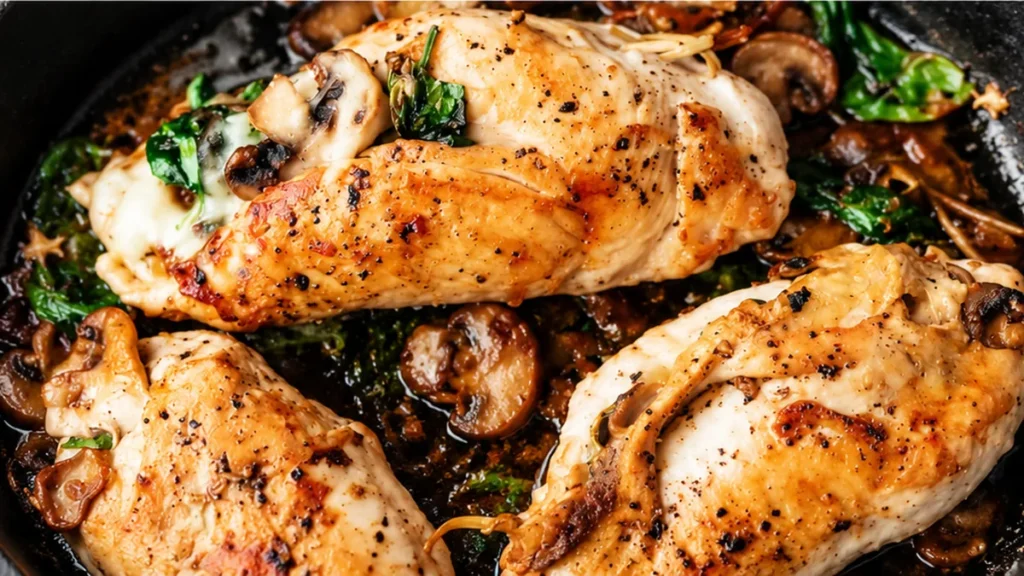
These juicy stuffed chicken breasts are filled with spinach and cheese. This recipe is straightforward and perfect for a weeknight dinner.
Key takeaways
- Ensure even stuffing to prevent dryness.
- Cook to an internal temperature of 75°C (165°F) for optimal juiciness.
- Choose moist fillings to enhance flavor and texture.
- Allow the chicken to rest before slicing to retain juices.
Juicy Stuffed Chicken Breasts!
Ingredients
- 2 tablespoons Olive Oil
- 1 teaspoon Butter
- 2 Garlic Cloves (minced)
- 10-12 Button Mushrooms (thickly sliced)
- 1/2 teaspoon Italian Seasoning Blend
- 3 Chicken Breasts (skinless, boneless)
- 2 cups Spinach Leaves (roughly chopped)
- 3/4 cup Mozzarella
- Salt
- Pepper
Instructions
- Heat olive oil in a cast iron pan over high heat. Add mushrooms and garlic, cooking for 2-3 minutes until golden brown.
- Butterfly the chicken breasts by slicing horizontally almost all the way through. Season with salt and pepper.
- On one side of each chicken breast, layer mushroom mixture, spinach, and mozzarella. Fold and secure with a toothpick.
- Heat remaining olive oil and butter in the pan over medium-high heat. Sear chicken for 1 minute, then cook for 6-7 minutes per side.
Understanding the Importance of Proper Stuffing Techniques
Stuffing chicken breasts properly is crucial for achieving juicy stuffed chicken breasts. The filling should be evenly distributed to ensure that each bite is flavorful and moist. A common mistake is overstuffing, which can lead to uneven cooking and a dry exterior. Aim for a filling that occupies about two-thirds of the chicken breast, allowing room for expansion as it cooks. This balance helps maintain moisture and ensures the chicken cooks evenly.
Temperature Control: The Key to Juiciness
Cooking chicken breasts at the right temperature is vital for juiciness. The ideal internal temperature for cooked chicken is 75°C (165°F). Using a meat thermometer can help you avoid undercooking or overcooking. If the chicken is cooked too quickly over high heat, it can become dry. Instead, consider starting on medium heat and finishing in the oven. This gradual cooking process allows the juices to redistribute, resulting in a tender and juicy chicken breast.
Choosing the Right Fillings for Maximum Flavor
The choice of filling significantly impacts the overall flavor of the dish. Classic options like spinach and feta or sun-dried tomatoes and mozzarella can elevate the taste profile. However, it’s essential to consider the moisture content of the filling. Ingredients like cooked spinach release moisture, which can enhance the juiciness of the chicken. Conversely, drier ingredients may lead to a less succulent result. Aim for a balance of flavors and moisture to ensure a satisfying bite.
Resting Time: Why It Matters
After cooking, allowing the stuffed chicken breasts to rest for at least 5-10 minutes is essential. This resting period enables the juices to redistribute throughout the meat, preventing them from spilling out when cut. Skipping this step can lead to a drier texture, as the juices will escape, leaving the chicken less flavorful. Make it a habit to let your chicken rest covered with foil to keep it warm while you prepare any sides or sauces.
Understanding the Impact of Ingredient Quality on Juicy Stuffed Chicken Breasts
The quality of ingredients significantly affects the outcome of stuffed chicken breasts. Fresh, high-quality chicken will yield a more succulent and flavorful dish. Look for chicken breasts that are plump and have a pink hue; avoid those that appear dry or discolored. Additionally, the freshness of your stuffing ingredients, such as herbs, cheeses, or vegetables, can enhance the overall flavor profile. For instance, using fresh basil instead of dried can elevate the dish with vibrant taste and aroma. Moreover, seasonal ingredients often provide better flavors and textures. For example, ripe tomatoes in summer can add juiciness and sweetness to your stuffing, while root vegetables in winter can provide heartiness and depth.
Batch Scaling for Juicy Stuffed Chicken Breasts
When scaling the recipe for larger gatherings, it’s essential to maintain the balance of flavors and textures. For every additional chicken breast, ensure that the amount of stuffing is proportionately increased. A good rule of thumb is to use about 60-90 grams of stuffing per chicken breast. However, be cautious not to overstuff, as this can lead to uneven cooking. If cooking in larger batches, consider using a larger baking dish to allow for even heat distribution. Cooking times may also vary; larger quantities may require a slightly longer cooking time, so always check the internal temperature with a meat thermometer to ensure doneness.
Equipment Variations and Their Effects on Cooking Juicy Stuffed Chicken Breasts
The equipment used can greatly influence the outcome of your stuffed chicken breasts. Conventional ovens may produce different results compared to convection ovens due to the way heat circulates. Convection ovens can cook food more evenly and quickly, potentially resulting in juicier chicken. If using a grill, indirect heat is recommended to avoid drying out the chicken while ensuring the stuffing is heated through. Additionally, consider using a meat mallet to flatten the chicken breasts evenly before stuffing; this can help them cook more uniformly. For those using a slow cooker, be mindful that the cooking time will differ, and you may need to adjust the liquid content in your stuffing to prevent it from becoming too soggy.
Serving Suggestions to Enhance Juicy Stuffed Chicken Breasts
Pairing your juicy stuffed chicken breasts with complementary sides can enhance the overall dining experience. Consider serving them alongside a light salad dressed with a zesty vinaigrette to balance the richness of the stuffing. Roasted vegetables, such as asparagus or Brussels sprouts, can add a delightful crunch and flavor contrast. For a starch component, creamy mashed potatoes or a wild rice pilaf can provide a comforting base. Additionally, a sauce or gravy that complements the stuffing can elevate the dish further; for instance, a light lemon-butter sauce can add brightness, while a savory mushroom sauce can deepen the flavors.
How to Prepare Juicy Stuffed Chicken Breasts in Advance
Planning ahead can significantly enhance your cooking experience, especially for juicy stuffed chicken breasts. Preparing the chicken and stuffing in advance allows the flavors to meld beautifully. Begin by seasoning and stuffing the chicken breasts, then wrap them tightly in plastic wrap or store them in an airtight container. You can refrigerate them for up to 24 hours before cooking. If you want to store them longer, consider freezing the stuffed chicken breasts. Just ensure they are well-wrapped to prevent freezer burn. When ready to cook, thaw them in the refrigerator overnight for the best results. This method not only saves time but also allows the chicken to absorb the flavors of the stuffing, resulting in a more delicious meal.
Adapting Cooking Techniques for Different Equipment
The cooking equipment you use can greatly affect the outcome of your juicy stuffed chicken breasts. For instance, using a conventional oven versus a convection oven can yield different results. Convection ovens circulate hot air, allowing for more even cooking and potentially reducing cooking time. If using an air fryer, adjust the temperature to about 180°C (350°F) and check for doneness earlier than you would in a traditional oven. Additionally, if you opt for a stovetop method, consider using a heavy skillet that retains heat well. Always use a meat thermometer to ensure the internal temperature reaches 75°C (165°F) for safe consumption, regardless of the cooking method.
Seasonal Ingredients and Their Effect on Flavor
Using seasonal ingredients can elevate the flavor profile of your juicy stuffed chicken breasts. For example, in summer, fresh herbs like basil and parsley can add brightness, while in fall, ingredients like butternut squash or apples can introduce warmth and sweetness to the stuffing. Additionally, the quality of ingredients can vary with the seasons, impacting the overall taste. Fresh, local produce often delivers better flavor and texture. When selecting your ingredients, consider their peak seasons and choose those that are vibrant and fresh. This attention to seasonal quality not only enhances the dish but also promotes sustainability by supporting local farmers.
Understanding the Impact of Stuffing Consistency on Juiciness
The consistency of your stuffing plays a crucial role in achieving juicy stuffed chicken breasts. A mixture that is too dry can lead to a lack of moisture in the final dish, while a stuffing that is too wet can cause the chicken to become soggy. Aim for a balanced stuffing texture, typically a ratio of 1 part liquid to 2 parts dry ingredients. For example, if you use 100 grams of bread crumbs, incorporate about 50 grams of liquid (like broth or cream). This ensures that the stuffing remains moist without compromising the chicken’s texture. Additionally, consider adding ingredients that retain moisture, such as sautéed vegetables or cheese, which can enhance flavor and juiciness.
Choosing the Right Cooking Method for Optimal Results
The cooking method you select significantly affects the juiciness of your stuffed chicken breasts. Baking is a popular choice, as it allows for even cooking and helps retain moisture, especially when the chicken is covered with foil for the first part of the cooking process. Alternatively, pan-searing followed by oven finishing can create a desirable crust while sealing in juices. If you opt for grilling, ensure you monitor the temperature closely; high heat can lead to drying out the chicken. For best results, use a meat thermometer to ensure the internal temperature reaches 75°C (165°F) without overcooking, which can dry out the meat.
Pro tips
Pro tip: Best served immediately while hot!
Frequently asked questions
How can I tell when the stuffed chicken breasts are fully cooked?
The best way to check if stuffed chicken breasts are fully cooked is to use a meat thermometer. Insert it into the thickest part of the chicken; it should read 75°C (165°F). Additionally, the juices should run clear when the chicken is pierced.
Can I prepare stuffed chicken breasts in advance?
Yes, you can prepare stuffed chicken breasts ahead of time. Assemble them and store them in the refrigerator for up to 24 hours before cooking. This allows the flavors to meld, but be sure to cook them within a day for the best results.
What can I do if my filling is too dry?
If your filling turns out too dry, consider adding a moisture-rich ingredient like cream cheese or a bit of broth. This will help to enhance the flavor and keep the filling moist, ensuring a juicy stuffed chicken breast.
Are there any specific herbs that work best in stuffed chicken breasts?
Fresh herbs like basil, thyme, and parsley work exceptionally well in stuffed chicken breasts. They add vibrant flavors that complement the chicken and filling. Experimenting with different herbs can elevate your dish to new heights.
More from Keto Dinners & Mains →