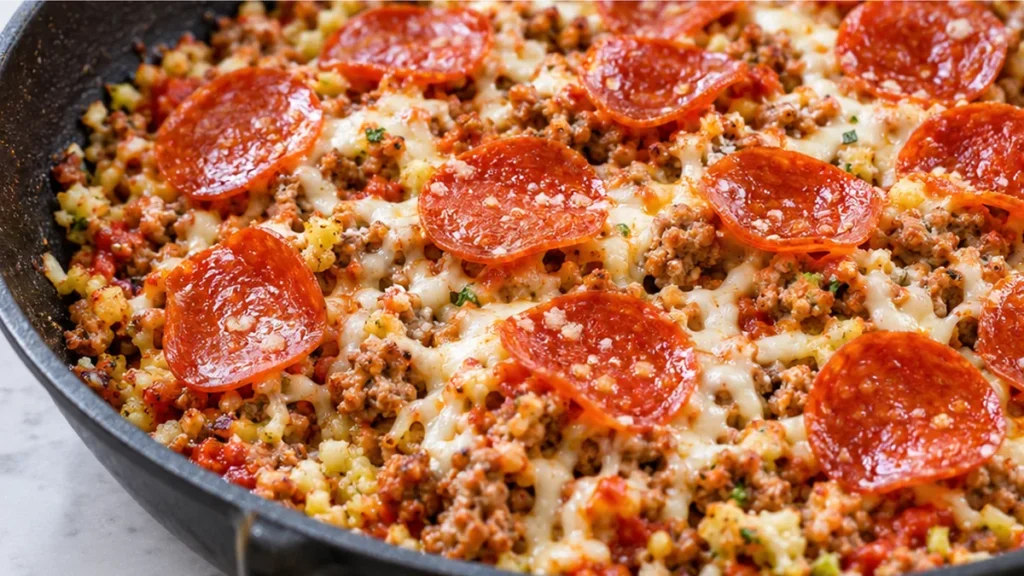
This keto pizza skillet in 15 is a quick and easy meal option. Using a cauliflower crust, it’s perfect for those following a low-carb diet.
Key takeaways
- Utilize almond flour for a low-carb crust alternative.
- Preheat your skillet to ensure proper cooking and texture.
- Adjust hydration levels for optimal batter consistency.
- Experiment with toppings to customize flavor without adding carbs.
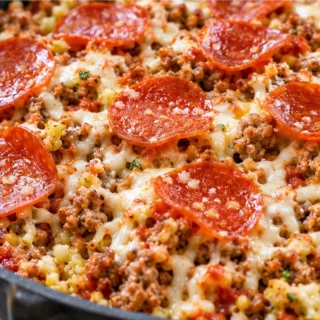
Keto Pizza Skillet in 15 Mins!
Ingredients
- 19.5 ounces sweet Italian turkey sausage
- 1 10 ounces package frozen or fresh riced cauliflower and broccoli (you can also use all cauliflower rice)
- 1 cup pizza sauce
- 1 ounce sliced pepperoni (about 17 slices)
- 1/2 cup whole milk shredded mozzarella cheese
- Parmesan for sprinkling on top
Instructions
- In a large skillet, brown and crumble the sausage over medium heat for 5-7 minutes until cooked through.
- Add the riced cauliflower and broccoli to the skillet. Sauté for 3-5 minutes until desired tenderness is reached.
- Stir in the pizza sauce until well combined.
- Layer the pepperoni and mozzarella cheese evenly over the mixture. Cover the skillet and cook for 2-3 minutes, or until the cheese is melted and bubbly.
- Sprinkle with Parmesan cheese to serve.
Understanding the Ingredients for Keto Pizza Skillet
The keto pizza skillet relies on specific ingredients that adhere to a low-carb diet while still providing the flavors and textures associated with traditional pizza. The use of almond flour instead of regular flour significantly reduces the carbohydrate content, making it suitable for keto dieters. Additionally, cheese plays a crucial role in binding the ingredients and adding richness. For instance, mozzarella cheese not only contributes to the classic pizza flavor but also aids in achieving the desired gooey texture.
Moreover, the choice of toppings can greatly influence the overall nutritional profile of the dish. Opting for low-carb vegetables such as bell peppers, mushrooms, or spinach can enhance both flavor and nutrient density without adding excessive carbohydrates. Understanding the role each ingredient plays is vital for achieving the best results in your keto pizza skillet.
The Science Behind Cooking a Perfect Keto Pizza Skillet
Cooking a keto pizza skillet effectively requires attention to heat control and timing. The skillet method ensures that the bottom gets a nice crisp while the toppings cook evenly. For optimal results, preheating the skillet is essential. This process allows for the Maillard reaction to occur, which is responsible for developing complex flavors and a desirable crust. Aim for a temperature of around 190°C (375°F) before adding the batter.
Another important factor is the hydration level of the batter. Too much moisture can lead to a soggy base, while too little can result in a dry texture. It’s recommended to balance the wet ingredients with the dry ones, maintaining a ratio that supports a cohesive batter. Typically, a 1:1 ratio of wet to dry ingredients works well in this recipe.
Common Pitfalls and Fixes When Making Keto Pizza Skillet
One common issue when making keto pizza skillet is the batter not setting properly. This can often be attributed to inadequate cooking time or insufficient heat. If the batter remains too runny, extend the cooking time by a few minutes and ensure the skillet is adequately heated. Another potential problem is the cheese not melting or browning correctly. This can be resolved by using shredded cheese instead of blocks, as it melts more uniformly and quickly.
Additionally, if the pizza is too greasy, it may be due to excess cheese or oily toppings. To remedy this, consider reducing the amount of cheese or opting for leaner protein toppings. On the other hand, if the pizza lacks flavor, a simple solution is to enhance the seasoning. Adding herbs and spices like oregano, basil, or garlic powder can significantly elevate the dish.
Ingredient Swaps and Their Effects on the Dish
When preparing a keto pizza skillet, certain ingredient swaps can yield different textures and flavors. For instance, replacing almond flour with coconut flour can provide a slightly sweeter taste but requires adjusting the liquid content due to coconut flour’s higher absorbency. A common rule of thumb is to use one-fourth the amount of coconut flour compared to almond flour.
Another swap involves using different types of cheese. While mozzarella is traditional, using a blend of cheddar and cream cheese can create a richer flavor profile. However, this may alter the melting characteristics, leading to a slightly different texture. Additionally, if you’re looking for a dairy-free option, nutritional yeast can be used to impart a cheesy flavor without the fat.
Unique Features of Keto Pizza Skillet Compared to Traditional Pizza
The keto pizza skillet stands out from traditional pizza not only in its ingredient composition but also in its preparation method. The skillet method allows for a quicker cooking time, as it eliminates the need for a lengthy dough preparation and baking process. This dish can be ready in just 15 minutes, making it an ideal option for busy weeknights. Furthermore, the focus on low-carb ingredients aligns with the growing trend toward healthier eating without sacrificing flavor.
Additionally, the versatility of toppings in a keto pizza skillet allows for creativity while maintaining dietary restrictions. Unlike traditional pizza, which often relies heavily on high-carb crusts and sauces, the keto version emphasizes fresh, low-carb ingredients that can be tailored to individual preferences, making it a unique and adaptable dish.
How to Store and Reheat Leftover Keto Pizza Skillet
Storing leftover keto pizza skillet is straightforward. Allow the dish to cool completely before transferring it to an airtight container. It can be stored in the refrigerator for up to 3 days. When reheating, use a skillet over medium heat for about 5-7 minutes, or until heated through, to maintain the texture. Alternatively, you can microwave it for 1-2 minutes, but this may result in a softer crust. If you prefer a crispier texture, reheating in the oven at 180°C (350°F) for about 10 minutes is ideal.
Scaling the Recipe for Larger Gatherings
If you want to serve more people, scaling the keto pizza skillet recipe is simple. The key is to maintain the same ratios of ingredients. For example, if doubling the recipe, use twice the amount of cheese and almond flour. However, be cautious with the cooking time; larger quantities may require a longer cooking time to ensure everything is heated thoroughly. A larger skillet or multiple skillets may be necessary to accommodate the increased volume. Adjust the heat slightly lower to prevent burning the bottom while ensuring the center cooks completely.
Choosing the Right Equipment for Optimal Results
The type of skillet you use can significantly affect the outcome of your keto pizza skillet. A cast-iron skillet retains heat well and provides even cooking, which is ideal for achieving a crispy crust. Non-stick skillets are also a good choice, making it easier to release the pizza once cooked. Avoid using aluminum pans, as they may not provide the same heat retention. Additionally, ensure your skillet is preheated before adding the batter to help achieve the desired texture.
Pairing Suggestions to Enhance Your Meal
When serving keto pizza skillet, consider pairing it with fresh ingredients to enhance the meal. A side salad with leafy greens, cucumbers, and a light vinaigrette can balance the richness of the pizza. Additionally, serving it with a dollop of sour cream or guacamole adds creaminess and flavor. For beverages, opt for sparkling water with lemon or herbal teas, which complement the dish without adding extra carbohydrates.
Understanding the Impact of Ingredient Quality on Keto Pizza Skillet
The quality of ingredients used in a keto pizza skillet can significantly affect the final dish. For instance, fresh vegetables not only enhance the flavor but also improve the texture and nutritional profile. Opting for high-quality cheese, such as mozzarella or cheddar, ensures a better melt and stretch, which are crucial for achieving that classic pizza experience. Additionally, the type of fat used, whether olive oil or butter, can influence the overall taste and health benefits of the dish. When selecting meats or protein sources, look for grass-fed or organic options, as these can provide superior flavor and better nutritional content.
Adjusting Cooking Times Based on Equipment Differences
Different cooking equipment can lead to variations in the cooking time and texture of your keto pizza skillet. For instance, using a cast-iron skillet may yield a crispier crust compared to a non-stick pan due to better heat retention. If using an electric skillet or stovetop, monitor the heat closely, as these devices may heat unevenly. The thickness of the skillet also plays a role; thicker skillets may require longer cooking times to ensure the center is fully cooked while preventing the edges from burning. Adjusting the cooking time based on your specific equipment will help achieve optimal results.
How to Successfully Scale Your Keto Pizza Skillet for Larger Groups
Scaling the keto pizza skillet recipe is straightforward, but it requires attention to detail to maintain the dish’s integrity. When increasing the quantities, ensure that the ratio of ingredients remains consistent. For example, if doubling the recipe, use double the amount of almond flour and cheese to ensure the crust maintains its texture. Additionally, consider using a larger skillet or multiple skillets to accommodate the increased volume. Cooking times may also need adjustment; larger batches may require a few extra minutes on the heat to ensure even cooking throughout. Monitor the skillet closely to avoid burning, as larger amounts can cook unevenly. It’s also wise to keep the toppings proportional to the crust to prevent sogginess. Remember, the key is to maintain a balance between the crust and toppings for optimal flavor and texture.
Understanding the Impact of Ingredient Quality on Flavor and Texture
The quality of ingredients significantly influences the overall success of your keto pizza skillet. For instance, using high-quality mozzarella cheese can enhance the dish’s creaminess and meltability, creating a desirable gooey texture. Fresh herbs, such as basil or oregano, can elevate the flavor profile, making the dish more aromatic and flavorful. Conversely, low-quality ingredients may lead to a greasy or bland pizza. Furthermore, the freshness of your vegetables can affect both taste and texture; wilted or overripe vegetables can detract from the dish’s appeal. When possible, opt for organic or locally sourced ingredients, as they often have superior flavor. This attention to ingredient quality ensures that each bite of your keto pizza skillet is satisfying and delicious, setting it apart from other variations.
Pro tips
Pro tip: Best served immediately while hot!
Frequently asked questions
Can I use regular flour instead of almond flour?
Using regular flour will significantly increase the carbohydrate content, making it unsuitable for a keto diet. Almond flour is the preferred choice for maintaining low carbs while achieving a similar texture.
How can I make my pizza crust crispier?
To achieve a crispier crust, ensure the skillet is preheated adequately before adding the batter and consider cooking it for a few extra minutes. Using less moisture in the batter can also help.
What toppings are best for a keto pizza skillet?
Low-carb toppings such as pepperoni, bell peppers, mushrooms, and spinach work well. Avoid high-carb ingredients like traditional sauces and sugary toppings to keep the dish keto-friendly.
Can I make this recipe dairy-free?
Yes, you can make a dairy-free version by using dairy-free cheese alternatives or nutritional yeast for flavor. Adjust the recipe to accommodate these substitutions while keeping the overall texture in mind.
More from Keto Dinners & Mains →