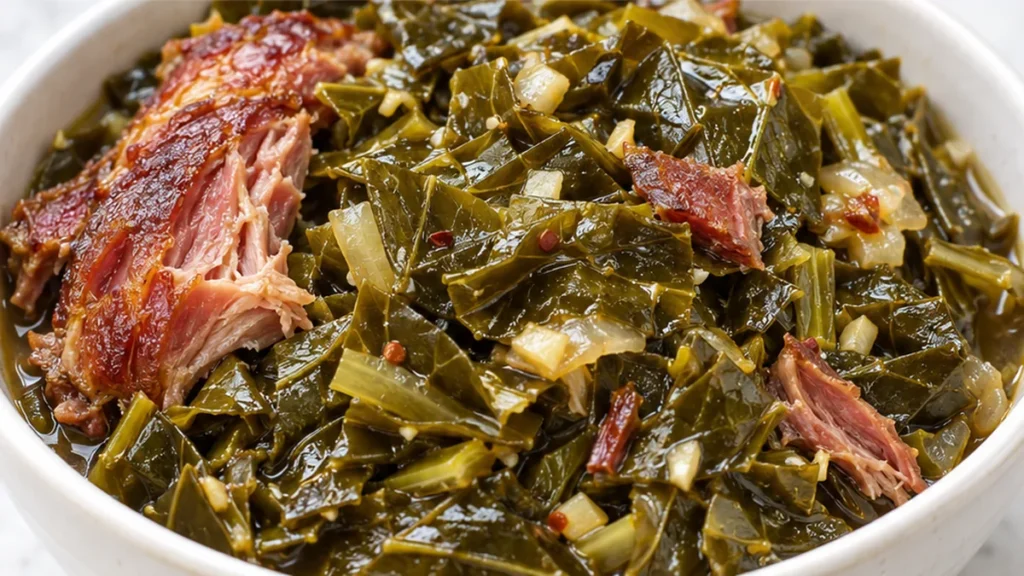
Collard greens are a staple in Southern cooking, known for their hearty texture and smoky taste. This recipe uses smoked turkey to enhance the flavor.
Key takeaways
- Use vinegar to balance flavors and tenderize greens.
- Avoid overcooking to maintain texture and integrity.
- Season throughout cooking for the best flavor.
- Experiment with smoked meats for varied flavor profiles.
Southern Collard Greens with Smoked Turkey
Ingredients
- 1/2 cup white distilled vinegar
- 3 tablespoons salt
- 2 bunches fresh collard greens
- 1 tablespoon extra virgin olive oil
- ½ cup finely diced onions
- 1 tablespoon minced garlic
- 1/2 teaspoon red pepper flakes
- 4-5 cups chicken broth
- 1 smoked turkey leg (about 13 oz)
Instructions
- Wash the collard greens thoroughly, remove tough stems, and chop into 1-inch pieces.
- Heat olive oil in a large pot over medium heat, add onions, and cook for 5 minutes.
- Stir in minced garlic and red pepper flakes, cooking for 1 minute until fragrant.
- Add collard greens, pour in 4 cups of chicken broth, and add the smoked turkey leg.
- Cover and simmer on low for 1.5 to 2 hours until greens are tender, stirring occasionally.
- Remove turkey leg, shred the meat, and return it to the pot.
- Stir in vinegar and salt, simmer for another 10 minutes, and adjust seasoning.
Notes
Understanding the Role of Collard Greens in Southern Cuisine
Collard greens are a staple in Southern cooking, known for their robust flavor and nutritional benefits. Rich in vitamins A, C, and K, they are not only delicious but also a powerhouse of nutrients. The cooking method, particularly the long simmering process, helps to tenderize the greens while infusing them with flavors from other ingredients, especially when paired with smoked meats like turkey. This method of preparation allows the collard greens to absorb the smoky essence, enhancing their natural taste.
The Importance of Vinegar in Flavor Development
White distilled vinegar plays a crucial role in balancing the flavors of collard greens. The acidity from the vinegar cuts through the richness of the smoked turkey and the savory broth, providing a bright contrast. This balance is essential, as it prevents the dish from becoming overly heavy. Additionally, the vinegar helps to tenderize the greens further, making them more palatable. A general guideline is to use about 15-30 ml (1-2 tablespoons) of vinegar per serving to achieve the best flavor balance.
Common Mistakes and How to Avoid Them
- Overcooking the Greens: Collard greens should be cooked until tender but not mushy. Aim for a cooking time of 45-60 minutes for optimal texture.
- Insufficient Seasoning: Always taste and adjust seasoning throughout the cooking process. A common mistake is to add too little salt initially; start with the recommended amount and adjust as needed.
- Ignoring the Broth: The choice of broth can significantly impact the flavor. Using homemade chicken broth enhances the dish, while store-bought can be too salty or bland.
Ingredient Swaps and Their Effects
- Smoked Turkey Leg: You can substitute with ham hocks or smoked sausage for a different flavor profile. However, this may alter the dish’s overall smokiness and richness.
- Red Pepper Flakes: For a milder dish, omit the red pepper flakes or replace them with a dash of black pepper. This will reduce the heat but still provide a flavorful kick.
- Olive Oil: While extra virgin olive oil adds richness, you can use bacon grease for a more traditional Southern flavor, though it will increase the dish’s fat content.
Unique Characteristics of Southern Collard Greens
What sets Southern collard greens apart from other leafy greens is not just their flavor but also their cultural significance. Traditionally served as a side dish during New Year’s celebrations, collard greens symbolize prosperity and good fortune. Additionally, the long cooking time allows the greens to develop a deep, rich flavor that is characteristic of Southern soul food. This dish is often paired with cornbread, making it a fulfilling meal that showcases the heartiness of Southern cuisine.
How to Scale the Recipe for Collard Greens
Scaling a recipe for collard greens is straightforward, but it requires careful attention to ingredient ratios and cooking times. For every additional bunch of collard greens, increase the amount of chicken broth by approximately 2 cups to ensure the greens are adequately submerged and cooked. Adjust the seasoning, particularly salt and vinegar, based on taste preference, as larger quantities may require more balancing. When scaling, consider that cooking time may slightly increase, especially if using a larger pot or batch size. A good rule of thumb is to monitor the greens closely and check for tenderness after 45 minutes, adjusting as necessary.
Equipment Considerations for Perfectly Cooked Greens
The equipment you use can significantly impact the outcome of your collard greens. A large, heavy-bottomed pot is ideal for even heat distribution, preventing scorching. If you have a Dutch oven, it is highly recommended due to its ability to maintain consistent temperatures. For those with pressure cookers, collard greens can be prepared in a fraction of the time, typically around 15-20 minutes under pressure. However, be cautious with the liquid levels; too much can lead to overly watery greens. Additionally, using a sharp knife for chopping will ensure even cooking, as uniformly sized pieces cook more evenly.
Understanding the Impact of Seasonal Ingredients on Flavor
Seasonality plays a crucial role in the flavor profile of collard greens. Fresh collard greens in the spring and early summer tend to be more tender and sweeter, while those harvested in the fall and winter can be tougher and more bitter. When selecting greens, look for vibrant, dark green leaves without yellowing or wilting. The quality of your smoked turkey also impacts the dish; opt for high-quality, naturally smoked varieties for the best flavor infusion. If using frozen collard greens, be aware that they may have a different texture and flavor intensity, which can alter the final dish.
Serving Suggestions and Pairings for Collard Greens
Collard greens are a versatile side dish that pairs well with a variety of mains. Traditionally, they are served alongside cornbread, fried chicken, or other Southern staples. For a modern twist, consider serving them with grilled meats or even a hearty vegetarian dish like lentil stew. A splash of hot sauce or a sprinkle of lemon juice just before serving can brighten the flavors. Additionally, collard greens can be incorporated into salads or grain bowls, adding a nutritious element to your meal. Leftover greens can be sautéed with garlic and olive oil for a quick lunch or dinner option.
Understanding the Role of Cooking Time in Flavor Development
The cooking time for collard greens is crucial in developing their deep, rich flavors. Cooking them too briefly may result in a tough texture and a somewhat bitter taste, while overcooking can lead to a mushy consistency and loss of nutrients. For optimal results, simmer the collard greens for at least 45 minutes to 1 hour in the chicken broth with the smoked turkey leg. This allows the flavors to meld beautifully, as the turkey imparts a smoky richness that enhances the greens. The ideal temperature for simmering is around 90-95°C (194-203°F), ensuring the greens become tender without losing their vibrant color.
Make-Ahead Strategies for Collard Greens
Preparing collard greens in advance can save time and enhance their flavors. After cooking, allow the greens to cool completely before transferring them to an airtight container. Properly stored, they can be kept in the refrigerator for up to 5 days. When reheating, add a splash of chicken broth for moisture and to refresh the flavors. Alternatively, collard greens can be frozen for up to 3 months. To freeze, portion them into freezer-safe bags, removing as much air as possible to prevent freezer burn. When ready to use, thaw in the refrigerator overnight and reheat on the stovetop.
How Ingredient Quality Affects the Final Dish
The quality of your ingredients plays a significant role in the outcome of your collard greens. Fresh, vibrant greens are essential for achieving the best flavor and texture. Look for collard greens that are deep green and free of yellowing or wilting. The smoked turkey leg should also be of good quality, as it imparts crucial flavor to the dish. If using a lower-quality turkey, consider enhancing the flavor with additional spices or a splash of liquid smoke. Seasonal variations can affect the taste; for instance, collard greens harvested in cooler months tend to be sweeter and more tender than those grown in the heat of summer, which can be tougher and more bitter.
Understanding the Impact of Cooking Time on Collard Greens
Collard greens require a careful balance of cooking time to achieve the desired tenderness without losing their vibrant color and nutrients. Cooking them too briefly can leave the greens tough and fibrous, while overcooking can lead to a mushy texture and dull flavor. Generally, simmering collard greens for 45 minutes to 1 hour allows the tough fibers to break down, resulting in a tender, flavorful dish. During this time, the greens absorb flavors from the smoked turkey and seasonings, enhancing the overall taste. Monitoring the greens closely towards the end of the cooking process is essential; a taste test can help determine if they are at the perfect doneness.
Batch Scaling Techniques for Collard Greens
When scaling up a recipe for collard greens, it’s crucial to adjust not only the ingredient quantities but also the cooking method. For larger batches, consider using a larger pot or multiple pots to ensure even cooking. Increasing the quantity of collard greens may require additional liquid and seasonings to maintain the flavor profile. A general rule is to add an extra 1/2 cup of chicken broth for every additional bunch of greens. Additionally, the cooking time may vary slightly, so keep an eye on the greens and adjust based on texture and taste. This ensures that even in larger quantities, the dish retains its signature taste and texture.
Pro tips
- Use fresh, bright green collard leaves. Avoid any that look wilted or yellow.
- Don’t skimp on the simmering time; tenderness is key!
- Taste and adjust salt and vinegar at the end to suit your preference.
- For a spicier kick, add a pinch more red pepper flakes.
Enjoy these deeply flavorful Southern Collard Greens as a staple side dish that brings a taste of tradition to your table.
Frequently asked questions
How do I know when collard greens are done cooking?
Collard greens are done when they are tender but still hold their shape, typically after 45-60 minutes of simmering. They should be soft enough to eat but not mushy.
Can I use frozen collard greens for this recipe?
Yes, you can use frozen collard greens. Just make sure to thaw and drain them well before adding them to the pot, as they may release additional moisture during cooking.
What can I serve with collard greens?
Collard greens pair well with cornbread, fried chicken, or black-eyed peas. These sides complement the dish’s flavors and enhance the Southern dining experience.
How can I store leftover collard greens?
Store leftover collard greens in an airtight container in the refrigerator for up to four days. They can also be frozen for longer storage, but the texture may change slightly upon reheating.
More from Keto Sides & Veggies →