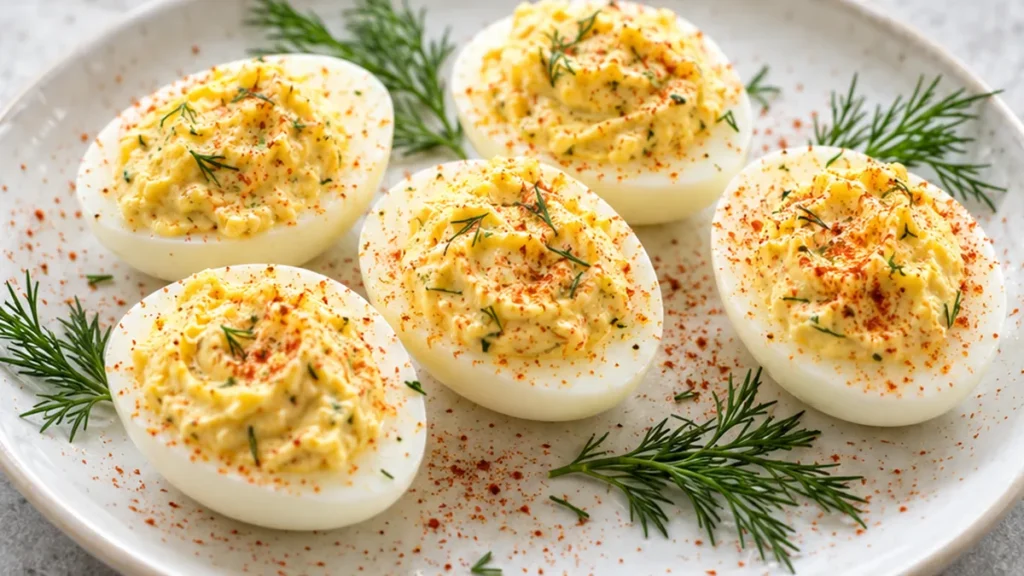
These zesty horseradish deviled eggs for gatherings are a simple yet flavorful appetizer. Perfect for parties, they combine classic ingredients with a spicy twist.
Key takeaways
- The right ratio of horseradish enhances flavor without overpowering.
- Achieving a creamy texture requires proper egg cooking and mashing techniques.
- Perfect hard-boiled eggs are essential for avoiding greenish yolks.
- Complementary ingredients should be balanced to enhance, not overshadow, the horseradish.
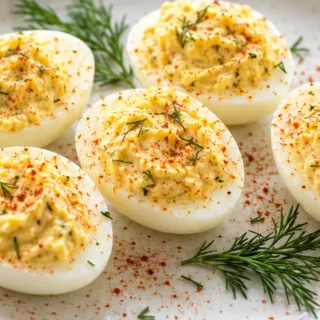
Zesty Horseradish Deviled Eggs for Parties!
Ingredients
- 6 hard boiled eggs
- 1/4 cup mayonnaise
- 1 tablespoon prepared horseradish
- 1/2 teaspoon chopped dill
- 1/4 teaspoon ground mustard
- salt and pepper to taste
- paprika for sprinkling
Instructions
- Carefully cut each hard-boiled egg in half lengthwise with a sharp knife. Gently remove the yolks and place them into a small mixing bowl.
- Using a fork, thoroughly mash the egg yolks until smooth. Add the 1/4 cup mayonnaise, 1 tablespoon prepared horseradish, 1/2 teaspoon chopped dill, and 1/4 teaspoon ground mustard to the mashed yolks.
- Season the mixture with salt and pepper to taste, then mix well until all ingredients are fully combined and creamy.
- Spoon the prepared filling evenly into the hollowed-out egg white shells. Lightly sprinkle the tops with paprika for garnish before chilling for at least 30 minutes.
- Chill the deviled eggs in the refrigerator for at least 30 minutes before serving to allow the flavors to meld and the eggs to firm up.
Understanding the Role of Horseradish in Flavor Development
Horseradish contributes a unique sharpness and heat to deviled eggs, elevating their flavor profile. The key to achieving the right balance lies in the ratio of horseradish to egg yolk. Typically, a good starting point is one tablespoon of prepared horseradish for every two yolks. This can be adjusted based on personal preference and the potency of the horseradish used. Freshly grated horseradish offers a more intense flavor compared to prepared versions, which are often milder due to added vinegar or sugar.
Common Issues with Texture in Deviled Eggs
Texture is crucial for deviled eggs, and achieving the right creaminess can be challenging. If the filling is too dry, it may be due to overcooking the eggs, which can cause the yolks to become crumbly. Conversely, if the mixture is too runny, it could be a result of adding too much mayonnaise or liquid ingredients. A good tip is to mash the yolks thoroughly before incorporating other ingredients, ensuring a smooth and creamy texture. Aim for a filling that holds its shape but is still easy to pipe or spoon into the egg whites.
Perfecting the Egg Boiling Technique for Ideal Yolks
The perfect hard-boiled egg is fundamental for deviled eggs. Start by placing the eggs in a single layer in a pot and covering them with cold water. Bring the water to a boil, then cover the pot and remove it from heat, letting the eggs sit for 9 to 12 minutes, depending on the size of the eggs. This method helps prevent the greenish ring around the yolk, which occurs when eggs are overcooked. After the resting period, immediately transfer the eggs to an ice bath to halt the cooking process and facilitate easy peeling.
Enhancing Flavor with Additional Ingredients
While horseradish is the star ingredient, adding complementary flavors can take deviled eggs to the next level. Consider incorporating ingredients like Dijon mustard for tanginess, smoked paprika for depth, or chopped herbs like chives or dill for freshness. Each addition should be balanced carefully; for instance, too much mustard can overpower the horseradish. A good rule of thumb is to keep the total volume of additional ingredients to no more than one-third of the total filling mixture to maintain the integrity of the horseradish flavor.
Understanding the Impact of Ingredient Quality on Flavor
The quality of the ingredients used in zesty horseradish deviled eggs significantly affects the final flavor profile. Fresh eggs are essential; older eggs can lead to a sulfurous taste and undesirable texture. Additionally, the quality of horseradish plays a crucial role. Freshly grated horseradish offers a sharper, more vibrant flavor compared to pre-packaged versions, which might contain preservatives that dull the taste. When selecting mayonnaise, opt for high-quality brands that use natural ingredients, as this can elevate the overall richness and mouthfeel of the filling. The freshness of herbs, such as chives or parsley, also contributes to the brightness of the dish. Aim for organic or locally sourced ingredients when possible to maximize flavor.
Scaling the Recipe for Larger Gatherings
When preparing zesty horseradish deviled eggs for a larger crowd, it’s essential to scale the recipe effectively while maintaining the flavor balance. Doubling or tripling the recipe is straightforward, but be cautious with the horseradish quantity. Start with the original amount and gradually increase, tasting as you go to ensure the desired zestiness without overpowering the eggs. Keep in mind that larger batches may require more mixing time to achieve a smooth filling. Additionally, consider the size of your mixing bowl and the equipment available; using a stand mixer can save time and effort when handling larger quantities.
Make-Ahead Strategies for Stress-Free Entertaining
Preparing zesty horseradish deviled eggs in advance can alleviate stress on the day of your gathering. Hard-boiled eggs can be prepared up to a week in advance, stored in their shells in the refrigerator to maintain freshness. The filling can also be made a day ahead; simply store it in an airtight container in the fridge. To prevent the filling from becoming watery, avoid adding horseradish until just before serving. When ready to serve, pipe the filling into the egg whites and garnish with fresh herbs. This approach not only saves time but also allows the flavors to meld beautifully, enhancing the overall taste.
Choosing the Right Serving and Pairing Options
Serving zesty horseradish deviled eggs can be enhanced by thoughtful presentation and pairing with complementary flavors. Using a decorative platter or egg tray adds visual appeal. Consider garnishing with microgreens or edible flowers for an elegant touch. Pairing these deviled eggs with beverages can also elevate the experience; a crisp white wine or a light beer complements the zesty flavors beautifully. For a more adventurous pairing, serve with a spicy Bloody Mary, which echoes the horseradish’s heat. Additionally, offering a selection of crackers or a fresh vegetable platter alongside the deviled eggs can create a well-rounded appetizer spread.
Understanding the Impact of Horseradish on Texture and Flavor
The unique pungency of horseradish plays a crucial role in the overall experience of deviled eggs. When incorporated properly, horseradish can enhance the creamy texture of the egg yolks while introducing a sharp, zesty kick that elevates the dish. However, the amount used is key; too much can overpower the delicate balance of flavors. For optimal results, a ratio of 1 tablespoon of prepared horseradish per 4 egg yolks is recommended, allowing the horseradish to shine without overwhelming the dish. Additionally, fresh horseradish root can be grated and mixed into the yolk filling for a more robust flavor, but it should be noted that this may alter the texture slightly, making it more fibrous. Understanding how horseradish interacts with other ingredients can help achieve a harmonious blend in your deviled eggs.
Adapting the Recipe for Seasonal Ingredients
Seasonal ingredients can significantly influence the flavor profile of your zesty horseradish deviled eggs. For instance, during spring and summer, fresh herbs like chives, dill, or parsley can be added to the filling for a lighter, fresher taste. Conversely, in the fall and winter, incorporating ingredients like smoked paprika or roasted garlic can provide warmth and depth. When adapting the recipe, consider the balance of flavors; for example, if adding a strong herb, you may want to reduce the amount of horseradish slightly to maintain the intended zing without overpowering the dish. This adaptability not only enhances the flavor but also allows you to make use of ingredients that are at their peak, ensuring the best possible taste experience.
Scaling Up for Larger Gatherings: Techniques and Considerations
When preparing zesty horseradish deviled eggs for larger gatherings, scaling the recipe can present unique challenges. It is important to maintain the same flavor profile while ensuring consistency across batches. A general guideline is to increase the recipe by a factor of two or three, ensuring that you proportionally increase each ingredient, including the horseradish, which should be adjusted to taste. Additionally, consider the method of preparation; using a stand mixer for larger batches can ensure a smooth, well-blended filling. To maintain freshness, prepare the filling and egg whites separately, combining them just before serving. This approach helps prevent the egg whites from becoming soggy and ensures that your deviled eggs remain visually appealing and delicious.
Understanding the Role of Horseradish in Flavor Development
Horseradish is a key ingredient in zesty horseradish deviled eggs, offering a distinct sharpness that elevates the overall flavor profile. The pungency of horseradish comes from the compound sinigrin, which, when grated, converts to allyl isothiocyanate, creating that characteristic heat. This heat can vary significantly based on the freshness of the horseradish used. Freshly grated horseradish tends to have a stronger, more vibrant flavor compared to prepared horseradish found in jars. When making deviled eggs, it’s crucial to balance the amount of horseradish with the creaminess of the yolk and mayonnaise mixture. A good starting ratio is about 1 tablespoon of freshly grated horseradish for every four egg yolks. Adjusting this ratio allows for a personalized heat level that can cater to different tastes while ensuring that the horseradish does not overpower the other flavors.
Choosing the Right Equipment for Perfectly Creamy Filling
The equipment used in preparing zesty horseradish deviled eggs can significantly impact the texture of the filling. For the smoothest results, a food processor is highly recommended. This tool ensures that the yolks, mayonnaise, and horseradish are blended thoroughly, creating a creamy and homogeneous mixture without lumps. If a food processor is unavailable, a fine mesh sieve can be used to press the yolks through, which also helps achieve a silky texture. Additionally, using a piping bag or a zip-top bag with a corner snipped off can make filling the egg whites easier and more visually appealing. Whichever method is chosen, ensuring that the filling is well-mixed and free of lumps is essential for a delightful bite.
Pro tips
Pro tip: Best served immediately while hot!
Frequently asked questions
How can I prevent my deviled egg filling from being too dry?
To avoid a dry filling, ensure you do not overcook the eggs. A proper cooking method involves boiling the eggs, then letting them sit in hot water for 9 to 12 minutes before cooling them in an ice bath. Additionally, incorporate enough mayonnaise or a creamy element to keep the filling moist.
What can I substitute for horseradish in this recipe?
If you want a milder flavor, consider using prepared mustard or a dash of hot sauce. However, these substitutes will not replicate the unique taste of horseradish, so adjust the quantity to suit your taste preferences. Expect a different flavor profile, but it can still be delicious.
How do I achieve a smooth filling for my deviled eggs?
To get a smooth filling, mash the yolks thoroughly before adding other ingredients. Using a fork or a food processor can help achieve the desired consistency. Make sure to mix in the mayonnaise gradually until you reach a creamy texture.
What is the best way to store leftover deviled eggs?
Store leftover deviled eggs in an airtight container in the refrigerator. They are best consumed within 2 days for optimal freshness and flavor. To prevent the filling from drying out, consider covering the eggs with a damp paper towel before sealing the container.
More from Keto Sides & Veggies →