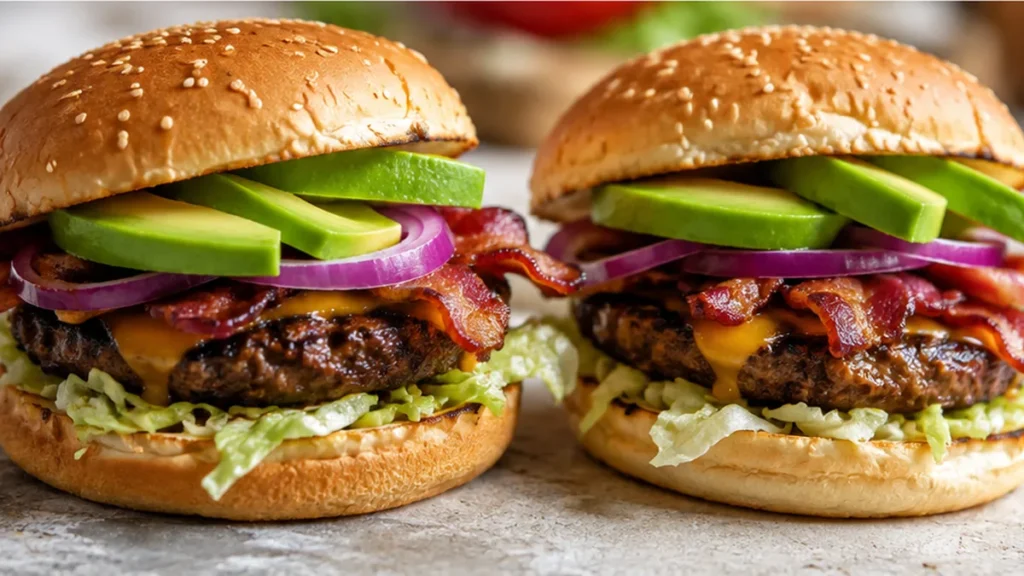
Avocado burger perfection lies in the harmony of seasoning and a well-cooked patty. This avocado burger recipe combines robust flavors with a creamy texture, making it a standout. Crafted for those who appreciate a hearty meal with fresh components, this avocado burger is ideal for weekend grilling or a satisfying weeknight dinner. It’s a simple yet impactful way to improve a classic.
Key takeaways
- Use 80/20 ground beef for juiciness
- Season just before cooking to retain moisture
- Cook at high heat for the Maillard effect
- Avocado adds creaminess and nutrition
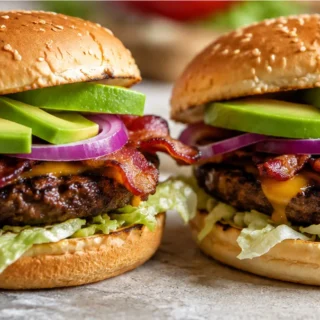
Avocado Bacon Burgers: Juicy & Smoky
Ingredients
- 2 pounds ground beef 80/20
- 1 teaspoon sea salt
- ½ teaspoon freshly cracked black pepper
- 1 teaspoon garlic powder
- ½ teaspoon onion powder
- 2 tablespoons vegetable oil
- 6 hamburger buns, toasted
- ½ small head of iceberg lettuce, shredded
- 9 slices of thick-cut bacon, cooked
- ½ small red onion, thinly sliced into rings
Instructions
- In a large bowl, combine the beef, salt, pepper, garlic powder, and onion powder. Form into 6
- Heat the grill on high and brush the grates with the oil. Place the patties on the grill and cook until slightly charred and the internal temperature reaches 150
- Grill the buns until golden brown, about 4 minutes.
- Divide the lettuce between the bottom buns, then top with the patties, bacon, and onion. Add avocado and jalape
Video
Notes
Understanding the Beef Blend for Optimal Flavor
Using ground beef with an 80/20 fat ratio is crucial for creating juicy burgers. The 20% fat content ensures that the burgers remain moist during cooking while also imparting rich flavor. If you opt for leaner beef, the resulting burger may be dry and lack the desirable juiciness associated with a classic burger.
Importance of Seasoning and Its Timing
Seasoning the beef with sea salt, black pepper, garlic powder, and onion powder enhances the flavor profile. However, it’s essential to season the meat just before forming the patties. Salting too early draws moisture out of the meat, leading to a drier burger. Allow the patties to rest for about 10 minutes after shaping to help them hold their shape during cooking.
Cooking Techniques for Perfectly Juicy Burgers
When cooking the burgers, using a hot grill or skillet is vital for achieving the Maillard reaction, which produces a desirable brown crust. Preheat your cooking surface to around 450°F (232°C) and cook the burgers for about 4-5 minutes on each side for medium doneness. Avoid pressing down on the patties with a spatula, as this releases juices and can lead to a dry burger.
Choosing the Right Toppings for Balance
The addition of avocado, bacon, shredded lettuce, and red onion not only adds flavor but also balances the richness of the beef. The creamy texture of avocado complements the smoky flavor of bacon, while the crunch of lettuce and the sharpness of red onion provide a refreshing contrast. Consider toasting the hamburger buns to add a slight crunch and prevent them from becoming soggy.
Why Avocado is Unique in This Burger
Avocado is not only a trendy topping but also adds a unique creaminess and healthy fats that differentiate this burger from others. Unlike traditional toppings like cheese or sauces, avocado enhances the nutritional profile of the burger, offering vitamins and minerals. Its mild flavor allows it to blend seamlessly with the other ingredients without overpowering them.
How to Prepare the Ingredients for Optimal Flavor
Before cooking, proper preparation of ingredients enhances the overall taste of your avocado bacon burgers. Start by ensuring the ground beef is at room temperature, ideally around 65°F (18°C), to promote even cooking. This helps the fat render properly, which is essential for juiciness. For the bacon, using thick-cut slices ensures a smoky flavor without becoming overly crispy. Pre-cook the bacon until just crisp to allow it to retain some chewiness when assembled in the burger. Additionally, slicing the red onion into thin rings (about 1/8 inch) ensures they soften slightly when placed on the hot burger, enhancing their sweetness.
Scaling the Recipe for Larger Gatherings
When entertaining a larger group, scaling your avocado bacon burger recipe requires careful consideration to maintain quality. For each additional pound of ground beef, increase the seasoning by 1 teaspoon of sea salt, ½ teaspoon of black pepper, 1 teaspoon of garlic powder, and ½ teaspoon of onion powder. This ensures the flavor remains consistent. Cooking times may also need adjustment; for larger batches, consider cooking burgers in batches to avoid overcrowding the grill or skillet, which can lead to steaming rather than searing. Keep the burgers warm in a low oven (around 200°F or 93°C) while finishing the rest.
Understanding Equipment Differences and Their Impact
The equipment you use can greatly affect the outcome of your avocado bacon burgers. A cast-iron skillet retains heat well, allowing for a nice sear, while a non-stick skillet may require less oil but won’t achieve the same crust. If using a grill, ensure it is preheated to about 450°F (232°C) for optimal searing. Cooking on a charcoal grill can add additional smoky flavors, enhancing the overall taste. If using a stovetop, consider using a splatter guard to manage grease from the bacon while ensuring the cooking area remains clean.
Seasonal Ingredient Quality and Its Effect on Flavor
Ingredient quality can vary significantly with the seasons, impacting the flavor of your avocado bacon burgers. In warmer months, ripe avocados are more readily available and will have a creamier texture, enhancing the burger’s richness. Conversely, during the off-season, avocados may be less flavorful; consider substituting with guacamole or avocado spread to maintain creaminess. Additionally, sourcing locally grown tomatoes and lettuce during peak season can elevate the freshness of your toppings. Always taste your ingredients before assembly; this ensures the best quality and flavor in your final dish.
How to Prepare Burgers in Advance for Busy Days
Making avocado bacon burgers ahead of time can save you precious minutes on busy days. To prepare, form the patties from the ground beef mixture, seasoning them with salt, pepper, garlic powder, and onion powder. Wrap each patty individually in plastic wrap and store them in an airtight container in the refrigerator for up to 24 hours. For longer storage, freeze the patties for up to three months. When ready to cook, thaw the frozen patties overnight in the refrigerator and follow your cooking method as usual. This approach helps maintain the burgers’ moisture and flavor, ensuring they remain juicy even after being prepped in advance.
Understanding the Impact of Equipment on Cooking the Perfect Burger
The equipment you use can significantly affect the cooking process of your avocado bacon burger. A cast-iron skillet or grill pan retains heat well and provides a consistent cooking surface, which is essential for achieving the Maillard reaction that gives burgers their signature crust. If using a grill, ensure it’s preheated to medium-high heat (about 375°F to 450°F) for optimal searing. Avoid overcrowding the cooking surface, as this can lower the temperature and lead to steaming rather than searing. Using a meat thermometer to check for doneness is advised; aim for an internal temperature of 160°F for medium-well burgers. This precision ensures that your burgers are not only safe to eat but also perfectly cooked.
Choosing the Right Ingredients for Seasonality and Flavor
The quality of your ingredients can dramatically influence the flavor of your avocado bacon burgers. When selecting avocados, look for those that yield slightly to gentle pressure, indicating ripeness. Seasonality plays a crucial role; for example, using fresh, local produce can enhance the overall taste. In summer, opt for vine-ripened tomatoes and crisp lettuce, while in colder months, consider using roasted vegetables for a different flavor profile. Additionally, the type of bacon can vary in taste and texture; thick-cut bacon provides a satisfying crunch and smokiness, while thinner varieties may become crispy faster but lack the same depth of flavor. Understanding these nuances allows you to tailor your burger to the best available ingredients, enhancing the overall dining experience.
Understanding the Impact of Bacon on Flavor and Texture
Bacon adds a unique smoky flavor and a satisfying crunch to the avocado burger. The Maillard reaction, which occurs during the cooking of bacon, enhances its savory profile. For optimal results, cook bacon until it reaches a crisp texture, which usually takes about 8-10 minutes on medium heat. This ensures that the fat renders properly, creating a non-greasy bite that complements the creamy avocado. The ideal thickness for bacon in this recipe is around 1/4 inch; this thickness balances cooking time and texture. If bacon is too thin, it may become overly crisp and lose its structural integrity, while thick bacon may not cook evenly. Pairing the crispy bacon with the creamy avocado creates a contrast that enhances the overall eating experience.
How to Scale Your Avocado Bacon Burger for Larger Gatherings
Scaling the avocado bacon burger recipe is straightforward, but there are key considerations to maintain flavor and texture. For every additional pound of ground beef, increase the seasoning proportionally: 1 teaspoon of sea salt and ½ teaspoon of pepper per pound. If you’re planning to serve a larger group, consider forming the patties ahead of time and storing them in the refrigerator for up to 24 hours. This allows the flavors to meld. When cooking multiple burgers, use a large skillet or griddle to ensure even cooking. Cooking in batches might lead to uneven doneness if the pan is overcrowded. Aim for a cooking temperature of 375°F (190°C) for optimal searing. Additionally, if you’re using a grill, make sure to preheat it adequately to avoid sticking and achieve those desirable grill marks.
Pro tips
- For the juiciest patties, avoid overworking the meat when forming the avocado burger. Gentle handling keeps the texture tender.
- Ensure your grill grates are clean and well-oiled to prevent sticking, which is key for a beautifully charred avocado burger.
- Burgers should reach an internal temperature of 160°F (71°C) for safe consumption, though they are often removed at 150°F (66°C) and rest to 160°F. Always use a meat thermometer.
- Leftover patties can be stored in an airtight container in the refrigerator for up to 3 days. Reheat gently in a skillet or oven to maintain moisture.
This avocado burger brings together classic comfort with a fresh twist. Experiment with different cheeses or a fried egg for an extra layer of indulgence. Enjoy your creation!
Frequently asked questions
Can I use turkey or chicken instead of beef?
Yes, you can substitute ground turkey or chicken for beef, but keep in mind that these leaner meats may require additional fat or moisture to prevent dryness. Consider adding ingredients like olive oil or additional toppings to enhance flavor and texture.
How do I know when the burgers are cooked to my liking?
The best way to check doneness is to use a meat thermometer. For medium, aim for an internal temperature of 160°F (71°C). If you prefer rare or well-done, adjust the cooking time accordingly, remembering that ground beef should always reach at least 160°F for safety.
Can I prepare the patties in advance?
Yes, you can prepare the burger patties in advance and store them in the refrigerator for up to 24 hours. Make sure to wrap them tightly to prevent drying out. If freezing, place parchment paper between each patty to avoid sticking.
What can I use instead of bacon?
If you’re looking for a substitute for bacon, consider using turkey bacon or crispy fried onions for a similar crunch and flavor. Alternatively, you can skip the bacon altogether and add extra avocado or a different topping to maintain balance in the burger.
More from Keto Dinners & Mains →