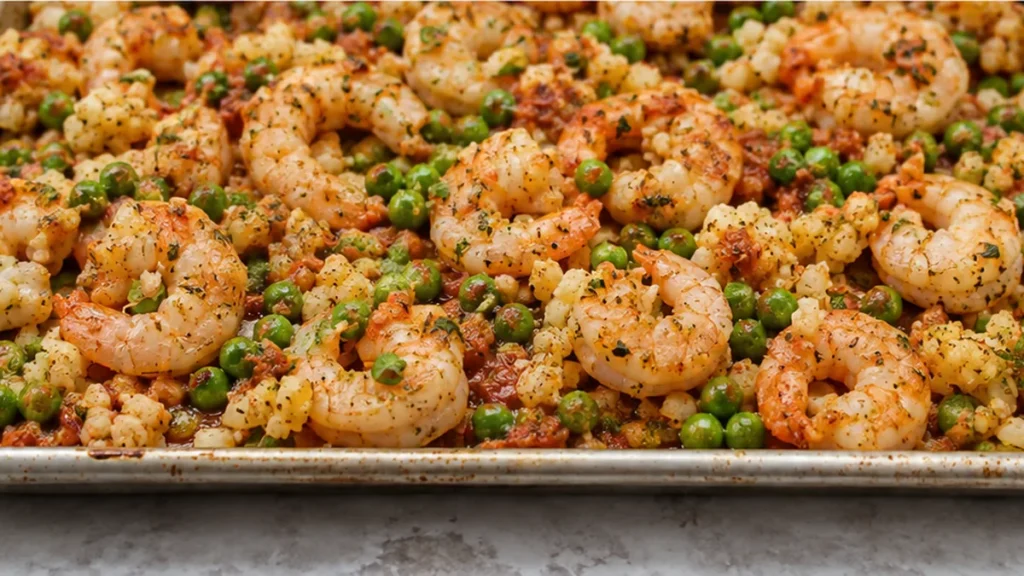
Sheet pan shrimp make weeknight cooking a breeze, and this Sheet Pan Shrimp and Cauli Rice recipe is a perfect illustration. This recipe suits busy evenings when you want something satisfying without a mountain of dishes. This dish combines tender shrimp, flavorful riced cauliflower, and sweet peas all cooked together on one pan.
Key takeaways
- Cook shrimp at 400°F (204°C) for 6-8 minutes for perfect texture.
- Use Prianno Rosso Pesto or similar for rich flavor, adjusting seasonings accordingly.
- Avoid overcooking riced cauliflower; heat just until warmed through.
- Incorporate heavy cream for a creamy texture, but consider the additional richness.
Speedy Sheet Pan Shrimp & Cauliflower Magic!
Ingredients
- 1 bag Season’s Choice Garlic Herb Riced Cauliflower (use 2 bags for a higher cauli-to-shrimp ratio)
- 2 tablespoons Prianno Rosso Pesto Sauce or similar sauce
- 1 lb Fremont Fish Market Jumbo EZ Peel Raw Shrimp, tail off
- 1 cup Simply Nature Organic Frozen Sweet Peas
- 1/2 teaspoon garlic powder
- 2 tablespoons butter
- up to 1/4 cup heavy cream (optional)
- salt and pepper to taste
- fresh lemon juice to taste
Instructions
- Preheat the oven to 425 degrees F (220 C). Mix the riced cauliflower and pesto sauce directly on a large sheet pan. Bake for 15-20 minutes.
- Arrange the raw shrimp and frozen peas on top of the baked cauliflower rice. Sprinkle the shrimp with salt, pepper, and garlic powder, then brush with melted butter. Bake for another 5-7 minutes, or until the shrimp are pink and cooked through.
- Carefully remove the sheet pan from the oven. Add the heavy cream (if using) and stir everything to combine directly on the pan. This will make the dish creamier, almost like a risotto.
- Season with additional salt and pepper to taste, and a generous squeeze of fresh lemon juice for brightness. Serve immediately.
Notes
Achieving Perfectly Cooked Shrimp
Cooking shrimp perfectly is crucial for this dish. Shrimp should be cooked at a high temperature for a short duration, ideally around 400°F (204°C) for 6-8 minutes. Overcooking will lead to rubbery textures, while undercooking can pose food safety risks. Aim for shrimp that are pink and opaque, indicating they are cooked through.
Balancing Flavors with Pesto and Seasonings
The choice of pesto sauce significantly impacts the flavor profile of this dish. Prianno Rosso Pesto adds a rich, herbaceous note, but if unavailable, consider alternatives like basil pesto or sun-dried tomato pesto. The garlic powder enhances the overall taste, so ensure it is evenly distributed to prevent clumping. Adjust salt and pepper to taste, remembering that the shrimp and pesto will contribute their own saltiness.
Utilizing Riced Cauliflower Effectively
The Season’s Choice Garlic Herb Riced Cauliflower serves as a nutritious base. To maintain moisture and avoid a mushy texture, avoid overcooking the cauliflower. It should be heated just until warmed through, about 5-7 minutes in the oven. If using two bags for a higher cauli-to-shrimp ratio, increase the cooking time slightly to ensure even heating.
Incorporating Cream for Richness
Adding heavy cream is optional but can elevate the dish by creating a creamy texture. If you choose to include it, add up to 1/4 cup after the shrimp and cauliflower are cooked, stirring gently to create an emulsion. This will help bind the flavors together and provide a luxurious mouthfeel. However, be mindful of the additional calories and richness it adds.
Maximizing Freshness with Lemon Juice
Fresh lemon juice is essential for brightening the dish. Add it just before serving to enhance the flavors without cooking the acidity out. The acidity helps cut through the richness of the butter and cream, balancing the dish. Aim for about 1-2 tablespoons, adjusting according to your taste preference.
How to Make Ahead for Easy Weeknight Dinners
Making this sheet pan shrimp dish ahead of time can streamline your weeknight meals. You can prepare the riced cauliflower and shrimp mixture in advance. Combine the shrimp, pesto, garlic powder, and peas in a bowl, cover, and refrigerate for up to 24 hours. When ready to cook, simply spread the mixture on the sheet pan, add the riced cauliflower, and follow the cooking instructions. This method not only saves time but also allows the flavors to meld. Just remember that the shrimp should be cooked fresh for the best texture, so avoid pre-cooking them.
Understanding Batch Scaling for Gatherings
If you’re hosting a gathering, scaling this recipe is straightforward. For every additional pound of shrimp, increase the riced cauliflower by one bag and adjust the peas accordingly. Ensure that the sheet pan is large enough to accommodate the increased volume without overcrowding, which can lead to steaming instead of roasting. Cooking times may vary slightly, so monitor the shrimp closely. A larger batch can be divided between two pans if necessary, allowing for even cooking and crisping.
Choosing the Right Equipment for Optimal Results
Using the right equipment can significantly impact the outcome of your sheet pan shrimp. A heavy-duty, rimmed baking sheet is essential for even heat distribution and to prevent spills. If you have a convection oven, consider using it; it circulates hot air, resulting in perfectly cooked shrimp and a nicely browned cauliflower. Additionally, a silicone mat or parchment paper can help with cleanup and prevent sticking. Avoid overcrowding the pan, as this can lead to uneven cooking.
Adapting to Seasonal Ingredients for Freshness
Using seasonal ingredients can enhance the flavor profile of your sheet pan shrimp dish. In the summer, fresh peas can replace frozen ones for a sweeter taste. During fall, consider adding roasted butternut squash for a heartier texture. Adjust the amount of pesto based on the freshness of your ingredients; fresher herbs may require less seasoning. Being mindful of ingredient quality not only affects taste but also the nutritional value of your meal.
How to Store Leftovers for Maximum Freshness
Storing leftovers from sheet pan shrimp and cauliflower properly is crucial to maintain flavor and texture. Allow the dish to cool completely before transferring it to an airtight container. This prevents condensation, which can lead to sogginess. Store in the refrigerator for up to 3 days. For longer storage, freeze in portions, ensuring to use freezer-safe containers. The dish can be reheated in the oven at 350°F (175°C) for about 15-20 minutes or in the microwave until heated through, but note that the shrimp may lose some of their original texture.
Adjusting Serving Sizes Without Compromising Flavor
Scaling the recipe for larger gatherings is simple yet requires attention to ingredient ratios to maintain flavor. For every additional bag of riced cauliflower, increase the shrimp by 1 pound and adjust the pesto sauce accordingly, typically by 1 tablespoon for every additional bag of cauliflower. This ensures that the dish remains balanced and flavorful. When scaling, consider that the cooking time may vary slightly, so monitor the shrimp closely to avoid overcooking.
Choosing the Right Baking Sheet for Even Cooking
The type of baking sheet you use can significantly affect the outcome of your sheet pan shrimp. A heavy-duty, rimmed baking sheet is ideal as it distributes heat evenly, preventing hot spots. Avoid using non-stick pans, as they can cause uneven cooking and browning. Line the baking sheet with parchment paper for easy cleanup and to prevent sticking. Ensure the shrimp and cauliflower are spread out in a single layer to promote even cooking and browning.
How Seasonal Ingredients Impact Flavor Profile
Using seasonal ingredients can enhance the flavor profile of your sheet pan shrimp dish. Fresh, in-season produce, such as asparagus or bell peppers, can be added alongside the cauliflower for a vibrant color and taste. When using fresh peas instead of frozen, for example, the sweetness is more pronounced, enhancing the overall dish. Always taste and adjust the seasoning to account for the natural sweetness or bitterness of seasonal vegetables, ensuring a harmonious balance.
How to Prepare Shrimp for Optimal Flavor and Texture
To ensure your shrimp are flavorful and have the right texture, it’s essential to properly thaw and season them. Begin by placing the frozen shrimp in a bowl of cold water for about 15-20 minutes until fully thawed. Pat them dry with paper towels to remove excess moisture, which can lead to steaming instead of roasting. Season the shrimp with salt, pepper, and a touch of garlic powder before adding them to the sheet pan. The garlic powder will enhance the overall flavor without overpowering the dish. Additionally, if using fresh shrimp, be mindful of their size; larger shrimp may require a slightly longer cooking time to ensure they are fully cooked and tender.
Understanding the Role of Cauliflower in Texture and Flavor
Riced cauliflower is a fantastic low-carb substitute that adds volume and texture to this dish. However, it can become mushy if not handled properly. When using frozen riced cauliflower, ensure it is adequately thawed and drained of excess moisture before spreading it on the sheet pan. This helps achieve a slightly crispy texture while roasting. The natural flavors of the cauliflower will complement the shrimp and pesto sauce, creating a balanced dish. If you prefer a firmer texture, consider roasting the cauliflower separately for a few minutes before adding the shrimp to the pan. This method allows for better control over the cooking process and prevents the dish from becoming watery.
How to Scale the Recipe Without Losing Flavor
Scaling the Speedy Sheet Pan Shrimp & Cauliflower recipe requires careful attention to ingredient ratios to maintain the dish’s flavor integrity. For every additional bag of riced cauliflower, you should increase the shrimp by at least 0.5 lb. This ensures that the shrimp remains the star of the dish while providing enough volume. If doubling the recipe, consider using 4 tablespoons of pesto sauce to enhance the flavor without overwhelming the dish. The cooking time may also need slight adjustments; for larger batches, extend the roasting time by about 5-10 minutes, monitoring the shrimp to prevent overcooking. Ensure even distribution on your sheet pan to allow proper airflow and cooking, which is crucial for achieving that perfect caramelization.
Understanding the Importance of Sheet Pan Selection
The choice of sheet pan can significantly affect the cooking outcome of your shrimp and cauliflower dish. Opt for a heavy-duty, rimmed baking sheet, ideally made of aluminum or stainless steel, as these materials conduct heat better, promoting even cooking. A non-stick surface can help prevent sticking, but be cautious with using high heat, which can damage non-stick coatings. If using a dark or non-stick pan, reduce the oven temperature by 25°F to avoid burning. The size of the sheet pan matters too; overcrowding can lead to steaming rather than roasting, resulting in a less desirable texture. For optimal results, aim for a single layer of shrimp and cauliflower on the pan, allowing for maximum caramelization and flavor development.
Pro tips
- Don’t overcrowd the sheet pan: Ensure shrimp and cauliflower are in a single layer for even cooking and browning. Use two sheet pans if necessary.
- Internal temperature for shrimp: Shrimp are cooked when they turn opaque pink and reach an internal temperature of 145°F (63°C).
- For extra crispiness: After the initial cauliflower bake, if it’s still too wet, spread it out more before adding shrimp. A slightly drier base helps prevent steaming and encourages browning.
- Storage: Leftovers can be stored in an airtight container in the refrigerator for up to 2-3 days. Reheat gently in a skillet or microwave.
This Sheet Pan Shrimp and Cauli Rice offers a simple yet satisfying meal solution for any day of the week. Experiment with adding other vegetables like bell peppers or cherry tomatoes for variety. Enjoy this quick, flavorful, and easy-to-clean-up dinner!
Frequently asked questions
How do I know when the shrimp are fully cooked?
Shrimp are fully cooked when they turn pink and opaque. This typically takes about 6-8 minutes at 400°F (204°C). Overcooking can make them rubbery, so keep an eye on them.
Can I use fresh cauliflower instead of frozen riced cauliflower?
Yes, you can use fresh cauliflower, but you’ll need to rice it yourself. Steam or sauté it briefly to soften before adding to the sheet pan, ensuring it doesn’t become mushy.
What can I substitute for heavy cream in this recipe?
You can use half-and-half or coconut milk as a lighter alternative to heavy cream. However, these substitutes will alter the richness and flavor profile of the dish slightly.
Is it necessary to add lemon juice?
While it’s not strictly necessary, fresh lemon juice brightens the dish and balances richness. If you prefer a less acidic flavor, you can omit it or reduce the amount used.
More from Keto Dinners & Mains →