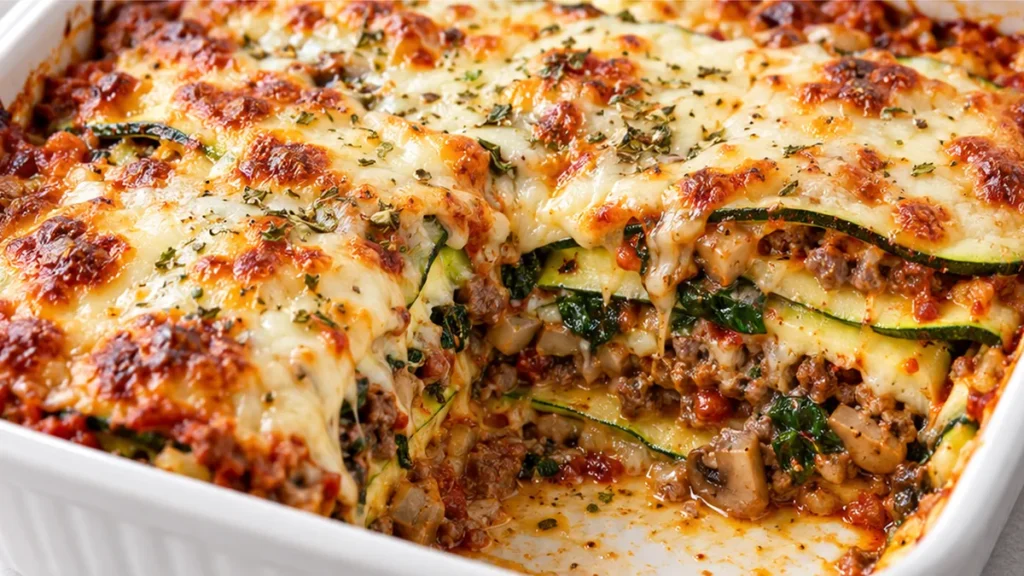
This zucchini lasagna without noodles is a healthy alternative to traditional lasagna. It uses thinly sliced zucchini in place of pasta, making it low-carb.
Key takeaways
- Salting and draining zucchini prevents sogginess.
- Layering with different cheeses enhances flavor and texture.
- Using fresh herbs can significantly improve taste.
- Zucchini adds a unique flavor and reduces carbs compared to traditional lasagna.
Zucchini Lasagna Without Noodles
Ingredients
- 1 pound ground beef (93/7)
- 1 ½ teaspoons Italian seasoning
- ½ teaspoon fine salt
- ¼ teaspoon black pepper
- 1 tablespoon olive oil
- 2 medium zucchini (4 cups)
- 2 cups diced mushrooms
- 1 cup diced yellow onion (1/2 medium onion)
- 4 garlic cloves, minced
- 2 cups packed fresh spinach
Instructions
- In a deep skillet over medium-high heat, add ground beef, Italian seasoning, salt, and pepper. Cook until beef is no longer pink, about 7-10 minutes.
- Remove beef from skillet to a plate lined with a paper towel.
- Wipe out the skillet and add olive oil. Once hot, add zucchini, mushrooms, onion, garlic, and a dash of salt and pepper. Sauté for 7-9 minutes until onions are translucent.
- Stir in spinach and sauté for another 2 minutes.
- Stir in marinara sauce, balsamic vinegar, cooked ground beef, and 1/2 cup mozzarella cheese.
- Dollop cottage cheese evenly over top and let cook on low simmer for about 10 minutes.
- Top with remaining mozzarella cheese and Parmesan; cover and cook for another 3-5 minutes until cheese is melted.
- Remove from heat and let set for 10 minutes before serving.
Understanding the Role of Zucchini in Lasagna
Zucchini serves as a versatile substitute for traditional lasagna noodles, providing a low-carb alternative that retains moisture and flavor. The key to utilizing zucchini effectively lies in its water content, which can lead to a soggy dish if not managed properly. By salting and draining the zucchini before assembly, you can reduce excess moisture and enhance the overall texture of your zucchini lasagna without noodles.
Common Issues and Solutions in Zucchini Lasagna
When preparing zucchini lasagna, several common issues can arise:
- Soggy Layers: Excess water from the zucchini can lead to a watery lasagna. To combat this, slice the zucchini thinly, sprinkle with salt, and let it sit for about 30 minutes to draw out moisture.
- Flavor Imbalance: If the zucchini is bland, enhance the flavor by seasoning it well with herbs and spices before assembly.
- Structural Integrity: Without the traditional noodles, the dish may lack stability. Layering with a mix of cheeses and a firm sauce helps maintain structure.
Ingredient Swaps for Enhanced Flavor and Texture
Experimenting with ingredient swaps can elevate your zucchini lasagna:
- Cheese Variations: Use ricotta, cottage cheese, or even vegan cheese alternatives for different textures and flavors. Each type will yield a distinct creaminess and taste.
- Herb Alternatives: Instead of basil, try using oregano or thyme for a different aromatic profile that complements the zucchini and sauce.
- Meat Options: Ground turkey or chicken can replace beef for a lighter dish, while plant-based meat substitutes can cater to vegetarian preferences.
The Unique Characteristics of Zucchini Lasagna
This dish stands out from traditional lasagna due to its use of zucchini as a primary ingredient, which not only reduces carbohydrates but also adds a unique flavor and texture. Unlike pasta, zucchini absorbs flavors differently, allowing it to meld beautifully with sauces and cheeses, creating a harmonious dish that is both satisfying and nutritious.
Understanding the Make-Ahead Options for Zucchini Lasagna Without Noodles
Zucchini lasagna without noodles can be prepared in advance, making it a convenient option for busy weeknights or meal prep. To ensure the best results, assemble the layers without baking and store them in the refrigerator for up to 24 hours. This allows the flavors to meld together, enhancing the overall taste. However, be mindful of moisture; zucchini can release water during storage. To mitigate this, consider salting the zucchini slices before assembly to draw out excess moisture. For longer storage, you can freeze the assembled lasagna. Wrap it tightly in plastic wrap and then in aluminum foil to prevent freezer burn. When ready to eat, thaw it overnight in the refrigerator and bake it directly from there, adjusting the cooking time as needed.
Scaling the Recipe for Different Serving Sizes
One of the advantages of zucchini lasagna without noodles is its flexibility in scaling. If you’re cooking for a larger gathering, simply multiply the ingredient quantities by the number of servings required. However, keep in mind that the baking time may change depending on the size of the dish. A larger lasagna may take longer to cook through, while a smaller version will cook more quickly. Use a thermometer to check for doneness; the internal temperature should reach 74°C (165°F). Conversely, if you’re cooking for one or two, consider halving the recipe or using a smaller baking dish. Individual portions can also be made using ramekins, which will reduce cooking time and allow for personal servings.
Choosing the Right Equipment for Optimal Results
The equipment used can significantly impact the outcome of zucchini lasagna without noodles. A high-quality mandoline or sharp knife is essential for slicing zucchini uniformly, ensuring even cooking. An oven-safe baking dish is also crucial; glass or ceramic dishes retain heat well and promote even cooking. If you prefer a crispy top, consider using a broiler-safe dish to finish the lasagna under the broiler for a few minutes at the end of the baking process. Additionally, using parchment paper can facilitate easy removal and cleanup. If you have a food processor, it can be handy for quickly chopping vegetables or making sauces, further streamlining the preparation process.
Serving Suggestions and Pairings for Zucchini Lasagna
When it comes to serving zucchini lasagna without noodles, consider complementary sides and beverages to enhance the meal. A fresh green salad with a light vinaigrette provides a refreshing contrast to the rich flavors of the lasagna. Garlic bread or a crusty baguette can also be a great addition, perfect for soaking up any sauce. For beverages, a light-bodied red wine, such as Pinot Noir, pairs beautifully with the tomato sauce and zucchini. If you’re looking for non-alcoholic options, a sparkling water with lemon or a chilled herbal tea can be a delightful accompaniment. Additionally, garnishing the lasagna with fresh basil or parsley before serving adds a burst of color and flavor.
Understanding the Texture of Zucchini in Lasagna
The texture of zucchini plays a crucial role in the overall experience of zucchini lasagna without noodles. Zucchini has a high water content, which can lead to a soggy dish if not handled properly. To achieve the best texture, it is advisable to slice the zucchini thinly, ideally 3-5 mm thick, to ensure even cooking. Additionally, salting the slices and allowing them to rest for about 20-30 minutes can draw out excess moisture. This technique not only prevents sogginess but also intensifies the zucchini’s flavor. After resting, pat the slices dry with a paper towel to remove any residual moisture. This method is particularly effective in maintaining a firmer texture, allowing the zucchini to hold its shape during baking.
Batch Scaling for Zucchini Lasagna Without Noodles
Scaling the recipe for zucchini lasagna without noodles requires careful consideration of ingredient ratios and baking times. When doubling or halving the recipe, maintain the same proportions of zucchini to sauce and cheese to ensure balanced flavors. For example, if using 1 kg of zucchini, pair it with approximately 500 g of ricotta and 300 g of mozzarella. Baking time may also vary; larger batches may need an additional 10-15 minutes in the oven to ensure that everything is heated through and that the cheese is adequately melted and bubbly. Conversely, smaller portions may cook faster, so check for doneness a few minutes earlier. Always use a baking dish that accommodates the volume of ingredients, as overcrowding can lead to uneven cooking.
Seasonal Variations and Ingredient Quality in Zucchini Lasagna
The quality of zucchini and other ingredients can significantly impact the final dish, especially in a recipe like zucchini lasagna without noodles. Fresh, in-season zucchini is typically firmer and has a more vibrant flavor compared to out-of-season varieties, which may be watery and bland. During peak season, consider enhancing the dish with additional seasonal vegetables such as spinach or bell peppers, which can complement the zucchini and add nutritional value. Additionally, using high-quality cheeses can elevate the flavor profile; for instance, opting for fresh mozzarella instead of pre-shredded can yield a creamier texture. Always choose organic or locally sourced ingredients when possible, as they tend to have superior taste and nutritional benefits, enhancing the overall experience of the dish.
Understanding the Storage and Make-Ahead Options for Zucchini Lasagna Without Noodles
Zucchini lasagna without noodles can be prepared in advance, making it a convenient option for busy weeknights or meal prep. To make ahead, assemble the lasagna but do not bake it. Cover it tightly with plastic wrap or aluminum foil and refrigerate for up to 24 hours. When ready to bake, remove the cover and allow it to come to room temperature for about 30 minutes. This helps ensure even cooking. If you plan to freeze the assembled lasagna, wrap it tightly and store it in the freezer for up to three months. To bake from frozen, remove the wrap and bake it covered at 180°C (350°F) for about 1.5 hours, then uncover and bake for an additional 30 minutes. This method allows the flavors to meld beautifully over time.
How Ingredient Quality and Seasonality Affect Zucchini Lasagna
The quality and seasonality of ingredients play a significant role in the overall taste and texture of zucchini lasagna without noodles. Fresh, in-season zucchini tends to be firmer and more flavorful, providing a better structure for the dish. When zucchini is out of season, it may be watery and less flavorful, potentially leading to a soggy lasagna. Opt for organic or locally sourced zucchini when possible, as they are often harvested at peak ripeness. Additionally, the quality of cheese and tomatoes used can greatly influence the dish’s richness and depth of flavor. For the best results, choose high-quality mozzarella and San Marzano tomatoes, which are known for their sweet flavor and low acidity. This attention to ingredient quality will elevate your zucchini lasagna to new heights.
Pro tips
Pro tip: Best served immediately while hot!
Frequently asked questions
Can I prepare zucchini lasagna in advance?
Yes, you can prepare zucchini lasagna a day ahead. Assemble the layers, cover tightly, and refrigerate. When ready to serve, bake directly from the fridge, adding a few extra minutes to the cooking time.
How do I prevent the zucchini from becoming mushy?
To prevent mushiness, slice the zucchini thinly and salt it to draw out moisture before layering. Baking at a higher temperature can also help achieve a firmer texture.
Can I freeze zucchini lasagna?
Yes, zucchini lasagna can be frozen. Cool completely, wrap tightly, and store in the freezer for up to three months. Thaw in the refrigerator before baking.
What can I use instead of cheese in a dairy-free version?
For a dairy-free version, consider using cashew cheese or a blend of nutritional yeast and blended tofu. These alternatives provide a creamy texture and a cheesy flavor without dairy.
More from Keto Dinners & Mains →