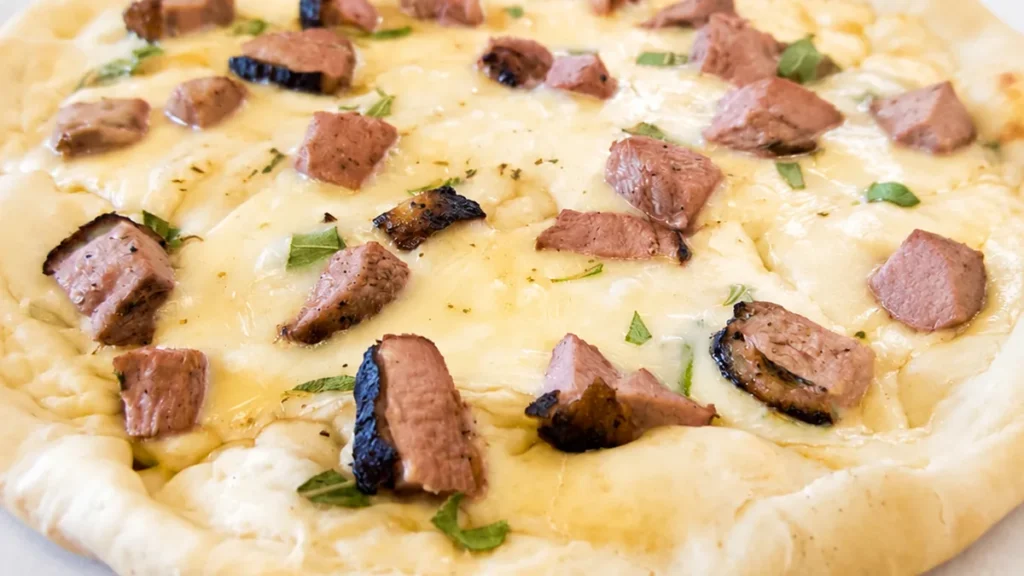
Duck pizza is a unique dish that combines rich flavors and textures. This recipe highlights crispy duck and savory toppings for a satisfying meal.
Key takeaways
- Duck’s rich flavor requires careful cooking to prevent greasiness.
- Sear duck skin to render fat and enhance flavor.
- Balance duck’s richness with tangy and sweet toppings.
- Monitor internal temperature to avoid overcooking for juicy results.
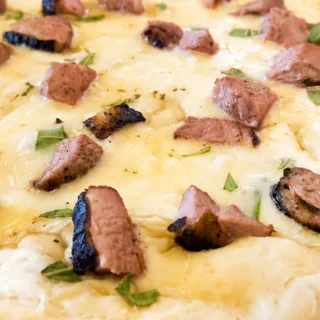
Duck Pizza Perfection!
Ingredients
Instructions
- Crush sage leaves, garlic, and pepper in a mortar and pestle to make a paste. Mix with lemon juice and olive oil in a bowl. Marinate duck breast for at least 2 hours.
- Grill the duck breast over medium-high heat, turning once, until it reaches an internal temperature of 130 degrees. Cover with aluminum foil for 5 minutes.
- Preheat the grill to 400 degrees.
- Place the pizza crust on a pizza pan and top with mozzarella cheese and chopped sage.
- Thinly slice the duck breast and add it to the pizza.
- Grill the pizza until the cheese melts and the crust is cooked, about 10 minutes.
- Slice and serve the pizza.
Understanding Duck’s Unique Flavor Profile
Duck is renowned for its rich, gamey flavor, which stands in contrast to more common pizza toppings like chicken or pepperoni. The fat content in duck, particularly in the skin, contributes to its moistness and depth of flavor. When preparing duck pizza, it’s crucial to render some of this fat before cooking to prevent the pizza from becoming greasy. Aim for a duck with a fat content of around 20-30% for optimal flavor and texture.
The Importance of Proper Cooking Techniques
Achieving the perfect duck pizza relies heavily on cooking techniques. The Maillard reaction, which occurs at temperatures above 300°F (150°C), is essential for developing a savory crust on the duck. Cook the duck breast to an internal temperature of 135°F (57°C) for medium-rare, ensuring it remains tender and juicy. Letting the duck rest for at least 5 minutes after cooking allows the juices to redistribute, enhancing flavor.
Balancing Flavors with Toppings
Complementing the rich flavor of duck is vital for a harmonious pizza. Ingredients like fresh herbs, tangy cheeses, and sweet fruits can balance the dish. For instance, adding a drizzle of balsamic reduction can enhance the overall taste profile by introducing acidity. Consider using toppings such as caramelized onions or figs, which pair beautifully with duck, creating a well-rounded flavor experience.
Common Pitfalls and How to Avoid Them
- Greasy Pizza: If the duck is not rendered properly, excess fat can make the pizza greasy. Ensure to sear the duck skin side down first to render out the fat.
- Overcooked Duck: Overcooking can lead to dry meat. Use a meat thermometer to monitor the internal temperature and remove the duck from heat at 135°F (57°C).
- Soggy Crust: A soggy crust can result from too much moisture from toppings. Pre-cook ingredients like mushrooms or spinach to reduce moisture before adding them to the pizza.
Unique Aspects of Duck Pizza
Duck pizza stands out due to its luxurious and rich flavor profile, which is less common in traditional pizza recipes. Unlike typical meats, duck offers a unique depth that pairs well with gourmet ingredients. The use of duck fat can also enhance the dough’s flavor if brushed on the crust before baking, creating a crispy, flavorful base that is distinctively different from other pizzas.
How to Prepare Duck for Optimal Flavor and Texture
When making duck pizza, the preparation of the duck is crucial for achieving the desired flavor and texture. Start by choosing high-quality duck breast, ideally from a reputable source. The skin should be crispy, while the meat remains tender and juicy. To prepare, score the skin in a crosshatch pattern, which helps render the fat and allows for even cooking. Season generously with salt and pepper, and consider marinating with herbs or spices for added depth. Cook the duck skin-side down in a cold skillet over medium heat, rendering the fat slowly. This method allows the skin to crisp without overcooking the meat. Aim for an internal temperature of 135°F (57°C) for medium-rare, which takes about 6-8 minutes of cooking time. Let the duck rest for at least 5 minutes before slicing to ensure juices are retained.
Choosing the Right Cheese for Duck Pizza
The selection of cheese can significantly impact the overall flavor profile of your duck pizza. Traditional choices like mozzarella may not complement the rich flavor of duck as well as other options. Consider using a blend of cheeses such as fontina and gouda, which provide a creamy texture and nutty flavor. A sprinkle of blue cheese can also add a tangy contrast that balances the richness of the duck. When using these cheeses, ensure they melt well and create a cohesive topping. For a unique twist, try adding a layer of goat cheese for a creamy, tart element that contrasts beautifully with the savory duck. Remember, the cheese should enhance rather than overpower the duck’s flavor.
Adapting Duck Pizza for Seasonal Ingredients
Seasonal ingredients can elevate your duck pizza, making it even more delicious and relevant to the time of year. In spring, consider adding fresh asparagus or peas, which provide a bright, crisp contrast to the rich duck. In summer, ripe tomatoes and fresh basil make for a classic combination that highlights freshness. Autumn can bring roasted butternut squash or caramelized onions, adding sweetness and depth. Winter might call for earthy mushrooms or Brussels sprouts, which pair well with the duck’s flavor. Adjusting your toppings based on seasonal availability not only enhances the dish but also supports local agriculture. When using seasonal ingredients, be mindful of their moisture content, as this can affect the pizza’s overall texture.
Scaling Duck Pizza for Larger Gatherings
If you’re planning to serve duck pizza for a larger gathering, scaling the recipe requires some adjustments to ensure consistency in flavor and texture. When increasing the quantity, consider using a larger baking surface, such as a pizza stone or a baking sheet, to accommodate the additional pizzas. Keep the oven temperature consistent, typically around 475°F (245°C), to ensure even cooking. When scaling ingredients, maintain the same ratios; for instance, if doubling the duck, ensure you also double the cheese and sauce accordingly. Additionally, prepare the duck in batches to avoid overcrowding the pan, which can lead to uneven cooking. Finally, consider pre-cooking the duck and slicing it ahead of time, allowing you to assemble and bake the pizzas quickly when guests arrive.
How to Prepare Duck Pizza Ahead of Time
When planning to make duck pizza, preparation can significantly enhance your cooking experience. The duck can be cooked and shredded a day in advance, allowing the flavors to meld. Store the cooked duck in an airtight container in the refrigerator. The pizza dough can also be made ahead of time; after kneading, let it rise, then punch it down and refrigerate it. This resting period enhances gluten development, resulting in a better texture. When ready to assemble, allow the dough to come to room temperature before stretching it out. This method saves time and ensures a delicious, stress-free meal.
Understanding the Impact of Ingredient Quality on Duck Pizza
The quality of the ingredients you choose for your duck pizza can drastically affect the final outcome. Fresh, high-quality duck can provide a richer flavor and better texture. Opt for duck breast or leg sourced from reputable suppliers. Seasonal vegetables or herbs can also enhance the dish’s flavor profile. For instance, using fresh herbs like thyme or rosemary during the peak of their season can elevate the taste. Additionally, the type of cheese impacts the pizza’s overall character; a well-aged cheese will provide a more complex flavor compared to a young cheese. Always aim for the freshest ingredients to ensure the best results.
Choosing the Right Equipment for Perfect Duck Pizza
The equipment you use can make a significant difference in the preparation of duck pizza. A pizza stone or steel is highly recommended for achieving a crispy crust. Preheat your oven to at least 475°F (245°C) with the stone inside for optimal heat retention. If you don’t have a pizza stone, a baking sheet can work, but it may not yield the same level of crispiness. A pizza peel is also useful for transferring the pizza to the oven. Ensure that you have a good quality knife for slicing the duck and a rolling pin for the dough. The right tools can streamline the process and enhance the final product.
How to Store Duck Pizza for Maximum Freshness
Storing duck pizza properly is crucial to maintain its flavor and texture. If you have leftovers, allow the pizza to cool to room temperature before wrapping it tightly in plastic wrap or aluminum foil. For best results, store it in the refrigerator for up to 3 days. Reheat slices in a preheated oven at 350°F (175°C) for about 10-15 minutes, ensuring the crust remains crispy. Avoid microwaving, as this can lead to a soggy crust. For longer storage, consider freezing the pizza. Wrap it tightly in plastic wrap and then in aluminum foil to prevent freezer burn. Duck pizza can be frozen for up to 2 months. To reheat, thaw it overnight in the refrigerator and then bake as mentioned above.
Scaling Duck Pizza for Larger Gatherings Without Compromising Quality
When scaling duck pizza for larger gatherings, maintaining quality while increasing quantity is essential. A good rule of thumb is to increase the dough and toppings proportionally. For example, if your original recipe serves 4, and you need to serve 12, triple the ingredients. However, be mindful of oven space and cooking times. Baking multiple pizzas at once can lead to uneven cooking, so consider using multiple baking sheets and rotating them halfway through the cooking process. Additionally, prepare the duck in batches if necessary, ensuring that each portion is cooked evenly. Keep in mind that the flavors may intensify when scaling up, so taste as you go and adjust seasoning accordingly to avoid overpowering the dish.
Pro tips
Pro tip: Best served immediately while hot!
Frequently asked questions
Can I use duck breast instead of duck confit for this pizza?
Yes, duck breast is a great choice for duck pizza. Just ensure you cook it properly to maintain juiciness, aiming for medium-rare at 135°F (57°C).
What type of cheese works best with duck pizza?
Cheeses like goat cheese or blue cheese complement duck well, adding a tangy contrast to its richness. Mozzarella can also work for a milder flavor.
How do I prevent the pizza from becoming soggy?
To prevent sogginess, pre-cook moisture-rich toppings like spinach or mushrooms and ensure the duck is rendered properly before adding it to the pizza.
Is it necessary to rest the duck before slicing?
Yes, resting the duck for at least 5 minutes before slicing allows the juices to redistribute, resulting in a more flavorful and tender meat on your pizza.
More from Keto Dinners & Mains →