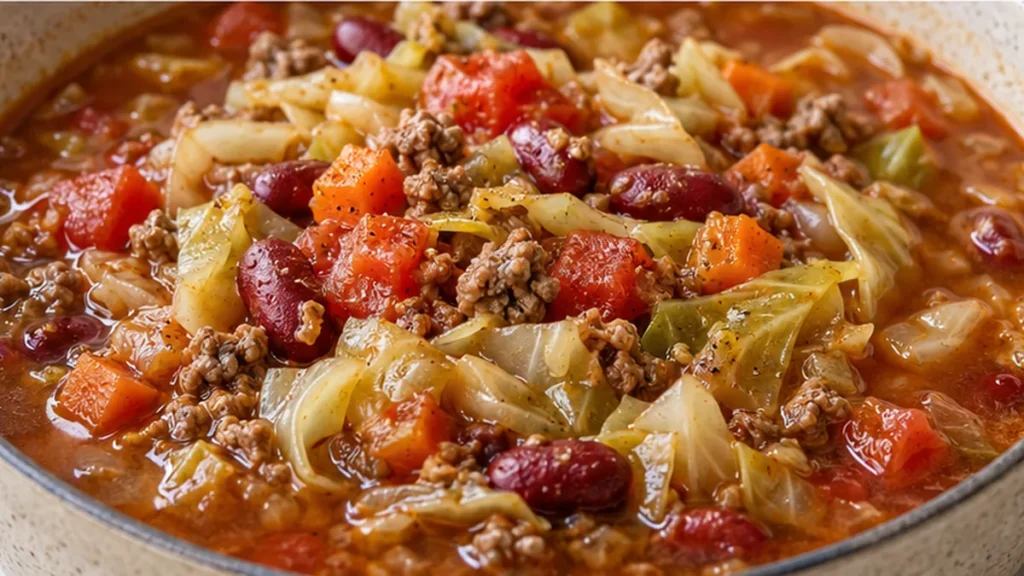
Beef cabbage soup offers a comforting experience through a slow, gentle simmer that allows the flavors to meld beautifully. This beef cabbage soup recipe delivers a hearty, wholesome meal with minimal fuss, making it perfect for busy weeknights or relaxed weekend cooking. This recipe focuses on simple, readily available ingredients that come together to create a deeply satisfying and nourishing beef cabbage soup. It’s a fantastic way to enjoy a vegetable-packed meal that feels both comforting and light.
Key takeaways
- Use lean ground beef for a rich flavor without excess grease.
- Proper seasoning enhances the natural flavors of the ingredients.
- Chop vegetables evenly for balanced texture in the soup.
- Canned tomatoes add acidity and sweetness, essential for flavor balance.
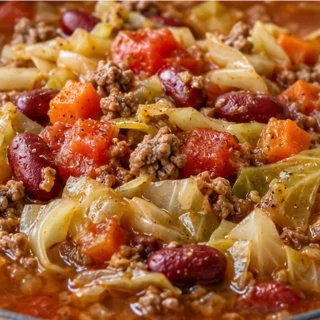
Cozy Beef & Cabbage Soup: Hearty Meal!
Ingredients
- 1 tablespoon olive oil
- 1 pound lean ground beef
- 3 teaspoons minced garlic
- salt to taste
- pepper to taste
- ½ chopped head cabbage
- 1 (28-ounce) can diced tomatoes
- 2 stalks chopped celery
- 2 medium peeled and chopped carrots
- 1 (16-ounce) can kidney beans, (drained)
Instructions
- In a large pot, add 1 tablespoon olive oil and 1 pound lean ground beef. Cook and brown the beef until no longer pink.
- Add 3 teaspoons minced garlic and salt and pepper to taste and cook for 30 seconds.
- Add ½ chopped head cabbage, 1 (28-ounce) can diced tomatoes, 2 stalks chopped celery, 2 medium peeled and chopped carrots, 1 (16-ounce) can kidney beans, and 3 ½ cups beef broth. Stir to combine.
- Bring the soup to a boil, reduce the heat, and simmer for 1 hour. Garnish with parsley if desired.
Video
Notes
Choosing the Right Ground Beef for Flavor
The flavor of your beef cabbage soup largely depends on the type of ground beef you choose. Lean ground beef, typically around 90% lean to 10% fat, is ideal. This ratio allows for a rich flavor without excessive grease. Cooking it at medium-high heat (about 375°F or 190°C) for 8-10 minutes ensures proper browning through the Maillard reaction, which enhances the overall depth of flavor in your soup.
The Importance of Proper Seasoning
Salt and pepper are crucial for enhancing the natural flavors of the ingredients. Start by seasoning the ground beef with salt and pepper as it cooks. A good rule of thumb is to use about 1 teaspoon of salt per pound of meat. Adjust to taste later, especially after adding the tomatoes and beans, which can alter the soup’s overall saltiness.
Balancing Textures with Vegetables
Cabbage, celery, and carrots not only add flavor but also texture to your beef cabbage soup. Cabbage should be chopped into bite-sized pieces, while celery and carrots should be diced evenly to ensure they cook at the same rate. Cooking the vegetables for 5-7 minutes after browning the beef allows them to soften while retaining some crunch, contributing to a satisfying mouthfeel.
Why Canned Tomatoes Are Essential
Using a 28-ounce can of diced tomatoes provides both acidity and sweetness, which balances the richness of the beef. The acidity helps to brighten the flavors of the soup. When simmered, the tomatoes break down, thickening the broth and creating a cohesive dish. Simmering the soup for at least 30 minutes allows the flavors to meld, but it can be left longer for deeper flavor development.
Enhancing Protein and Fiber with Beans
Kidney beans not only add protein but also fiber, making this soup a hearty meal. Rinsing and draining the beans before adding them prevents any excess sodium from the can and avoids altering the soup’s flavor profile. Adding the beans in the last 10 minutes of cooking ensures they are heated through without becoming mushy, maintaining their texture in the soup.
How to Make Beef & Cabbage Soup Ahead of Time
Preparing beef cabbage soup in advance allows the flavors to meld beautifully, enhancing the overall taste. To make this soup ahead of time, follow these steps: Cook the ground beef and vegetables as directed, then let the soup cool completely before transferring it to an airtight container. Store it in the refrigerator for up to 3 days or freeze it for up to 3 months. When reheating, ensure you warm it to at least 165°F (74°C) to ensure food safety. Note that the cabbage may become softer upon reheating, but the flavor will deepen.
Adjusting Portions for Different Serving Sizes
Scaling the recipe for beef cabbage soup is straightforward. If you need to adjust the serving size, simply multiply the ingredient quantities by the desired factor. For example, doubling the recipe for a larger gathering means using 2 pounds of ground beef, a full head of cabbage, and so on. Keep in mind that larger batches may require a longer cooking time to ensure the soup reaches a simmer. Always taste and adjust seasoning accordingly, as larger volumes may dilute flavors.
Choosing the Right Equipment for Cooking
The equipment you use can significantly impact the cooking process of beef cabbage soup. A heavy-bottomed pot or Dutch oven is ideal, as it distributes heat evenly and prevents burning. If using a slow cooker, brown the beef and sauté the garlic and vegetables in a pan first to develop flavors before transferring everything to the slow cooker. Cooking on low for 6-8 hours will yield a rich, flavorful soup. If using an Instant Pot, set it to high pressure for about 15 minutes, allowing for a quick yet hearty meal.
Seasonal Ingredients and Their Impact on Flavor
Using seasonal produce can elevate the flavor profile of beef cabbage soup. In fall and winter, opt for hearty, locally sourced cabbage and root vegetables, which have a sweeter taste during these months. Spring and summer may provide more tender cabbage varieties, which will cook down faster. Additionally, fresh herbs like thyme or parsley can be used to brighten the dish when they are in season. Always adjust cooking times based on the freshness and type of ingredients used to ensure optimal texture and flavor.
Understanding the Flavor Development in Beef Cabbage Soup
The depth of flavor in beef cabbage soup is significantly influenced by the Maillard reaction, which occurs when the ground beef is browned. This process not only enhances the savory notes but also contributes to the overall aroma of the dish. To achieve this, cook the beef in olive oil over medium-high heat for about 5-7 minutes, ensuring it’s well-browned and crumbled. The ideal internal temperature for ground beef is 160°F (71°C), which ensures it’s safely cooked while maximizing flavor development. Additionally, incorporating minced garlic during the last minute of browning enhances its flavor without burning, which can lead to bitterness.
Scaling the Recipe for Larger Gatherings
When scaling beef cabbage soup for a larger group, consider maintaining the ratio of ingredients to preserve the flavor profile. For every additional pound of ground beef, increase the cabbage by half a head, and adjust the other ingredients proportionally. For instance, doubling the recipe to serve eight requires 2 pounds of beef, 1 head of cabbage, and 4 cups of diced tomatoes. Keep in mind that cooking time may also increase slightly; monitor the soup for tenderness in the vegetables, which should take around 30-40 minutes on a simmer. Also, a larger pot may require a longer heating period to reach the desired simmering state.
Optimal Serving Suggestions for Beef Cabbage Soup
Beef cabbage soup is versatile in its serving options. To enhance the meal, consider pairing it with crusty bread or a fresh green salad, which adds texture and brightness. The soup can also be garnished with fresh herbs like parsley or dill for an aromatic touch. For a heartier meal, top with grated cheese or a dollop of sour cream. If serving in colder months, a side of roasted vegetables can complement the warmth of the soup. Remember that the soup tends to thicken as it cools, so adding a splash of broth or water during reheating can help maintain the desired consistency.
Understanding the Impact of Ingredient Quality on Flavor
The quality of ingredients plays a crucial role in the overall flavor profile of beef cabbage soup. Fresh, high-quality vegetables will impart a brighter taste and better texture compared to their older counterparts. For instance, using in-season cabbage can enhance the sweetness and crunch, while older cabbage may result in a more bitter flavor. Similarly, the type of ground beef used can affect the richness of the soup. Lean ground beef, typically around 90% lean, provides a good balance between flavor and health, while higher-fat beef can add more richness but may require more draining to avoid greasiness. Aim for fresh, organic tomatoes if possible, as they often have a more robust flavor than canned varieties, although the latter are still a great option for convenience. Additionally, using homemade or high-quality broth instead of water can significantly elevate the soup’s depth of flavor.
Scaling the Recipe for Larger Batches
Scaling beef cabbage soup for larger gatherings can be straightforward, but it requires attention to ingredient ratios and cooking times. When doubling or tripling the recipe, maintain the same proportions for all ingredients to ensure balanced flavors. However, note that the cooking time may increase slightly, especially if using a larger pot. This is because larger volumes take longer to reach the desired temperature. A good rule of thumb is to add an extra 10-15 minutes of simmering time for every double batch, checking for tenderness in the cabbage and carrots. Additionally, ensure that your pot is large enough to accommodate the increased volume without overflowing. If you’re using a slow cooker for larger batches, be aware that the cooking time may differ; typically, it will take longer on low heat. Lastly, consider the serving method; a larger batch may require more space for serving and storing leftovers, so have containers ready for proper storage.
Pro tips
- For an even richer broth, brown the ground beef thoroughly until a nice fond forms at the bottom of the pot before adding liquids.
- If you find your soup lacking depth, a splash of Worcestershire sauce or a pinch of smoked paprika can enhance the savory notes.
- Cook the soup until the cabbage is tender but still retains a slight bite; overcooking can make it mushy. You can store leftovers in an airtight container in the refrigerator for up to 3-4 days, or freeze for up to 3 months. When reheating from frozen, thaw overnight in the fridge and warm gently on the stovetop.
This beef and cabbage soup is a testament to how simple ingredients can create truly satisfying flavors. Give this recipe a try for a wholesome meal that delivers on comfort and taste. Enjoy!
Frequently asked questions
Can I use a different type of meat?
Yes, you can substitute ground turkey or chicken for a leaner option. However, these meats may require additional seasoning to achieve the same depth of flavor as beef.
How can I make this soup vegetarian?
To make a vegetarian version, replace the ground beef with plant-based meat alternatives and use vegetable broth instead of water. You can also increase the amount of beans for added protein.
What if my soup is too thick?
If your soup is too thick, simply add more broth or water until you reach your desired consistency. Gradually add liquid to avoid making it too watery.
Can I freeze the soup for later?
Yes, beef cabbage soup freezes well. Allow it to cool completely before transferring it to airtight containers. It can be stored in the freezer for up to three months. Reheat on the stove or in the microwave when ready to eat.
More from Keto Dinners & Mains →