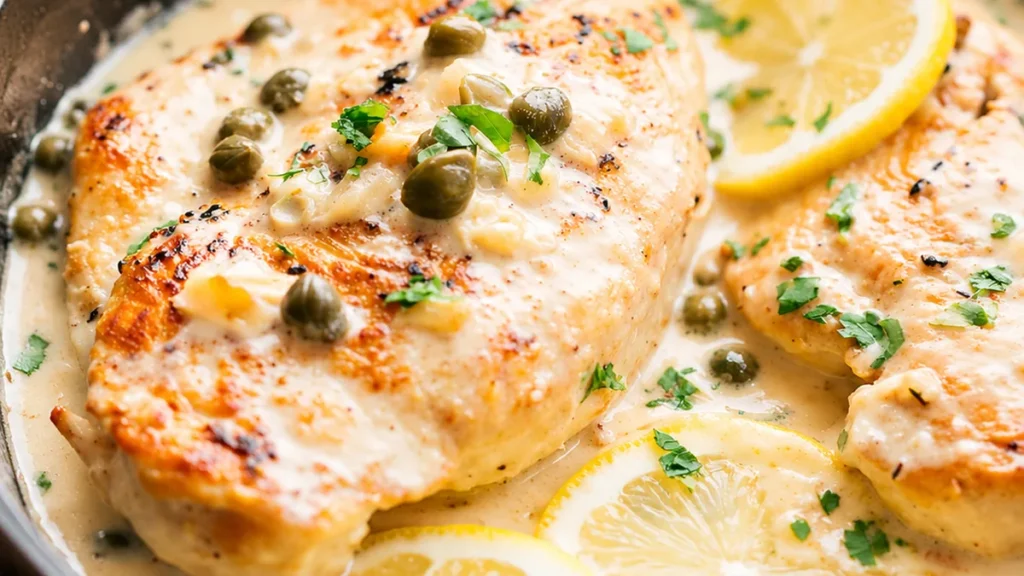
Lemon chicken shines in this scallopini recipe, where pan-searing meets a bright, emulsified sauce. This dish offers a perfect balance of tender chicken and a creamy lemon-caper finish that will redefine your weeknight dinners. Forget complicated techniques; this lemon chicken scallopini is designed for maximum flavor with minimal effort, proving that gourmet meals can be achievable even on a busy schedule.
Key takeaways
- Emulsification is key for a creamy sauce.
- Pound chicken breasts to ensure even cooking.
- Substituting Greek yogurt for cream alters flavor and texture.
- Lemon and capers provide a unique, bright flavor profile.
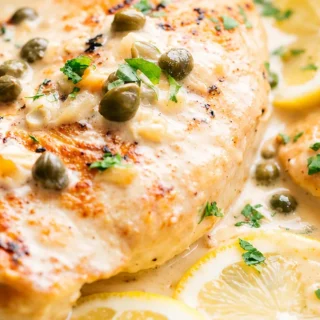
Lemon Chicken Scallopini
Ingredients
- 2 Chicken Breasts (approx 500 grams 1 lb.)
- 2 Garlic Cloves (minced)
- 1 tablespoon Unsalted Butter
- 1 tablespoon Extra Virgin Olive Oil
- 1/4 cup Onions (finely chopped)
- 1/2 cup Chicken Stock
- Juice of 1 1/2 Lemons
- 3 tablespoons Capers
- 1 teaspoon Salt
- 1/4 cup Heavy Cream
Instructions
- Slice each chicken breast in half horizontally, creating four thin fillets. Season with salt and rub minced garlic all over.
- Heat unsalted butter and extra virgin olive oil in a skillet over medium-high heat. Add chicken fillets and cook for 4-5 minutes per side until golden brown.
- If the skillet is dry, add another teaspoon of unsalted butter. Add finely chopped onions and sauté for 2-3 minutes until translucent.
- Pour in chicken stock and let it simmer on high heat for a few minutes until reduced by half. Lower the heat, then add lemon juice and mix well.
- Stir in capers, heavy cream, and remaining salt. Let the sauce simmer gently for another minute until slightly thickened.
- Return cooked chicken fillets to the skillet. Spoon the creamy lemon sauce over the chicken, ensuring each piece is coated.
- Serve immediately while warm and enjoy!
Video
Notes
Understanding the Role of Emulsion in Lemon Chicken Scallopini
The key to a creamy sauce in lemon chicken scallopini lies in the emulsion of the heavy cream with the chicken stock and lemon juice. Emulsification occurs when fat and water-based ingredients are combined, creating a stable mixture. To achieve this, it’s crucial to add the cream gradually while stirring continuously, ensuring the sauce thickens and maintains a smooth texture. The ideal temperature for this process is around 70°C (160°F), which helps the fat in the cream blend seamlessly with the liquid components.
Common Mistakes and How to Fix Them
One common issue when preparing lemon chicken scallopini is overcooking the chicken, which can lead to dryness. To prevent this, ensure the chicken breasts are pounded to an even thickness of about 1.5 cm (0.6 inches), allowing for uniform cooking. Another frequent pitfall is the sauce becoming too tangy. If this occurs, adding a pinch of sugar can balance the acidity of the lemons. Additionally, if the sauce is too thin, simmer it for a few extra minutes to reduce and thicken.
Ingredient Swaps and Their Effects
When cooking lemon chicken scallopini, certain ingredient substitutions can alter the dish’s flavor and texture. For instance, replacing heavy cream with Greek yogurt can lighten the sauce but may result in a tangier flavor and less creaminess. Alternatively, using white wine instead of chicken stock can introduce a depth of flavor, though it may require additional seasoning to balance the dish. If capers are unavailable, green olives can provide a similar briny taste, but they will alter the overall flavor profile.
Unique Characteristics of Lemon Chicken Scallopini
Lemon chicken scallopini is distinct from other chicken dishes due to its bright, zesty flavor profile, primarily derived from the use of fresh lemons and capers. This dish is often associated with Italian cuisine, where the balance of acidity and creaminess is celebrated. Unlike heavier chicken preparations, the lightness of this dish makes it suitable for various occasions, from casual weeknight dinners to elegant gatherings.
Optimal Equipment for Preparing Lemon Chicken Scallopini
Choosing the right equipment can significantly impact the outcome of your lemon chicken dish. A heavy-bottomed skillet or sauté pan is ideal for achieving the right sear on the chicken. The heat retention properties of these pans help in developing a golden crust without overcooking the chicken. Use a meat mallet to pound the chicken breasts to an even thickness, ensuring they cook uniformly. A digital meat thermometer can be invaluable for checking doneness, aiming for an internal temperature of 75°C (165°F). Additionally, having a zester or microplane for the lemon zest will enhance the dish’s flavor profile, as the zest contains aromatic oils that are crucial in elevating the overall taste.
Understanding the Impact of Ingredient Quality on Flavor
The quality of ingredients plays a crucial role in the flavor profile of lemon chicken scallopini. Fresh, organic chicken breasts will yield a more succulent and flavorful dish compared to frozen or lower-quality alternatives. Similarly, using fresh lemons instead of bottled lemon juice will provide a brighter, more vibrant taste. The freshness of your capers can also affect the dish; look for plump, firm capers for the best results. When possible, opt for homemade chicken stock, as it offers a depth of flavor that store-bought versions often lack. These choices can elevate your dish from ordinary to extraordinary, making a noticeable difference in the final presentation and taste.
Scaling Up the Recipe for Larger Gatherings
If you plan to serve lemon chicken scallopini for a larger group, scaling the recipe is straightforward but requires careful attention to cooking times and equipment. When doubling or tripling the recipe, consider using multiple pans to avoid overcrowding, which can lead to steaming rather than searing. Adjust the cooking times accordingly, as thicker batches may require a few extra minutes on the stovetop. Additionally, ensure your sauce ingredients are proportionally increased to maintain the balance of flavors. Preparing the chicken in batches can help retain the quality of each piece, ensuring a consistent texture and flavor throughout the dish. This method allows for a seamless serving experience, keeping the dish warm and fresh.
Pairing Suggestions for Lemon Chicken Scallopini
Lemon chicken scallopini pairs beautifully with a variety of sides and beverages that complement its zesty and creamy flavors. For a classic pairing, consider serving it with a light, fresh arugula salad dressed in a simple vinaigrette. The peppery notes of arugula balance the richness of the cream sauce. Alternatively, roasted or sautéed seasonal vegetables, such as asparagus or green beans, add a vibrant color and texture contrast. For starch, consider a side of garlic mashed potatoes or a light pasta tossed in olive oil and herbs. When it comes to beverages, a crisp white wine like Sauvignon Blanc or a light red such as Pinot Noir can enhance the dish’s flavors without overpowering them, providing a delightful dining experience.
Understanding the Role of Acid in Flavor Development
The use of lemon juice in Lemon Chicken Scallopini is not just for acidity; it plays a crucial role in flavor development and the overall sensory experience of the dish. The acidity from the lemon juice helps to balance the richness of the heavy cream and the butter, creating a well-rounded sauce. When cooking, the ideal balance of acidity is achieved by using the juice of 1.5 lemons, which typically yields about 60-75 ml (approximately 1/4 to 1/3 cup). This amount is sufficient to enhance the dish without overpowering the other flavors. For optimal results, ensure that the lemon juice is freshly squeezed, as bottled lemon juice can lack the vibrant flavor and aromatic qualities needed for this dish.
Batch Scaling and Its Impact on Cooking Time
When scaling the Lemon Chicken Scallopini recipe for larger gatherings, it’s essential to consider the impact on cooking time and heat distribution. Doubling the recipe may seem straightforward, but it’s crucial to adjust the cooking method accordingly. For example, if you increase the quantity of chicken breasts, you may need to cook them in batches to ensure even cooking. Cooking too many pieces at once can lower the pan temperature, leading to steaming rather than searing. A good rule of thumb is to maintain similar surface area contact with the pan; if you double the quantity, consider using a larger pan or cooking in two separate skillets. Additionally, monitor the internal temperature of the chicken, aiming for 75°C (165°F) for safe consumption.
Make-Ahead Strategies for Lemon Chicken Scallopini
Preparing Lemon Chicken Scallopini in advance can be a time-saver for busy weeknights or special occasions. To make ahead, consider cooking the chicken and preparing the sauce separately. Cook the chicken breasts as instructed, then allow them to cool before storing them in an airtight container in the refrigerator for up to 2 days. For the sauce, prepare it as directed but stop before adding the heavy cream. Store the sauce in a separate container, and when ready to serve, simply reheat the sauce gently on the stove and stir in the cream just before serving. This method preserves the freshness of the dish while allowing for easy reheating and serving.
Understanding the Role of Capers in Lemon Chicken Scallopini
Capers are a key ingredient in lemon chicken scallopini, providing a unique briny flavor that enhances the dish’s overall profile. The small, pickled flower buds add a burst of acidity that complements the lemon juice, creating a balanced flavor experience. When using capers, it’s essential to rinse them under cold water to remove excess salt and vinegar, which can overpower the dish. A typical serving of capers is about 3 tablespoons, which can be adjusted based on personal taste preferences. The brininess of capers also interacts with the cream, creating a more complex sauce. For those who may not enjoy capers, alternatives like green olives or pickled jalapeños can be used, but they will alter the dish’s intended flavor profile. Keep in mind that the substitution may not provide the same depth of flavor, so adjustments in seasoning may be necessary to achieve a similar taste.
How to Achieve Perfectly Cooked Chicken Breasts for Scallopini
Cooking chicken breasts to the perfect tenderness is crucial for lemon chicken scallopini. The thickness of the chicken breasts can significantly affect cooking time; therefore, it’s recommended to pound them to an even thickness of about 1/2 inch. This ensures that they cook evenly and quickly. When cooking, use medium-high heat and avoid overcrowding the pan, which can cause steaming instead of searing. A cooking time of 3-4 minutes per side is typically ideal, depending on the thickness. To check for doneness, the internal temperature should reach 75°C (165°F). After cooking, let the chicken rest for a few minutes before slicing; this allows the juices to redistribute, keeping the meat moist. Additionally, using a meat thermometer can help avoid overcooking, which is a common issue that results in dry chicken. For those looking to add more flavor, marinating the chicken in lemon juice, garlic, and a bit of olive oil for 30 minutes prior to cooking can enhance the dish significantly.
Pro tips
- Ensure chicken is sliced thinly for even cooking and tenderness.
- Don’t overcrowd the pan when searing the chicken; cook in batches if necessary to achieve a golden crust.
- Use fresh lemon juice for the best bright flavor; bottled juice can be less bright.
Enjoy this incredibly flavorful and easy lemon chicken scallopini! It’s a dish that brings sunshine to your plate.
Frequently asked questions
Can I use chicken thighs instead of chicken breasts?
Yes, chicken thighs can be used instead of breasts. They will add more flavor and moisture to the dish, but may require slightly longer cooking time due to their thicker texture.
What can I serve with lemon chicken scallopini?
This dish pairs well with a variety of sides such as steamed vegetables, rice, or a simple green salad. The acidity of the lemon complements lighter accompaniments.
How do I store leftovers?
Store leftovers in an airtight container in the refrigerator for up to three days. Reheat gently on the stove to avoid overcooking the chicken.
Can I make this dish dairy-free?
Yes, you can substitute heavy cream with coconut cream or a dairy-free cream alternative. This will change the flavor slightly but will maintain the creamy texture.
More from Keto Dinners & Mains →