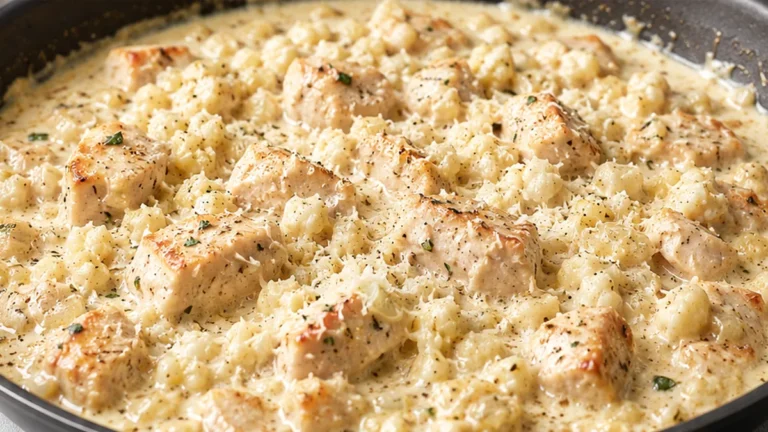
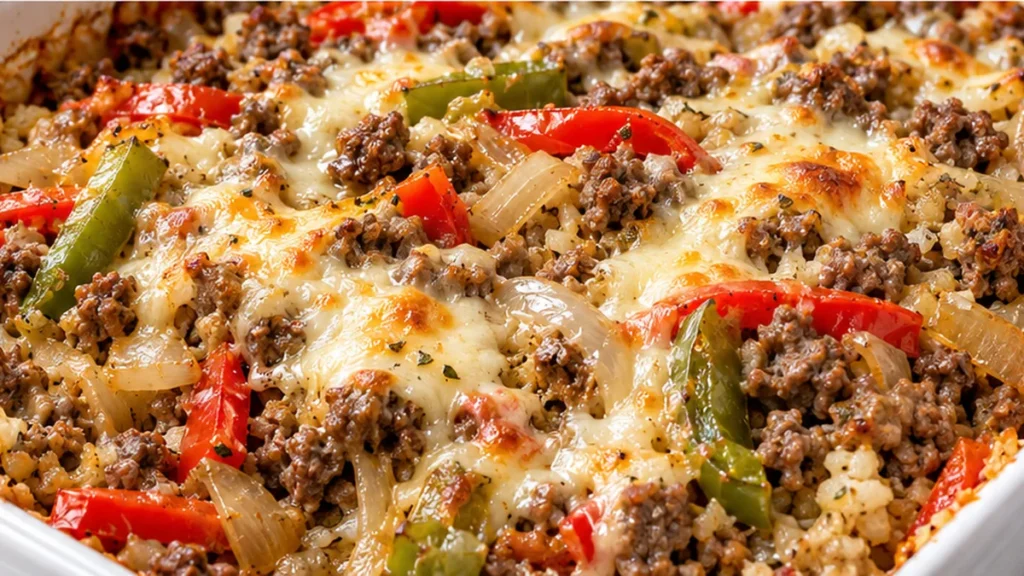
This philly cheesesteak casserole is a hearty dish featuring layers of beef, peppers, and cheese. It’s an easy way to enjoy classic flavors in a new format.
Key takeaways
- Choosing the right cheese enhances flavor and texture.
- Selecting high-quality meat ensures tenderness and moisture.
- Sautéing vegetables adds sweetness and depth to the dish.
- Layering ingredients thoughtfully promotes even cooking and flavor melding.
Philly Cheesesteak Casserole
Ingredients
- 2 lbs lean ground beef (ground sirloin or 93/7 ground beef)
- 1 medium red bell pepper, thinly sliced (about 1- 1½ inches long)
- 1 medium green bell pepper, thinly sliced (about 1- 1½ inches long)
- 1 medium yellow onion, diced
- 3 garlic cloves, minced
- ½ teaspoon fine salt
- ¼ teaspoon black pepper
- 1 ½ teaspoons dried Italian seasoning
- 1 teaspoon paprika
- 3 cups frozen cauliflower rice (10 ounce bag)
Instructions
- Preheat oven to 350°F (175°C).
- In a large oven-safe skillet over medium heat, add the ground beef, red bell pepper strips, green bell pepper strips, and minced garlic. Cook for 8-10 minutes until browned.
- Reduce the heat to low. Add the salt, black pepper, Italian seasoning, and paprika; stir to incorporate. Stir in the cauliflower rice until evenly distributed.
- Top the mixture evenly with provolone cheese slices, ensuring full coverage.
- Bake for 10-12 minutes, or until the cheese is completely melted and bubbly.
- Remove from the oven and let sit for 5-10 minutes before serving. Garnish with fresh parsley if desired.
Understanding the Role of Cheese in Philly Cheesesteak Casserole
The choice of cheese is crucial in a Philly cheesesteak casserole. Traditional options include provolone, American, or Cheez Whiz, each providing a unique flavor and texture. Provolone offers a sharpness, while American cheese melts smoothly, creating a creamy consistency. The key is to achieve the right melting point, around 70°C (160°F), to ensure a gooey texture without becoming oily. Combining cheeses can also enhance the dish’s complexity, balancing sharpness with creaminess.
Meat Selection: The Backbone of Flavor
The type of meat used significantly influences the overall taste of the casserole. Ribeye steak is the preferred cut for its tenderness and flavor, often cooked to medium-rare for optimal juiciness. When using ground beef, aim for an 80/20 lean-to-fat ratio to maintain moisture during cooking. Cooking the meat at a high temperature (around 200°C or 400°F) helps achieve a nice sear, enhancing the Maillard reaction, which develops rich flavors and a pleasing color.
Vegetable Variations and Their Impact on Texture
Bell peppers and onions are classic additions that contribute both flavor and texture to the casserole. Sautéing these vegetables until they are slightly caramelized (about 10 minutes at medium heat) brings out their natural sweetness, complementing the savory meat and cheese. For a twist, consider adding mushrooms or jalapeños for extra depth and a kick of heat. The key is to ensure all vegetables are cooked to a tender consistency before layering them in the casserole, preventing excess moisture that could make the dish soggy.
Layering Techniques for Optimal Flavor Distribution
How you layer the ingredients can affect the final dish’s texture and flavor. Start with a base of cooked meat to anchor the flavors, followed by a layer of sautéed vegetables, then cheese, and repeat the process. This method allows the cheese to melt into the meat and vegetables, creating a cohesive flavor profile. Baking at 180°C (350°F) for about 25-30 minutes ensures everything melds together while the top layer of cheese becomes beautifully golden.
How to Make Ahead for Busy Weeknights
Preparing a Philly cheesesteak casserole in advance can save time and effort during busy weeknights. You can assemble the casserole up to 24 hours ahead of baking. Simply prepare the ingredients as per the recipe, layer them in the baking dish, and cover tightly with plastic wrap or aluminum foil. When you’re ready to bake, remove the cover and allow it to sit at room temperature for about 30 minutes before placing it in the oven. This helps ensure even cooking. If you need to store it longer, consider freezing it. Wrap the assembled casserole tightly in plastic wrap and then in aluminum foil. When ready to bake, thaw it in the refrigerator overnight before cooking.
Scaling the Recipe for Larger Gatherings
Scaling a Philly cheesesteak casserole recipe is straightforward and can be done to accommodate larger gatherings. To double the recipe, simply multiply each ingredient by two. However, it’s essential to use a larger baking dish to ensure even cooking. A 9×13 inch dish is suitable for a standard recipe, but for a doubled version, consider using a 12×18 inch dish. Keep in mind that the baking time may increase slightly; check for doneness by ensuring the cheese is bubbly and golden brown. Adjusting the seasoning may also be necessary, as larger quantities can dilute flavors.
Choosing the Right Equipment for Optimal Results
The equipment you use can significantly influence the outcome of your Philly cheesesteak casserole. A glass or ceramic baking dish is ideal for even heat distribution, while a metal dish may lead to faster browning. If you’re using a convection oven, reduce the temperature by 20°C (about 25°F) to prevent overcooking. Additionally, a sharp knife or a mandoline for slicing vegetables can help achieve uniform thickness, promoting even cooking. Using a heavy-bottomed skillet for sautéing the meat and vegetables ensures that they are cooked properly without burning, which is crucial for flavor development.
Seasonal Variations and Ingredient Quality Impact
The quality of ingredients and seasonal variations can greatly affect the flavor profile of your Philly cheesesteak casserole. Fresh, in-season vegetables can enhance the dish’s taste and texture. For instance, spring onions or bell peppers in peak season can add a sweetness that complements the savory meat. Conversely, using out-of-season ingredients may result in a less vibrant dish. Additionally, consider adjusting spices and seasonings based on seasonal flavors. In fall, adding a pinch of nutmeg or smoked paprika can introduce warmth, while a splash of lemon juice in summer can brighten the dish.
Understanding the Importance of Resting Time for Optimal Flavor
Resting time is crucial in enhancing the flavors of your Philly cheesesteak casserole. Allowing the casserole to sit for 10 to 15 minutes after baking enables the flavors to meld together. This resting period allows the cheese to set slightly, making it easier to slice and serve while ensuring that each bite is infused with the rich, savory notes of the beef, peppers, and onions. During this time, the residual heat continues to cook the dish gently, ensuring a harmonious blend of flavors without overcooking the ingredients.
How Ingredient Quality Affects the Final Dish
The quality of the ingredients used in your Philly cheesesteak casserole can significantly impact the final result. Fresh, high-quality beef will yield a more tender and flavorful casserole. Similarly, using freshly sliced bell peppers and onions rather than frozen alternatives can enhance texture and taste. When selecting cheese, opt for a good-quality provolone or Cheez Whiz for an authentic experience; these varieties melt beautifully and contribute to the overall creaminess of the dish. Seasonal vegetables can also be incorporated, adding freshness and nutritional value while altering the flavor profile subtly.
Scaling the Recipe: Adjusting for Larger Gatherings
When scaling your Philly cheesesteak casserole for larger gatherings, it’s essential to maintain the balance of flavors and textures. Doubling the recipe is straightforward, but pay attention to the baking time; larger quantities may require additional time in the oven to ensure even cooking. Use a larger baking dish to accommodate the increased volume, and consider spreading the layers more thinly to promote even cooking. Additionally, keep an eye on the cheese layer, as it may need to be adjusted to ensure that each serving remains gooey and delicious.
How to effectively store leftovers for maximum freshness
When you have leftover Philly Cheesesteak Casserole, proper storage is essential to maintain its flavor and texture. Allow the casserole to cool to room temperature before transferring it to an airtight container. It can be stored in the refrigerator for up to 3-4 days. For longer storage, consider freezing it. To freeze, portion the casserole into individual servings and wrap them tightly in plastic wrap before placing them in a freezer-safe container. It can be frozen for up to 2-3 months. When you’re ready to enjoy it again, thaw it in the refrigerator overnight and reheat in the oven at 180°C (350°F) until heated through, typically about 20-25 minutes.
Scaling the recipe for larger gatherings without sacrificing quality
Scaling the Philly Cheesesteak Casserole for larger gatherings can be a straightforward process, but attention to detail is crucial to ensure consistent quality. When doubling or tripling the recipe, maintain the same ratios of ingredients for flavor balance. However, be mindful of the baking time; larger quantities may require additional cooking time. Use a larger baking dish to allow for even cooking and browning. If using multiple pans, rotate them halfway through the baking process to ensure even heat distribution. Also, consider the type of cheese used; some cheeses may not melt as well in larger quantities, so stick with varieties known for their melting properties, like provolone or mozzarella.
Understanding the Impact of Ingredient Quality on Flavor and Texture
The quality of ingredients plays a crucial role in the overall success of a Philly cheesesteak casserole. For instance, using high-quality beef, such as ribeye or sirloin, yields a more tender and flavorful result compared to lower-grade cuts. Fresh vegetables, particularly bell peppers and onions, not only enhance flavor but also contribute to the dish’s texture. The cheese selection is equally important; opting for a combination of provolone and Cheez Whiz can create a more authentic and creamy experience. Moreover, using fresh herbs can elevate the flavor profile significantly. When preparing this dish, it’s advisable to source the best ingredients available, as they directly affect the taste and satisfaction of the final casserole.
Scaling the Recipe for Larger Gatherings Without Compromising Quality
When scaling the Philly cheesesteak casserole for larger gatherings, maintaining the balance of flavors and textures is essential. A common mistake is to simply double the ingredients without considering the cooking time and temperature adjustments. Larger batches may require a longer cooking time to ensure even heating throughout the casserole. Additionally, using a larger baking dish can help distribute heat more evenly, preventing undercooked sections. It’s also important to taste and adjust seasoning as you scale up, as flavors can dilute in larger quantities. Keeping these factors in mind will ensure that the casserole remains delicious and satisfying, regardless of the number of servings.
Pro tips
Pro tip: Best served immediately while hot!
Frequently asked questions
Can I use different types of meat in the casserole?
Yes, while ribeye is traditional, you can use ground beef, chicken, or even turkey. Just ensure the meat is cooked thoroughly and retains moisture for the best results.
How do I prevent the casserole from becoming soggy?
To avoid sogginess, ensure all vegetables are sautéed until tender before layering. Additionally, avoid overloading the casserole with too much liquid or uncooked ingredients.
What can I substitute for cheese if I want a dairy-free option?
For a dairy-free alternative, consider using vegan cheese or a cashew cheese sauce. These options can mimic the melting quality of traditional cheese while accommodating dietary restrictions.
How can I make the casserole spicier?
To add heat, include diced jalapeños or a splash of hot sauce in the meat mixture. You can also use pepper jack cheese for a spicy twist on the traditional cheese blend.
More from Keto Dinners & Mains →