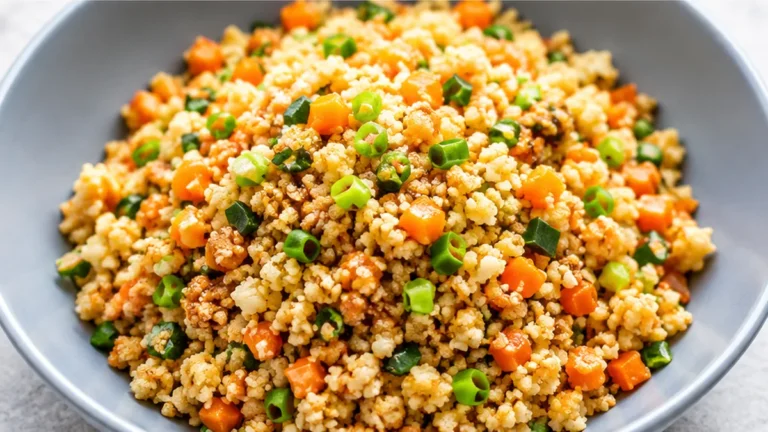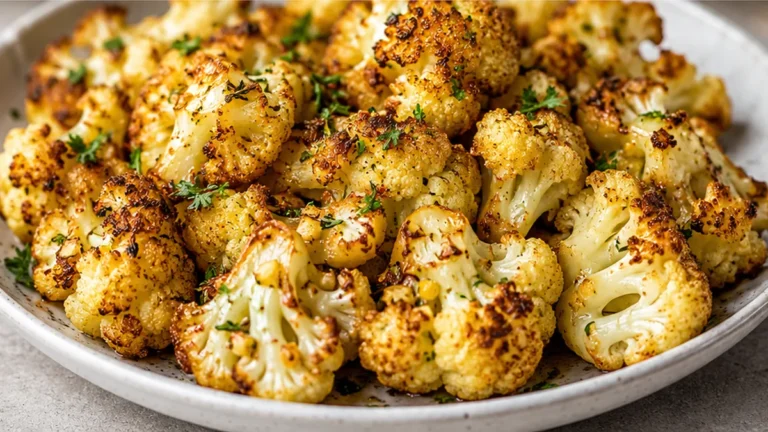
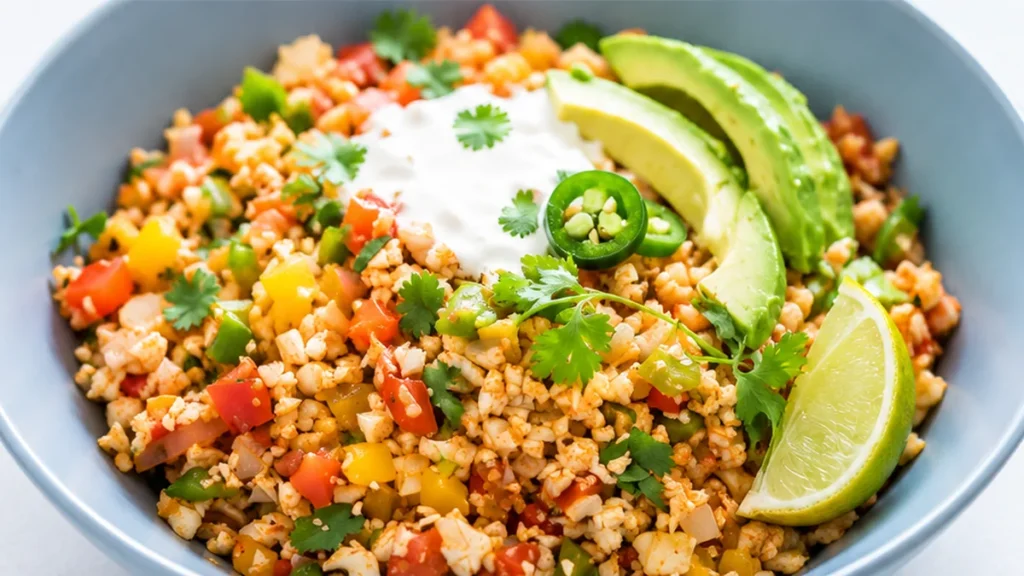
Mexican cauliflower rice offers a satisfying low-carb alternative that enhances your meals. This recipe transforms humble cauliflower into a bright, flavorful side dish that rivals traditional rice, making healthy eating exciting. We’ll guide you through creating this speedy, delicious staple. Our Mexican cauliflower rice is designed for flavor and speed, perfect for weeknights. It’s naturally gluten-free and keto-friendly, proving that healthy food can be incredibly tasty.
Key takeaways
- Use fresh cauliflower for the best texture.
- Sauté aromatics carefully to develop deep flavors.
- Avoid overcooking to maintain cauliflower’s crunch.
- Experiment with ingredient swaps for personalized flavors.
Low-Carb Mexican Cauliflower Rice
Ingredients
- 3 cups Cauliflower Florets (stems removed and washed)
- 1 tablespoon Olive oil
- 1 Onion (finely chopped)
- 3-4 Garlic Cloves (minced)
- 1 Jalapeno (finely chopped)
- 2 Tomatoes (finely chopped)
- 3/4 cup Bell Peppers (diced)
- 1 teaspoon Cumin Powder
- 1/2 teaspoon Paprika Powder
- 1 tablespoon Coriander (chopped)
Instructions
- Add cauliflower florets to a food processor and pulse until it resembles small bits.
- Heat olive oil in a pan and add onions, garlic, and jalapenos. Stir fry until onions are translucent.
- Add tomatoes, cumin powder, and paprika powder to the pan. Cook for 4-5 minutes until tomatoes soften.
- Add diced bell peppers and cauliflower rice to the pan. Stir fry for 3-4 minutes until tender.
- Serve hot with your favorite toppings.
Video
Notes
Understanding the Role of Cauliflower in Low-Carb Dishes
Cauliflower serves as an excellent substitute for traditional grains and starches in low-carb recipes, particularly in dishes like Mexican cauliflower rice. The key to achieving the right texture lies in the preparation method. When processed into rice-like granules, cauliflower retains moisture while providing a neutral flavor that absorbs the spices and other ingredients effectively. For optimal results, use fresh cauliflower florets, as they yield a better texture compared to frozen alternatives.
Flavor Balance: Spices and Aromatics
The combination of spices and aromatics in this recipe is crucial for creating a vibrant flavor profile. Cumin and paprika not only add warmth but also enhance the overall depth of the dish. When sautéing the onion, garlic, and jalapeño, aim for a medium heat to allow the flavors to meld without burning. This step is essential as it develops the base flavor, which is further enriched by the addition of tomatoes and bell peppers. Cook these ingredients until they soften, which typically takes about 5-7 minutes, ensuring a well-rounded taste.
Common Mistakes and How to Avoid Them
One common mistake when preparing Mexican cauliflower rice is overcooking the cauliflower, leading to a mushy texture. To prevent this, pulse the cauliflower in a food processor until it resembles rice, but do not over-process. Additionally, ensure that you sauté the cauliflower just until tender, about 3-5 minutes, to maintain a slight crunch. Another issue can arise from not seasoning adequately; always taste and adjust seasoning as needed to enhance the flavors.
Ingredient Swaps for a Custom Experience
While the recipe calls for specific vegetables and spices, there are several swaps you can make to personalize your dish. For instance, if you prefer a milder flavor, you can substitute the jalapeño with a sweet bell pepper. Alternatively, for a spicier kick, consider adding diced serrano peppers. If fresh coriander is unavailable, dried coriander can be used, but reduce the amount to about one teaspoon, as dried herbs are more concentrated. Each swap will slightly alter the dish’s flavor profile, allowing for creativity while maintaining the essence of Mexican cauliflower rice.
The Unique Aspect of This Dish
This recipe stands out because it incorporates the traditional elements of Mexican cuisine while adhering to a low-carb framework. Unlike conventional rice dishes, Mexican cauliflower rice delivers the same satisfaction with significantly fewer carbohydrates. The use of fresh vegetables not only adds color but also enhances the nutritional value, making this dish a wholesome option for those seeking healthier meal alternatives.
Understanding the Best Cooking Methods for Mexican Cauliflower Rice
When preparing Mexican cauliflower rice, the cooking method significantly influences the texture and flavor. Sautéing is the most common method, as it allows for even cooking while retaining the cauliflower’s moisture. Aim for a cooking temperature of around 190°C (375°F) to achieve a slight caramelization without burning. If you prefer a softer texture, consider steaming the cauliflower florets before sautéing. This method enhances the overall tenderness and allows the flavors to meld better. A common mistake is cooking at too high a temperature, which can lead to uneven cooking and burnt bits. Instead, use medium heat and stir frequently to ensure all components cook evenly.
Batch Scaling and Adjusting Ingredients for Larger Groups
Scaling the recipe for larger gatherings is straightforward but requires some adjustments to maintain flavor balance. For every additional cup of cauliflower, increase the amount of onions, garlic, and spices proportionally. However, be cautious with the jalapeño and cumin; start with a smaller increment, as their flavors can become overpowering. For instance, if doubling the recipe, consider adding an extra half jalapeño instead of a full one. This ensures that the dish remains well-balanced and not overly spicy. Additionally, when scaling, ensure you have a sufficiently large pan to avoid overcrowding, which can lead to steaming rather than sautéing.
How to Properly Store and Reheat Mexican Cauliflower Rice
Storing Mexican cauliflower rice correctly extends its shelf life and preserves flavor. Allow the dish to cool completely before transferring it to an airtight container. It can be stored in the refrigerator for up to 4 days. For longer storage, consider freezing it in portions; it will last up to 3 months in the freezer. When reheating, use a skillet over medium heat, adding a splash of water or broth to prevent drying out. Alternatively, microwave in short intervals, stirring in between. A common issue is that reheated cauliflower rice can become mushy; to avoid this, ensure it is heated just until warm, not overcooked.
Pairing and Serving Suggestions for Mexican Cauliflower Rice
Mexican cauliflower rice is versatile and pairs well with various dishes, enhancing your meal’s overall experience. It complements proteins like grilled chicken, shrimp, or beef tacos perfectly. For a vegetarian option, serve it alongside black beans or grilled vegetables. Garnishing with fresh cilantro or a squeeze of lime can elevate the dish’s freshness. Consider serving it as a bed for a protein or as a side dish to balance heavier meals. A common mistake is serving it plain; adding toppings like avocado, salsa, or cheese can significantly enhance the flavor profile and visual appeal.
Understanding the Impact of Freshness on Flavor and Texture
The quality of ingredients significantly affects the overall flavor and texture of Mexican cauliflower rice. Fresh cauliflower, for instance, will yield a crisper texture and a more vibrant taste compared to older, wilted florets. When selecting cauliflower, look for firm, tightly packed florets without brown spots. Fresh produce retains more moisture, which helps in achieving that ideal ‘rice’ texture. Additionally, fresh herbs like coriander can elevate the dish’s fragrance and flavor profile, adding brightness that dried herbs may lack. For the best results, consider using seasonal vegetables; they are often fresher and more flavorful. This is particularly true for tomatoes and bell peppers, which should be ripe and juicy to contribute to the dish’s overall taste.
Batch Scaling: Adjusting Ingredients for Larger Groups
When scaling the recipe for larger gatherings, it’s essential to maintain the ratios of ingredients to preserve flavor and texture. For instance, if doubling the recipe, use six cups of cauliflower florets and adjust the spices accordingly, ensuring the cumin and paprika are balanced to prevent overpowering the dish. Additionally, consider the cooking time; larger batches may require a longer sautéing time to ensure even cooking and flavor distribution. A larger pan or skillet can help achieve this, as it allows for better heat distribution and prevents overcrowding, which can lead to steaming instead of sautéing. Always taste and adjust seasoning as needed, since scaling can sometimes dilute flavors.
Choosing the Right Equipment for Optimal Results
The equipment you use can greatly influence the outcome of your Mexican cauliflower rice. A food processor is ideal for achieving the perfect rice-like texture; pulse the cauliflower florets until they resemble grains, but be careful not to over-process, which can lead to a mushy consistency. For cooking, a large skillet or wok is recommended to allow for even heat distribution and to facilitate proper sautéing. Non-stick pans can help prevent sticking and ensure easy cleanup. If you prefer a more hands-off approach, consider using an Instant Pot or rice cooker to prepare the cauliflower rice, adjusting the cooking time accordingly. Each piece of equipment has its nuances, so understanding how they affect the cooking process is key to achieving the best results.
Understanding the Make-Ahead Potential of Mexican Cauliflower Rice
One of the appealing aspects of Mexican cauliflower rice is its make-ahead potential. This dish can be prepared in advance and stored for later use, making it a convenient option for meal prep. After cooking, allow the cauliflower rice to cool completely before transferring it to an airtight container. Properly stored in the refrigerator, it can last for up to five days. For longer storage, consider freezing the cauliflower rice. Spread it out on a baking sheet to freeze in a single layer, then transfer it to a freezer-safe bag or container. When ready to use, simply reheat in a skillet or microwave. However, it’s essential to note that freezing may slightly alter the texture, making it softer upon reheating. To maintain the best flavor, consume the frozen rice within three months.
Scaling Up: Adjusting Quantities for Larger Groups
Scaling up your Mexican cauliflower rice recipe is straightforward, yet it requires careful attention to maintain the flavor and texture. When doubling or tripling the recipe, keep the ratios of spices and aromatics consistent to ensure balanced seasoning. For instance, if you double the amount of cauliflower, also double the olive oil, onion, garlic, jalapeño, tomatoes, and spices. However, be cautious with cooking times; larger batches may require additional time to cook evenly. Use a large skillet or a wok to allow for better heat distribution. When cooked in a larger batch, ensure to stir frequently to prevent sticking or burning. This method not only helps in achieving an even cook but also enhances the overall flavor as the ingredients meld together more effectively.
Pro tips
- Pulse cauliflower in a food processor in batches to avoid mushiness. Aim for a rice-like texture.
- Don’t overcrowd the pan when stir-frying; cook in batches if necessary for even browning.
- Adjust the jalapeño and chili powder for your preferred heat level.
- Serve immediately for the best texture.
Enjoy this quick, healthy, and incredibly flavorful Mexican cauliflower rice as a versatile side or light main.
Frequently asked questions
Can I use frozen cauliflower for this recipe?
While you can use frozen cauliflower, fresh cauliflower yields a better texture and flavor. Frozen cauliflower can become mushy when cooked, so if you must use it, ensure to thaw and drain it thoroughly before cooking.
How can I make this dish spicier?
To increase the spiciness, add more jalapeños or include diced serrano peppers. You can also sprinkle some cayenne pepper or chili powder during cooking for an extra kick.
What is the best way to store leftovers?
Store any leftovers in an airtight container in the refrigerator for up to 3 days. Reheat in a skillet over medium heat to restore some of the original texture.
Can I add protein to this dish?
Absolutely! You can add cooked chicken, shrimp, or black beans to make it a more filling meal. Just mix them in during the last few minutes of cooking to warm through.
More from Keto Sides & Veggies →